Kirjojen hintavertailu – 12 859 828 kirjaa ja 27 kauppaa
Kirjailija
Angel M. Y. Lin
Kirjat ja teokset yhdessä paikassa: 7 kirjaa, julkaisuja vuosilta 2006–2026, suosituimpiin kuuluu Teachers as AI Developers. Vertaile teosten hintoja ja tarkista saatavuus suomalaisista kirjakaupoista.
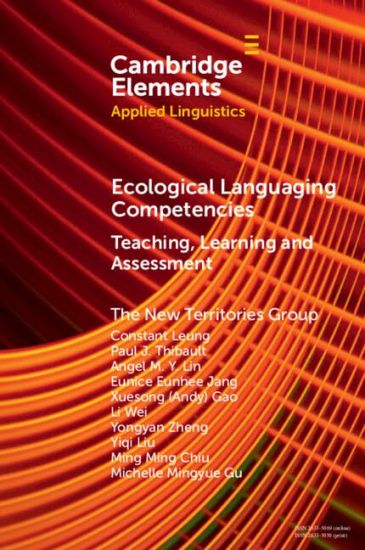
The concept of communicative competence has been rendered as context-abstracted code-bound knowledge for language teaching and assessment. This Element offers a different perspective on 'communication' and 'competence'. Part I offers the rationale for this re-orientation. Part II examines the conceptual and pedagogic affordances and delimitations of the prevailing approach to communicative competence; Part III describes a conceptual re-framing of language use as ecological languaging in terms of embodied, situation-sensitive action through which people coordinate with others, artefacts, and environments; Part IV explores assessment approaches built on Bayesian principles for tracking learner development and progress by taking account of prior accomplishment, expert opinion, and emerging performance to create probabilistic trajectories; Part V focusses on professional developments related to conceptual refinement, curriculum design, teaching materials, and teacher education. Part VI considers some key future challenges. This title is also available as Open Access on Cambridge Core.

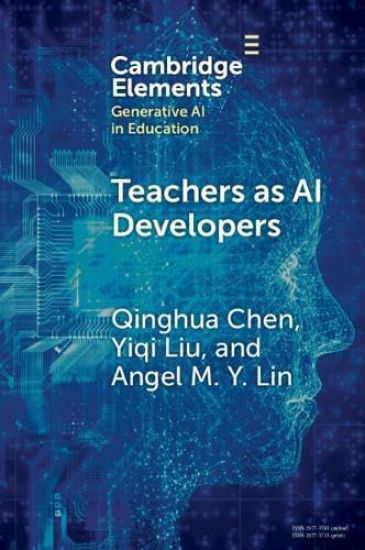
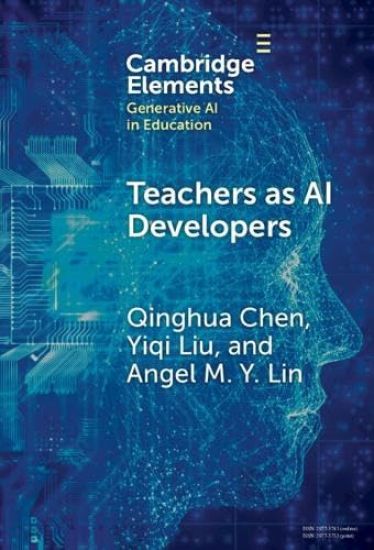
The dominance of commercial AI in education has created a paradox: while these tools promise transformation, they perpetuate dependency, financial barriers, and environmental unsustainability. This Element challenges the 'technical mystique', the misconception that AI development requires expertise beyond educators' reach, and demonstrates how teachers can become creators rather than consumers of educational technology. The authors chronicle their transformation from linguists and educators to AI developers without formal computer science training, illustrating how the technical barriers educators face are often more perceived than real. Through detailed case studies, including an AI-assisted Dialogue System (ADS) for multilingual nurse-patient training and assessment, they demonstrate how teachers can leverage AI coding assistants, browser-based models, and open-source resources to develop pedagogically tailored applications. This title is also available as open access on Cambridge Core.
This book will be of interest to a broad readership, regardless of whether they have a background in sociolinguistics, functional linguistics or genre theories. It presents an accessible “meta-language” (i.e. a language for talking about language) that is workable and usable for teachers and researchers from both language and content backgrounds, thus facilitating collaboration across content and language subject panels. Chapters 1 to 3 lay the theoretical foundation of this common meta-language by critically reviewing, systematically presenting and integrating key theoretical resources for teachers and researchers in this field. In turn, Chapters 4 to 7 focus on issues in pedagogy and assessment, and on school-based approaches to LAC and CLIL, drawing on both research studies and the experiences of front-line teachers and school administrators. Chapter 8 provides a critical and reflexive angle on the field by asking difficult questions regarding how LAC and CLIL areoften situated in contexts characterized by inequality of access to the linguistic and cultural capitals, where the local languages of the students are usually neglected or viewed unfavourably in relation to the L2 in mainstream society, and where teachers are usually positioned as recipients of knowledge rather than makers of knowledge. In closing, Chapter 9 reviews the state of the art in the field and proposes directions for future inquiry.
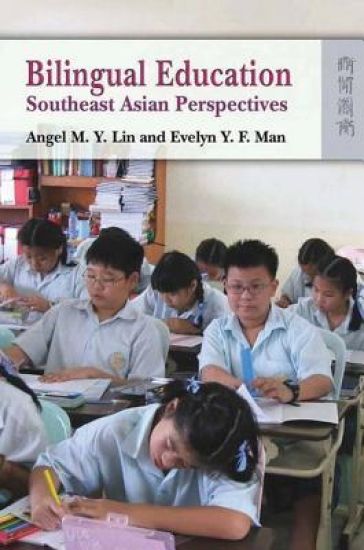
This book aims at meeting this urgent need by discussing, in accessible language, research findings on key concepts of bilingual education, and recent developments of bilingual education policies in Hong Kong, Singapore and Malaysia. Teachers, students and researchers in the areas of bilingual education, language policy and planning (LPP), and studies of medium of instruction policy and practice both in Hong Kong and other Southeast Asian contexts will benefit from the book.
Classroom Interactions as Cross-Cultural Encounters is about native English speakers teaching English as a global language in non-English speaking countries. Through analysis of naturally occurring dialogic encounters, the authors examine the multifaceted ways in which teachers and students utilize diverse communicative resources to construct, display, and negotiate their identities as teachers, learners, and language users, with different pedagogic, institutional, social, and political implications. A range of issues in applied linguistics is addressed, including linguistic imperialism, post-colonial theories, micropolitics of classroom interaction, language and identity, and bilingual classroom practices. Intended to help TESOL professionals of different cultural backgrounds, working in different sociocultural contexts, to critically understand how non-assimilationist, dialogic intercultultural communication with students can be achieved and built on for mutual cultural and linguistic enrichment and empowerment, this book:*emphasizes the sociocultural meanings and micropolitics of classroom interactions that reveal the complex realities of power and identity negotiations in cross-cultural interactions in ELT (English Language Teaching) classroom contexts;*revisits and reconstitutes the notion of native-speakerness and repositions the roles of native and non-native English teachers in the TESOL profession in the contexts of decolonization and globalization; *highlights the need to mobilize intercultural communicative resources for global communication;*addresses two major concerns of EFL (English as a Foreign Language) classroom researchers and teachers: student resistance and learning motivation; and*examines and analyzes the changing ideologies (both explicit and implicit) of teachers and students about English learning in the context of a post-colonial society, and how these ideologies are being enacted, reproduced, but also sometimes contested in EFL classroom interactions. Each chapter includes Questions for Reflection and Discussion to promote critical thinking and understanding of the issues discussed. Tuning-In discussion questions are provided in the three chapters on classroom data analysis to activate readers interpretive schemas before they examine the actual classroom episodes. The data are from an ethnographic study in post-colonial Hong Kong secondary schools involving four native English-speaker teachers and two bilingual Cantonese-English speaking teachers engaged in intercultural classroom dialogues with their Cantonese Hong Kong students. The rich, naturally occurring classroom data and in-depth analyses provide useful pedagogical materials for courses in EFL teacher education programs on classroom discourse analysis from sociocultural perspectives.