Kirjailija
Angela Yarber
Kirjat ja teokset yhdessä paikassa: 9 kirjaa, julkaisuja vuosilta 2013–2026, suosituimpiin kuuluu Traveling Free. Vertaile teosten hintoja ja tarkista saatavuus suomalaisista kirjakaupoista.
9 kirjaa
Kirjojen julkaisuvuodet: 2013–2026.

For too long marginalized authors have been held captive by the struggling writer stereotype. The Authorpreneur Handbook dismantles this myth by following Dr. Yarber's three-part coaching method, empowering authors in Book Doula Writing, Book Diva Marketing, and Book DreamMaker Authorpreneurship. This method has helped hundreds of writers leave toxic jobs, quit the 9-5 rat race, and create a pathway to living the author life of their dreams in ways that are financially sustainable, justice-centered, and joyful.

The chalky remains of a life cut short filled my hands as I watched my faith slip through the cracks between my fingers. As ordained clergy, I've officiated a lot of funerals. For fourteen years, I shaped burnt ash across congregants' foreheads each year before Lent and reminded them that we all come from dust. To dust we shall return. This day, as I officiated my little brother's funeral, I held the ashes of his body in my bare hands. I'd never done this with anyone else's remains, but I wanted to somehow touch him one last time, to feel his pain and let his torment fall through my fingers, as fragments of his bones clung to my palms. Duster to dust. Computer duster killed my brother. I stood before the folding chairs of family with swipes of my brother's remains smudged across my black dress, as though I had been teaching a thorough lesson at the blackboard of my university classroom and mistakenly leaned against the chalk. A colander was perched atop my head. This was, indeed, comical. And intentional. You see, my little brother, Carl, was not religious. In fact, he was anti-religious. He embodied his disdain for organized religion with a profound love for the Church of the Flying Spaghetti Monster. As I am a professor of religion, Carl could hold his own with me when discussing world religions, and I would dare say he knew more about Christian history, scripture, and theology than most people who profess the faith. This was in large part because my brother was an intelligent critical thinker, and in small part because he deplored the way most churches treated his queer big sister. But organized religions were not for Carl, so he opted to study and parody them with the Church of the Flying Spaghetti Monster. Started as a protest against right-wing discrimination, the Church of the Flying Spaghetti Monster holds a light-hearted view of religion and jokingly calls its adherents "pastafarians." So, the colander is a highly esteemed satirical symbol. You know. Because it drains pasta. In addition to omitting any references to god throughout his funeral, I also opted to wear the colander on my head, passing it around whenever anyone wanted to share a memory or a word of comfort. This probably seems blasphemous to many. As an ordained clergywoman, I think it's pretty damn funny. I needed the levity. Other clergy colleagues offered to officiate, knowing how emotional I would be and seeking to provide me with the care I was extending to so many others. But I couldn't trust anyone with the words and gestures, rituals and lamentations for honoring my little brother. Trembling under March clouds, the vineyard behind me, farmhouse beside me, family before me, and shiny metal colander rattling above me, I couldn't help but wonder, "How in the hell did we get here? And how can we survive this?" How'd We Get Here?

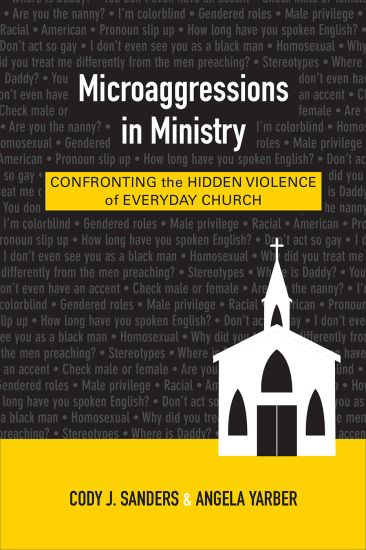
Microaggressions in Ministry
Cody J. Sanders; Angela Yarber
Westminster/John Knox Press,U.S.
2015
nidottu
Carlosa third-generation U. S. citizen from New Jersey whose family emigrated from Colombia many years before Carlos was bornis often complimented on how articulate he is and asked how long he has been in the United States. Deborah, a Certified Public Accountant (CPA) who is up for election as church treasurer, has her qualifications questioned, debated, and scrutinized by the congregation far more than any of her male predecessors who were elected with a simple vote. Lisa, a male-to-female transgender person, attends a Sunday school where her classmates continue to refer to her with masculine pronouns (he, him, his). The three examples above portray microaggressions: subtle slights, insults, and indignities expressed to persons of varied minority statuses. Although microaggressions are usually unintentional, they occur on a regular basis in education, the workplace, and daily life. This is the first book that addresses the concept of microaggressions in ministry and church life. Drawing from their background as ordained clergy, Sanders and Yarber introduce ministry leaders to the concept of microaggressions and look specifically at microaggressions directed at race, gender, and sexuality in the church. Sanders and Yarber help readers become more aware of these subtle and often unconscious communications, offering realistic examples and guidance for grappling with this issue in preaching, religious education, worship, spirituality, and pastoral care and counseling. Microaggressions in Ministry equips congregations with methods for assessment and tools for action that will ultimately help create stronger, more welcoming faith communities.