Kirjojen hintavertailu – 12 859 818 kirjaa ja 27 kauppaa

Kirjailija

Anita Sanchez

Kirjat ja teokset yhdessä paikassa: 28 kirjaa, julkaisuja vuosilta 2009–2025, suosituimpiin kuuluu In Praise of Poison Ivy. Vertaile teosten hintoja ja tarkista saatavuus suomalaisista kirjakaupoista.

28 kirjaa

Kirjojen julkaisuvuodet: 2009–2025.

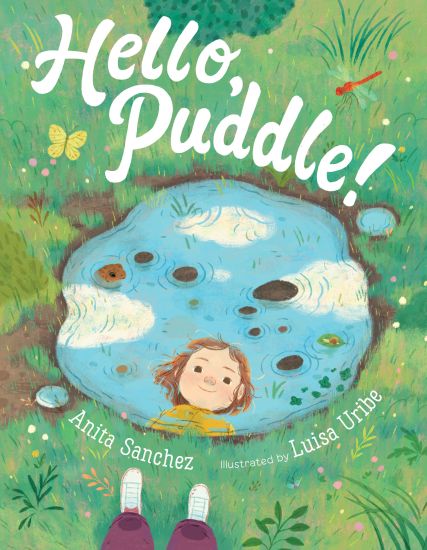
Hello, Puddle!

Hello, Puddle!

Anita Sanchez

HARPERCOLLINS PUBLISHERS INC
2022
sidottu
A nonfiction picture book exploring a deceptively simple but unexpectedly crucial resource for wildlife: puddles! This lyrical, gorgeously illustrated nonfiction picture book is perfect for young science learners and nature lovers. Hello, puddle! Who's here? A normal everyday puddle may not seem very special. But for a mother turtle, it might be the perfect place to lay her eggs. For a squirrel, it might be the only spot to cool off and get a drink when the sun is shining down in July. And for any child, it can be a window into the elegant, complex natural world right outside their window. With lush, playful illustrations and fun facts about the animals featured, Hello, Puddle! is a joyful celebration of the remarkable in the ordinary, and the importance of even the most humble places in fostering life.
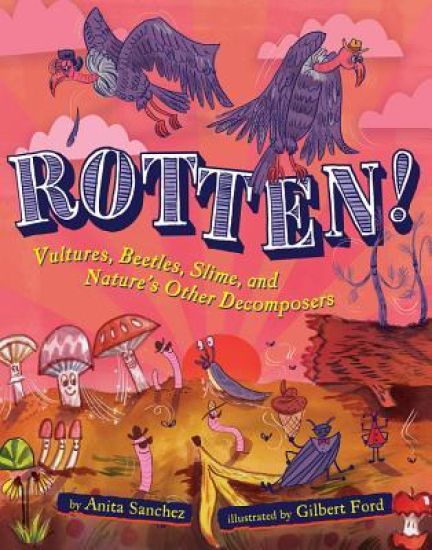
Rotten!

Rotten!

Anita Sanchez

HMH Books for Young Readers
2019
sidottu
What’s that terrible smell? It’s the revolting scent of rot. But being rotten isn’t necessarily bad. If nothing ever rotted, nothing new could live. Decomposition may seem like the last stop on the food chain, but it’s just the beginning. When dead plants and animals decay, they give life to a host of other creatures, and each one helps ecosystems thrive. Decomposition happens in the forest, the ocean - even in your stomach and between your teeth! From vultures and sharks to bacteria, maggots, mushrooms, and more, discover the dirty rotten truth about one of nature’s most fascinating processes.
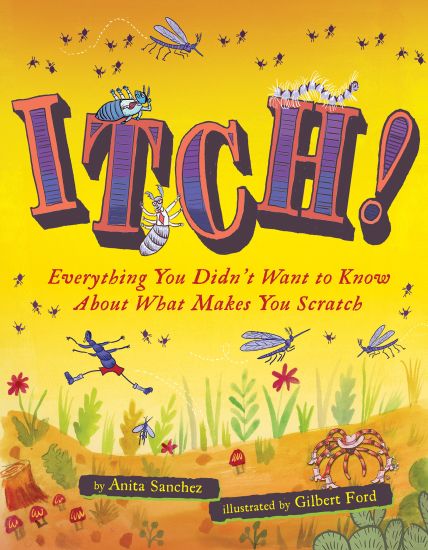
Itch!

Itch!

Anita Sanchez

Houghton Mifflin Books for Children
2018
sidottu
You can feel it coming on - that terrible, tortuous ITCH. As irritating as an itch is, it is also your body’s way of sending you a message you can’t miss, like you’ve brushed up against poison ivy or lice have taken up residence in your hair. None of which you’d know without that telltale itch! And there are so many things that make us itch - from fungus to fleas, mosquitoes to nettles, poison ivy to tarantulas! Combining history, anatomy, laugh-out-loud illustrations, and even tips to avoid - and soothe - the itch, Anita Sanchez and Gilbert Ford take readers on an intriguing (and sometimes disgusting) look into what makes you scratch.
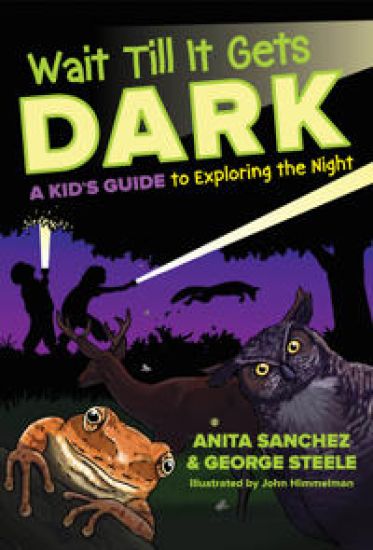
Wait Till It Gets Dark

Wait Till It Gets Dark

Anita Sanchez; George Steele

Muddy Boots Press
2017
sidottu
It’s night. It’s dark. It’s time to go indoors—or is it? The outdoors at night can be a scary place, but this book will help young readers investigate the mysterious nature of night. To explore the night, it would be great to have eyes like an owl, the sensitive nose of a deer, and feet that can move as silently as a fox. Humans aren’t quite as good as nocturnal animals at navigating the darkness, but we can come surprisingly close. Our senses are much sharper than we realize, if we learn how to use them. Some scientists are even researching the sensory abilities of human hair! Each chapter of the book spotlights a different nocturnal creature. And while learning about animals’ adaptations for navigating the world of night, young readers discover their own surprising abilities. Years of teaching children in the outdoors has given the author, renowned environmental educator Anita Sanchez, firsthand experience in introducing students to the terrors and joys of nature at night. She has led kids on night walks in a variety of habitats, including urban settings. Based on these experiences, the book describes night-time landscapes and the nocturnal animals that inhabit them, from desert coyotes to the frog chorus in a backyard pond—and a corner of the bathroom at midnight where a spider lurks. Readers will encounter: --The great horned owl, who can spot the twitch of a mouse’s tail in almost total darkness. --The Gila monster, who prowls the desert night using its tongue to locate prey. --The super-sensitive ears of a bullfrog (yes, frogs have ears!) --The delicate sense of touch of a spider, capturing its prey by feeling the slightest vibrations of its web. Sidebars called “You Can Do It!” offer fun and active ways for kids to explore their own senses—learning more about their own eyes, ears, nose, and senses of touch and taste. --While using crayons at night, can your eyes tell red from green? --Can you hold completely still for an entire minute, like a fox stalking its prey? --Could you follow the scent trail of an onion across the back yard? --Can you find sounds in the dark? Learn to use the “big ears” technique to locate sounds with accuracy.
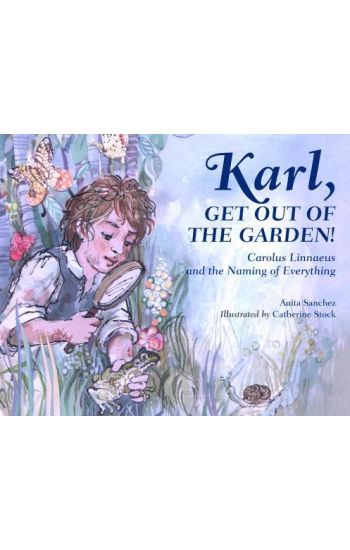
Karl, Get Out of the Garden!

Karl, Get Out of the Garden!

Anita Sanchez

Charlesbridge Publishing,U.S.
2017
sidottu
Do you know what a Solanum caule inermi herbaceo, foliis pinnatis incises, racemis simplicibus is?* Carolus (Karl) Linnaeus started off as a curious child who loved exploring the garden. Despite his intelligence--and his mother's scoldings--he was a poor student, preferring to be outdoors with his beloved plants and bugs. As he grew up, Karl's love of nature led him to take on a seemingly impossible task: to give a scientific name to every living thing on earth. The result was the Linnaean system--the basis for the classification system used by biologists around the world today. Backyard sciences are brought to life in beautiful color. Back matter includes more information about Linnaeus and scientific classification, a classification chart, a time line, source notes, resources for young readers, and a bibliography. *it's a tomato A handsome introductory book on Linnaeus and his work -- Booklist, starred review A good introduction to a man in a class by himself -- Kirkus Reviews Lends significant humanity to the naturalist -- Publisher's Weekly The biographical approach to a knotty scientific subject makes this a valuable addition to STEM and biography collections -- School Library Journal
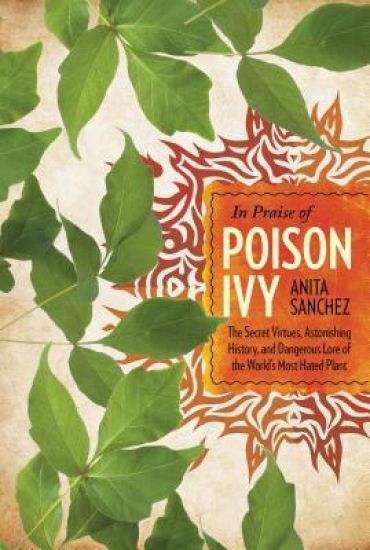
In Praise of Poison Ivy

In Praise of Poison Ivy

Anita Sanchez

Taylor Trade Publishing
2016
sidottu
Deadly. Powerful. Beautiful. The much-hated plant called poison ivy is all of these—and more. Poison ivy has long irritated humans, but the astounding paradox is that poison ivy is a plant of immense ecological value. In Praise of Poison Ivy explores the vices and virtues of a plant with a dramatic history and a rosy future. Once planted in gardens from Versailles to Monticello, poison ivy now has a crucial role in the American landscape. The detested plant is a lens through which to observe the changes and challenges that face our planet. For centuries, poison ivy has bedeviled, inconvenienced, and downright tortured the human race. This book covers the unique history of the plant, starting with the brash and adventurous explorer Captain John Smith, who “discovered” poison ivy the hard way in 1607. Despite its irritating qualities, the magnificent scarlet-and-gold autumn foliage lured Virginia entrepreneurs to export the vine to Europe, making it one of the earliest documented New World plants to cross the Atlantic, and its meteoric rise to fame as–of all unlikely things—a garden plant. Showcased in the pleasure grounds of emperors and kings, poison ivy was displayed like a captive tiger, admired by Thomas Jefferson, Marie Antoinette, and Josephine Bonaparte. Today, poison ivy is valued by environmentalists and native plant enthusiasts who name it one of our most important plants for wildlife as well as for soil conservation. In Praise of Poison Ivy will reveal why, in its native American habitat, poison ivy is a plant of astonishing ecological value. Poison ivy leaves are an important wildlife food, and the berries are a crucial source of winter nutrition for beloved bird species like robins, bluebirds and cardinals. On a national listing of hundreds of native plants that are of value to wildlife, poison ivy ranks seventh in importance. In Praise of Poison Ivy also explores the question of why this plant is apparently on a mission to give us humans grief, from itchy ankles to life-threatening medical emergencies. The book will examine why poison ivy targets humans, but no other species, and explain the mystery of why a privileged few are immune to its itchy consequences. Since the time of John Smith and Pocahontas, the American landscape has changed in countless ways—many obvious, some subtle. This book will reveal why there is far more poison ivy on the planet now than there was in 1607, with lots more on its way. It examines the ecological reasons for poison ivy’s rosy future, note the effects of climate change on native plants, and investigate the valuable role that poison ivy could play in our changing world.

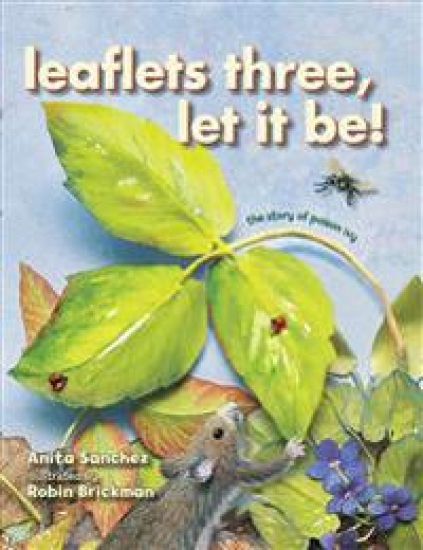
Leaflets Three, Let It Be!

Leaflets Three, Let It Be!

Anita Sanchez

Boyds Mills Press
2015
sidottu
What's the first thing anyone hears about poison ivy? "Leaflets three, let it be!" But this engaging nonfiction book will surprise readers who fear the itch--inducing plant. Taking us through the year, the narrative introduces the rabbit who nibbles on the tender leaves after a hard winter, the salamander who shelters in the plant's cool, umbrella--shadows, the fall insects who wrap themselves in poison--ivy blankets, and the birds who feast on its berries in the starving heart of winter. Poison ivy has always seemed mysterious in its danger, but it too has a purpose and it has something to give.
Mr Lincoln's Chair

Mr Lincoln's Chair

Anita Sanchez

McDonald Woodward Publishing Company, US
2009
nidottu
This book provides an interesting and engaging look at the Shakers, one of the most complex but largely ignored religious groups and one of the most unusual and successful Utopian communities in American history. The book tells the story of the Shakers from their tumultuous beginnings in the eighteenth century to the present day. It provides a broad overview of Shaker history, culture, religion, life, and work, and presents the Shakers against the backdrop of the Civil War, contrasting their peaceful and productive lives with the carnage of America's bloodiest battles. The book details the Shakers' struggle to obtain legal conscientious objector status, a quest that led them all the way to the White House and an audience with President Abraham Lincoln. The book is for anyone interested in the Shakers, their unique way of life, and their world famous furniture and architecture. For Civil War buffs, or for anyone fascinated by the rich life of Abraham Lincoln, the book takes a look at Lincoln from a different point of view -- the Commander-in-Chief of America's bloodiest war seen through the eyes of America's first conscientious objectors. The book also includes brief up-to-date descriptions of all Shaker sites, listed state by state from Maine to Florida. It describes the museums and restored villages, archeological sites, and the all-but-forgotten sites at which few if any traces of the Shakers remain.