Kirjojen hintavertailu – 12 903 725 kirjaa ja 27 kauppaa

Kirjailija

Anita Sengupta

Kirjat ja teokset yhdessä paikassa: 8 kirjaa, julkaisuja vuosilta 2003–2025, suosituimpiin kuuluu India’s Eurasian Alternatives in an Era of Connectivity. Vertaile teosten hintoja ja tarkista saatavuus suomalaisista kirjakaupoista.

8 kirjaa

Kirjojen julkaisuvuodet: 2003–2025.

India’s Eurasian Alternatives in an Era of Connectivity

India’s Eurasian Alternatives in an Era of Connectivity

Anita Sengupta

SPRINGER VERLAG, SINGAPORE
2025
nidottu
The volume examines how in the twenty-first century narratives built around connectivity have become a structural component of international politics expanding into a wider array of policy fields i It examines the significance of this emerging narrative from an Indian perspective with particular reference to Eurasian alternatives. It argues that this represents the next stage of globalization and that an understanding of this is increasingly becoming crucial given the recent disruptions along with the emergence of a spate of new policies and institutions that could eventually lead to a new understanding of connectivity.
India’s Eurasian Alternatives in an Era of Connectivity

India’s Eurasian Alternatives in an Era of Connectivity

Anita Sengupta

SPRINGER VERLAG, SINGAPORE
2024
sidottu
The volume examines how in the twenty-first century narratives built around connectivity have become a structural component of international politics expanding into a wider array of policy fields i It examines the significance of this emerging narrative from an Indian perspective with particular reference to Eurasian alternatives. It argues that this represents the next stage of globalization and that an understanding of this is increasingly becoming crucial given the recent disruptions along with the emergence of a spate of new policies and institutions that could eventually lead to a new understanding of connectivity.

Master Dentistry Volume 1

Master Dentistry Volume 1

Paul Coulthard; Philip Sloan; Elizabeth D. Theaker; Anita Sengupta

Elsevier Health Sciences
2021
nidottu
Now in its fourth edition, this popular text provides a comprehensive overview of the oral and maxillofacial subjects in dentistry that students will need in order to pass their final exams. This invaluable adjunct to exam preparation provides a practical synthesis of core information, reflecting real-life case scenarios. Information is structured to enhance understanding and clinical decision making, and a variety of self-assessment methods prepare students for success. Comprehensively updated, the book covers a range of essential topics in the field of contemporary oral and maxillofacial subjects, including surgical flap design, state-of-the-art surgical techniques, zygomatic implants, molecular pathology, current imaging applications and pain management. The text is integrated and evidence based throughout. Covers oral and maxillofacial surgery, radiology, pathology and oral medicine subjects? Brand new chapter on facial skin broadens diagnostic ability Range of self-assessment tasks to support learning Aligns to dental school curricula globally Concise and easy to follow Designed to support recall for examination purposes Practical guidance on examination preparation and skills Perfect for BDS exam preparation and candidates taking the MFDS, MJDF, ORE or other post-graduate exams
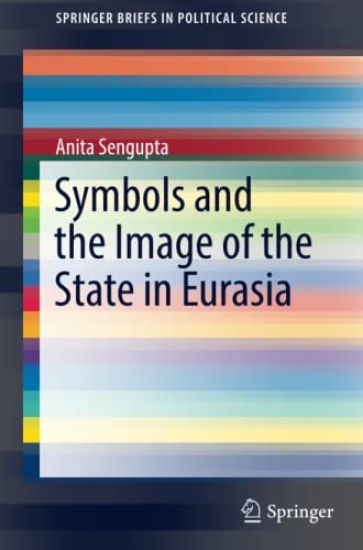
Symbols and the Image of the State in Eurasia

Symbols and the Image of the State in Eurasia

Anita Sengupta

Springer Verlag, Singapore
2016
nidottu
This book discusses the significance of cultural symbols/‘images’ in the nation-building of Eurasian states that emerged out of the former Soviet Union. It particularly focuses on the cases of Uzbekistan and Kazakhstan in the post-Soviet era and argues that the relationship between nation- and image-building has been particularly relevant for Eurasian states. In an increasingly globalized world, nation-state building is no longer an activity confined to the domestic arena. The situating of the state within the global space and its ‘image’ in the international community (nation branding) becomes in many ways as crucial as the projection of homogeneity within the state. The relationship between politics and cultural symbols/ ‘images’, therefore acquires and represents multiple possibilities. It is these possibilities that are the focus of Symbols and the Image of the State in Eurasia. It argues that the relationship between politics and cultural symbols/ ‘images’, became particularlyrelevant for states that emerged in the wake of the disintegration of the Soviet Union in Central Asia. It extends the argument further to contend that the image that the state projects is largely determined by its legacy and it attempts to do this by taking into account the Uzbek and Kazakh cases. In the shaping of the post-Soviet future these legacies and projections as well as the policy implications of these projections in terms of governmentality and foreign policy have been decisive.
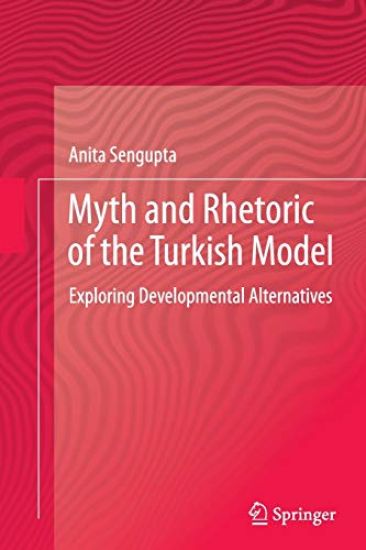
Myth and Rhetoric of the Turkish Model

Myth and Rhetoric of the Turkish Model

Anita Sengupta

Springer, India, Private Ltd
2016
nidottu
The volume discusses what the Turkish Model, or Turkish Development Alternative, was and why it was promoted in the Central Asian republics immediately following the dissolution of the Soviet Union. It argues that the Turkish Model was a myth that transferred the ideal of a ''secular, democratic, liberal society'' as a model for the post Soviet Turkic world and in the process encouraged a ''Turkic" rhetoric that emphasized connection between the two regions based on a common ancestry. The volume begins with an understanding of the reality of the Model from a Turkish perspective and then goes on to examine whether the Turkic world as a "cultural-civilizational alternative" makes sense both from a historical as well as contemporary perspective. It concludes by looking at the re-emergence of the Model in the wake of the events in West Asia in early 2011 and examines how in the light of a search for options the Turkish Model is once again projected as viable.
Myth and Rhetoric of the Turkish Model

Myth and Rhetoric of the Turkish Model

Anita Sengupta

Springer, India, Private Ltd
2014
sidottu
The volume discusses what the Turkish Model, or Turkish Development Alternative, was and why it was promoted in the Central Asian republics immediately following the dissolution of the Soviet Union. It argues that the Turkish Model was a myth that transferred the ideal of a ''secular, democratic, liberal society'' as a model for the post Soviet Turkic world and in the process encouraged a ''Turkic" rhetoric that emphasized connection between the two regions based on a common ancestry. The volume begins with an understanding of the reality of the Model from a Turkish perspective and then goes on to examine whether the Turkic world as a "cultural-civilizational alternative" makes sense both from a historical as well as contemporary perspective. It concludes by looking at the re-emergence of the Model in the wake of the events in West Asia in early 2011 and examines how in the light of a search for options the Turkish Model is once again projected as viable.
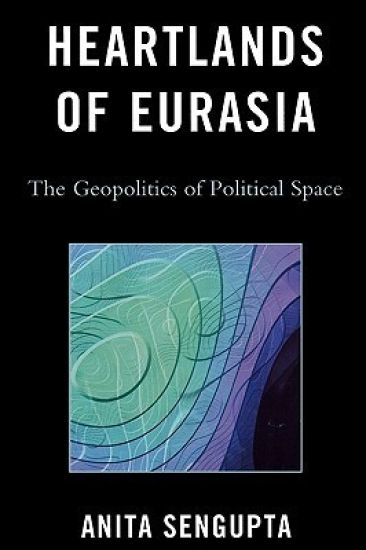
Heartlands of Eurasia

Heartlands of Eurasia

Anita Sengupta

Lexington Books
2009
sidottu
Heartlands of Eurasia explores how received metageographical knowledge informs the understanding of global processes and is subsequently transformed into geopolitical reasoning with foreign policy implications. It provides a detailed examination of writings, from both within the region and outside, that look into the significance of Halford Mackinder's heritage in the context of a vastly changed world situation. In particular, it attempts to examine how policy makers and strategic thinkers have used these geopolitical concepts as justification for their policy in the region. Finally, it attempts an analysis of the extent to which this policy thinking was translated into practice. While the study looks into how the vision of the "pivotal" significance of a vast expanse of land finds its echoes in contemporary narratives, it also underlines the very creative ways in which Mackinder's ideas have been reinterpreted in keeping with the changing global dynamics. Making use of the way in which the region has been traditionally defined and the way in which the people defined themselves, the study brings into focus a debate on the usefulness of region or "area"-based studies that are located in geographical imaginations. Anita Sengupta uses this connection to examine the following issues: geopolitical imaginations and their relevance in identifying "areas" in the present context; the intersection between how areas are defined from an outsider perspective and how people define themselves; the extent to which these definitions have influenced policy; and the possibility or feasibility of the development of alternative geostrategic discourses. Mackinder himself did not specify the geographical area identified first as the "pivot" and later the "heartland," but his ideas were focused on the "closed heartland of Euro-Asia," an area that was unassailable by sea power. This study therefore centers its debates around the Eurasian space in general, though the focus is on the Central Asian region and Uzbekistan in p
The Formation of the Uzbek Nation-State

The Formation of the Uzbek Nation-State

Anita Sengupta

Lexington Books
2003
sidottu
Within one century the Uzbek state was formed twice: once when it was 'created' as the Soviet Socialist Republic of Uzbekistan in the post revolution period and then again when it was reborn as the sovereign Uzbek Republic after the dissolution of the Soviet Union. The Formation of the Uzbek Nation-State: A Study in Transition examines the process of nation-state formation in Central Asia, providing a detailed and insightful look at the transitions the Uzbek state has undergone in governance, politics and culture, and the problems it has confronted. Author Anita Sengupta pays particularly close attention to the social construction of the cultural elements that are so often the basis for deliniation of territorial boundaries, and the relationship between political and cultural factors in the Uzbek state. Compelling and persuasive, The Formation of the Uzbek Nation-State challenges traditional theories about the formation of nation-states to confront the long-term transitions that shape cultures and governments.