Kirjojen hintavertailu – 12 903 725 kirjaa ja 27 kauppaa

Kirjailija

Anjali Gera Roy

Kirjat ja teokset yhdessä paikassa: 4 kirjaa, julkaisuja vuosilta 2010–2025, suosituimpiin kuuluu Global Urban Spaces. Vertaile teosten hintoja ja tarkista saatavuus suomalaisista kirjakaupoista.

4 kirjaa

Kirjojen julkaisuvuodet: 2010–2025.

Global Urban Spaces

Global Urban Spaces

Madhumita Roy; Anjali Gera Roy

TAYLOR FRANCIS LTD
2025
sidottu
From the pre-Islamic Jahilia, early modern Sikri and Florence, to postcolonial Bombay and Karachi, cities have played a pivotal role in Salman Rushdie’s fiction. This book focuses on spatial concerns and urban imaginaries in his works, challenging the dominant metropolitan discourse on cities under globalization. Rushdie’s works prominently feature cities of the Global South while they explores in great detail the figure of the postcolonial migrant. This book analyses the dynamic cities described in Midnight’s Children (1981), The Satanic Verses (1988), The Moor’s Last Sigh (1995) and The Ground Beneath Her Feet (1999) and discusses the idea of the global-urban. It examines how these works explore alternative geo-histories, the idea of global homes, and the idea of cities as sites of conflict and contestation, where histories and memories are embedded and reimagined. This book will be useful for scholars and researchers of literature, urban studies, cultural studies, postcolonial studies, sociology, Indian English, and South Asian literature.
Global Urban Spaces

Global Urban Spaces

Madhumita Roy; Anjali Gera Roy

TAYLOR FRANCIS LTD
2025
nidottu
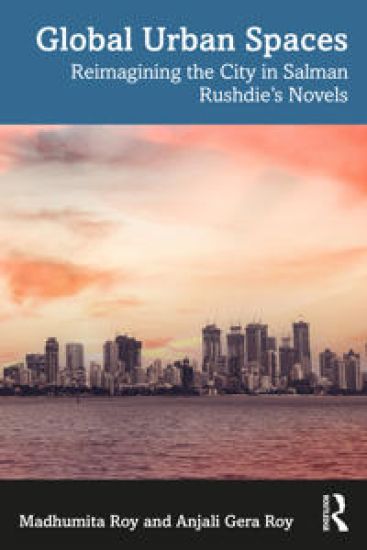
From the pre-Islamic Jahilia, early modern Sikri and Florence, to postcolonial Bombay and Karachi, cities have played a pivotal role in Salman Rushdie’s fiction. This book focuses on spatial concerns and urban imaginaries in his works, challenging the dominant metropolitan discourse on cities under globalization. Rushdie’s works prominently feature cities of the Global South while they explores in great detail the figure of the postcolonial migrant. This book analyses the dynamic cities described in Midnight’s Children (1981), The Satanic Verses (1988), The Moor’s Last Sigh (1995) and The Ground Beneath Her Feet (1999) and discusses the idea of the global-urban. It examines how these works explore alternative geo-histories, the idea of global homes, and the idea of cities as sites of conflict and contestation, where histories and memories are embedded and reimagined. This book will be useful for scholars and researchers of literature, urban studies, cultural studies, postcolonial studies, sociology, Indian English, and South Asian literature.
Bhangra Moves

Bhangra Moves

Anjali Gera Roy

Routledge
2016
nidottu
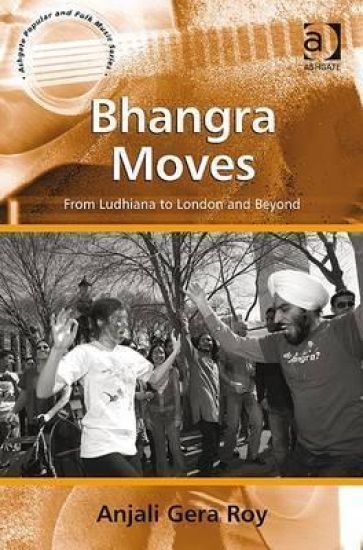
Bhangra is commonly understood as the hybrid music produced in Britain by British Asian music producers through mixing Panjabi folk melodies with western pop and black dance rhythms. This is derived from a Punjabi harvest dance of the same name. This book looks at Bhangra's global flows from one of its originary sites, the Indian subcontinent, to contribute to the understanding of emerging South Asian cultural practices such as Bhangra or Bollywood in multi-ethnic societies. It seeks to trace Bhangra's moves from Punjab and its 'return back' to look at the forces that initiate and regulate global flows of local texts and to ask how their producers and consumers redirect them to produce new definitions of culture, identity and nation. The critical importance of this book lies in understanding the difference between the present globalizing wave and previous trans-local movements. Gera Roy contrasts the frames of cultural imperialism with those of cultural invasion to show how Indian cultures have constantly reinvented themselves by cross-pollinating with 'invading' cultures such as Hellenic, Persian, Arabic and many others in the past. By looking at Bhangra's flows to and from India, the book revises the relation between culture, space and identity and challenges boundaries. It weighs both the uses and costs of visibility provided by global networks to marginalized groups in diverse localities and explores whether collaborations between Bhangra practitioners, largely of working class origin, give ordinary people any control over the circulation of culture in the global village. Finally, the book considers whether cultural practices can alter hierarchies and power structures in the real world.
Bhangra Moves

Bhangra Moves

Anjali Gera Roy

Ashgate Publishing Limited
2010
sidottu
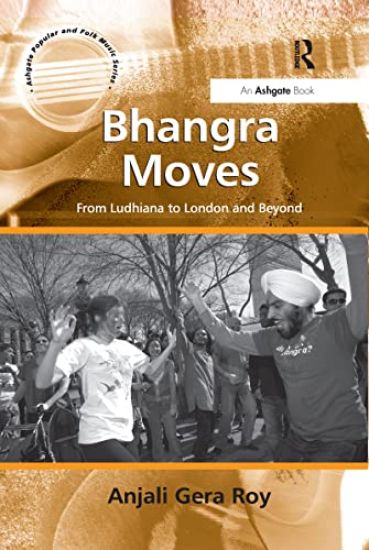
Bhangra is commonly understood as the hybrid music produced in Britain by British Asian music producers through mixing Panjabi folk melodies with western pop and black dance rhythms. This is derived from a Punjabi harvest dance of the same name. This book looks at Bhangra's global flows from one of its originary sites, the Indian subcontinent, to contribute to the understanding of emerging South Asian cultural practices such as Bhangra or Bollywood in multi-ethnic societies. It seeks to trace Bhangra's moves from Punjab and its 'return back' to look at the forces that initiate and regulate global flows of local texts and to ask how their producers and consumers redirect them to produce new definitions of culture, identity and nation. The critical importance of this book lies in understanding the difference between the present globalizing wave and previous trans-local movements. Gera Roy contrasts the frames of cultural imperialism with those of cultural invasion to show how Indian cultures have constantly reinvented themselves by cross-pollinating with 'invading' cultures such as Hellenic, Persian, Arabic and many others in the past. By looking at Bhangra's flows to and from India, the book revises the relation between culture, space and identity and challenges boundaries. It weighs both the uses and costs of visibility provided by global networks to marginalized groups in diverse localities and explores whether collaborations between Bhangra practitioners, largely of working class origin, give ordinary people any control over the circulation of culture in the global village. Finally, the book considers whether cultural practices can alter hierarchies and power structures in the real world.