
Kirjailija
Ann Hutchinson Guest
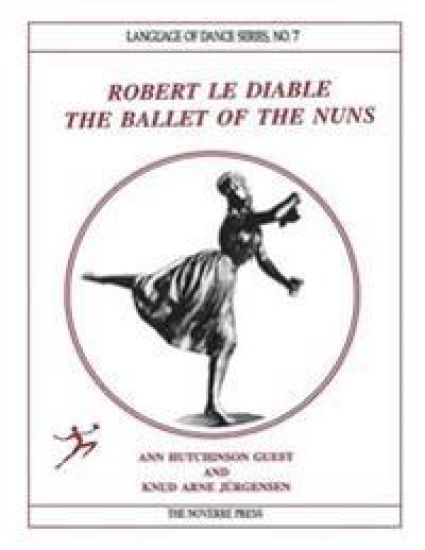
Kirjat ja teokset yhdessä paikassa: 25 kirjaa, julkaisuja vuosilta 1983–2021, suosituimpiin kuuluu Robert le Diable. Vertaile teosten hintoja ja tarkista saatavuus suomalaisista kirjakaupoista.
25 kirjaa
Kirjojen julkaisuvuodet: 1983–2021.

Advanced Labanotation issue 10: Body Variations.
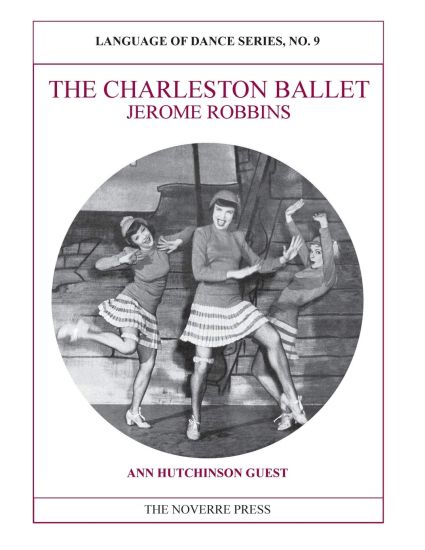
A Labanotation score. In capturing the spirit of the 'Roaring Twenties' Jerome Robbins' Charleston Ballet is a gem. It came to life in the 1945 Broadway show Billion Dollar Baby, providing a highlight despite being only seven minutes long. Robbins depicted the various characters of the time, the gangsters, bootleggers, a policeman (who was always looking the other way) and various other characters who entered - and also exited - the Speakeasy. For each of these people Robbins selected appropriate Charleston steps of the period to illustrate their particular personality. Three young Flappers had great fun whooping it up; the Rich Couple exuded elegance and disdain as they swept into the Speakeasy; the doddery Old Couple, dancing the familiar steps with caution; the over exuberant Collegiate Couple wildly sharing a flask of booze; two Younger Generation, he with banjo, joyfully beating time to the music; two Gangsters furtively casing the joint before the Bootleggers bring in the boxes of likker. The poor Timid Girl (who lives alone in an attic), meets up with Good Time Charlie who soon drags her into the Speakeasy. Before long, wildly drunk, the Timid Girl comes bursting out the Speakeasy and introduces exaggerated Charleston steps which leads into the group finale.
Your Move: A New Approach to the Study of Movement and Dance
Ann Hutchinson Guest
Routledge
2017
sidottu
The author takes a new approach to teaching notation through movement exercises, thus enlarging the scope of the book to teachers of movement and choreography as well as the traditional dance notation students. Updated and enlarged to reflect the most recent scholarship and through a series of exercises, this book guides students through:movement, stillness, timing, shaping, accents travelling direction, flexion and extension rotations, revolutions and turns supporting balance relationships. All of these movements are related to notation, so the student learns how to notate and describe the movements as they are performed.
Your Move: A New Approach to the Study of Movement and Dance establishes a fresh and original framework for looking at dance. In examining the basic elements of dance - the Alphabet of Movement - and using illustrations of movement technique and notation symbols it provides a new way to see, to teach and to choreograph dance. This book gives a list of primary actions upon which all physical activity is gased, focusing on both the functional and expressive sides of movement. It draws upon the author's broad experience in ballet, modern and ethnic dance to reinterpret movement and to shed new light on the role of movement in dance. Your Move is an important book not only for dancers but also for instructors in sport and physical therapy. Each copy of Your Move comes complete with exercise sheets, which can also be purchased separately. A teacher's guide has also been designed providing notes on each chapter, approaches to the exploration of movement, interpretation of the reading studies, additional information of motif description and answers to the exercise sheets. An optional audio cassette, with music written and recorded especially for use with the book, is also available.
Your Move: A New Approach to the Study of Movement and Dance
Ann Hutchinson Guest
Routledge
2017
sidottu
First published in 1995. A collection of sixty exercise sheets for activities in dance that include such areas as shifting body areas, body direction like tilting, displacement, and destination motion as well as contraction, elongation, folding, rotational twists, and the five forms of aerial steps.
A definitive book for students of dance and movement studies, Labanotation is now available in a fourth edition, the first complete revision of the text since 1977. Initiated by the movement genius Rudolf Laban, and refined through fifty years of work by teachers here and abroad, Labanotation, the first wholly successful system for recording human movement, is now having the effect on ballet and other forms of dance that the prefection of music notation in the Renaissance had on the development of music. This book makes it possible to record accurately, for study and reconstruction, the great dance creations of the theater, as well as such diverse activities as time/motion studies for industry, personnel assessment and physical therapy. So comprehensive that it can indicate even facial expressions, the system is also simple enough for a child to learn easily as an integral part of athletic or dance training.
Advanced Labanotation, Volume 1, Part 3
Ann Hutchinson Guest; Rob van Haarst
Dance Books
2011
pokkari
A comprehensive manual for writing movement in Labanotation when the body is not supported on the feet. Not only does it analyse in great detail how one can get up from lying, lie down from standing, roll from sitting on to the knees, etc., and how these movements are notated, but it also offers a complete survey of the Labanotation rules about distance, timing, systems of reference, weight distribution, and floor contact that apply to Labanotation as a whole and underlie any writing of 'floorwork'.
This is the first source text on this issue of Labanotation since it was introduced into the system in 1979. It shows the application of design drawing and the use of shape in pantomime gestures, in the handling of props and in choreography such as 'The Green Table' by Kurt Jooss.
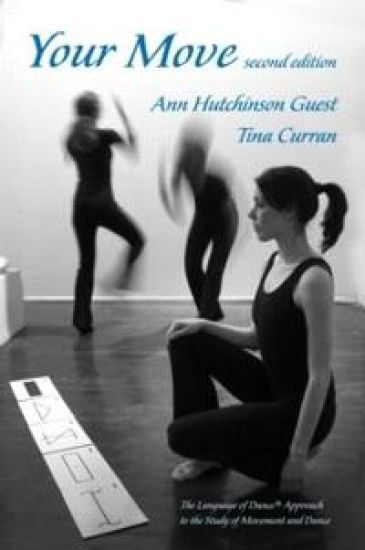
This second edition of this well-known text book now offers downloadable resources to accompany the dance studies throughout the chapters. The authors take a new approach to teaching, learning and creating with notation through movement exploration, exercises and short dances, thus enlarging the scope of the book to teachers of movement, movement analysis and choreography as well as the traditional dance notation students. Updated and enlarged to reflect the most recent scholarship and through a series of exercises, this book guides students through:movement, stillness, timing, shaping, accentstravellingdirection, flexion and extension,rotations, revolutions and turnssupporting, change of supportspringingbalancerelationships. All of these movements are explored sequentially and are represented symbolically in notation so the student learns how to physically articulate, notate and describe the movements as they are performed.
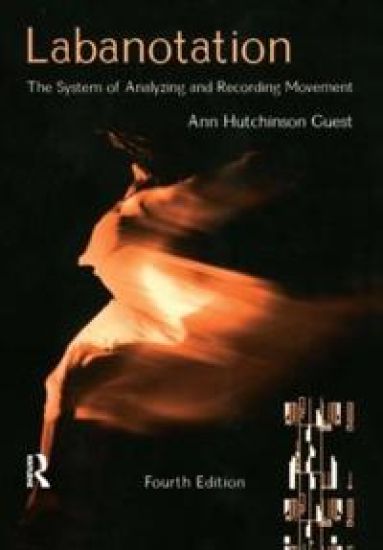
A definitive book for students of dance and movement studies, Labanotation is now available in a fourth edition, the first complete revision of the text since 1977. Initiated by the movement genius Rudolf Laban, and refined through fifty years of work by teachers here and abroad, Labanotation, the first wholly successful system for recording human movement, is now having the effect on ballet and other forms of dance that the prefection of music notation in the Renaissance had on the development of music. This book makes it possible to record accurately, for study and reconstruction, the great dance creations of the theater, as well as such diverse activities as time/motion studies for industry, personnel assessment and physical therapy. So comprehensive that it can indicate even facial expressions, the system is also simple enough for a child to learn easily as an integral part of athletic or dance training.
How to write a successive movement in Labanotation, a movement that flows from one part of the body to another in succession, passing from joint to joint or vertebra to vertebra. It analyzes different forms of sequential movements, including the body wave often used in early modern dance. The book also shows how the notation has been applied in recording exercises and compositions by Shawn, St. Denis, and Humphrey.
The possibilities of exploring in Labanotation movements in which placement of body weight is of particular importance: balancing, shifting weight, leaning, and falling. Many examples from modern dance technique are included.
This issue completes the theory relating to movements on the floor, supporting on various body parts and transitions between such supports. It also gives a full account of revolutions of the body and their recording in Labanotation and offers many reading examples from choreography that features particular floorwork actions.
Specific details on notating a range of aspects of movement in Labanotation. These include finer intermediate directions, greater variations in writing paths of gestures and paths across the floor, defined intermediate distances, specific minor movements, motion versus destination, orientation according to various systems of reference, and defined areas and locations on stage.
The description and notation of various different types of objects, such as sticks, fans, swords, ribbons, and candles, and the ways in which they can be held or manipulated with the hands or other parts of the body.
The notation of hand movements ranging from broad general statements for the whole hand to detailed descriptions that necessitate defining use of a particular surface or edge of a specific joint or segment.