Kirjojen hintavertailu – 12 903 724 kirjaa ja 27 kauppaa

Kirjailija

Ann Johnson

Kirjat ja teokset yhdessä paikassa: 13 kirjaa, julkaisuja vuosilta 2009–2025, suosituimpiin kuuluu Zero Trust Overview and Playbook Introduction. Vertaile teosten hintoja ja tarkista saatavuus suomalaisista kirjakaupoista.

13 kirjaa

Kirjojen julkaisuvuodet: 2009–2025.

Zero Trust Overview and Playbook Introduction

Zero Trust Overview and Playbook Introduction

Mark Simos; Nikhil Kumar; Ann Johnson

PACKT PUBLISHING LIMITED
2023
nidottu
Enhance your cybersecurity and agility with this thorough playbook, featuring actionable guidance, insights, and success criteria from industry experts Key Features Get simple, clear, and practical advice for everyone from CEOs to security operations Organize your Zero Trust journey into role-by-role execution stages Integrate real-world implementation experience with global Zero Trust standards Purchase of the print or Kindle book includes a free eBook in the PDF format Book DescriptionZero Trust is cybersecurity for the digital era and cloud computing, protecting business assets anywhere on any network. By going beyond traditional network perimeter approaches to security, Zero Trust helps you keep up with ever-evolving threats. The playbook series provides simple, clear, and actionable guidance that fully answers your questions on Zero Trust using current threats, real-world implementation experiences, and open global standards. The Zero Trust playbook series guides you with specific role-by-role actionable information for planning, executing, and operating Zero Trust from the boardroom to technical reality. This first book in the series helps you understand what Zero Trust is, why it’s important for you, and what success looks like. You’ll learn about the driving forces behind Zero Trust – security threats, digital and cloud transformations, business disruptions, business resilience, agility, and adaptability. The six-stage playbook process and real-world examples will guide you through cultural, technical, and other critical elements for success. By the end of this book, you’ll have understood how to start and run your Zero Trust journey with clarity and confidence using this one-of-a-kind series that answers the why, what, and how of Zero Trust! What you will learn Find out what Zero Trust is and what it means to you Uncover how Zero Trust helps with ransomware, breaches, and other attacks Understand which business assets to secure first Use a standards-based approach for Zero Trust See how Zero Trust links business, security, risk, and technology Use the six-stage process to guide your Zero Trust journey Transform roles and secure operations with Zero Trust Discover how the playbook guides each role to success Who this book is forWhether you’re a business leader, security practitioner, or technology executive, this comprehensive guide to Zero Trust has something for you. This book provides practical guidance for implementing and managing a Zero Trust strategy and its impact on every role (including yours!). This is the go-to guide for everyone including board members, CEOs, CIOs, CISOs, architects, engineers, IT admins, security analysts, program managers, product owners, developers, and managers. Don't miss out on this essential resource for securing your organization against cyber threats.

Cultures of Prediction

Cultures of Prediction

Ann Johnson; Johannes Lenhard

MIT PRESS LTD
2024
nidottu
A probing examination of the dynamic history of predictive methods and values in science and engineering that helps us better understand today's cultures of prediction. The ability to make reliable predictions based on robust and replicable methods is a defining feature of the scientific endeavor, allowing engineers to determine whether a building will stand up or where a cannonball will strike. Cultures of Prediction, which bridges history and philosophy, uncovers the dynamic history of prediction in science and engineering over four centuries. Ann Johnson and Johannes Lenhard identify four different cultures, or modes, of prediction in the history of science and engineering: rational, empirical, iterative-numerical, and exploratory-iterative. They show how all four develop together and interact with one another while emphasizing that mathematization is not a single unitary process, but one that has taken many forms. The story is not one of the triumph of abstract mathematics or technology, but of how different modes of prediction, complementary concepts of mathematization, and technology coevolved, building what the authors call "cultures of prediction." The first part of the book examines prediction from early modernity up to the computer age. The second part probes computer-related cultures of prediction, which focus on making things and testing their performance, often in computer simulations. This new orientation challenges basic tenets of the philosophy of science, in which scientific theories and models are predominantly seen as explanatory rather than predictive. It also influences the types of research projects that scientists and engineers undertake, as well as which ones receive support from funding agencies.
They're Still Among Us: War Between the Nations.

They're Still Among Us: War Between the Nations.

Ann Johnson

Independently Published
2019
nidottu
Eric and his brother Ivan are still on the run from their Uncle Satan. He and his family have survived his attacks and his demons. Finally, Satan sends one person after him that he can't resist. Will he follow her back to the gates of hell, or will he continue to stand for God and righteousness.
Things Don't go as Planned: David and Bette

Things Don't go as Planned: David and Bette

Ann Johnson

Independently Published
2019
nidottu
Bette Jean Davis is a young colored girl living in the southern Jim Crow state of Louisiana. she lives with her mother and father and siblings. They are farmers who also pick cotton to make ends meet. Her life is pretty much routine until her father dies. Then she decides to take an extra job to help her mother send her older sister to school. she decides to keep the job in order to help send herself to college, but she soon learns that things don't always go as planned.
"They Walk Among Us"

"They Walk Among Us"

Ann Johnson

Independently Published
2019
nidottu
Eric is the vampire son of the fallen angel, Kazan. He and his brother Ivan are doomed to walk the earth devouring humans until they one day meet a woman who changes their destiny forever.
Hitting the Brakes

Hitting the Brakes

Ann Johnson

Duke University Press
2009
pokkari
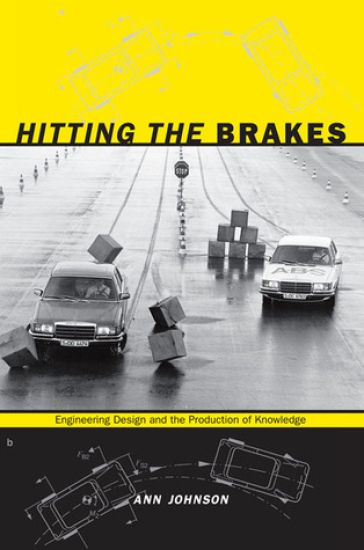
In Hitting the Brakes, Ann Johnson illuminates the complex social, historical, and cultural dynamics of engineering design, in which knowledge communities come together to produce new products and knowledge. Using the development of antilock braking systems for passenger cars as a case study, Johnson shows that the path to invention is neither linear nor top-down, but highly complicated and unpredictable. Individuals, corporations, university research centers, and government organizations informally coalesce around a design problem that is continually refined and redefined as paths of development are proposed and discarded, participants come and go, and information circulates within the knowledge community. Detours, dead ends, and failures feed back into the developmental process, so that the end design represents the convergence of multiple, diverse streams of knowledge. The development of antilock braking systems (ABS) provides an ideal case study for examining the process of engineering design because it presented an array of common difficulties faced by engineers in research and development. ABS did not develop predictably. Research and development took place in both the public and private sectors and involved individuals working in different disciplines, languages, institutions, and corporations. Johnson traces ABS development from its first patents in the 1930s to the successful 1978 market introduction of integrated ABS by Daimler and Bosch. She examines how a knowledge community first formed around understanding the phenomenon of skidding, before it turned its attention to building instruments to measure, model, and prevent cars’ wheels from locking up. While corporations’ accounts of ABS development often present a simple linear story, Hitting the Brakes describes the full social and cognitive complexity and context of engineering design.
Hitting the Brakes

Hitting the Brakes

Ann Johnson

Duke University Press
2009
sidottu
In Hitting the Brakes, Ann Johnson illuminates the complex social, historical, and cultural dynamics of engineering design, in which knowledge communities come together to produce new products and knowledge. Using the development of antilock braking systems for passenger cars as a case study, Johnson shows that the path to invention is neither linear nor top-down, but highly complicated and unpredictable. Individuals, corporations, university research centers, and government organizations informally coalesce around a design problem that is continually refined and redefined as paths of development are proposed and discarded, participants come and go, and information circulates within the knowledge community. Detours, dead ends, and failures feed back into the developmental process, so that the end design represents the convergence of multiple, diverse streams of knowledge. The development of antilock braking systems (ABS) provides an ideal case study for examining the process of engineering design because it presented an array of common difficulties faced by engineers in research and development. ABS did not develop predictably. Research and development took place in both the public and private sectors and involved individuals working in different disciplines, languages, institutions, and corporations. Johnson traces ABS development from its first patents in the 1930s to the successful 1978 market introduction of integrated ABS by Daimler and Bosch. She examines how a knowledge community first formed around understanding the phenomenon of skidding, before it turned its attention to building instruments to measure, model, and prevent cars’ wheels from locking up. While corporations’ accounts of ABS development often present a simple linear story, Hitting the Brakes describes the full social and cognitive complexity and context of engineering design.