Kirjojen hintavertailu – 12 903 725 kirjaa ja 27 kauppaa

Kirjailija

Ann-Mari Sätre

Kirjat ja teokset yhdessä paikassa: 6 kirjaa, julkaisuja vuosilta 2008–2025, suosituimpiin kuuluu The Other Russia. Vertaile teosten hintoja ja tarkista saatavuus suomalaisista kirjakaupoista.

6 kirjaa

Kirjojen julkaisuvuodet: 2008–2025.

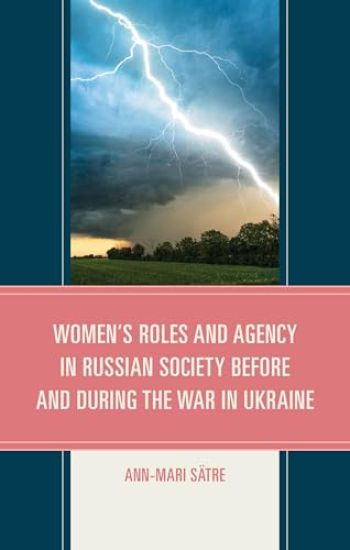
Women's Roles and Agency in Russian Society Before and During the War in Ukraine
Women's Roles and Agency in Russian Society Before and During the War in Ukraine tracks Russian societal development and transformation as reflected in women’s experiences, views, and agency. This book explores women's roles in various sectors of Russian society, including the labor market in the 1990s, entrepreneurship, politics, the social sector, and their engagement in civil society. The author employs interviews describing the experiences, views, and agency of Russian women in leading positions in the social services, NGOs, and elsewhere that serve to help vulnerable women. Their stories make visible how women's agency has changed in the face of growing authoritarianism in the region. Their work and position have become more perilous in the wake of the Russia-Ukraine War, and the increased attempts by authorities to cover up and silence social unrest.
The Other Russia

The Other Russia

Leo Granberg; Ann-Mari Sätre

Taylor Francis Ltd
2021
nidottu
Most recent research seeks to explain contemporary changes in Russia by analysing the decisions of Russian leaders, oligarchs and politicians based in Moscow. This book examines another Russia, one of ordinary people changing their environment and taking opportunities to provoke societal changes in small towns and the countryside. Russia is a resource-rich society and the country’s strategy and institutional structure are built on the most valuable of these resources: oil and gas. Analysing the implications of this situation at the local level, this book offers chapters on resource use, local authorities, enterprises, poverty and types of individual, as well as a final chapter which places local societies within the framework of the Russian politicised economy. Based on extensive empirical data gathered through more than 400 semi-structured interviews with entrepreneurs, teachers, social workers and those working for the local authorities, this book sheds light on the role of local activity in the development of Russian society and is essential reading for students and scholars interested in Russia and its politics.
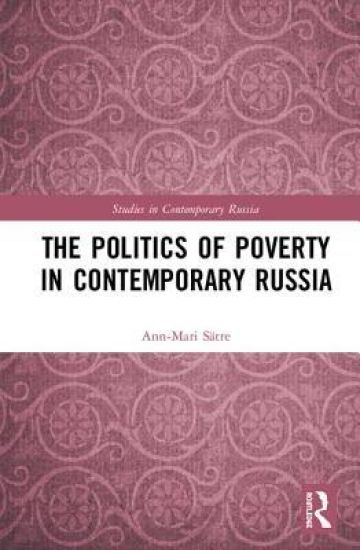
The Politics of Poverty in Contemporary Russia

The Politics of Poverty in Contemporary Russia

Ann-Mari Sätre

Taylor Francis Ltd
2021
nidottu
This book provides an overview of poverty and well-being in Russia. Increasing poverty rates during the 1990s were followed by greater attention to social policies in the 2000s and increased efforts to engage people in socially oriented NGOs and ‘encourage’ them to contribute to the fulfillment of social aims. What impact did these developments have on the prevalence of poverty in contemporary Russian society? Tracing continuities from the Soviet system alongside recent developments such as the falling price of oil, economic sanctions, and changes in directions of social policy, this book explores the impact of poverty, inequality and social programmes. The author examines the agency of people living in poverty and those engaged in social policy, using official statistics, survey data and interviews from four Russian regions to explain the reasons and consequences of poverty and people’s attempts to get out of it. The approach is based on institutional theory, complemented by Amartya Sen’s capability approach highlighting the importance of agency and an institutional framework as a means for change. A timely book that will be of interest to students of contemporary Russian politics as well as those engaged in social policy issues.
The Politics of Poverty in Contemporary Russia
This book provides an overview of poverty and well-being in Russia. Increasing poverty rates during the 1990s were followed by greater attention to social policies in the 2000s and increased efforts to engage people in socially oriented NGOs and ‘encourage’ them to contribute to the fulfillment of social aims. What impact did these developments have on the prevalence of poverty in contemporary Russian society? Tracing continuities from the Soviet system alongside recent developments such as the falling price of oil, economic sanctions, and changes in directions of social policy, this book explores the impact of poverty, inequality and social programmes. The author examines the agency of people living in poverty and those engaged in social policy, using official statistics, survey data and interviews from four Russian regions to explain the reasons and consequences of poverty and people’s attempts to get out of it. The approach is based on institutional theory, complemented by Amartya Sen’s capability approach highlighting the importance of agency and an institutional framework as a means for change. A timely book that will be of interest to students of contemporary Russian politics as well as those engaged in social policy issues. The Open Access version of this book, available at http://www.taylorfrancis.com, has been made available under a Creative Commons Attribution-Non Commercial-No Derivatives 4.0 license.
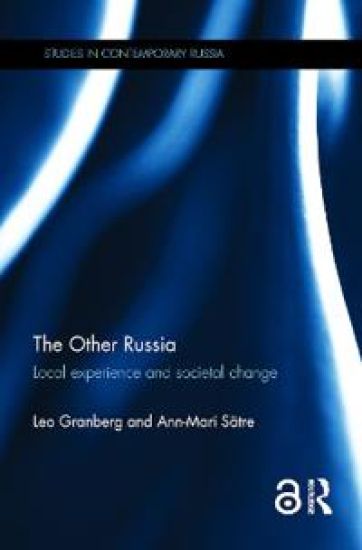
The Other Russia

The Other Russia

Leo Granberg; Ann-Mari Sätre

Routledge
2016
sidottu
Most recent research seeks to explain contemporary changes in Russia by analysing the decisions of Russian leaders, oligarchs and politicians based in Moscow. This book examines another Russia, one of ordinary people changing their environment and taking opportunities to provoke societal changes in small towns and the countryside. Russia is a resource-rich society and the country’s strategy and institutional structure are built on the most valuable of these resources: oil and gas. Analysing the implications of this situation at the local level, this book offers chapters on resource use, local authorities, enterprises, poverty and types of individual, as well as a final chapter which places local societies within the framework of the Russian politicised economy. Based on extensive empirical data gathered through more than 400 semi-structured interviews with entrepreneurs, teachers, social workers and those working for the local authorities, this book sheds light on the role of local activity in the development of Russian society and is essential reading for students and scholars interested in Russia and its politics.