Kirjojen hintavertailu – 12 903 725 kirjaa ja 27 kauppaa

Kirjailija

Anna Branagan

Kirjat ja teokset yhdessä paikassa: 15 kirjaa, julkaisuja vuosilta 2016–2026, suosituimpiin kuuluu Word Aware Concepts Assessment: Levels 1-6. Vertaile teosten hintoja ja tarkista saatavuus suomalaisista kirjakaupoista.

15 kirjaa

Kirjojen julkaisuvuodet: 2016–2026.

Word Aware Concepts Assessment: Levels 1-6

Word Aware Concepts Assessment: Levels 1-6

Anna Branagan; Stephen Parsons; Sarah Smith

TAYLOR FRANCIS LTD
2026
muu
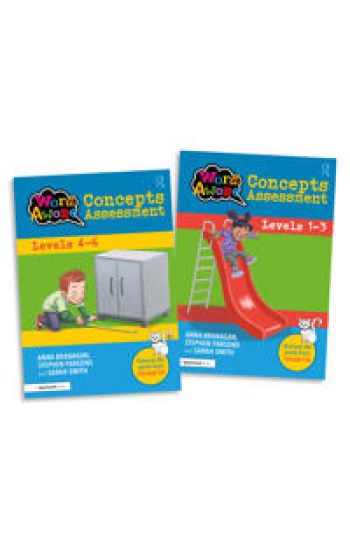
A strong understanding of conceptual vocabulary in the Early Years supports children’s communication and thinking and forms the foundation for later mathematical and scientific learning. The Word Aware Concepts Assessment (WACA) is an informal assessment that can be used to baseline and track children’s learning of Early Years concepts such as ‘both,’ ‘through,’ ‘whole,’ ‘direction,’ ‘altogether’ and ‘equal.’ The WACA is divided into 2 volumes, each with 3 levels, and this set contains the assessment tools needed for carrying out all 6 levels. The books are designed to be used with children aged 3-5 and beyond, across nursery and reception, and contain: Clear instructions for using the resource in whole class sampling, as well as with individual children, including those with additional needs. Assessment pages for 150 concepts across two books, brought to life with engaging illustrations. The Word Aware Concepts Assessment is an essential tool to monitor children’s progress and provide targeted teaching. It has been designed to accompany Concept Cat, a programme which provides a whole class approach for teaching concepts and will be a valuable resource for all Early Years educators, primary teachers and speech and language therapists.
Word Aware Concepts Assessment: Levels 4-6

Word Aware Concepts Assessment: Levels 4-6

Anna Branagan; Stephen Parsons; Sarah Smith

TAYLOR FRANCIS LTD
2026
sidottu
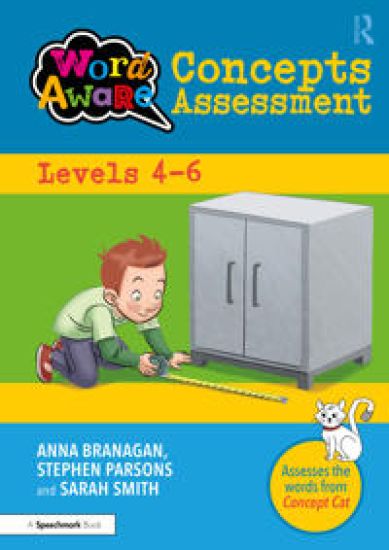
A strong understanding of conceptual vocabulary in the Early Years supports children’s communication and thinking and forms the foundation for later mathematical and scientific learning. The Word Aware Concepts Assessment (WACA) is an informal assessment that can be used to baseline and track children’s learning of early concepts such as ‘less,’ ‘height,’ ‘direction,’ ‘altogether’ and ‘equal.’ The WACA is divided into 2 volumes, each with 3 levels and this book contains the assessment tools needed for carrying out levels 4–6. It is designed to be used with children in reception (ages 4–5) and beyond, and contains: Clear instructions for using the resource in whole class sampling, as well as with individual children, including those with additional needs. Assessment pages for 75 concepts, brought to life with engaging illustrations. The Word Aware Concepts Assessment is an essential tool to monitor children’s progress and provide targeted teaching. It has been designed to accompany Concept Cat, a programme which provides a whole class approach for teaching concepts and will be a valuable resource for all Early Years educators, primary teachers and speech and language therapists.
Word Aware Concepts Assessment: Levels 4-6

Word Aware Concepts Assessment: Levels 4-6

Anna Branagan; Stephen Parsons; Sarah Smith

TAYLOR FRANCIS LTD
2026
nidottu
A strong understanding of conceptual vocabulary in the Early Years supports children’s communication and thinking and forms the foundation for later mathematical and scientific learning. The Word Aware Concepts Assessment (WACA) is an informal assessment that can be used to baseline and track children’s learning of early concepts such as ‘less,’ ‘height,’ ‘direction,’ ‘altogether’ and ‘equal.’ The WACA is divided into 2 volumes, each with 3 levels and this book contains the assessment tools needed for carrying out levels 4–6. It is designed to be used with children in reception (ages 4–5) and beyond, and contains: Clear instructions for using the resource in whole class sampling, as well as with individual children, including those with additional needs. Assessment pages for 75 concepts, brought to life with engaging illustrations. The Word Aware Concepts Assessment is an essential tool to monitor children’s progress and provide targeted teaching. It has been designed to accompany Concept Cat, a programme which provides a whole class approach for teaching concepts and will be a valuable resource for all Early Years educators, primary teachers and speech and language therapists.
Word Aware Concepts Assessment: Levels 1-3

Word Aware Concepts Assessment: Levels 1-3

Anna Branagan; Stephen Parsons; Sarah Smith

TAYLOR FRANCIS LTD
2026
sidottu
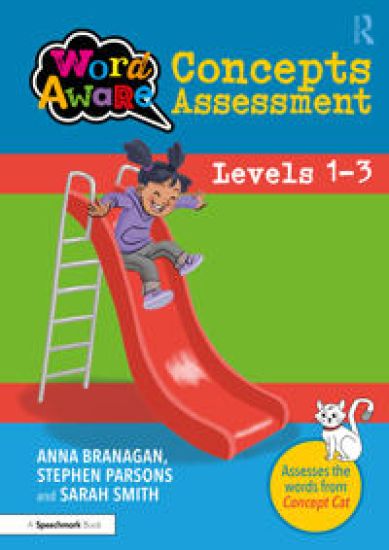
A strong understanding of conceptual vocabulary in the Early Years supports children’s communication and thinking and forms the foundation for later mathematical and scientific learning. The Word Aware Concepts Assessment (WACA) is an informal assessment that can be used to baseline and track children’s learning of Early Years concepts such as ‘both,’ ‘through,’ ‘all,’ ‘first’ and ‘longer.’ The WACA is divided into 2 volumes, each with 3 levels and this book contains the assessment tools needed for carrying out levels 1–3. It is designed to be used with children aged 3–5 across nursery and reception and contains: • Clear instructions for using the resource in whole class sampling, as well as with individual children, including those with additional needs. • Assessment pages for 75 concepts, brought to life with engaging illustrations. The Word Aware Concepts Assessment is an essential tool to monitor children’s progress and provide targeted teaching. It has been designed to accompany Concept Cat, a programme which provides a whole class approach for teaching concepts and will be a valuable resource for all Early Years educators, primary teachers and speech and language therapists.
Word Aware Concepts Assessment: Levels 1-3

Word Aware Concepts Assessment: Levels 1-3

Anna Branagan; Stephen Parsons; Sarah Smith

TAYLOR FRANCIS LTD
2026
nidottu
A strong understanding of conceptual vocabulary in the Early Years supports children’s communication and thinking and forms the foundation for later mathematical and scientific learning. The Word Aware Concepts Assessment (WACA) is an informal assessment that can be used to baseline and track children’s learning of Early Years concepts such as ‘both,’ ‘through,’ ‘all,’ ‘first’ and ‘longer.’ The WACA is divided into 2 volumes, each with 3 levels and this book contains the assessment tools needed for carrying out levels 1–3. It is designed to be used with children aged 3–5 across nursery and reception and contains: • Clear instructions for using the resource in whole class sampling, as well as with individual children, including those with additional needs. • Assessment pages for 75 concepts, brought to life with engaging illustrations. The Word Aware Concepts Assessment is an essential tool to monitor children’s progress and provide targeted teaching. It has been designed to accompany Concept Cat, a programme which provides a whole class approach for teaching concepts and will be a valuable resource for all Early Years educators, primary teachers and speech and language therapists.
Concept Cat: Teaching Concepts in the Early Years

Concept Cat: Teaching Concepts in the Early Years

Anna Branagan; Stephen Parsons

TAYLOR FRANCIS LTD
2025
sidottu
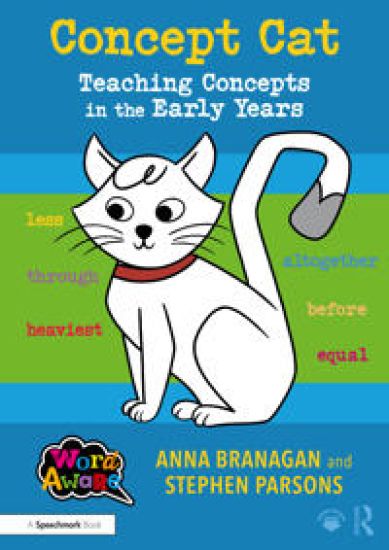
Conceptual vocabulary shapes children’s thinking in the Early Years and forms the foundation for later mathematical and scientific learning. However, these words are abstract and often tricky to learn – and to teach. Concept Cat is a tried-and-tested, evidence-based approach that supports all young children’s learning of conceptual vocabulary. Vocabulary is taught in a structured and engaging manner with explicit teaching of vocabulary followed by implicit teaching in play-based learning. The resource provides:A step-by-step guide to teaching 150 different concepts, using songs, stories and play-based activitiesA whole-class approach, which is accessible for a wide range of children, including those with limited languageGuidance and resources for working with families to effectively support children’s learningAccompanying downloadable resources, including printable symbols of each concept, for immediate use in the classroomConcept Cat is a complete guide to implementing this approach and an essential resource for Early Years educators, primary teachers and speech and language therapists. All you need is a cat toy to get you started!
Concept Cat: Teaching Concepts in the Early Years

Concept Cat: Teaching Concepts in the Early Years

Anna Branagan; Stephen Parsons

TAYLOR FRANCIS LTD
2025
nidottu
Conceptual vocabulary shapes children’s thinking in the Early Years and forms the foundation for later mathematical and scientific learning. However, these words are abstract and often tricky to learn – and to teach. Concept Cat is a tried-and-tested, evidence-based approach that supports all young children’s learning of conceptual vocabulary. Vocabulary is taught in a structured and engaging manner with explicit teaching of vocabulary followed by implicit teaching in play-based learning. The resource provides:A step-by-step guide to teaching 150 different concepts, using songs, stories and play-based activitiesA whole-class approach, which is accessible for a wide range of children, including those with limited languageGuidance and resources for working with families to effectively support children’s learningAccompanying downloadable resources, including printable symbols of each concept, for immediate use in the classroomConcept Cat is a complete guide to implementing this approach and an essential resource for Early Years educators, primary teachers and speech and language therapists. All you need is a cat toy to get you started!
Word Aware 3

Word Aware 3

Anna Branagan; Stephen Parsons

Routledge
2021
sidottu
Word Aware 3 is a comprehensive, practical and engaging resource that focuses on teaching vocabulary and word learning skills to children aged 6 to 11 years who have vocabulary learning needs. For many children, particularly those with Special Educational Needs and Disabilities (SEND) or those whose home language isn’t English (ELL or EAL learners), the vocabulary of the classroom can be a barrier to learning. This book outlines how to best support these children who require extra help, offering concrete, easy-to-implement activities and resources for use in small groups, to maximise the impact on learning and open up access to the curriculum. Word Aware 3: Takes a highly practical, evidence-based and curriculum-focused approach to vocabulary learning that supports a broad range of learners Includes photocopiable and downloadable planning, intervention and evaluation resources Provides staff training resources and an overview video presented by the authorsThis book can be used as an adjunct to Word Aware 1, or as an intervention on its own. Although it is most suited to children aged 6 to 11 years, it may be adapted for older students with significant learning needs. It is an essential resource for teaching assistants and learning support assistants and will also save time for special educational needs co-ordinators (SENCOs) and speech and language therapists (SaLTs) who are keen to establish effective vocabulary interventions.
Word Aware 3

Word Aware 3

Anna Branagan; Stephen Parsons

Routledge
2021
nidottu
Word Aware 3 is a comprehensive, practical and engaging resource that focuses on teaching vocabulary and word learning skills to children aged 6 to 11 years who have vocabulary learning needs. For many children, particularly those with Special Educational Needs and Disabilities (SEND) or those whose home language isn’t English (ELL or EAL learners), the vocabulary of the classroom can be a barrier to learning. This book outlines how to best support these children who require extra help, offering concrete, easy-to-implement activities and resources for use in small groups, to maximise the impact on learning and open up access to the curriculum. Word Aware 3: Takes a highly practical, evidence-based and curriculum-focused approach to vocabulary learning that supports a broad range of learners Includes photocopiable and downloadable planning, intervention and evaluation resources Provides staff training resources and an overview video presented by the authorsThis book can be used as an adjunct to Word Aware 1, or as an intervention on its own. Although it is most suited to children aged 6 to 11 years, it may be adapted for older students with significant learning needs. It is an essential resource for teaching assistants and learning support assistants and will also save time for special educational needs co-ordinators (SENCOs) and speech and language therapists (SaLTs) who are keen to establish effective vocabulary interventions.
Word Aware 1

Word Aware 1

Stephen Parsons; Anna Branagan

Routledge
2021
nidottu
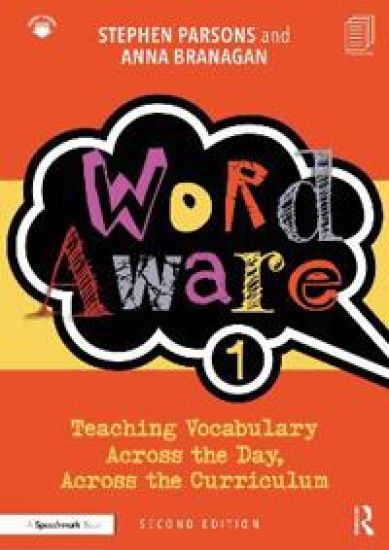
Now in a fully updated second edition, this comprehensive and practical book outlines the theoretical underpinnings for vocabulary and acts as a ‘how to’ guide to developing word learning across the school and curriculum. It is packed with easy-to-implement activities, worksheets and resources that can be put into practice immediately with individual students or groups, whole classes and throughout the school. The Word Aware approach provides a structured framework to promote vocabulary development in all children and has been rigorously tried and tested. Now in full colour, with photocopiable and downloadable materials, it is an outstanding resource that will be an essential addition to any school and classroom. The second edition of Word Aware 1 brings:An even wider range of ready-to-go vocabulary activitiesFine-tuned teaching techniquesEnhanced resources to develop children’s independent word learning skillsA step-by-step guide to developing a whole school approachWord Aware 1 is an invaluable tool for teachers and other professionals looking to support children as they broaden their vocabulary. It is particularly suited to children aged 5–11 years but can easily be adapted for older children.
Word Aware 1

Word Aware 1

Stephen Parsons; Anna Branagan

Routledge
2021
sidottu
Now in a fully updated second edition, this comprehensive and practical book outlines the theoretical underpinnings for vocabulary and acts as a ‘how to’ guide to developing word learning across the school and curriculum. It is packed with easy-to-implement activities, worksheets and resources that can be put into practice immediately with individual students or groups, whole classes and throughout the school. The Word Aware approach provides a structured framework to promote vocabulary development in all children and has been rigorously tried and tested. Now in full colour, with photocopiable and downloadable materials, it is an outstanding resource that will be an essential addition to any school and classroom. The second edition of Word Aware 1 brings:An even wider range of ready-to-go vocabulary activitiesFine-tuned teaching techniquesEnhanced resources to develop children’s independent word learning skillsA step-by-step guide to developing a whole school approachWord Aware 1 is an invaluable tool for teachers and other professionals looking to support children as they broaden their vocabulary. It is particularly suited to children aged 5–11 years but can easily be adapted for older children.
Language for Behaviour and Emotions

Language for Behaviour and Emotions

Anna Branagan; Melanie Cross; Stephen Parsons

Routledge
2020
nidottu
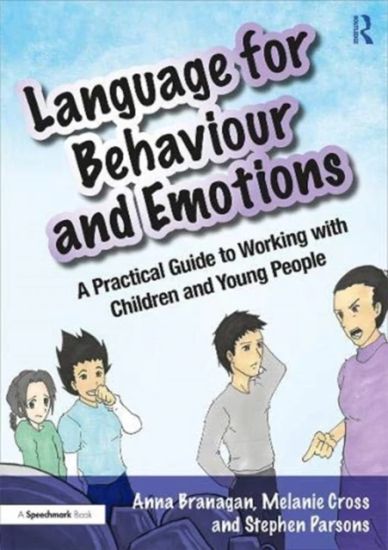
This practical, interactive resource is designed to be used by professionals who work with children and young people who have Social, Emotional and Mental Health needs and Speech, Language and Communication needs. Gaps in language and emotional skills can have a negative impact on behaviour as well as mental health and self-esteem. The Language for Behaviour and Emotions approach provides a systematic approach to developing these skills so that young people can understand and work through social interaction difficulties. Key features include: A focus on specific skills that are linked to behaviour, such as understanding meaning, verbal reasoning and emotional literacy skills. A framework for assessment, as well as a range of downloadable activities, worksheets and resources for supporting students. Sixty illustrated scenarios that can be used flexibly with a wide range of ages and abilities to promote language skills, emotional skills and self-awareness. This invaluable resource is suitable for use with young people with a range of abilities in one to one, small group or whole class settings. It is particularly applicable to children and young people who are aiming to develop wider language, social and emotional skills including those with Developmental Language Disorder and Autism Spectrum Disorder.
Language for Behaviour and Emotions

Language for Behaviour and Emotions

Anna Branagan; Melanie Cross; Stephen Parsons

Routledge
2020
sidottu
This practical, interactive resource is designed to be used by professionals who work with children and young people who have Social, Emotional and Mental Health needs and Speech, Language and Communication needs. Gaps in language and emotional skills can have a negative impact on behaviour as well as mental health and self-esteem. The Language for Behaviour and Emotions approach provides a systematic approach to developing these skills so that young people can understand and work through social interaction difficulties. Key features include: A focus on specific skills that are linked to behaviour, such as understanding meaning, verbal reasoning and emotional literacy skills. A framework for assessment, as well as a range of downloadable activities, worksheets and resources for supporting students. Sixty illustrated scenarios that can be used flexibly with a wide range of ages and abilities to promote language skills, emotional skills and self-awareness. This invaluable resource is suitable for use with young people with a range of abilities in one to one, small group or whole class settings. It is particularly applicable to children and young people who are aiming to develop wider language, social and emotional skills including those with Developmental Language Disorder and Autism Spectrum Disorder.
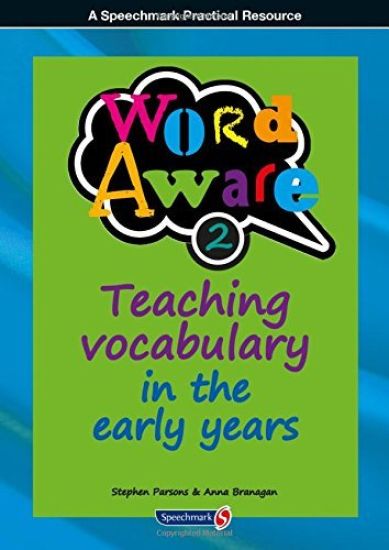
Word Aware 2

Word Aware 2

Stephen Parsons; Anna Branagan

Speechmark Publishing Ltd
2017
nidottu
This is a highly practical, comprehensive resource designed to support Early Years practitioners in the provision of effective vocabulary development in preschool children of all abilities. It is based on the same theory as the existing 'Word Aware' resource (9780863889554) but is adapted for Early Years. This rigorously tried and tested approach is an outstanding resource that will be an essential addition to any early years' setting or preschool classroom. It is also an important addition to the materials used by speech and language therapists.
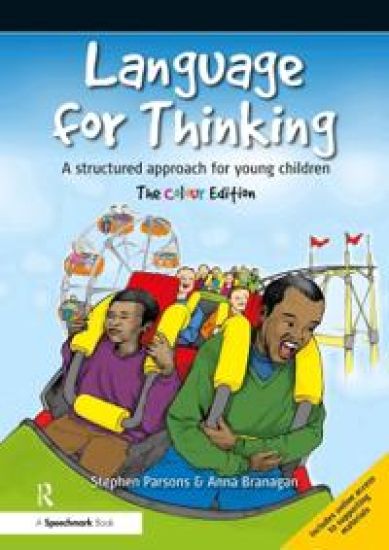
Language for Thinking

Language for Thinking

Stephen Parsons; Anna Branagan

Speechmark Publishing Ltd
2016
nidottu
This photocopiable resource provides a clear structure to assist teachers, SENCOs, learning support assistants and speech language therapists in developing children's language from the concrete to the abstract. It is based on fifty picture and verbal scenarios that can be used flexibly with a wide range of ages and abilities. Quick, practical and easy to use in the classroom, this programme can be used with individual children, in small groups or can form the basis of a literacy lesson or speech language therapy session. Key Features include:question sheets are carefully structured to promote children's development of inference, verbal reasoning and thinking skillsthe three parallel assessments of spoken and written language can be used to assess each child's starting level and then to monitor progressscore forms and worksheets for each lesson are included. The book is particularly useful for children who are recognised as having delayed language skills, specific language impairment, Autism Spectrum Disorder (including Asperger's Syndrome), pragmatic language impairment or moderate learning difficulties. The second edition is now in full colour throughout and has been updated with a simplified introduction. All illustrations and worksheets will now be available online.