

Kirjailija
Anna Davies
Kirjat ja teokset yhdessä paikassa: 6 kirjaa, julkaisuja vuosilta 2001–2026, suosituimpiin kuuluu Miner's Lad. Vertaile teosten hintoja ja tarkista saatavuus suomalaisista kirjakaupoista.
6 kirjaa
Kirjojen julkaisuvuodet: 2001–2026.

From the sandals of Ancient Rome to the towering heels of Vivienne Westwood; a phenomenal frolic through footwear fashion. “They went into my closets looking for skeletons, but thank God, all they found were shoes, beautiful shoes.” – Imelda Marcos Lace up your boots and take a journey through the rich history of footwear. Shoes tell stories about their wearers - who they are, where they come from and how they want to be seen. Over the years, these stories and footwear styles have evolved. From André Perugia's surrealist creations of the 1940s to Terry de Havilland's iconic 1970s wedges, and the famous rivalry between the Dassler brothers that birthed Adidas and Puma, this book showcases the most captivating tales and personalities in shoe design throughout history. With stunning illustrations by award-winning Daisy Wynter, reminiscent of fellow shoe lover Andy Warhol's style, this book is a delightful addition to any fashion or footwear enthusiast's collection, whether they're 6 or 60.
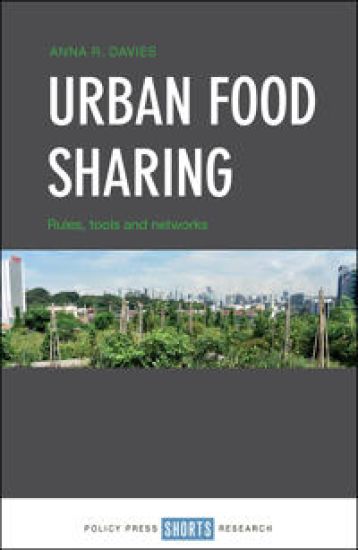
Available Open Access under CC-BY-NC licence. This book explores the history and current practice of food sharing. Illustrated by rich case studies from around the world, the book uses new empirical data to set an agenda for research and action. The book will be an important resource for researchers, policy makers and sharing innovators to explore the impacts and sustainability potential of such sharing for cities.
Over a half of adults in the US, Canada, Australia and numerous European countries are now overweight or obese, a proportion that has risen sharply in the past two decades. Dominant biomedical explanations focus on the energy equation – an imbalance between energy intake and expenditure - and remedies focus on motivating individuals to restore the balance by eating better and being more active, or – in extreme cases – surgical intervention. This book offers a perspective that sees increasing obesity as a social phenomenon as well as a public health problem. It contains detailed accounts of three generations of Australians’ experiences of changing environments and the emergence of social trends such as increasing availability of convenience foods, the individualisation and commercialisation of leisure, car reliance, and busyness. Participants' narratives are interwoven with sociological and historical analyses of changes to show how contemporary Australians are experiencing and adapting to dramatic socio-cultural and environmental changes that are reshaping their lives and, in many cases, their bodies. The book demonstrates that obesity is an unintended consequence of economic development accompanied by profound socio-cultural changes, and by identifying the key developments the authors propose leverage points. While the research was conducted in Australia, the fundamental drivers of rapid weight gain are equally present in other modern, secular societies.
Over a half of adults in the US, Canada, Australia and numerous European countries are now overweight or obese, a proportion that has risen sharply in the past two decades. Dominant biomedical explanations focus on the energy equation – an imbalance between energy intake and expenditure - and remedies focus on motivating individuals to restore the balance by eating better and being more active, or – in extreme cases – surgical intervention. This book offers a perspective that sees increasing obesity as a social phenomenon as well as a public health problem. It contains detailed accounts of three generations of Australians’ experiences of changing environments and the emergence of social trends such as increasing availability of convenience foods, the individualisation and commercialisation of leisure, car reliance, and busyness. Participants' narratives are interwoven with sociological and historical analyses of changes to show how contemporary Australians are experiencing and adapting to dramatic socio-cultural and environmental changes that are reshaping their lives and, in many cases, their bodies. The book demonstrates that obesity is an unintended consequence of economic development accompanied by profound socio-cultural changes, and by identifying the key developments the authors propose leverage points. While the research was conducted in Australia, the fundamental drivers of rapid weight gain are equally present in other modern, secular societies.
Researching Human Geography is an essential new text for any geography student about to embark on a research project. An understanding of how different theories of knowledge have influenced research methodologies is crucial in planning and designing effective research; this book makes this link clear and explores how various philosophical positions, from positivism to post-structuralism, have become associated with particular methodologies. The book gives an overview of a wide range of methods and data collection, both quantitative and qualitative, and explores their strengths and weaknesses for different kinds of research. 'Researching Human Geography' also looks at the various techniques available for the analysis of data, which is presented as an integral and ongoing part of the research process. Clearly written, with extensive use of examples from previous research to show 'methodology in action', this new text is an invaluable addition to both the theory and method of research in human geography.