Kirjojen hintavertailu – 12 903 725 kirjaa ja 27 kauppaa
Kirjailija
Anna Greenspan
Kirjat ja teokset yhdessä paikassa: 7 kirjaa, julkaisuja vuosilta 2014–2025, suosituimpiin kuuluu Machine Decision Is Not Final. Vertaile teosten hintoja ja tarkista saatavuus suomalaisista kirjakaupoista.
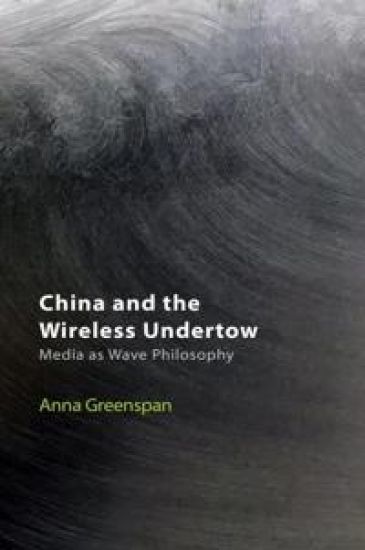
In the twenty-first century city, wireless waves constitute an imperceptible, immersive, all-encompassing environment. Nowhere is this more so than in China, where a hyperdense network of mobile media has restructured daily life. Anna Greenspan re-imagines the relationship between China and wirelessness by synthesizing contemporary media theory with modern Chinese thought. It focuses specifically on the work of three critical figures: Tan Sitong (18651898), Xiong Shili (18851968) and Mou Zongsan (19091995).
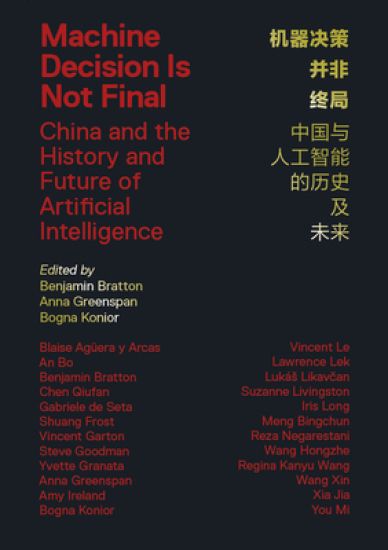
An interdisciplinary, cross-cultural collection that decenters familiar narratives to provide a fresh perspective on what artificial intelligence is today, and what it might become. Historians, media theorists, science-fiction writers, philosophers, and artists from China and elsewhere reexamine the nation's intense engagement with AI, moving beyond the clich s that still dominate contemporary debate. Today, visions of the contested future of AI veer between common planetary goals and a new Cold War, as culturally-specific models of intelligence, speculative traditions, and thought experiments come up against the emergence of novel forms of cognition that cannot be reduced to any historical cultural tradition. This uniquely positioned volume provides expert insight into this tension, using China as a touchstone for rethinking artificiality and intelligence as sites of difference in a way that is already present in the difficulty of precisely translating the Chinese term 人工智能. Tracking the history of Chinese AI from the pre-Cultural Revolution to the post-Deng Xiaoping eras right up to contemporary debates surrounding facial recognition, the writers in this collection draw on a mixture of speculative thought experiments and cutting-edge use cases to offer singular views on topics including AI and Chinese philosophy, AI ethics and policymaking, the development of computational models in early Chinese cybernetics, and the aesthetics of Sinofuturism. Spanning borders between different worlds, histories, futures, and foundational models, Machine Decision is Not Final is not only a timely reappraisal of the stakes of AI development, but a tool for constructing more global imaginaries for the future of AI. ContributorsBlaise Aguera y Arcas, Bo An, Benjamin Bratton, Shuang Frost, Vince Garton, Steve Goodman, Yvette Granata, Anna Greenspan, Amy Ireland, Xia Jia, Bogna Konior, Vincent Le, Lawrence Lek, Lukas Likavcan, Suzanne Livingston, Iris Long, Bingchun Meng, Reza Negarestani, Chen Quifan, Gabriele de Seta, Hongzhe Wang, Wang Xin, Mi You
Explores the increasingly intimate relationship between China and wireless technology, taking the wave as a central concept Provides a new theoretical apparatus that reimagines key issues around technological evolution in a shifting geopolitical landscape Offers a corrective to certain myopias of Western media theory Presents a deep, historical engagement with issues and debates surrounding Chinese cyberculture Brings together contemporary media theory with modern Chinese philosophical thought In the 21st century city, wireless waves constitute an imperceptible, immersive, all-encompassing environment. Nowhere is this more so than in China, where a hyperdense network of mobile media has restructured daily life. Anna Greenspan re-imagines the relationship between China and wirelessness by synthesising contemporary media theory with modern Chinese thought. It focuses specifically on the work of three critical figures: Tan Sitong ??? (1865 1898), Xiong Shili ??? (1885 1968) and Mou Zongsan ??? (1909 1995).
This thesis seeks to establish a connection between abstract thought and material practice. It does so by focusing on the relation between the transcendental philosophy of time and the socio-technics of timekeeping practices. The thesis begins with a discussion of Kant's philosophy of time as outlined in the Critique of Pure Reason. It argues that Kant's discovery of the transcendental coincides with the development of an entirely new conception of time. This new conception overturns classical thought by making a distinction between the abstract form of time and the empirical phenomena of movement and change. The second chapter maps the transcendental philosophy of time on to the history of capitalist timekeeping. This history includes the invention and development of the mechanical clock, temporal standardization, and the increasing importance of the equation 'time = money.' The aim in bringing these two spheres together is to show both that Kant's philosophy of time owes much to his empirical surroundings, and also that capitalist time can only be understood through the temporal abstraction of transcendental thought. This link between Kant and capitalism is blocked, however, by a dividing line which separates the philosophical nature of time from the empirical changes of history. In order to surpass this problem, the thesis turns to the work of Deleuze and Guattari whose 'transcendental materialism' connects the abstract production of time with empirical innovations. This is accomplished by replacing the classical conception of a transcendent eternity with the immanent materiality of an exterior plane. This plane-which they call Aeon and is composed of thresholds, or singular events-makes no distinction between time and that which occurs in time. The final chapter explores the dawn of the third millennium-or Y2K-as constituting one such Aeonic event
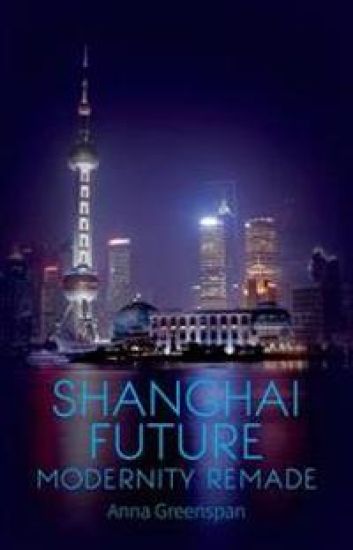
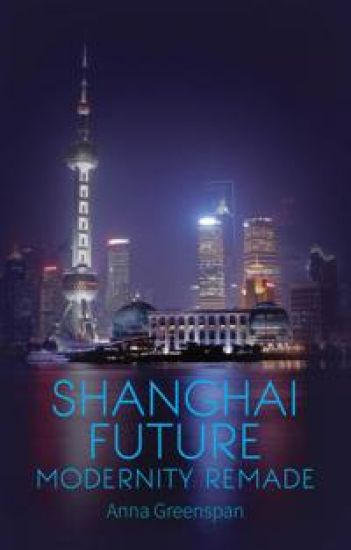
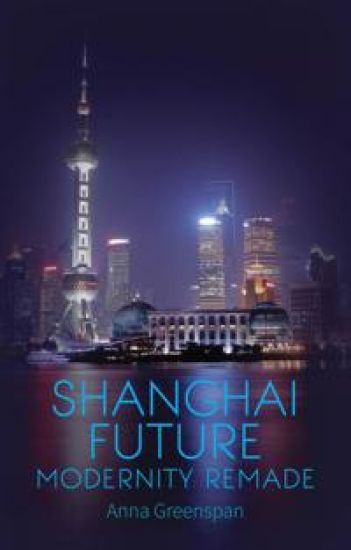
China is in the midst of the fastest and most intense process of urbanization the world has ever known, and Shanghai -- its biggest, richest and most cosmopolitan city -- is positioned for acceleration into the twenty-first century. Yet, in its embrace of a hopeful -- even exultant -- futurism, Shanghai recalls the older and much criticized project of imagining, planning and building the modern metropolis. Today, among Westerners, at least, the very idea of the futuristic city -- with its multilayered skyways, domestic robots and flying cars -- seems doomed to the realm of nostalgia, the sadly comic promise of a future that failed to materialize. Shanghai Future maps the city of tomorrow as it resurfaces in a new time and place. It searches for the contours of an unknown and unfamiliar futurism in the city's street markets as well as in its skyscrapers. For though it recalls the modernity of an earlier age, Shanghai's current re-emergence is only superficially based on mimicry. Rather, in seeking to fulfill its ambitions, the giant metropolis is reinventing the very idea of the future itself. As it modernizes, Shanghai is necessarily recreating what it is to be modern.
China is in the midst of the fastest and most intense process of urbanisation the world has ever known, and Shanghai - its biggest, richest and most cosmopolitan city - is positioned for acceleration into the twenty-first century. Yet, in its embrace of a hopeful - even exultant - futurism, Shanghai recalls the older and much criticised project of imagining, planning and building the modern metropolis. Today, among Westerners, at least, the very idea of the futuristic city - with its multilayered skyways, domestic robots and flying cars - seems doomed to the realm of nostalgia, the sadly comic promise of a future that failed to materialise. Shanghai Future maps the city of tomorrow as it resurfaces in a new time and place. It searches for the contours of an unknown and unfamiliar futurism in the city's street markets as well as in its skyscrapers. For though it recalls the modernity of an earlier age, Shanghai's current re-emergence is only superficially based on mimicry. Rather, in seeking to fulfill its ambitions, the giant metropolis is reinventing the very idea of the future itself. As it modernises, Shanghai is necessarily recreating what it is to be modern.
China is in the midst of the fastest and most intense process of urbanisation the world has ever known, and Shanghai - its biggest, richest and most cosmopolitan city - is positioned for acceleration into the twenty-first century. Yet, in its embrace of a hopeful - even exultant - futurism, Shanghai recalls the older and much criticised project of imagining, planning and building the modern metropolis. Today, among Westerners, at least, the very idea of the futuristic city - with its multilayered skyways, domestic robots and flying cars - seems doomed to the realm of nostalgia, the sadly comic promise of a future that failed to materialise. Shanghai Future maps the city of tomorrow as it resurfaces in a new time and place. It searches for the contours of an unknown and unfamiliar futurism in the city's street markets as well as in its skyscrapers. For though it recalls the modernity of an earlier age, Shanghai's current re-emergence is only superficially based on mimicry. Rather, in seeking to fulfill its ambitions, the giant metropolis is reinventing the very idea of the future itself. As it modernises, Shanghai is necessarily recreating what it is to be modern.