Kirjojen hintavertailu – 12 859 829 kirjaa ja 27 kauppaa

Kirjailija

Anna Johnston

Kirjat ja teokset yhdessä paikassa: 16 kirjaa, julkaisuja vuosilta 2003–2026, suosituimpiin kuuluu Drama for a Billionaire. Vertaile teosten hintoja ja tarkista saatavuus suomalaisista kirjakaupoista.

16 kirjaa

Kirjojen julkaisuvuodet: 2003–2026.

When Lemons Give You Life

When Lemons Give You Life

Anna Johnston

William Morrow Company
2026
sidottu
From the author of the beloved feel-good debut The Borrowed Life of Frederick Fife comes another humorous, heart-stirring novel about family, second chances, and the lengths we go for those we love, following a woman fighting to hold onto life and her older brother who's rediscovering reasons to embrace it. Retired Michelin-star chef Griff Barlow has lost his appetite. He's done with grief, guilt and the beige slop they dare call food at Sunny Glen Aged Care Facility, where he now resides. Six decades of life have given him all the lemons he can handle, so he breaks into the nursing home kitchen to bake himself one last tart. It's supposed to be his final meal but the act of cooking stirs a dormant joy. Soon, he's regularly sneaking in after dark, serving up flavor and comfort to fellow residents, who, in turn, begin to come alive with each bite of Griff's delicious concoctions. Yet behind the apron is a lie so big it could destroy the one thing Griff has left to protect. Lisa, the only family and visitor Griff has, is clueless to what's happening behind the closed kitchen doors. Their sibling relationship fractured long ago, plus she has her own distractions: navigating an ADHD diagnosis in middle age, the spark of a new romance, and unexpected news that might change life as she knows it. Any hope of reconciliation between the two is long gone, buried in the silence between them. But the truth has a way of boiling over, and when secrets, souffl s, and second chances collide, Griff and Lisa may discover a recipe for forgiveness. Heartfelt and inspiring, When Lemons Give You Life is an uplifting, feel-good novel about love, forgiveness, redemption, and the joy of rediscovering what truly matters in life.

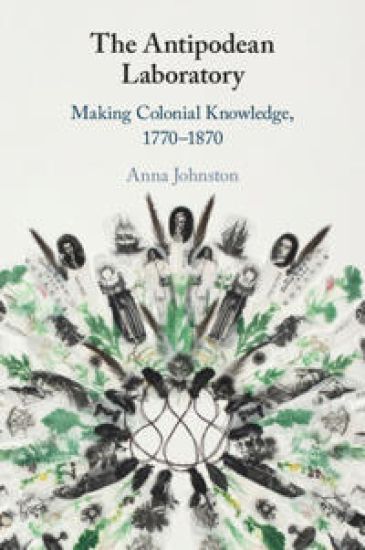
The Antipodean Laboratory

The Antipodean Laboratory

Anna Johnston

Cambridge University Press
2025
pokkari
In this compelling study, Anna Johnston shows how colonial knowledge from Australia influenced global thinking about convicts, natural history and humanitarian concerns about Indigenous peoples. These were fascinating topics for British readers, and influenced government policies in fields such as prison reform, the history of science, and humanitarian and religious campaigns. Using a rich variety of sources including natural history and botanical illustrations, voyage accounts, language studies, Victorian literature and convict memoirs, this multi-disciplinary account charts how new ways of identifying, classifying, analysing and controlling ideas, populations, and environments were forged and circulated between colonies and through metropolitan centres. They were also underpinned by cultural exchanges between European and Indigenous interlocutors and knowledge systems. Johnston shows how colonial ideas were disseminated through a global network of correspondence and print culture.
The Borrowed Life of Frederick Fife

The Borrowed Life of Frederick Fife

Anna Johnston

William Morrow Large Print
2024
nidottu
"A funny, heartfelt story about found family and seeing the silver lining in life. Fans of A Man Called Ove and Remarkably Bright Creatures will especially enjoy this new novel."--Library JournalA zany case of mistaken identity allows a lonely old man one last chance to be part of a family." Would you mind terribly, old boy, if I borrowed the rest of your life? I promise I'll take excellent care of it." Frederick Fife was born with an extra helping of kindness in his heart. If he borrowed your car, he'd return it washed with a full tank of gas. The problem is, at age eighty-two, there's nobody left in Fred's life to borrow from, and he's broke and on the brink of eviction. But Fred's luck changes when he's mistaken for Bernard Greer, a missing resident at the local nursing home, and takes his place. Now Fred has warm meals in his belly and a roof over his head--as long as his look-alike Bernard never turns up. Denise Simms is stuck breathing the same disappointing air again and again. A middle-aged mom and caregiver at Bernard's facility, her crumbling marriage and daughter's health concerns are suffocating her joy for life. Wounded by her two-faced husband, she vows never to let a man deceive her again. As Fred walks in Bernard's shoes, he leaves a trail of kindness behind him, fueling Denise's suspicions about his true identity. When unexpected truths are revealed, Fred and Denise rediscover their sense of purpose and learn how to return a broken life to mint condition. Bittersweet and remarkably perceptive, The Borrowed Life of Frederick Fife is a hilarious, feel-good, clever novel about grief, forgiveness, redemption, and finding family.
The Borrowed Life of Frederick Fife

The Borrowed Life of Frederick Fife

Anna Johnston

William Morrow Company
2024
sidottu

Halvin toimitettuna 27,60 €

"A funny, heartfelt story about found family and seeing the silver lining in life. Fans of A Man Called Ove and Remarkably Bright Creatures will especially enjoy this new novel."--Library JournalA zany case of mistaken identity allows a lonely old man one last chance to be part of a family." Would you mind terribly, old boy, if I borrowed the rest of your life? I promise I'll take excellent care of it." Frederick Fife was born with an extra helping of kindness in his heart. If he borrowed your car, he'd return it washed with a full tank of gas. The problem is, at age eighty-two, there's nobody left in Fred's life to borrow from, and he's broke and on the brink of eviction. But Fred's luck changes when he's mistaken for Bernard Greer, a missing resident at the local nursing home, and takes his place. Now Fred has warm meals in his belly and a roof over his head--as long as his look-alike Bernard never turns up. Denise Simms is stuck breathing the same disappointing air again and again. A middle-aged mom and caregiver at Bernard's facility, her crumbling marriage and daughter's health concerns are suffocating her joy for life. Wounded by her two-faced husband, she vows never to let a man deceive her again. As Fred walks in Bernard's shoes, he leaves a trail of kindness behind him, fueling Denise's suspicions about his true identity. When unexpected truths are revealed, Fred and Denise rediscover their sense of purpose and learn how to return a broken life to mint condition. Bittersweet and remarkably perceptive, The Borrowed Life of Frederick Fife is a hilarious, feel-good, clever novel about grief, forgiveness, redemption, and finding family.
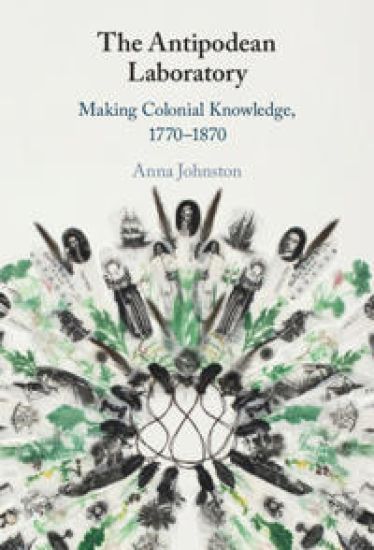
The Antipodean Laboratory

The Antipodean Laboratory

Anna Johnston

Cambridge University Press
2023
sidottu
In this compelling study, Anna Johnston shows how colonial knowledge from Australia influenced global thinking about convicts, natural history and humanitarian concerns about Indigenous peoples. These were fascinating topics for British readers, and influenced government policies in fields such as prison reform, the history of science, and humanitarian and religious campaigns. Using a rich variety of sources including natural history and botanical illustrations, voyage accounts, language studies, Victorian literature and convict memoirs, this multi-disciplinary account charts how new ways of identifying, classifying, analysing and controlling ideas, populations, and environments were forged and circulated between colonies and through metropolitan centres. They were also underpinned by cultural exchanges between European and Indigenous interlocutors and knowledge systems. Johnston shows how colonial ideas were disseminated through a global network of correspondence and print culture.
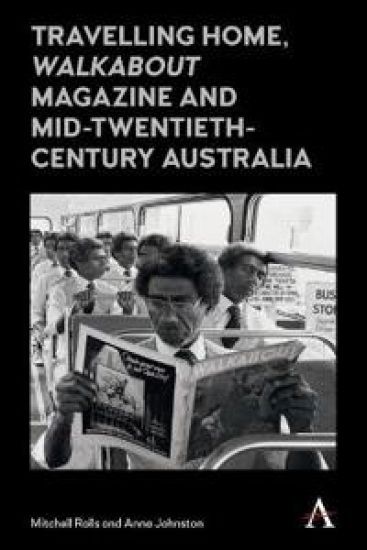
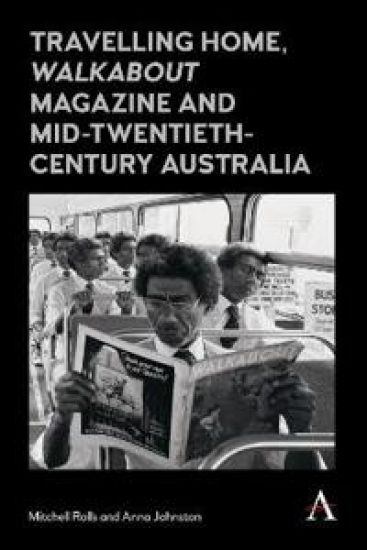
Travelling Home, 'Walkabout Magazine' and Mid-Twentieth-Century Australia
'Travelling Home' provides a detailed analysis of the contribution that the mid twentieth-century 'Walkabout' magazine made to Australia’s cultural history. Spanning five central decades of the twentieth century (1934-1974), 'Walkabout' was integral to Australia’s sense of itself as a nation. By advocating travel—both vicarious and actual—'Walkabout' encouraged settler Australians to broaden their image of the nation and its place in the Pacific region. In this way, 'Walkabout' explicitly aimed to make its readers feel at home in their country, as well as including a diverse picture of Aboriginal and Pacific cultures. Given its wide availability and distribution, together with its accessible and entertaining content, 'Walkabout' changed how Australia was perceived, and the magazine is recalled with nostalgic fondness by most if not all of its former readers. Drawing on interdisciplinary scholarship, 'Travelling Home' engages with key questions in literary, cultural, and Australian studies about national identity and modernity. The book’s diverse topics demonstrate how 'Walkabout' canvassed subtle and shifting fields of representation; as a result, this analysis produces complex and nuanced readings of Australian literary and cultural history.
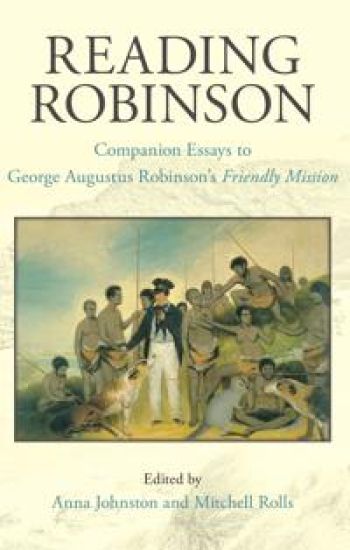
Reading Robinson

Reading Robinson

Anna Johnston; Mitchell Rolls

Monash University Publishing
2012
nidottu
This reprint - originally published by Quintus Publishing - brings together essays by leading Australian and international historians in an analysis of the monumental Friendly Mission: The Tasmanian Journals and Papers of George Augustus Robinson 1829-1834, edited by N. J. B. Plomley and republished in 2008. Until this book, Friendly Mission has rarely been considered in a context beyond the immediacy of "Van Diemen's Land" (the original European name for Tasmania). Yet, George Augustus Robinson's diverse writings constitute a body of work that typically has one set of meanings for local readers, and another for those outside its sphere of production. Robinson's texts are exemplary of the ways in which colonial texts circulated around what Alan Lester, Professor of Historical Geography at the University of Sussex, has called 'imperial networks.' Reading Robinson, while remaining cognizant of local resonances, extends Friendly Mission from parochial particularity and situates it within international contexts, both in terms of contemporary accounts of colonial/settler contact, conflict with indigenes, and current scholarship analyzing this material.
Missionary Writing and Empire, 1800–1860

Missionary Writing and Empire, 1800–1860

Anna Johnston

Cambridge University Press
2007
pokkari
Anna Johnston analyses missionary writing under the aegis of the British Empire. Johnston argues that missionaries occupied ambiguous positions in colonial cultures, caught between imperial and religious interests. She maps out this position through an examination of texts published by missionaries of the largest, most influential nineteenth-century evangelical institution, the London Missionary Society. These texts provide a fascinating commentary on nineteenth-century evangelism and colonialism, and illuminate complex relationships between white imperial subjects, white colonial subjects, and non-white colonial subjects. With their reformist, and often prurient interest in sexual and familial relationships, missionary texts focused imperial attention on gender and domesticity in colonial cultures. Johnston contends that in doing so they rewrote imperial expansion as a moral allegory and confronted British ideologies of gender, race and class. Texts from Indian, Polynesian and Australian missions are examined to highlight their representation of nineteenth-century evangelical activity in relation to gender, colonialism and race.
Missionary Writing and Empire, 1800–1860

Missionary Writing and Empire, 1800–1860

Anna Johnston

Cambridge University Press
2003
sidottu
Anna Johnston analyses missionary writing under the aegis of the British Empire. Johnston argues that missionaries occupied ambiguous positions in colonial cultures, caught between imperial and religious interests. She maps out this position through an examination of texts published by missionaries of the largest, most influential nineteenth-century evangelical institution, the London Missionary Society. These texts provide a fascinating commentary on nineteenth-century evangelism and colonialism, and illuminate complex relationships between white imperial subjects, white colonial subjects, and non-white colonial subjects. With their reformist, and often prurient interest in sexual and familial relationships, missionary texts focused imperial attention on gender and domesticity in colonial cultures. Johnston contends that in doing so they rewrote imperial expansion as a moral allegory and confronted British ideologies of gender, race and class. Texts from Indian, Polynesian and Australian missions are examined to highlight their representation of nineteenth-century evangelical activity in relation to gender, colonialism and race.