Kirjojen hintavertailu – 12 875 467 kirjaa ja 26 kauppaa

Kirjailija

Anna Lowenhaupt Tsing

Kirjat ja teokset yhdessä paikassa: 9 kirjaa, julkaisuja vuosilta 1993–2027, suosituimpiin kuuluu Lopun aikojen sieni. Vertaile teosten hintoja ja tarkista saatavuus suomalaisista kirjakaupoista.

9 kirjaa

Kirjojen julkaisuvuodet: 1993–2027.

Lopun aikojen sieni

Lopun aikojen sieni

Anna Lowenhaupt Tsing

TUTKIJALIITTO
2020
nidottu

Halvin toimitettuna 34,90 €

Antropologi Anna Lowenhaupt Tsing jäljittää palkitussa menestyskirjassaan matsutake-sienen matkaa kapitalismin reunamilla Oregonin ja Suomen Lapin metsistä japanilaisten herkkusuiden ruokapöytiin. Matsutake, tuoksuvalmuska, on kenties maailman arvokkain sieni ja myös laji, joka menestyy ihmisen dramaattisesti muuttamissa ympäristöissä - väitetään, että ensimmäisenä Hiroshiman atomipommin jälkeen maasta puski juuri matsutake. Matsutaken omintakeinen toimitusketju kietoo yhteen työpaikkansa menettäneiden yhdysvaltalaisten, Oregonin hylättyihin talousmetsiin päätyneiden entisten viidakkosissien, kiinalaisten vuohipaimenten, suomalaisten luonto-oppaiden, japanilaisten bisnesmiesten ja lukemattomien muiden tarinat. Kiehtovan sienen kautta avautuukin näkymä kapitalismin ja sen marginaalien suhteisiin, vuorovaikutukseemme ei-inhimillisten toimijoiden kanssa ja lopulta elämän mahdollisuuksiin antroposeenin aikakaudella - kapitalismin jälkeensä jättämissä raunioissa.

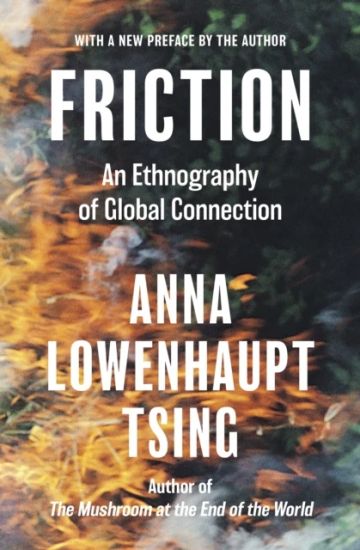
Friction

Friction

Anna Lowenhaupt Tsing

PRINCETON UNIVERSITY PRESS
2024
pokkari

Halvin toimitettuna 31,70 €

Co-Winner of the Senior Book Prize, American Ethnological SocietyWhat the struggle over the Indonesian rainforests can teach us about the social frictions that shape the world around usRubbing two sticks together produces heat and light while one stick alone is just a stick. It is the friction that produces movement, action, and effect. Anthropologist Anna Lowenhaupt Tsing challenges the widespread view that globalization invariably signifies a clash of cultures, developing friction as a metaphor for the diverse and conflicting social interactions that make up our contemporary world. Focusing on the social drama of the Indonesian rainforests in the 1980s and 1990s, she shows how a host of competing interests—from environmentalists and North American investors to advocates for Brazilian rubber tappers, international funding agencies, and village elders—are drawn into unpredictable, messy misunderstandings, but misunderstandings that sometimes work out. Now with a new preface by the author, Friction provides an invaluable portfolio of methods for the study of global interconnections.
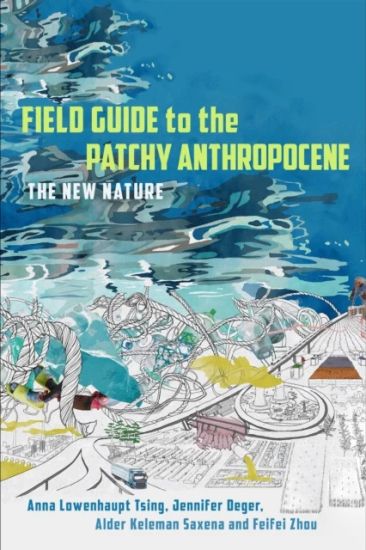
Field Guide to the Patchy Anthropocene

Field Guide to the Patchy Anthropocene

Anna Lowenhaupt Tsing; Jennifer Deger; Alder Keleman Saxena; Feifei Zhou

STANFORD UNIVERSITY PRESS
2027
pokkari
Nature has gone feral. How can we re-attune ourselves to the new nature? A field guide can help. While the global scientific community recently made headlines by ruling the Anthropocene – an era many date to the Industrial Revolution when human action truly began to transform the planet – did not qualify for a geological epoch quite yet, understanding the nature of human transformation of the Earth is more important than ever. The effects of human activity are global in scope, but take shape within distinct social and ecological "patches," discontinuous regions within which the key actors may not be human, but the plants, animals, fungi, viruses, plastics, and chemicals creating our new world. Field Guide to the Patchy Anthropocene takes stock of our current planetary crisis, leading readers through a series of sites, thought experiments, and genre-stretching descriptive practices to nurture a revitalized natural history. Field guides teach us how to notice, name, and so better appreciate more-than-human worlds. They hone our powers of observation and teach us to see the world anew. Field-based observations and place-based knowledge cultivation – getting up-close and personal with patchy dynamics – are vital to truly grapple with the ecological challenges and the historical conjunctures that are bringing us to multiple catastrophic tipping points. How has commercial agriculture runoff given rise to comb jellies in the Black Sea? What role did the Atlantic slave trade play in the worldwide spread of virus-carrying mosquitoes? How did the green revolution transform the brown planthopper into a superpredator in Philippine rice fields? Questions like these open up new ways of understanding, and ways of living through, the epoch that human activity has ushered in. This Field Guide shifts attention away from knowledge extractive practices of globalization to encourage skilled observers of many stripes to pursue their commitments to place, social justice, and multispecies community. It is through attention to the beings, places, ecologies, and histories of the Anthropocene that we can reignite curiosity, wonder, and care for our damaged planet.
Svampen ved verdens ende

Svampen ved verdens ende

Anna Lowenhaupt Tsing

Forlaget Mindspace
2024
pokkari

Halvin toimitettuna 40,80 €

Matsutake er den mest værdifulde svamp i verden og den vokser i menneskeforstyrrede skove på hele den nordlige halvkugle. Gennem sin evne til at give næring til træer hjælper matsutake skovene med at vokse på skræmmende steder. Den er også en spiselig delikatesse i Japan, hvor den kan have astronomiske priser. Ved at følge de nye transnationale forsynings- og varekæder disse meget efterspurgte svampe skaber, giver Anna Lowenhaupt Tsing os indsigt i områder, der rækker langt ud over svampe, og adresserer et afgørende spørgsmål: Hvad formår at leve i de ruiner, vi har skabt? Svampen ved verdens ende udforsker den underjordiske fælled og de multiartslige verdener omkring os. Vi møder japanske gourmeter, kapitalistiske handlende, hmongfolk i Oregon, industriskove, yi-kinesiske gedehyrder, finske naturguider og meget mere. Disse ledsagere fører os ind i svampeøkologier og skovhistorier for bedre at forstå løftet om samliv i en tid med massiv menneskelig ødelæggelse. Det er en original undersøgelse af forholdet mellem kapitalisme og samarbejdet om overlevelse i multiartslige landskaber, som er forudsætningen for fortsat liv på jorden. “En poetisk og bemærkelsesværdig frugtbar udforskning af forholdet mellem mennesker og det naturlige miljø.” – Pankaj Mishra, The Guardian “Jeg er meget taknemmelig for at have denne bog.” – Ursula K. Le Guin Anna Lowenhaupt Tsing er en international anerkendt professor i antropologi ved University of California, Santa Cruz. Tsing forsker i globalisering, miljø og klima, kapitalisme, feminisme og magt. Hun har især arbejdet med ’multiartslig etnografi’, der gentænker menneskets rolle i vores tids klima- og biodiversitetskriser. Hun er forfatter til Friction: An Ethnography of Global Connection og In the Realm of the Diamond Queen: Marginality in an Out-of-the-Way Place.
Field Guide to the Patchy Anthropocene

Field Guide to the Patchy Anthropocene

Anna Lowenhaupt Tsing; Jennifer Deger; Alder Keleman Saxena; Feifei Zhou

STANFORD UNIVERSITY PRESS
2024
sidottu

Halvin toimitettuna 27,90 €

Nature has gone feral. How can we re-attune ourselves to the new nature? A field guide can help. While the global scientific community recently made headlines by ruling the Anthropocene—an era many date to the Industrial Revolution when human action truly began to transform the planet—did not qualify for a geological epoch quite yet, understanding the nature of human transformation of the Earth is more important than ever. The effects of human activity are global in scope, but take shape within distinct social and ecological "patches," discontinuous regions within which the key actors may not be human, but the plants, animals, fungi, viruses, plastics, and chemicals creating our new world. Field Guide to the Patchy Anthropocene takes stock of our current planetary crisis, leading readers through a series of sites, thought experiments, and genre-stretching descriptive practices to nurture a revitalized natural history. Field guides teach us how to notice, name, and so better appreciate more-than-human worlds. They hone our powers of observation and teach us to see the world anew. Field-based observations and place-based knowledge cultivation—getting up-close and personal with patchy dynamics—are vital to truly grapple with the ecological challenges and the historical conjunctures that are bringing us to multiple catastrophic tipping points. How has commercial agriculture runoff given rise to comb jellies in the Black Sea? What role did the Atlantic slave trade play in the worldwide spread of virus-carrying mosquitoes? How did the green revolution transform the brown planthopper into a superpredator in Philippine rice fields? Questions like these open up new ways of understanding, and ways of living through, the epoch that human activity has ushered in. This Field Guide shifts attention away from knowledge extractive practices of globalization to encourage skilled observers of many stripes to pursue their commitments to place, social justice, and multispecies community. It is through attention to the beings, places, ecologies, and histories of the Anthropocene that we can reignite curiosity, wonder, and care for our damaged planet.
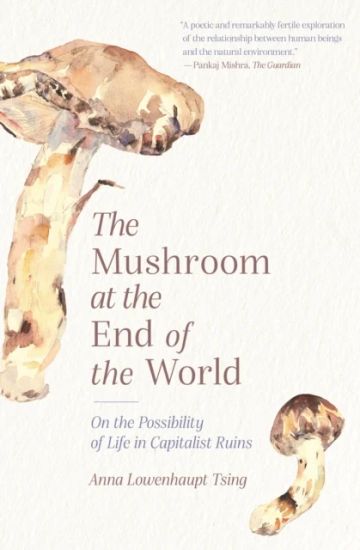
The Mushroom at the End of the World

The Mushroom at the End of the World

Anna Lowenhaupt Tsing

Princeton University Press
2021
pokkari

Halvin toimitettuna 20,90 €

"A poetic and remarkably fertile exploration of the relationship between human beings and the natural environment."—Pankaj Mishra, The Guardian"I'm very grateful to have this book."—Ursula K. Le GuinThe acclaimed and award-winning book about what a rare mushroom can teach us about sustaining life on a fragile planetA Flavorwire and Times Higher Education Book of the YearMatsutake is the most valuable mushroom in the world—and a weed that grows in human-disturbed forests across the northern hemisphere. Through its ability to nurture trees, matsutake helps forests to grow in daunting places. It is also an edible delicacy in Japan, where it sometimes commands astronomical prices. In all its contradictions, matsutake offers insights into areas far beyond just mushrooms and addresses a crucial question: what manages to live in the ruins we have made? A tale of diversity within our damaged landscapes, The Mushroom at the End of the World follows one of the strangest commodity chains of our times to explore the unexpected corners of capitalism. Here, we witness the varied and peculiar worlds of matsutake commerce: the worlds of Japanese gourmets, capitalist traders, Hmong jungle fighters, industrial forests, Yi Chinese goat herders, Finnish nature guides, and more. These companions also lead us into fungal ecologies and forest histories to better understand the promise of cohabitation in a time of massive human destruction. By investigating one of the world's most sought-after fungi, The Mushroom at the End of the World presents an original examination into the relation between capitalist destruction and collaborative survival within multispecies landscapes, the prerequisite for continuing life on earth.
In the Realm of the Diamond Queen

In the Realm of the Diamond Queen

Anna Lowenhaupt Tsing

Princeton University Press
1993
pokkari
In this highly original and much-anticipated ethnography, Anna Tsing challenges not only anthropologists and feminists but all those who study culture to reconsider some of their dearest assumptions. By choosing to locate her study among Meratus Dayaks, a marginal and marginalized group in the deep rainforest of South Kalimantan, Indonesia, Tsing deliberately sets into motion the familiar and stubborn urban fantasies of self and other. Unusual encounters with her remarkably creative and unconventional Meratus friends and teachers, however, provide the opportunity to rethink notions of tradition, community, culture, power, and gender--and the doing of anthropology. Tsing's masterful weaving of ethnography and theory, as well as her humor and lucidity, allow for an extraordinary reading experience for students, scholars, and anyone interested in the complexities of culture. Engaging Meratus in wider conversations involving Indonesian bureaucrats, family planners, experts in international development, Javanese soldiers, American and French feminists, Asian-Americans, right-to-life advocates, and Western intellectuals, Tsing looks not for consensus and coherence in Meratus culture but rather allows individual Meratus men and women to return our gaze. Bearing the fruit from the lively contemporary conversations between anthropology and cultural studies, In the Realm of the Diamond Queen will prove to be a model for thinking and writing about gender, power, and the politics of identity.