

Kirjailija
Anna McCarthy
Kirjat ja teokset yhdessä paikassa: 9 kirjaa, julkaisuja vuosilta 2001–2025, suosituimpiin kuuluu Hills Have Crazy Eyes â?? Woman in a Landscape. Vertaile teosten hintoja ja tarkista saatavuus suomalaisista kirjakaupoista.
9 kirjaa
Kirjojen julkaisuvuodet: 2001–2025.

Anna McCarthy's artist book is a collection of her popular pencil drawings of amorphous figures. Sentient figures trickle and ooze their way through different states of equilibrium; some self-contained fountains, clouds, or gusts of wind, whilst others have formed groups and seem to be planning something, communicating in fields of pylons and mountain landscapes. They are endearing with their big eyes and friendly doughy, cloud-like appearance, carrying sandwich lunchboxes, melting over and spilling into structures, morphing, and possibly disrupting the geometry of lines in pylons. Charming harbingers of chaos.
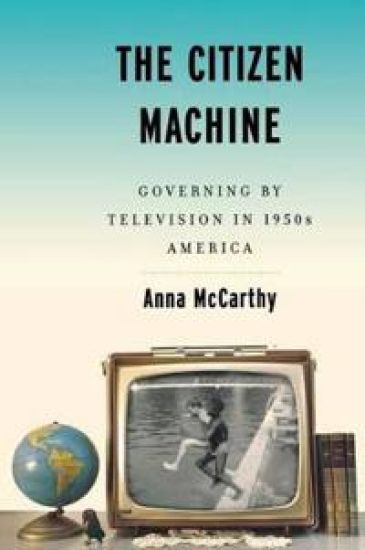
At the dawn of television in the early 1950s, a broad range of powerful groups and individuals—from prominent liberal intellectuals to massive corporations—saw in TV a unique capacity to influence the American masses, shaping (in the words of the American philosopher Mortimer Adler) "the ideas that should be in every citizen's mind." Formed in the shadow of the Cold War—amid the stirrings of the early civil rights movement—the potential of television as a form of unofficial government inspired corporate executives, foundation officers, and other influential leaders to approach TV sponsorship as a powerful new avenue for shaping the course of American democracy. In this compelling political history of television's formative years, media historian Anna McCarthy goes behind the scenes to bring back into view an entire era of civic-minded programming and the ideas about democratic agency from which it sprang. Based on pathbreaking archival work, The Citizen Machine poses entirely new questions about the political significance of television. At a time when TV broadcasting is in a state of crisis, and new media reform movements have entered political culture, here is an original and thought-provoking history of the assumptions that have profoundly shaped not only television but our understanding of American citizenship itself.
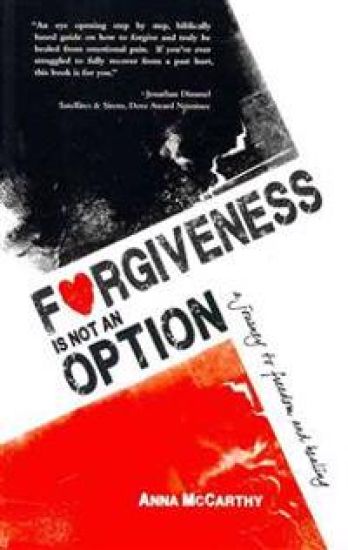
"An eye opening step-by-step, biblically-based guide on how to forgive and truly be healed from emotional pain. If you've ever struggled to fully recover from a past hurt, this book is for you."-Jonathan Dimmel, Satellites and Sirens, Dove Award Nominee How do you forgive the unforgiveable? Is it possible to truly be free from what others have done to you? Each of us has a story and has experienced hurt in some area of our lives. Whether in childhood, adolescence or adulthood, we all have experienced pain and disappointment. If not dealt with, these wounds begin to impact our everyday life at a crippling rate. We live bound by fear, insecurities, anger and jealousy; often chalking it up as "normal." Yet, in reality, we are being held captive by what others have done to us. We desire freedom from our pasts and our pain yet struggle with how to attain it; we wonder if it is even possible. Addressing a broad spectrum of issues from common offenses to abuse and betrayal, Forgiveness is Not an Option leaves no question as to God's opinion of mistreatment, and how we can heal and live a life of freedom from our past and present hurts. With practical tools, you will discover that freedom isn't just possible; it's attainable.
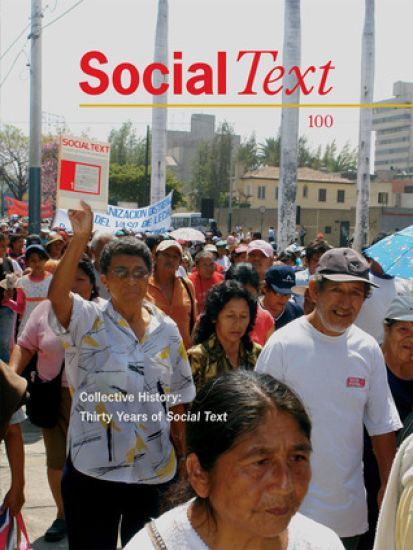
This issue marks the thirtieth anniversary of Social Text and celebrates the journal’s legacy. Offering a history of the journal since its inception in 1979, this issue explores the elements that have made Social Text what it is today: the intellectual impulses that first brought the editorial collective of scholars, artists, and activists together; the collective’s special commitment to collaborative journal editing; and the unique path the journal has taken to arrive at the distinctive place it now occupies in new left critical thought. Featuring new interviews with Social Text’s founders and former editors-including Stanley Aronowitz, John Brenkman, Fredric Jameson, Randy Martin, Toby Miller, Bruce Robbins, Andrew Ross, Sohnya Sayres, and Anders Stephanson-the issue reflects on the journal’s legacy as a radical publication that has bridged politics and the academy and has made critical interventions in both arenas. Several contributors revisit the first issue of the journal and describe its lasting impact. Others examine the politics of production at Social Text and detail the hands-on process of putting the journal together. Notably, the issue also features thirty essays by members of the current editorial collective, on key topics that have been crucial to the journal. Ranging from aesthetics to war, and including empire, mass culture, revolution, science, and theory, these essays bring to life the cultural history of the journal and demonstrate how Social Text has shaped the way that these terms are conceptualized and used today. Contributors. The forty-four contributors include the current members of the Social Text collective and a number of former members. For a complete list of the collective, visit socialtextonline.org.
Media Space explores the importance of ideas of space and place to understanding the ways in which we experience the media in our everyday lives. Essays from leading international scholars address the kinds of space created by media and the effects that spacial arrangements have on media forms. Case studies focus on a wide variety of subjects and locales, from in-flight entertainment to mobile media such as personal stereos and mobile phones, and from the electronic spaces of the Internet to the shopping mall.
Media Space explores the importance of ideas of space and place to understanding the ways in which we experience the media in our everyday lives. Essays from leading international scholars address the kinds of space created by media and the effects that spacial arrangements have on media forms. Case studies focus on a wide variety of subjects and locales, from in-flight entertainment to mobile media such as personal stereos and mobile phones, and from the electronic spaces of the Internet to the shopping mall.
Although we tend to think of television primarily as a household fixture, TV monitors outside the home are widespread: in bars, laundromats, and stores; conveying flight arrival and departure times in airports; uniting crowds at sports events and allaying boredom in waiting rooms; and helping to pass the time in workplaces of all kinds. In Ambient Television Anna McCarthy explores the significance of this pervasive phenomenon, tracing the forms of conflict, commerce, and community that television generates outside the home. Discussing the roles television has played in different institutions from 1945 to the present day, McCarthy draws on a wide array of sources. These include retail merchandising literature, TV industry trade journals, and journalistic discussions of public viewing, as well as the work of cultural geographers, architectural theorists, media scholars, and anthropologists. She also uses photography as a research tool, documenting the uses and meanings of television sets in the built environment, and focuses on such locations as the tavern and the department store to show how television is used to support very different ideas about gender, class, and consumption. Turning to contemporary examples, McCarthy discusses practices such as Turner Private Networks’ efforts to transform waiting room populations into advertising audiences and the use of point-of-sale video that influences brand visibility and consumer behavior. Finally, she inquires into the activist potential of out-of-home television through a discussion of the video practices of two contemporary artists in everyday public settings. Scholars and students of cultural, visual, urban, American, film, and television studies will be interested in this thought-provoking, interdisciplinary book.
Although we tend to think of television primarily as a household fixture, TV monitors outside the home are widespread: in bars, laundromats, and stores; conveying flight arrival and departure times in airports; uniting crowds at sports events and allaying boredom in waiting rooms; and helping to pass the time in workplaces of all kinds. In Ambient Television Anna McCarthy explores the significance of this pervasive phenomenon, tracing the forms of conflict, commerce, and community that television generates outside the home. Discussing the roles television has played in different institutions from 1945 to the present day, McCarthy draws on a wide array of sources. These include retail merchandising literature, TV industry trade journals, and journalistic discussions of public viewing, as well as the work of cultural geographers, architectural theorists, media scholars, and anthropologists. She also uses photography as a research tool, documenting the uses and meanings of television sets in the built environment, and focuses on such locations as the tavern and the department store to show how television is used to support very different ideas about gender, class, and consumption. Turning to contemporary examples, McCarthy discusses practices such as Turner Private Networks’ efforts to transform waiting room populations into advertising audiences and the use of point-of-sale video that influences brand visibility and consumer behavior. Finally, she inquires into the activist potential of out-of-home television through a discussion of the video practices of two contemporary artists in everyday public settings. Scholars and students of cultural, visual, urban, American, film, and television studies will be interested in this thought-provoking, interdisciplinary book.