Kirjailija
Anna Reid
Kirjat ja teokset yhdessä paikassa: 17 kirjaa, julkaisuja vuosilta 2003–2024, suosituimpiin kuuluu Borderland : A Journey Through the History of Ukraine. Vertaile teosten hintoja ja tarkista saatavuus suomalaisista kirjakaupoista.
17 kirjaa
Kirjojen julkaisuvuodet: 2003–2024.
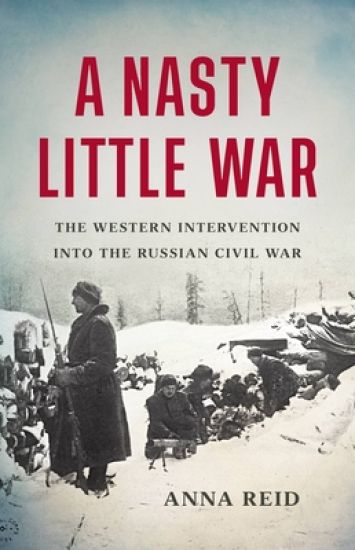
'Chillingly original' Max Hastings'Brilliantly depicts a disastrous failure' Antony Beevor'Witty and elegant . . . Excellent background to today's events' Anne Applebaum'Britain's most forgotten war, brilliantly remembered' Simon Jenkins'Vivid and remarkably timely' Martin SixsmithFrom the bestselling author of Borderland: A Journey Through the History of UkraineThe extraordinary story of the West's intervention into the Russian Civil War In the closing months of the First World War, Britain, America, France and Japan sent 180,000 soldiers to revolutionary Russia, in a doomed attempt to unseat the Bolsheviks. Entangled in what they termed a 'comic opera' conflict, they crisscrossed the shattered empire in sleds, trains and paddlesteamers, bivouacked in log cabins and felt yurts, torpedoed warships from speedboats, improvised the world's first air-dropped chemical weapons, and organised several coups and at least one assassination. Cheered on by Churchill, they also turned a blind eye to their Russian allies' many atrocities. Two years later, as the Red Army swept the board, the West evacuated, leaving Russia more blood-stained and suspicious than ever. A Nasty Little War brings this forgotten misadventure vividly to life.
A Nasty Little War: The Western Intervention Into the Russian Civil War
Anna Reid
BASIC BOOKS
2024
sidottu
The first comprehensive history of the failed Allied Intervention in the Russian Civil War, a decisive turning point in the relationship between Russia and the West Named a Best Book of 2024 by Foreign Affairs Overlapping with and overshadowed by the First World War, the Allied Intervention in the Russian Civil War was one of the most ambitious military ventures of the twentieth century. Launched in the summer of 1918, it drew in 180,000 troops from fifteen different countries in theaters ranging from the Caspian Sea to the Arctic, and from Poland to the Pacific. Though little remembered today, its consequences stoked global political turmoil for decades to come. In A Nasty Little War, top Russia historian Anna Reid offers a sweeping and deeply researched account of the conflict. Initially launched to prevent Germany from exploiting the power vacuum in Eastern Europe left by the Russian Revolution, the Intervention morphed into a bid to destroy the Bolsheviks on the battlefield. But Allied armaments, supplies, and loans could not prevent Russia's anti-Bolshevik armies from collapsing, and the Allies were forced to retreat in defeat. The humiliation sapped British imperial swagger, chastened American idealism, and stoked militarism and nationalism in France and Germany. Combining immersive storytelling with deep research, A Nasty Little War reveals how the Allied Intervention reshaped the West's relations with Russia, and set a pattern for other interventions to come.
A BBC HISTORY MAGAZINE BOOK OF THE YEAR'Thoroughly researched, stylish and entertaining' Financial Times'A vivid and sparkling account, full of colour and dark drama' Observer'Brilliantly depicts a disastrous failure' Antony Beevor'Chillingly original' Max Hastings'Witty and elegant . . . Excellent background to today's events' Anne ApplebaumFrom the bestselling author of Borderland: A Journey Through the History of UkraineThe extraordinary story of how the West tried to reverse the Russian Revolution. In the closing months of the First World War, Britain, America, France and Japan sent arms and 180,000 soldiers to Russia, with the aim of tipping the balance in her post-revolutionary Civil War. From Central Asia to the Arctic and from Poland to the Pacific, they joined anti-Bolshevik forces in trying to overthrow the new men in the Kremlin, in an astonishingly ambitious military adventure known as the Intervention. Fresh, in the case of the British, from the trenches, they found themselves in a mobile, multi-sided conflict as different as possible from the grim stasis of the Western Front. Criss-crossing the shattered Russian empire in trains, sleds and paddlesteamers, they bivouacked in snowbound cabins and Kirghiz yurts, torpedoed Red battleships from speedboats, improvised new currencies and the world's first air-dropped chemical weapons, got caught up in mass retreats and a typhus epidemic, organised several coups and at least one assassination. Taking tea with warlords and princesses, they also turned a blind eye to their Russian allies' numerous atrocities. Two years later they left again, filing glumly back onto their troopships as port after port fell to the Red Army. Later, American veterans compared the humiliation to Vietnam, and the politicians and generals responsible preferred to trivialise or forget. Drawing on previously unused diaries, letters and memoirs, A Nasty Little War brings an episode with echoes down the century since vividly to life.
Educating Musicians for Sustainability
Anna Reid; Peter Petocz
TAYLOR FRANCIS LTD
2023
nidottu
Halvin toimitettuna 29,70 €
Educating Musicians for Sustainability explores the intersections of sustainability and music, investigating how sustainability affects the development and professional preparation of musicians while asking the question, ‘What does sustainability have to do with music?’ The volume presents a series of case studies organised according to an expanded view of the ‘four pillars of sustainability’, addressing cultural, environmental, economic, and social concerns. These case studies reveal a multitude of intersections, highlighting the crucial role music can play in raising awareness and overcoming the crisis of sustainability. In examining pedagogical and practical implications, aspiring musicians are encouraged to develop a broader view of the musical profession as a human endeavour, one that is intimately related to the world in which they live. Educating Musicians for Sustainability addresses the most pressing and serious problem of contemporary times – and seeks to inspire changes in attitudes and behaviour, for the benefit of all of humanity.
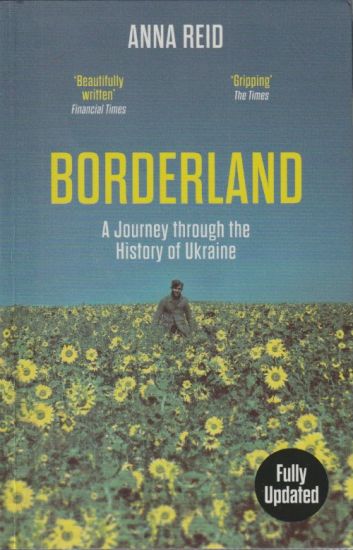
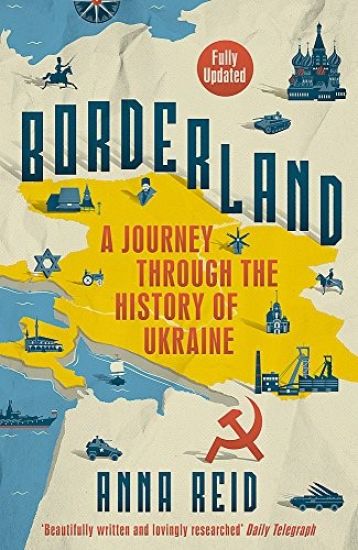
"A beautifully written evocation of Ukraine's brutal past and its shaky efforts to construct a better future."--Financial Times Ukraine is gripped in a bloody crisis that has killed tens of thousands, displaced millions, and is transforming the world's energy policies and security architecture. As celebrated journalist Anna Reid shows in Borderland, this conflict is the latest of many. Ukraine has been a borderland, and a battlefield, for more than seven centuries, from the Mongol invasion of 1240 to the Maidan protests of 2014--and, of course, the devastating Russian invasion of 2022. In this penetrating book, Reid combines research and her own experiences to chart Ukraine's tragic past and uncertain future. Talking to peasants and politicians, rabbis and racketeers, dissidents and paramilitaries, survivors of Stalin's famine and of Nazi labor camps, she reveals the layers of myth and propaganda that wrap this divided land. From the Polish churches of Lviv to the coal mines of the Donbass to the Tatar shantytowns of Crimea, the book explores Ukraine's struggle to build itself a national identity. Updated to include firsthand material from the 2022 Russia-Ukraine war, Borderland is essential reading for anyone looking to understand Ukraine and how its history is shaping its destiny.
FULLY UPDATED'A fascinating and often violent odyssey, spanning more than 1,000 years of conflict and culture'INDEPENDENTFlat, fertile, and fatally tempting to invaders, for centuries Ukraine was fought over by more powerful neighbours. Though its modern national movement dates back to the early nineteenth century, it did not win real independence until 1991, with the collapse of the Soviet Union. Since then, Ukrainians have proved themselves one of the world's most remarkable nations. In 2014 mass demonstrations forced out a corrupt pro-Russian president. Russia responded by invading, first seizing Crimea and the eastern Donbass, and then in February 2022 marching on Kyiv. With Western help, Ukraine is fighting back. But in what form it will emerge from the war - the bloodiest in Europe since 1945 - remains to be seen. For this fourth edition of her classic history, Anna Reid returns to the scene. Talking to refugees, politicians and victims of widespread Russian war crimes, she adds a new chapter to the complex biography of a country on the frontline of the conflict between democracy and dictatorship.
The Worth of Water
Liam McCarton; Sean O'Hogain; Anna Reid
Springer Nature Switzerland AG
2021
nidottu
There is no more fundamental substance to life on earth than water. Three quarter of the Earth’s surface is covered by either saltwater or freshwater, yet millions face a daily struggle to access enough water for survival. The effects of ongoing climate change have expanded the water crisis to areas previously considered water secure. This book addresses the role rainwater harvesting (rwh) can play in developing a resilient water infrastructure that will prove adaptive to climate change. The book features three sections. The first section presents the concepts underpinning a new approach to water infrastructure. The term “the worth of water” was developed to reflect the importance of the social life of water. This encompasses all human relationships with water including the social, cultural, hydrological, political, economic, technical and spiritual. A technology portfolio showcasing the worth of water from the Qanats of the ancient world to the modern Rain Cities is presented. Other concepts discussed include the circular economy of water and the concept of multiple waters for multiple users of multiple qualities. Water and its properties are a function of its peculiar molecular structure and this is illustrated in the book. Rainwater harvesting is considered by the authors as containing an inherent treatment train which functions as a complex water treatment system providing physical, chemical and biological removal mechanisms. Part two presents a new design methodology together with design templates and worked examples for the hydraulic and economic analysis of rwh systems. A state-of-the-art literature review of the potential health implications of utilizing rwh is also presented. The final section of the book discusses how rwh can play a vital role in contributing to achieving the Sustainable Development Goals and to living within the Planetary Boundaries.
Educating Musicians for Sustainability explores the intersections of sustainability and music, investigating how sustainability affects the development and professional preparation of musicians while asking the question, ‘What does sustainability have to do with music?’ The volume presents a series of case studies organised according to an expanded view of the ‘four pillars of sustainability’, addressing cultural, environmental, economic, and social concerns. These case studies reveal a multitude of intersections, highlighting the crucial role music can play in raising awareness and overcoming the crisis of sustainability. In examining pedagogical and practical implications, aspiring musicians are encouraged to develop a broader view of the musical profession as a human endeavour, one that is intimately related to the world in which they live. Educating Musicians for Sustainability addresses the most pressing and serious problem of contemporary times – and seeks to inspire changes in attitudes and behaviour, for the benefit of all of humanity.
The Worth of Water
Liam McCarton; Sean O'Hogain; Anna Reid
Springer Nature Switzerland AG
2020
sidottu
There is no more fundamental substance to life on earth than water. Three quarter of the Earth’s surface is covered by either saltwater or freshwater, yet millions face a daily struggle to access enough water for survival. The effects of ongoing climate change have expanded the water crisis to areas previously considered water secure. This book addresses the role rainwater harvesting (rwh) can play in developing a resilient water infrastructure that will prove adaptive to climate change. The book features three sections. The first section presents the concepts underpinning a new approach to water infrastructure. The term “the worth of water” was developed to reflect the importance of the social life of water. This encompasses all human relationships with water including the social, cultural, hydrological, political, economic, technical and spiritual. A technology portfolio showcasing the worth of water from the Qanats of the ancient world to the modern Rain Cities is presented. Other concepts discussed include the circular economy of water and the concept of multiple waters for multiple users of multiple qualities. Water and its properties are a function of its peculiar molecular structure and this is illustrated in the book. Rainwater harvesting is considered by the authors as containing an inherent treatment train which functions as a complex water treatment system providing physical, chemical and biological removal mechanisms. Part two presents a new design methodology together with design templates and worked examples for the hydraulic and economic analysis of rwh systems. A state-of-the-art literature review of the potential health implications of utilizing rwh is also presented. The final section of the book discusses how rwh can play a vital role in contributing to achieving the Sustainable Development Goals and to living within the Planetary Boundaries.
A classic and vivid history of Ukraine ’A fascinating and often violent odyssey, spanning more than 1,000 years of conflict and culture’Independent on Sunday Centre of the first great Slav civilisation in the tenth century, then divided between warring neighbours for a millennium, Ukraine finally won independence with the collapse of the Soviet Union. Tiring of their own corrupt governments, Ukrainians have since mounted two popular revolutions, taking to the streets to demand fair elections and closer ties to Europe. In the spring of 2014, Russia responded by invading Crimea and sponsoring a civil war in the Russian-speaking Donbass. Threatened by Moscow, misunderstood in the West, Ukraine hangs once more in the balance. Speaking to pro-democracy activists and pro-Russia militiamen, peasants and miners, survivors of Hitler’s Holocaust and Stalin’s famine, Anna Reid combines history and travel-writing to unpick the past and present of this bloody and complex borderland. ’Beautifully written and lovingly researched’Daily Telegraph ’Gripping history’The Times
This book considers the views of participants in the process of becoming a mathematician, that is, the students and the graduates. This book investigates the people who carry out mathematics rather than the topics of mathematics. Learning is about change in a person, the development of an identity and ways of interacting with the world. It investigates more generally the development of mathematical scientists for a variety of workplaces, and includes the experiences of those who were not successful in the transition to the workplace as mathematicians. The research presented is based on interviews, observations and surveys of students and graduates as they are finding their identity as a mathematician. The book contains material from the research carried out in South Africa, Northern Ireland, Canada and Brunei as well as Australia.
From Expert Student to Novice Professional
Anna Reid; Madeleine Abrandt Dahlgren; Lars Owe Dahlgren; Peter Petocz
Springer
2013
nidottu
Students entering higher education expect their studies to lead them towards some specific form of professional career. But in this age, complex internationalized professions are the main source of work for graduates, so students need to prepare themselves for a future that can be volatile, changeable and challenging. This book shows how students navigate their way through learning and become effective students; it details how to shift the focus of their learning away from the formalism associated with the university situation towards the exigencies of working life. It is in this sense that the book explores how people move from being expert students to novice professionals. This book presents a model of professional learning fashioned out of a decade of research undertaken in countries half a world away from each other—Sweden and Australia. It uses empirical research gathered from students and teachers to show how students negotiate the forms of professional knowledge they encounter as part of their studies and how they integrate their understandings of a future professional world with professional knowledge and learning. It reveals that as students move from seeing themselves as learners, they take on more of a novice professional identity which in turn provides a stronger motivation for their formal studies.
When Hitler attacked the Soviet Union in June 1941, he intended to capture Leningrad before turning on Moscow. Soviet resistance forced him to change tactics: with his forward troops only thirty kilometres from the city's historic centre, he decided instead to starve it out. Using newly available diaries and government records, Anna Reid describes a city's descent into hell - the breakdown of electricity and water supply; subzero temperatures; the consumption of pets, joiner's glue and face cream; the dead left unburied where they fell - but also the extraordinary endurance, bravery and self-sacrifice, despite the cruelty and indifference of the Kremlin.
This book considers the views of participants in the process of becoming a mathematician, that is, the students and the graduates. This book investigates the people who carry out mathematics rather than the topics of mathematics. Learning is about change in a person, the development of an identity and ways of interacting with the world. It investigates more generally the development of mathematical scientists for a variety of workplaces, and includes the experiences of those who were not successful in the transition to the workplace as mathematicians. The research presented is based on interviews, observations and surveys of students and graduates as they are finding their identity as a mathematician. The book contains material from the research carried out in South Africa, Northern Ireland, Canada and Brunei as well as Australia.
From Expert Student to Novice Professional
Anna Reid; Madeleine Abrandt Dahlgren; Lars Owe Dahlgren; Peter Petocz
Springer
2011
sidottu
Students entering higher education expect their studies to lead them towards some specific form of professional career. But in this age, complex internationalized professions are the main source of work for graduates, so students need to prepare themselves for a future that can be volatile, changeable and challenging. This book shows how students navigate their way through learning and become effective students; it details how to shift the focus of their learning away from the formalism associated with the university situation towards the exigencies of working life. It is in this sense that the book explores how people move from being expert students to novice professionals. This book presents a model of professional learning fashioned out of a decade of research undertaken in countries half a world away from each other—Sweden and Australia. It uses empirical research gathered from students and teachers to show how students negotiate the forms of professional knowledge they encounter as part of their studies and how they integrate their understandings of a future professional world with professional knowledge and learning. It reveals that as students move from seeing themselves as learners, they take on more of a novice professional identity which in turn provides a stronger motivation for their formal studies.
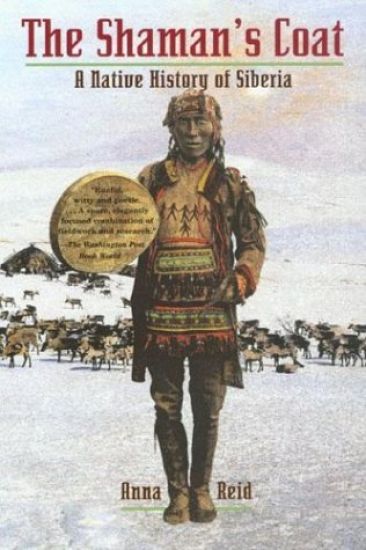
The fascinating history of an unknown people A vivid mixture of history and reporting, The Shaman's Coat tells the story of some of the world's least-known peoples-the indigenous tribes of Siberia. Russia's equivalent to the Native Americans or Australian Aborigines, they divide into two dozen different and ancient nationalities-among them Buryat, Tuvans, Sakha, and Chukchi. Though they number more than one million and have begun to demand land rights and political autonomy since the fall of communism, most Westerners are not even aware that they exist. Journalist and historian Anna Reid traveled the length and breadth of Siberia-one-twelfth of the world's land surface, larger than the United States and Western Europe combined-to tell the story of its people. Drawing on sources ranging from folktales to KGB reports, and on interviews with shamans and Buddhist monks, reindeer herders and whale hunters, camp survivors and Party apparatchiks, The Shaman's Coat travels through four hundred years of history, from the Cossacks' campaigns against the last of the Tatar khans to native rights activists against oil development. The result is a moving group portrait of extraordinary and threatened peoples, and a unique and intrepid travel chronicle.