

Kirjailija
Anne Chapman
Kirjat ja teokset yhdessä paikassa: 8 kirjaa, julkaisuja vuosilta 2007–2021, suosituimpiin kuuluu Democratizing Technology. Vertaile teosten hintoja ja tarkista saatavuus suomalaisista kirjakaupoista.
8 kirjaa
Kirjojen julkaisuvuodet: 2007–2021.
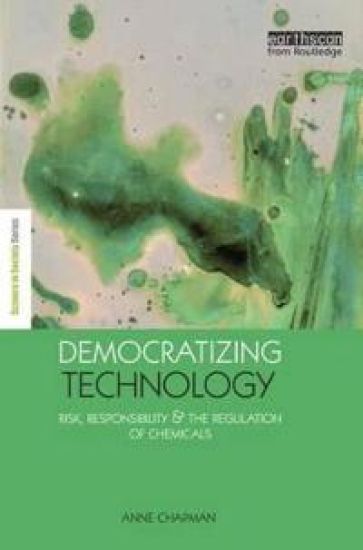
Democratizing Technology provides a much-needed fresh perspective on the regulation of chemicals, and an important contribution to green thinking about technology. Caroline Lucas, Green Party MEP. This book is an excellent critique of the current risk-based approach to technology. By exploring the philosophical underpinnings and the practical applications of current policy on science and technology, Chapman exposes the serious flaws in allowing economic considerations to dominate the agenda in this area. Her proposals for reform are expertly constructed and deserve urgent and serious consideration by policy-makers. Dr Stuart Parkinson, Executive Director, Scientists for Global Responsibility. In this important book Anne Chapman argues that decisions about technology should answer a republican question: what kind of public world should we create through technology? Democratizing Technology deserves to be read widely. John ONeill, Professor of Political Economy, University of Manchester, UK A welcome addition to the new, more empirical and applied literature in philosophy of technology. This book will be essential reading for a variety of scholars and for the general reader intent on understanding, and criticizing, our chemically made world. Andrew Light, Interim Director, Program on the Environment, University of Washington, US What is technology? How do humans use it to build and modify the world? What are the relationships between technology, science, economics and democratic governance? What, if any, are our ethical and political responsibilities and choices in how we develop, deploy and control technology in democratic states? Democratizing Technology sets out to answer these questions. Focusing on the most widespread and pervasive technology - chemicals - this groundbreaking volume peels apart the critical technology debate to look at the relationship between humans, technology and the biological world. Attention is given to the immensely important new regulations, REACH (Registration, Evaluation, Authorization and restriction of Chemicals), the EUs largest ever legal framework, discussing the problems that are likely to occur in REACHs reliance on risk assessment methods and suggesting an alternative way forward for the regulation of chemicals. Providing much-needed clarity and insight into the heart of key debates in science and technology, risk analysis and mitigation, and domestic and international law, this volume arrives as a breath of fresh air.

European Encounters with the Yamana People of Cape Horn, before and after Darwin
Anne Chapman
Cambridge University Press
2013
pokkari
This is a documented narration of dramas played out from 1578 to 2000 in the Cape Horn area, Tierra del Fuego, by the native Yamana and Charles Darwin, explorers, sealers, whalers, Anglican missionaries, and three other famous people who made contact with some of the last Yamana. The narration, based on geographical, historical, and ethnographic sources and Anne Chapman's fieldwork with the last few descendants of the Yamana, describes the Europeans' motives for going to Tierra del Fuego and the Yamana's motives for staying there some 6,000 years, what the outsiders gained, and what the Yamana lost. The main objective of this work is to incorporate the hunting-gathering Yamana into world history by evoking their way of life, especially Jemmy Button and Fuegia Basket in comparison with the outsiders they encountered, especially Drake, Cook, and Darwin in their scientific world in the context of their experiences with the Yamana in Tierra del Fuego and nearby areas.

Literature in English
Rozita Dass; Marnie O'Neill; Anne Chapman
Nova Science Publishers Inc
2013
sidottu
Recent research on literature education in Singapore has highlighted the state of ambivalence of the literature curriculum and suggested possibilities for its reconceptualisation, taking into consideration the contemporary Singaporean environment and the impact of globalisation; and considering the offering of alternative curricula. This book explores the state of literature as a subject in Singapore secondary schools in relation to this recent research by considering its role in the current political, economic, social and educational climate. It presents the findings and analysis of students' and teachers' perspectives on literary studies in Singapore secondary schools in order to generate theory on how students and teachers deal with literature in English studies. In-depth interpretivist case studies were conducted at five sites, purposively selected to incorporate the range of school types in Singapore. Emergent themes included: the insignificant impact of local literature on the study of literature, the low status of subject and the lack of desirability of literature as a course of study. The findings drawn from original empirical data from students and teachers have implications for theory, policy and practice. The work further delineates a need for further research into continued development of the literature curriculum in the Singapore education system, such as exploring the role of local literature, as articulated in the vision of Singapore as a world-class city.
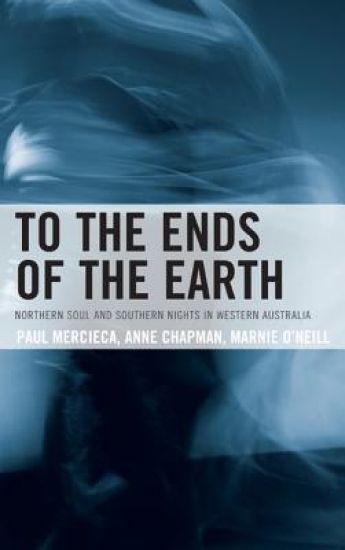
To the Ends of the Earth
Paul Mercieca; Anne Chapman; Marnie O'Neill
University Press of America
2013
sidottu
Northern Soul is a cultural phenomenon twice removed from its original source in Britain in the late 1960s. Rooted in gospel and rhythm and blues music, with pounding “four-to-the floor” beats, it is often accompanied by swirling strings, vibraphone flourishes, and infectious clapping. Since the 1960s Northern Soul has spread globally, via the Internet and migration, to such unlikely places as Medellin in Colombia. By giving voice to the members of this scene, this book explores theories about how identity and cultural literacy evolve through engagement with popular culture. It seeks to contribute to understandings about patterns of economic and media consumption, informal learning, intercultural communication, and about how migrants perceive themselves and form connections with others.
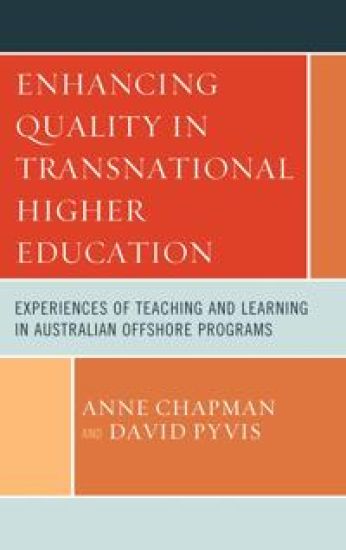
Enhancing Quality in Transnational Higher Education
Anne Chapman; David Pyvis
Lexington Books
2012
sidottu
Enhancing Quality in Transnational Higher Education explores issues and questions concerning the provision of quality teaching and learning in university programs delivered ‘offshore’. The focus of the book is on what makes for a good and successful education in the context of transnational programs of Australian universities. The book traces research by the authors into the ‘lived experiences’ of teachers and learners engaged in Australian transnational education across a broad range of universities, locations, programs and models of delivery. The enormous trend towards the delivery of university programs across national borders is compelling evidence of the internationalization of higher education in the 21st century. Universities worldwide are challenged to provide quality assurance for this new kind of education. For universities, this book offers principles to enhance existing frameworks for assuring the quality of learning and teaching in university offshore education programs. The book will also be of particular interest to academics of higher education institutions who are involved in the policy and practice of transnational education.

European Encounters with the Yamana People of Cape Horn, before and after Darwin
Anne Chapman
Cambridge University Press
2010
sidottu
This is a documented narration of dramas played out from 1578 to 2000 in the Cape Horn area, Tierra del Fuego, by the native Yamana and Charles Darwin, explorers, sealers, whalers, Anglican missionaries, and three other famous people who made contact with some of the last Yamana. The narration, based on geographical, historical, and ethnographic sources and Anne Chapman's fieldwork with the last few descendants of the Yamana, describes the Europeans' motives for going to Tierra del Fuego and the Yamana's motives for staying there some 6,000 years, what the outsiders gained, and what the Yamana lost. The main objective of this work is to incorporate the hunting-gathering Yamana into world history by evoking their way of life, especially Jemmy Button and Fuegia Basket in comparison with the outsiders they encountered, especially Drake, Cook, and Darwin in their scientific world in the context of their experiences with the Yamana in Tierra del Fuego and nearby areas.
Democratizing Technology provides a much-needed fresh perspective on the regulation of chemicals, and an important contribution to green thinking about technology. Caroline Lucas, Green Party MEP. This book is an excellent critique of the current risk-based approach to technology. By exploring the philosophical underpinnings and the practical applications of current policy on science and technology, Chapman exposes the serious flaws in allowing economic considerations to dominate the agenda in this area. Her proposals for reform are expertly constructed and deserve urgent and serious consideration by policy-makers. Dr Stuart Parkinson, Executive Director, Scientists for Global Responsibility. In this important book Anne Chapman argues that decisions about technology should answer a republican question: what kind of public world should we create through technology? Democratizing Technology deserves to be read widely. John ONeill, Professor of Political Economy, University of Manchester, UK A welcome addition to the new, more empirical and applied literature in philosophy of technology. This book will be essential reading for a variety of scholars and for the general reader intent on understanding, and criticizing, our chemically made world. Andrew Light, Interim Director, Program on the Environment, University of Washington, US What is technology? How do humans use it to build and modify the world? What are the relationships between technology, science, economics and democratic governance? What, if any, are our ethical and political responsibilities and choices in how we develop, deploy and control technology in democratic states? Democratizing Technology sets out to answer these questions. Focusing on the most widespread and pervasive technology - chemicals - this groundbreaking volume peels apart the critical technology debate to look at the relationship between humans, technology and the biological world. Attention is given to the immensely important new regulations, REACH (Registration, Evaluation, Authorization and restriction of Chemicals), the EUs largest ever legal framework, discussing the problems that are likely to occur in REACHs reliance on risk assessment methods and suggesting an alternative way forward for the regulation of chemicals. Providing much-needed clarity and insight into the heart of key debates in science and technology, risk analysis and mitigation, and domestic and international law, this volume arrives as a breath of fresh air.