Kirjojen hintavertailu – 12 903 733 kirjaa ja 27 kauppaa

Kirjailija

Anne Curry

Kirjat ja teokset yhdessä paikassa: 14 kirjaa, julkaisuja vuosilta 2000–2026, suosituimpiin kuuluu The Soldier in Later Medieval England. Vertaile teosten hintoja ja tarkista saatavuus suomalaisista kirjakaupoista.

14 kirjaa

Kirjojen julkaisuvuodet: 2000–2026.

The Soldier in Later Medieval England

The Soldier in Later Medieval England

Adrian R. Bell; Anne Curry; Andy King; David Simpkin

Oxford University Press
2026
nidottu
The Hundred Years War was a struggle for control over the French throne, fought as a series of conflicts between England, France, and their respective allies. The Soldier in Later Medieval England is the outcome of a project which collects the names of every soldier known to have served the English Crown from 1369 to the loss of Gascony in 1453, the event which is traditionally accepted as the end-date of the Hundred Years War. The data gathered throughout the project has allowed the authors of this volume to compare different forms of war, such as the chevauchées of the late fourteenth century and the occupation of French territories in the fifteenth century, and thus to identify longer-term trends. It also highlights the significance of the change of dynasty in England in the early 1400s. The scope of the volume begins in 1369 because of the survival from that point of the 'muster roll', a type of documentary record in which soldiers names are systematically recorded. The muster roll is a rich resource for the historian, as it allows closer study to be made of the peerage, the knights, the men-at-arms (the esquires), and especially the lower ranks of the army, such as the archers, who contributed the largest proportion of troops to English royal service. The Soldier in Later Medieval England seeks to investigate the different types of soldier, their regional and national origins, and movement between ranks. This is a wide-ranging volume, which offers invaluable insights into a much-neglected subject, and presents many opportunities for future research.
1415 Agincourt

1415 Agincourt

Anne Curry

THE HISTORY PRESS LTD
2024
pokkari
As night fell in Picardy on Thursday 24 October 1415, Henry V and his English troops, worn down by their long march in search of a crossing of the Somme, can only have dreamt that the battle of the next day would be remembered as one of the most momentous victories ever won. Six hundred years down the line, the battle of Agincourt still rings through the centuries. In this stupendous victory English and Welsh archers who formed the bulk of Henry’s army prevailed against large numbers of French men-at-arms and cavalry. This startling and revisionist history recreates the campaign and battle from the perspectives of the English. Acclaimed as one of the best battle accounts ever published, Anne Curry has updated her classic work in honour of the 600th anniversary of Agincourt.
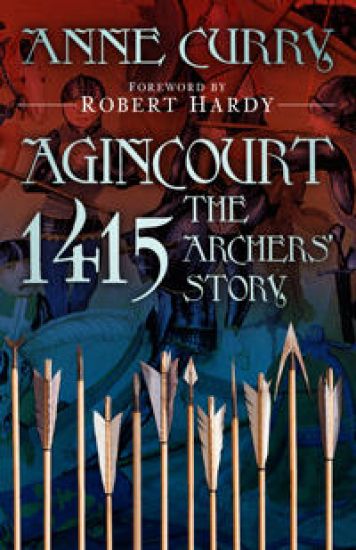
Agincourt 1415: The Archers' Story

Agincourt 1415: The Archers' Story

Anne Curry; Robert Hardy

THE HISTORY PRESS LTD
2024
pokkari

Halvin toimitettuna 20,30 €

‘Attempts to see the conflict from the perspectives of those who fought.’ – History TodayThe Battle of Agincourt still rings down through the centuries as a quite incredible victory by the outnumbered, happy few of England, enfeebled by disease and exhaustion, against the might of French chivalry. For many commentators then and now, it was the English archers who won the day for Henry V. This history re-tells the story of the battle and Henry V’s Normandy campaign from the perspective of the reputed commander of the English archers, Sir Thomas Erpingham. Sir Thomas, an experienced warrior from Norfolk with military experience dating back 40 years, is known for his brief but pivotal appearances in Shakespeare’s Henry V, where he is correctly portrayed as an elderly, white-haired veteran. At 57 he was one of the oldest there and a close personal confident of the King. But what was his background? How did he command his archers to such a place in history? And what role did the longbow and battlefield tactics play in the final analysis of victory? Copiously illustrated with reproductions of original muster rolls and other material, Agincourt 1415: The Archers’ Story steers the reader through the history of the most important battle of the Hundred Years War from an entirely fresh perspective.
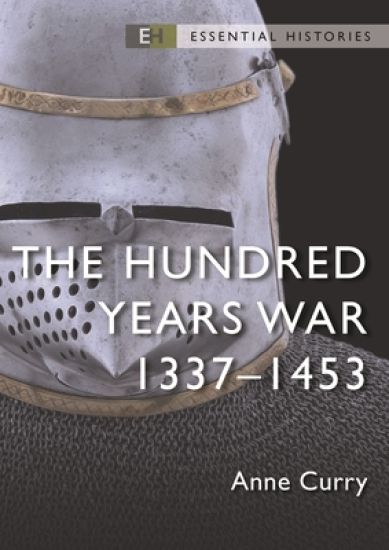
The Hundred Years War

The Hundred Years War

Anne Curry

BLOOMSBURY PUBLISHING PLC
2023
nidottu

Halvin toimitettuna 23,90 €

An illustrated overview of the Hundred Years War, the longest-running and the most significant conflict in western Europe in the later Middle Ages. There can be no doubt that military conflict between France and England dominated European history in the 14th and 15th centuries. The Hundred Years War is of considerable interest both because of its duration and the number of theatres in which it was fought. Drawing on the latest research for this new edition, Hundred Years War expert Professor Anne Curry examines how the war can reveal much about the changing nature of warfare: the rise of infantry and the demise of the knight; the impact of increased use of gunpowder and the effect of the war on generations of people. Updated and revised for the new edition, with full-colour maps and 50 new images, this illustrated introduction provides an important reference resource for the academic or student reader as well as those with a general interest in late medieval warfare.
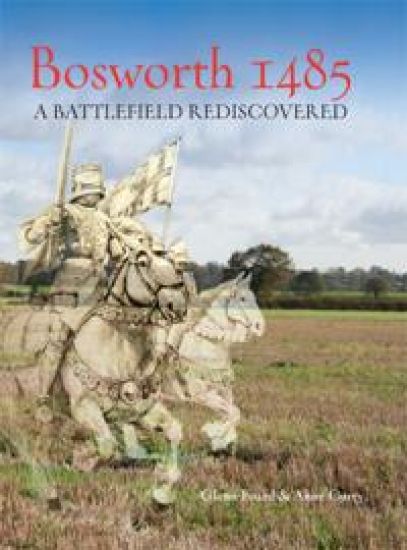
Bosworth 1485

Bosworth 1485

Glenn Foard; Anne Curry

OXBOW BOOKS
2022
nidottu
Bosworth stands alongside Naseby and Hastings as one of the three most iconic battles ever fought on English soil. The action on 22 August 1485 brought to an end the dynastic struggle known as the Wars of the Roses and heralded the dawn of the Tudor dynasty. However, Bosworth was also the most famous lost battlefield in England. Between 2005 and 2010, the techniques of battlefield archaeology were used in a major research programme to locate the site. Bosworth 1485: A Battlefield Rediscovered is the result. Using data from historical documents, landscape archaeology, metal detecting survey, ballistics and scientific analysis, the volume explores each aspect of the investigation – from the size of the armies, their weaponry, and the battlefield terrain to exciting new evidence of the early use of artillery – in order to identify where and how the fighting took place. Bosworth 1485 provides a fascinating and intricately researched new perspective on the event which, perhaps more than any other, marked the transition between medieval and early modern England.
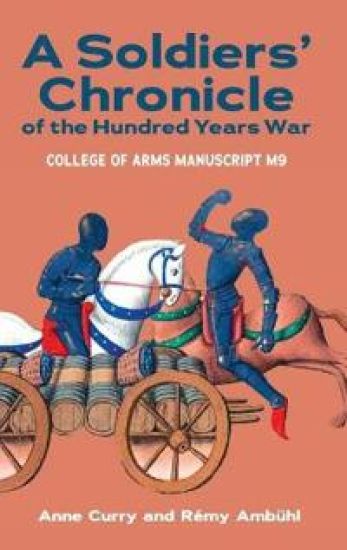
A Soldiers' Chronicle of the Hundred Years War

A Soldiers' Chronicle of the Hundred Years War

Anne Curry; Rémy Ambühl

BOYDELL BREWER LTD
2022
sidottu
A remarkable and very important unpublished chronicle written by two soldiers, covering in detail the English campaigns in France from 1415 to 1429. It lists many individuals who served in the war, and was written specifically for Sir John Fastolf, the English commander. This previously unpublished chronicle from the mid-fifteenth century covers the English wars in France from 1415 to 1429. It is highly unusual in that it was written by two soldiers, Peter Basset and Christopher Hanson. William Worcester, secretary to the English commander Sir John Fastolf, also had a hand in it, and it was specifically written for Sir John. The content is unusual, as it includes many lists of individuals serving in the war, and records their presence at battles, naming more than 700 in all. Over half these individuals are French or Scottish, so it would seem that the authors had a particularly detailed knowledge of French military participation. The narrative is important for the English campaigns in Maine in the 1420s in which Fastolf was heavily involved and which otherwise receive little attention in chronicles written on either side of the Channel. The progress of the war is well mapped, with around 230 place names mentioned. The chronicle was extensively used in the sixteenth century by several heralds and by Edward Hall. As a result, it had an influence on Shakespeare. The death of the earl of Salisbury at Orleans in 'Henry VI Part I' Follows the chronicle closely. The 'Mirror for Magistrates' Salisbury narrative is also derived from the chronicle. Another point of interest is that the chronicle is by a scribe who can be identified, and proves to be the only known fifteenth-century account of the war written in England in French, which adds an important linguistic dimension to its study.
Agincourt

Agincourt

Anne Curry

Oxford University Press
2021
nidottu
From Shakespeare to The Beatles, the battle of Agincourt has dominated the cultural landscape as one of the most famous battles in British history. Anne Curry seeks to find out how and why the legacy of Agincourt has captured the popular imagination. Agincourt (1415) is an exceptionally famous battle, one that has generated a huge and enduring cultural legacy in the six hundred years since it was fought. Everybody thinks they know what the battle was about. Even John Lennon, aged 12, wrote a poem and drew a picture headed 'Agincourt'. But why and how has Agincourt come to mean so much, to so many? Why do so many people claim their ancestors served at the battle? Is the Agincourt of popular image the real Agincourt, or is our idea of the battle simply taken from Shakespeare's famous depiction of it? Written by the world's leading expert on the battle, this book shows just why it has occupied such a key place in English identity and history in the six centuries since it was fought, exploring a cultural legacy that stretches from bowmen to Beatles, via Shakespeare, Dickens, and the First World War. Anne Curry first sets the scene, illuminating how and why the battle was fought, as well as its significance in the wider history of the Hundred Years War. She then takes the Agincourt story through the centuries from 1415 to now, from the immediate, and sometimes surprising, responses to it on both sides of the Channel, through its reinvention by Shakespeare in King Henry V (1599), and the enduring influence of both the play and the film versions of it, especially the patriotic Laurence Olivier version of 1944, at the time of the D-Day landings in Normandy. But the legacy of Agincourt does not begin and end with Shakespeare's play: from the eighteenth century onwards, on both sides of the Channel and in both the English and French speaking worlds the battle was used as an explanation of national identity, giving rise to jingoistic works in print and music. It was at this time that it became fashionable for the gentry to identify themselves with the victory, and in the Victorian period the Agincourt archer came to be emphasized as the epitome of 'English freedom'. Indeed, even today, historians continue to 'refight' the battle.
Henry V (Penguin Monarchs)

Henry V (Penguin Monarchs)

Anne Curry

Penguin Books Ltd
2018
nidottu
The acclaimed Penguin Monarchs series: short, fresh, expert accounts of England's rulers - now in paperbackHenry V's invasion of France, in August 1415, represented a huge gamble. As heir to the throne, he had been a failure, cast into the political wilderness amid rumours that he planned to depose his father. Despite a complete change of character as king - founding monasteries, persecuting heretics, and enforcing the law to its extremes - little had gone right since. He was insecure in his kingdom, his reputation low. On the eve of his departure for France, he uncovered a plot by some of his closest associates to remove him from power. Agincourt was a battle that Henry should not have won - but he did, and the rest is history. Within five years, he was heir to the throne of France. In this vivid new interpretation, Anne Curry explores how Henry's hyperactive efforts to expunge his past failures, and his experience of crisis - which threatened to ruin everything he had struggled to achieve - defined his kingship, and how his astonishing success at Agincourt transformed his standing in the eyes of his contemporaries, and of all generations to come.
The Agincourt Companion

The Agincourt Companion

Anne Curry; Dan Spencer; Peter Hoskins; Thom Richardson

Andre Deutsch Ltd
2015
sidottu
The Battle of Agincourt on 25 October, 1415, remains one of the most glorious victories in British history, with a legacy that endures today. A pivotal moment in the Hundred Years War between France and England, it reinvigorated the English campaign in France and bolstered the English crown's hereditary claims to French land. Published to mark the 600th anniversary of this famous victory, The Agincourt Companion presents the captivating story of the battle; how Henry V led an outnumbered army to glory, the skill of the archers, and the core military tactics that proved so successful for the English army. Moreover it tells a wider story about warfare in the middle ages. Delving into the development and advances in weaponry, armour and tactics during this period and the impact this had on the battlefield, this is a richly detailed look at the world of medieval warfare.
Agincourt

Agincourt

Anne Curry

Oxford University Press
2015
sidottu
Agincourt (1415) is an exceptionally famous battle, one that has generated a huge and enduring cultural legacy in the six hundred years since it was fought. Everybody thinks they know what the battle was about. Even John Lennon, aged 12, wrote a poem and drew a picture headed 'Agincourt'. But why and how has Agincourt come to mean so much, to so many? Why do so many people claim their ancestors served at the battle? Is the Agincourt of popular image the real Agincourt, or is our idea of the battle simply taken from Shakespeare's famous depiction of it? Written by the world's leading expert on the battle, this book shows just why it has occupied such a key place in English identity and history in the six centuries since it was fought, exploring a cultural legacy that stretches from bowmen to Beatles, via Shakespeare, Dickens, and the First World War. Anne Curry first sets the scene, illuminating how and why the battle was fought, as well as its significance in the wider history of the Hundred Years War. She then takes the Agincourt story through the centuries from 1415 to 2015, from the immediate, and sometimes surprising, responses to it on both sides of the Channel, through its reinvention by Shakespeare in King Henry V (1599), and the enduring influence of both the play and the film versions of it, especially the patriotic Laurence Olivier version of 1944, at the time of the D-Day landings in Normandy. But the legacy of Agincourt does not begin and end with Shakespeare's play: from the eighteenth century onwards, on both sides of the Channel and in both the English and French speaking worlds the battle was used as an explanation of national identity, giving rise to jingoistic works in print and music. It was at this time that it became fashionable for the gentry to identify themselves with the victory, and in the Victorian period the Agincourt archer came to be emphasized as the epitome of 'English freedom'. Indeed, even today, historians continue to 'refight' the battle - an academic contest which has intensified over recent years, in the run-up to the sixth hundredth anniversary year of 2015.
The Soldier in Later Medieval England

The Soldier in Later Medieval England

Adrian R. Bell; Anne Curry; Andy King; David Simpkin

Oxford University Press
2013
sidottu
The Hundred Years War was a struggle for control over the French throne, fought as a series of conflicts between England, France, and their respective allies. The Soldier in Later Medieval England is the outcome of a project which collects the names of every soldier known to have served the English Crown from 1369 to the loss of Gascony in 1453, the event which is traditionally accepted as the end-date of the Hundred Years War. The data gathered throughout the project has allowed the authors of this volume to compare different forms of war, such as the chevauchées of the late fourteenth century and the occupation of French territories in the fifteenth century, and thus to identify longer-term trends. It also highlights the significance of the change of dynasty in England in the early 1400s. The scope of the volume begins in 1369 because of the survival from that point of the 'muster roll', a type of documentary record in which soldiers names are systematically recorded. The muster roll is a rich resource for the historian, as it allows closer study to be made of the peerage, the knights, the men-at-arms (the esquires), and especially the lower ranks of the army, such as the archers, who contributed the largest proportion of troops to English royal service. The Soldier in Later Medieval England seeks to investigate the different types of soldier, their regional and national origins, and movement between ranks. This is a wide-ranging volume, which offers invaluable insights into a much-neglected subject, and presents many opportunities for future research.
The Battle of Agincourt: Sources and Interpretations
A great teaching tool for every aspect of medieval history... a remarkable book. JOURNAL OF MILITARY HISTORY Accessible collections of primary sources covering the Hundred Years War are still remarkably few and far between, and teachers of the subject will find Curry's volume a valuable addition to their bibliographies and teaching aids. FRENCH HISTORY "Agincourt! Agincourt! Know ye not Agincourt?" So began a ballad of around 1600. Since the event itself (25 October 1415), the great military engagement has occupied a special place in both English andFrench consciousness, respectively as either one of the greatest military successes ever, or as the "accursed day". Much ink has been spilt on the battle but do we really know Agincourt? Not since Harris Nicolas's History of the Battle of Agincourt (1827-33) has there been a full attempt to survey the sources until now: this book brings together, in translation and with commentary, English and French narrative accounts and literary works of the fifteenth century. It also traces the treatment of the battle in sixteenth-century English histories and in the literary representations of, amongst others, Shakespeare and Drayton. After examining how later historians interpreted the battle, it concludes with the first full assessment of the extremely rich administrative records which survive for the armies which fought "upon Saint Crispin's day". ANNE CURRY is Professor of Medieval Historyat the University of Southampton.
The Battle of Agincourt: Sources and Interpretations

The Battle of Agincourt: Sources and Interpretations

Anne Curry

The Boydell Press
2000
sidottu

Halvin toimitettuna 73,00 €

Latest title, destined to be the Agincourt sourcebook for years to come, in the Warfare in History: Sources and Interpretations series. Accessible collections of primary sources covering the Hundred Years War are still remarkably few and far between, and teachers of the subject will find Curry's volume a valuable addition to their bibliographies and teaching aids. FRENCH HISTORY "Agincourt! Agincourt! Know ye not Agincourt?" So began a ballad of around 1600. Since the event itself [25 October 1415], the great military engagement has occupied a special place in both English andFrench consciousness, respectively as either one of the greatest military successes ever, or as the "accursed day". Much ink has been spilt on the battle but do we really know Agincourt? Not since Harris Nicolas's History of the Battle of Agincourt (1827-33) has there been a full attempt to survey the sources until now: this book brings together, in translation and with commentary, English and French narrative accounts and literary works of the fifteenth century. It also traces the treatment of the battle in sixteenth-century English histories and in the literary representations of, amongst others, Shakespeare and Drayton. After examining how later historians interpreted the battle, it concludes with the first full assessment of the extremely rich administrative records which survive for the armies which fought "upon Saint Crispin's day". ANNE CURRY is Professor of Medieval Historyat the University of Southampton. CONTENTS Twenty-six chronicle sources, English and French Accounts from six sixteenth-century English historians Twenty-one records of contemporary reception of the battle, and the development of the literary tradition, in England and France Summaries of interpretations from the eighteenth to the twentieth centuries Excerpts from eighteen administrative records relating to the Englishand French armies