Kirjojen hintavertailu – 12 903 725 kirjaa ja 27 kauppaa
Kirjailija
Anne M. Burrows
Kirjat ja teokset yhdessä paikassa: 4 kirjaa, julkaisuja vuosilta 2012–2019, suosituimpiin kuuluu Photographic and Descriptive Musculoskeletal Atlas of Gibbons and Siamangs (Hylobates). Vertaile teosten hintoja ja tarkista saatavuus suomalaisista kirjakaupoista.
Rui Diogo; Josep M. Potau; Juan F. Pastor; Felix J. dePaz; Eva M. Ferrero; Gaelle Bello; Mercedes Barbosa; M. Ashraf Aziz; Anne M. Burrows; Julia Arias-Martorell; Bernard A. Wood
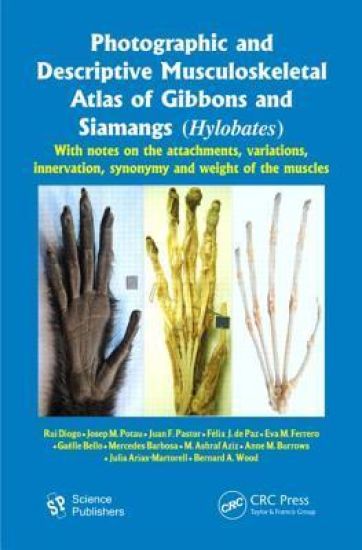
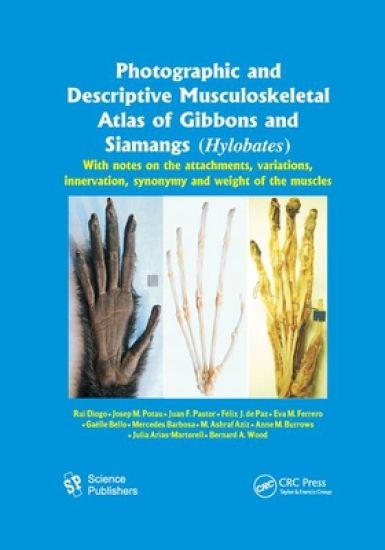
This book is the first photographic and descriptive musculoskeletal atlas of Hylobates, and adopts the same format as the photographic atlas of Gorilla published by the same authors in 2010. These two books are part of a series of monographs that will set out the comparative and phylogenetic context of the gross anatomy and evolutionary history of the soft tissue morphology of modern humans and their closest relatives. This atlas, which includes detailed high-quality photographs of musculoskeletal structures from most anatomical regions of the body as well as textual information about the attachments, innervation and weight of the respective muscles, is based on dissections and on an extensive review of the literature. It provides an updated review of the anatomical variations within hylobatids as well as an extensive list of the synonyms used in the literature to designate the structures we discuss. The atlas will be of interest to students, teachers and researchers studying primatology, comparative anatomy, functional morphology, zoology, and physical anthropology and to medical students, doctors and researchers who are curious about the origin, evolution, homology and variations of the musculoskeletal structures of modern humans.
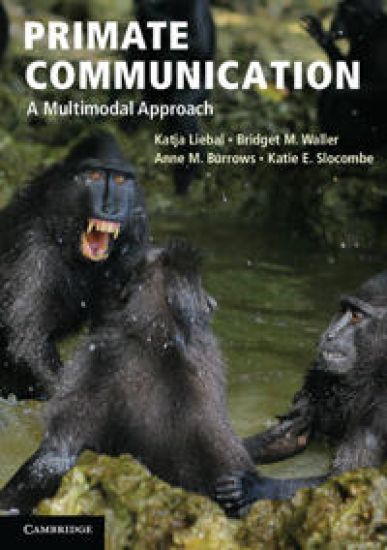
Primates communicate with each other using a wide range of signals: olfactory signals to mark territories, screams to recruit help while fighting, gestures to request food and facial expressions to initiate play. Primate Communication brings together research on all forms of interchange and discusses what we know about primate communication via vocal, gestural, facial, olfactory and integrated multimodal signals in relation to a number of central topics. It explores the morphological, neural and cognitive foundations of primate communication through discussion of cutting-edge research. By considering signals from multiple modalities and taking a unified multimodal approach, the authors offer a uniquely holistic overview of primate communication, discussing what we know, what we don't know and what we may currently misunderstand about communication across these different forms. It is essential reading for researchers interested in primate behaviour, communication and cognition, as well as students of primatology, psychology, anthropology and cognitive sciences.
Rui Diogo; Josep M. Potau; Juan F. Pastor; Felix J. dePaz; Eva M. Ferrero; Gaelle Bello; Mercedes Barbosa; M. Ashraf Aziz; Anne M. Burrows; Julia Arias-Martorell; Bernard A. Wood
This book is the first photographic and descriptive musculoskeletal atlas of Hylobates, and adopts the same format as the photographic atlas of Gorilla published by the same authors in 2010. These two books are part of a series of monographs that will set out the comparative and phylogenetic context of the gross anatomy and evolutionary history of the soft tissue morphology of modern humans and their closest relatives. This atlas, which includes detailed high-quality photographs of musculoskeletal structures from most anatomical regions of the body as well as textual information about the attachments, innervation and weight of the respective muscles, is based on dissections and on an extensive review of the literature. It provides an updated review of the anatomical variations within hylobatids as well as an extensive list of the synonyms used in the literature to designate the structures we discuss. The atlas will be of interest to students, teachers and researchers studying primatology, comparative anatomy, functional morphology, zoology, and physical anthropology and to medical students, doctors and researchers who are curious about the origin, evolution, homology and variations of the musculoskeletal structures of modern humans.