Kirjojen hintavertailu – 12 859 819 kirjaa ja 27 kauppaa

Kirjailija

Anne-Maria Makhulu

Kirjat ja teokset yhdessä paikassa: 3 kirjaa, julkaisuja vuosilta 2015–2022, suosituimpiin kuuluu Foundational African Writers. Vertaile teosten hintoja ja tarkista saatavuus suomalaisista kirjakaupoista.

3 kirjaa

Kirjojen julkaisuvuodet: 2015–2022.

Foundational African Writers

Foundational African Writers

Bhekizizwe Peterson; Khwezi Mkhize; Makhosazana Xaba; Jill Bradbury; Hugo Canham; Victoria J Collis-Buthelezi; Simon Gikandi; Anne-Maria Makhulu; Athambile Masola; Innocentia J Mhlambi; Sikhumbuzo Mngadi; Thando Njovane; Obi Nwakanma; James Ogude; Christopher EW Ouma; Stéphane Robolin; Crain Soudien; Tina Steiner; Thuto Thipe; Andrea Thorpe

WITS UNIVERSITY PRESS
2022
pokkari
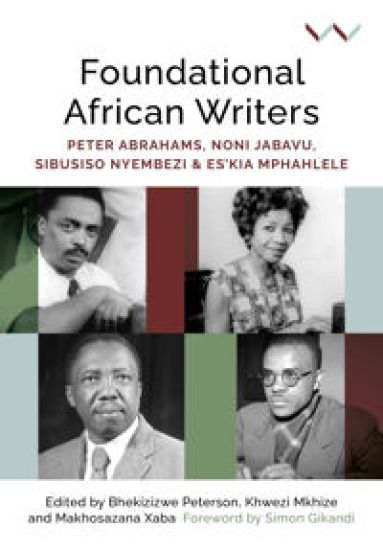
This collection explores the complexities of black existence, and intellectual and cultural life in the work and legacies of centenarian writers, Peter Abrahams, Noni Jabavu, Sibusiso Cyril Lincoln Nyembezi and Es'kia Mphahlele
Making Freedom

Making Freedom

Anne-Maria Makhulu

Duke University Press
2015
sidottu
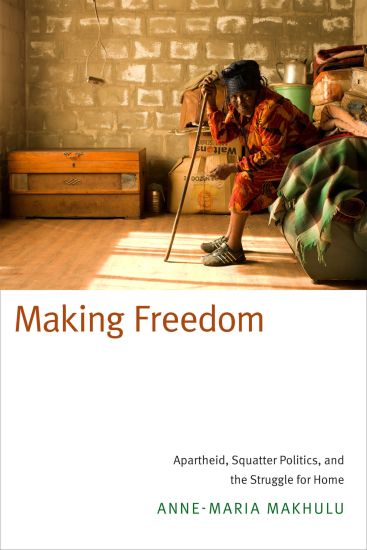
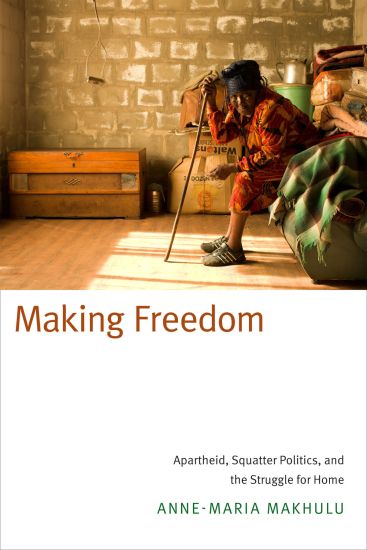
In Making Freedom Anne-Maria Makhulu explores practices of squatting and illegal settlement on the outskirts of Cape Town during and immediately following the end of apartheid. Apartheid's paradoxical policies of prohibiting migrant Africans who worked in Cape Town from living permanently within the city led some black families to seek safe haven on the city's perimeters. Beginning in the 1970s families set up makeshift tents and shacks and built whole communities, defying the state through what Makhulu calls a "politics of presence." In the simple act of building homes, squatters, who Makhulu characterizes as urban militants, actively engaged in a politics of "the right to the city" that became vital in the broader struggles for liberation. Despite apartheid's end in 1994, Cape Town’s settlements have expanded, as new forms of dispossession associated with South African neoliberalism perpetuate relations of spatial exclusion, poverty, and racism. As Makhulu demonstrates, the efforts of black Capetonians to establish claims to a place in the city not only decisively reshaped Cape Town's geography but changed the course of history.
Making Freedom

Making Freedom

Anne-Maria Makhulu

Duke University Press
2015
pokkari
In Making Freedom Anne-Maria Makhulu explores practices of squatting and illegal settlement on the outskirts of Cape Town during and immediately following the end of apartheid. Apartheid's paradoxical policies of prohibiting migrant Africans who worked in Cape Town from living permanently within the city led some black families to seek safe haven on the city's perimeters. Beginning in the 1970s families set up makeshift tents and shacks and built whole communities, defying the state through what Makhulu calls a "politics of presence." In the simple act of building homes, squatters, who Makhulu characterizes as urban militants, actively engaged in a politics of "the right to the city" that became vital in the broader struggles for liberation. Despite apartheid's end in 1994, Cape Town’s settlements have expanded, as new forms of dispossession associated with South African neoliberalism perpetuate relations of spatial exclusion, poverty, and racism. As Makhulu demonstrates, the efforts of black Capetonians to establish claims to a place in the city not only decisively reshaped Cape Town's geography but changed the course of history.