Kirjojen hintavertailu – 12 903 725 kirjaa ja 27 kauppaa

Kirjailija

Anne Marie Albano

Kirjat ja teokset yhdessä paikassa: 10 kirjaa, julkaisuja vuosilta 1996–2024, suosituimpiin kuuluu You And Your Anxious Child. Vertaile teosten hintoja ja tarkista saatavuus suomalaisista kirjakaupoista.

10 kirjaa

Kirjojen julkaisuvuodet: 1996–2024.

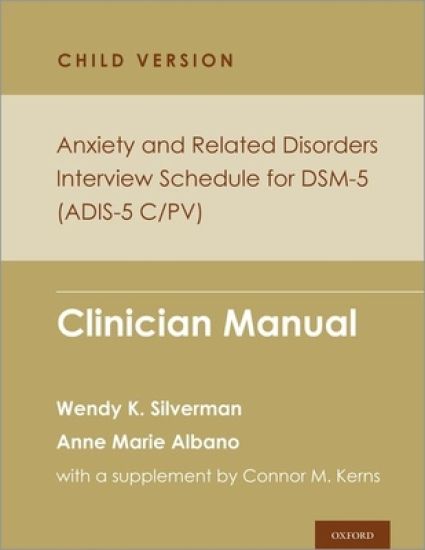
Anxiety and Related Disorders Interview Schedule for DSM-5, Child and Parent Version

Anxiety and Related Disorders Interview Schedule for DSM-5, Child and Parent Version

Wendy K. Silverman; Anne Marie Albano

OXFORD UNIVERSITY PRESS INC
2024
nidottu
The Anxiety Disorders Interview Schedule for DSM-5, Child and Parent Versions, are the gold standard semi-structured interviews used in clinical research and services to assess and diagnose the major mental health conditions affecting children, adolescents and young adults. These interviews cover the range of conditions identified in the Diagnostic and Statistical Manual of Mental Disorders (DSM), while also providing information for careful case formulation in treatment planning and evaluation of outcomes. Evaluators are able to quantify the severity of illness using a Clinician Severity Rating (CSR), as well as level of severity of symptoms and associated avoidance behavior. Decision rules for combining parent and youth reports, examples of CSR levels for the child anxiety triad of separation anxiety disorder, social anxiety disorder, and generalized anxiety disorder are included in the Clinician Guide, as well as detailed information on use of the Autism Supplement. This item includes one Clinician Manual.
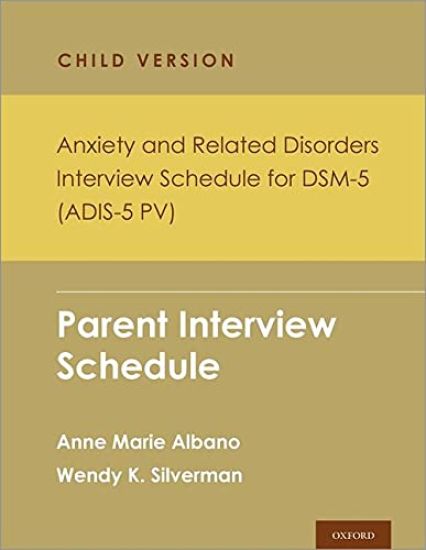
Anxiety and Related Disorders Interview Schedule for DSM-5, Child and Parent Version

Anxiety and Related Disorders Interview Schedule for DSM-5, Child and Parent Version

Anne Marie Albano; Wendy K. Silverman

OXFORD UNIVERSITY PRESS INC
2024
muu
The Anxiety Disorders Interview Schedule for DSM-5, Child and Parent Versions, are the gold standard semi-structured interviews used in clinical research and services to assess and diagnose the major mental health conditions affecting children, adolescents and young adults. These interviews cover the range of conditions identified in the Diagnostic and Statistical Manual of Mental Disorders (DSM), while also providing information for careful case formulation in treatment planning and evaluation of outcomes. Evaluators are able to quantify the severity of illness using a Clinician Severity Rating (CSR), as well as level of severity of symptoms and associated avoidance behavior. Decision rules for combining parent and youth reports, examples of CSR levels for the child anxiety triad of separation anxiety disorder, social anxiety disorder, and generalized anxiety disorder are included in the Clinician Guide. Price is for a set of 5 Parent Interview Schedules.
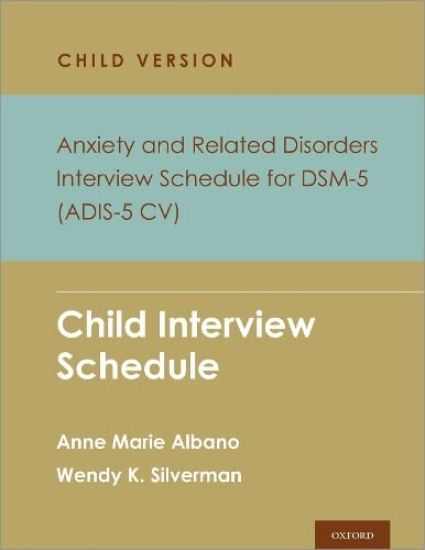
Anxiety and Related Disorders Interview Schedule for DSM-5, Child and Parent Version

Anxiety and Related Disorders Interview Schedule for DSM-5, Child and Parent Version

Anne Marie Albano; Wendy K. Silverman

OXFORD UNIVERSITY PRESS INC
2024
muu
The Anxiety Disorders Interview Schedule for DSM-5, Child and Parent Versions, are the gold standard semi-structured interviews used in clinical research and services to assess and diagnose the major mental health conditions affecting children, adolescents and young adults. These interviews cover the range of conditions identified in the Diagnostic and Statistical Manual of Mental Disorders (DSM), while also providing information for careful case formulation in treatment planning and evaluation of outcomes. Evaluators are able to quantify the severity of illness using a Clinician Severity Rating (CSR), as well as level of severity of symptoms and associated avoidance behavior. Decision rules for combining parent and youth reports, examples of CSR levels for the child anxiety triad of separation anxiety disorder, social anxiety disorder, and generalized anxiety disorder are included in the Clinician Guide. Price is for a set of 5 Child Interview Schedules.
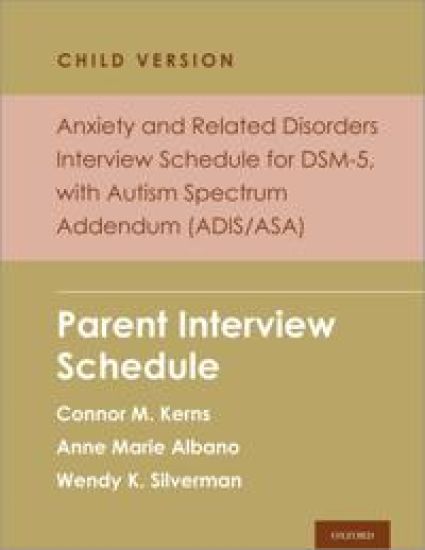
Anxiety and Related Disorders Interview Schedule for DSM-5, Child and Parent Version, with Autism Spectrum Addendum (ADIS/ASA)

Anxiety and Related Disorders Interview Schedule for DSM-5, Child and Parent Version, with Autism Spectrum Addendum (ADIS/ASA)

Connor M. Kerns; Anne Marie Albano; Wendy K. Silverman

OXFORD UNIVERSITY PRESS INC
2024
muu

Halvin toimitettuna 100,90 €

The Anxiety Disorders Interview Schedule for DSM-5, Child and Parent Versions, are the gold standard semi-structured interviews used in clinical research and services to assess and diagnose the major mental health conditions affecting children, adolescents and young adults. These interviews cover the range of conditions identified in the Diagnostic and Statistical Manual of Mental Disorders (DSM), while also providing information for careful case formulation in treatment planning and evaluation of outcomes. Evaluators are able to quantify the severity of illness using a Clinician Severity Rating (CSR), as well as level of severity of symptoms and associated avoidance behavior. Decision rules for combining parent and youth reports, examples of CSR levels for the child anxiety triad of separation anxiety disorder, social anxiety disorder, and generalized anxiety disorder are included in the Clinician Guide, as well as detailed information on use of the Autism Supplement. Price is for a set of 5 Parent Interview Schedules with Autism Spectrum Addendum.
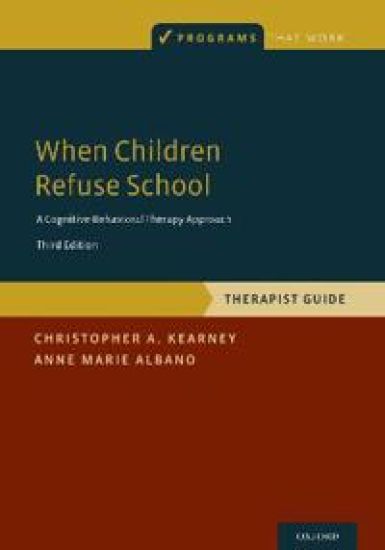
When Children Refuse School

When Children Refuse School

Christopher A. Kearney; Anne Marie Albano

Oxford University Press Inc
2018
nidottu

Halvin toimitettuna 61,30 €

Many children and teenagers refuse to attend school or have anxiety-related difficulties remaining in classes for an entire day. School refusal behavior can contribute to a child's academic, social, and psychological problems, impact a child's chances for future educational, financial, and personal success, and significantly affect family functioning. Cognitive Behavioral Therapy (CBT) has been shown to be a highly effective treatment for youth who exhibit this behavior. The third edition of When Children Refuse School, Therapist Guide, provides an updated multi-tiered approach model that can be used to effectively address the main types of school refusal behavior. The Guide introduces new material on very severe and chronic cases of problematic absenteeism, including alternative educational avenues and expansion of manual procedures, for children and adults. This manual includes tools for assessing a child's reasons for school refusal behavior and is based on a functional, prescriptive model. It presents well-tested techniques arranged by function to tailor treatment to a child's particular characteristics. Each treatment package also contains a detailed discussion of special topics pertinent to treating youths with school refusal behavior, such as medication, panic attacks, and being teased. A corresponding workbook is also available for parents, who often play an important part in a child's recovery. This comprehensive program is an invaluable resource for clinicians treating school refusal behavior.
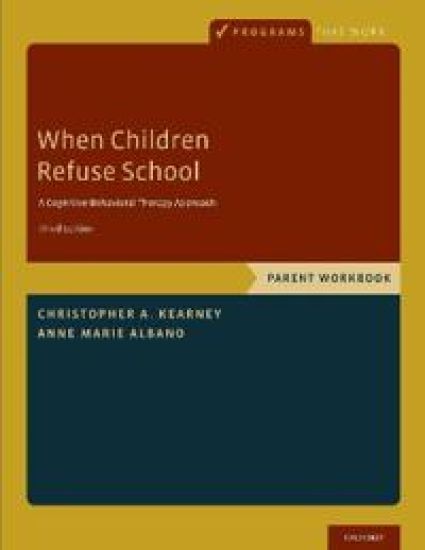
When Children Refuse School

When Children Refuse School

Christopher A. Kearney; Anne Marie Albano

Oxford University Press Inc
2018
nidottu

Halvin toimitettuna 49,10 €

School refusal behavior is a common and difficult problem facing parents of children and teenagers. The behavior often results in severe academic, social, and psychological problems. A child's absence from school also significantly increases family conflict. If your child experiences anxiety or noncompliance about attending school and has trouble remaining in classes for an entire day, When Children Refuse School, Parent Workbook, and the corresponding Therapist Guide, can help. The third edition of When Children Refuse School, Parent Workbook, is designed to help you work with a qualified therapist to resolve your child's school refusal behavior. This edition introduces parent involvement strategies, especially with respect to intervention compliance, and offers recommendations regarding consultation with school officials. Regardless of whether your child refuses school to relieve school-related distress, to avoid negative social situations at school, to receive attention from you or another family member, or to obtain tangible rewards outside of school, the flexible treatments described in this book will help you and your child overcome school refusal behavior. The Workbook describes what you can expect throughout the assessment and treatment of your child and provides answers to questions you may have about the process of therapy. It also provides instructions for continuing certain aspects of the program at home, including relaxation and breathing techniques, as well as exposure exercises to decrease your child's anxiety.
You And Your Anxious Child

You And Your Anxious Child

Anne Marie Albano

Avery Publishing Group Inc.,U.S.
2013
nidottu
One of the world's foremost experts on anxiety in children provides a guide to recognizing and alleviating a range of debilitating fears. Anxiety affects more children and teens than any other psychiatric illness, but it's also the most treatable emotional disorder. Some 25 percent of children and adolescents will suffer an anxiety disorder at several points in their lifetime, resulting in serious problems in their ability to function in school, with peers, and on a general day-to-day basis. A renowned researcher and clinician who has developed groundbreaking, proven coping strategies illuminates a new path to fear-free living for families. "You and Your Anxious Child "differentiates between separation anxiety, generalized anxiety, and social phobia, and guides parents on when and how to seek intervention. With moving case studies, such as Jon's, whose mother quit her job because his separation anxiety compelled her to stay with him full-time, this book elucidates the nightmare that families can be living, and helps them understand that they are not alone. Every step of the way, Albano illustrates proven therapies to manage anxiety issues in children while addressing the emotional needs of parents, too. "You and Your Anxious Child" brings much-needed hope to families, helping them shape a positive new vision of the future.
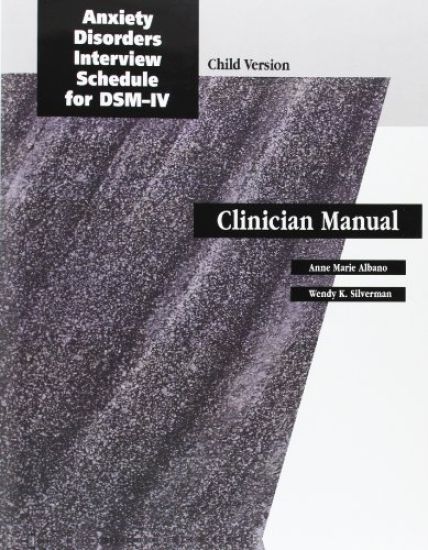
Anxiety Disorders Interview Schedule (ADIS-IV): Child and Parent Therapist Guide

Anxiety Disorders Interview Schedule (ADIS-IV): Child and Parent Therapist Guide

Wendy K. Silverman; Anne Marie Albano

Oxford University Press Inc
2007
nidottu
Companion Child and Parent Interviews are designed to help you diagnose children with emotional disorder, where anxiety is a prominent component. Problem behaviors and diagnoses include school refusal behavior, separation anxiety, social phobia, specific phobia, panic disorder, agoraphobia, OCD, and PTSD. Assessment of ADHD allow for differentiation of inattentive type, hyperactive-impulsive type, and combined type. Interview questions in the Child Interview are specifically designed to be sensitive and understandable at varied age levels. The Child and Parent Interview Schedules for the ADIS for DSM-IV:C are each semistructured interviews organized diagnostically to permit differential diagnoses among all of the DSM-IV anxiety disorders. In addition, sections for assessing mood and externalizing disorders are included to allow comprehensive assessment of a child's full diagnostic picture. These sections are particularly important for evaluation of comorbidity patterns that often accompany anxiety disorders. The diagnostic sections of the Child and Parent Interview Schedules allow sufficient information with which to formulate a thorough treatment plan for the child's presenting problems. The Child and Parent Interview Schedules both contain comprehensive sections for assessing the functions and patterns of school refusal behavior, a serious behavioral complication often accompanying anxiety disorders in youth. Screening sections have been included in the Interview Schedules for assessing substance abuse, psychosis, selective mutism, eating disorders, somatoform disorders, and specific developmental and learning disorders of childhood and adolescence. This item includes one clinician manual.
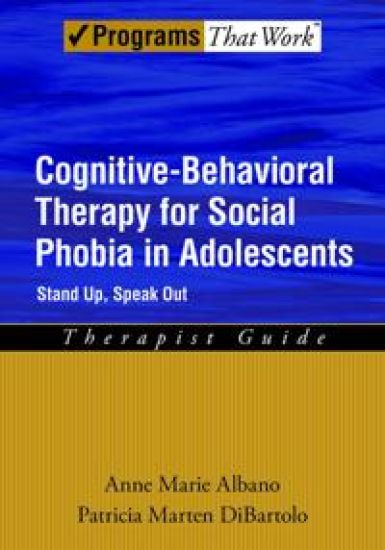
Cognitive-Behavioral Therapy for Social Phobia in Adolescents

Cognitive-Behavioral Therapy for Social Phobia in Adolescents

Anne Marie Albano; Patricia Marten DiBartolo

Oxford University Press Inc
2007
nidottu
Shyness and social anxiety are common emotions experienced by children and teenagers. When intense, they often result in the avoidance of social situations and can significantly impair a child's functioning and emotional development. Left untreated in its clinical state, Social Anxiety Disorder (SAD) is a serious condition often lasting into adulthood. Cognitive Behavioral Therapy (CBT) is highly effective in treating adults with SAD and has been successfully adapted for the treatment of youth. This therapist guide presents a group treatment program for adolescents aged 13 to 18 that uses well-tested CBT techniques. In this program, groups of 5 to 7 youths with excessive shyness or social anxiety learn how to cope in social situations. Cognitive restructuring exercises help participants understand their anxiety and reexamine thinking that may contribute to their distress. Other exercises teach social and problem solving skills, and also increase self-esteem and assertiveness. Behavioral exposure exercises give participants the opportunity to practice these skills by systematically confronting them in feared or avoided social situations. This guide offers practical instruction on how to apply this program, as well as information on the theory and research on which it is based. It provides session outlines for adolescent group therapy, including sample dialogues, role-playing scenarios, and homework assignments. It also addresses individual therapy and provides tips for conducting the treatment with children aged 8 to 12.
Anxiety Disorders Interview Schedule (ADIS-IV): Child and Parent Combination Specimen Set (Includes Clinician Manual, 1 Child Interview Schedule and 1 Parent Interview Schedule)
Companion Child and Parent Interviews are designed to help you diagnose children with emotional disorder, where anxiety is a prominent component. Problem behaviors and diagnoses include school refusal behavior, separation anxiety, social phobia, specific phobia, panic disorder, agoraphobia, OCD, and PTSD. Assessment of ADHD allow for differentiation of inattentive type, hyperactive-impulsive type, and combined type. Interview questions in the Child Interview are specifically designed to be sensitive and understandable at varied age levels. The Child and Parent Interview Schedules for the ADIS for DSM-IV:C are each semistructured interviews organized diagnostically to permit differential diagnoses among all of the DSM-IV anxiety disorders. In addition, sections for assessing mood and externalizing disorders are included to allow comprehensive assessment of a child's full diagnostic picture. These sections are particularly important for evaluation of comorbidity patterns that often accompany anxiety disorders. The diagnostic sections of the Child and Parent Interview Schedules allow sufficient information with which to formulate a thorough treatment plan for the child's presenting problems. The Child and Parent Interview Schedules both contain comprehensive sections for assessing the functions and patterns of school refusal behavior, a serious behavioral complication often accompanying anxiety disorders in youth. Screening sections have been included in the Interview Schedules for assessing substance abuse, psychosis, selective mutism, eating disorders, somatoform disorders, and specific developmental and learning disorders of childhood and adolescence. This item includes one clinician manual, one child interview schedule, and one parent interview schedule.