Kirjojen hintavertailu – 12 903 724 kirjaa ja 27 kauppaa
Kirjailija
Anne Winslow
Kirjat ja teokset yhdessä paikassa: 94 kirjaa, julkaisuja vuosilta 1990–2013, suosituimpiin kuuluu Self-Rule in Africa: Recent Advances in the Gold Coast. Vertaile teosten hintoja ja tarkista saatavuus suomalaisista kirjakaupoista.
The International Court and World Crisis is a book that explores the role of international conciliation in resolving global conflicts. Written by Julius Stone, it was originally published in January 1962 as part of the International Conciliation series, which is a collection of publications by the Carnegie Endowment for International Peace. The book focuses on the International Court of Justice, which is the principal judicial organ of the United Nations. Stone examines the court's history, structure, and procedures, as well as its role in resolving international disputes. He also discusses the court's limitations and challenges, including its lack of enforcement powers and the political pressures that can influence its decisions. The book is particularly relevant to the early 1960s, a time of significant global turmoil, including the Cold War, decolonization, and the Cuban Missile Crisis. Stone argues that the International Court can play a crucial role in promoting peace and stability in the face of these crises, but only if it is given the resources and support it needs to function effectively. Overall, The International Court and World Crisis is a thoughtful and insightful analysis of the challenges facing international law and institutions in a rapidly changing world. It is an important read for anyone interested in international relations, conflict resolution, and the role of law in global affairs. Additional Editors Are Elizabeth G. Korbonski And Janet Cameron Duffy. This scarce antiquarian book is a facsimile reprint of the old original and may contain some imperfections such as library marks and notations. Because we believe this work is culturally important, we have made it available as part of our commitment for protecting, preserving, and promoting the world's literature in affordable, high quality, modern editions, that are true to their original work.
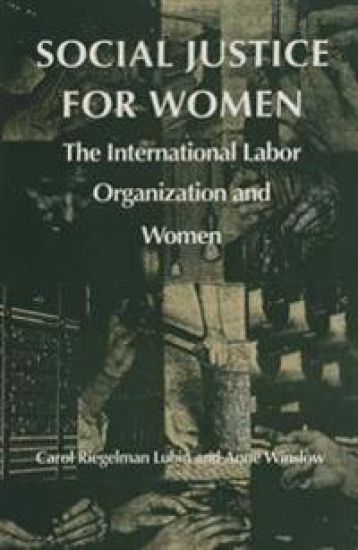
The International Labor Organization (ILO), founded in 1919 at the Paris Peace Conference, was the first international organization established prior to World War II to mention women in its constitution. Organized to promote the “protection of young children, young persons and women,” its original Labor Charter stood by the principle that “men and women should receive equal renumeration for work of equal value.” Social Justice for Women provides the first comprehensive and analytical history of the ILO with respect to women, examining the origins, operations, and successes and weaknesses of its policies. Carol Riegelman Lubin, a staff member of ILO for seventeen years, and Anne Winslow, for twenty-two years editor for the Carnegie Endowment, explore the important role played by women of the American and British trade union movement in the founding of the ILO. In surveying the organization’s history and structure, they ask how the ILO’s concern with women has manifested over the years, if it was faithful to its constitution, how it dealt with conflicting needs of women from industrialized nations and Third World countries, and what its relationship was to the international feminist movement. Drawing on case studies and analyses of literature on women and work, the authors identify the role of other international organizations in response to the ILO in fostering, or sometimes hindering, women’s development in the labor area.