Kirjojen hintavertailu – 12 903 725 kirjaa ja 27 kauppaa

Kirjailija

Annemarie Schimmel

Kirjat ja teokset yhdessä paikassa: 27 kirjaa, julkaisuja vuosilta 1982–2024, suosituimpiin kuuluu Sufismus. Vertaile teosten hintoja ja tarkista saatavuus suomalaisista kirjakaupoista.

27 kirjaa

Kirjojen julkaisuvuodet: 1982–2024.

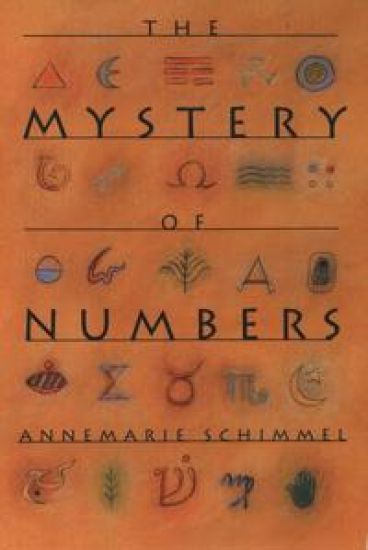
The Mystery of Numbers

The Mystery of Numbers

Annemarie Schimmel

Oxford University Press Inc
1994
nidottu

Halvin toimitettuna 30,50 €

Why is the number seven lucky - even holy - in almost every culture? Why do we speak of the four corners of the earth? Why do cats have nine lives (except in Iran, where they have seven)? From literature to folklore to private superstitions, numbers play a conspicuous role in our daily lives. In The Mystery of Numbers Annemarie Schimmel conducts an illuminating tour of the mysteries attributed to numbers over the centuries. She covers the origins of numbers, the symbolism of numbers, the source of this symbolism, and examines individual numbers from one to ten thousand. Using examples ranging from the Bible to Shakespeare, this engaging account uncovers the roots of a phenomenon we all feel every Friday the thirteenth.

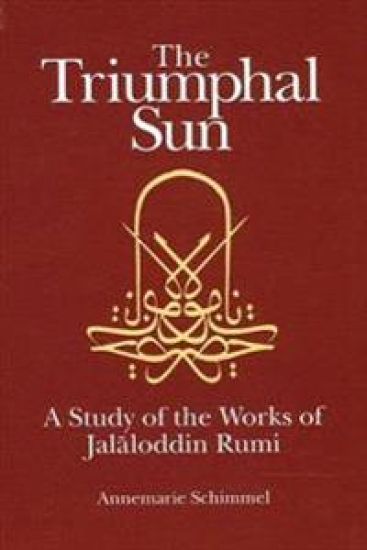
The Triumphal Sun

The Triumphal Sun

Annemarie Schimmel

State University of New York Press
1993
pokkari
This is a book on Rumi's life, his poetry, his thought, and his influence. Rumi's work forms one of the pillars of the Sufi orders, particularly the Mevlevi order, better known in the West as the Whirling Dervishes. In this book Rumi emerges not only as a spiritual master, but also as a fully human being grounded firmly in the Koran and in classical Islamic mysticism. The light of the Divine Sun, in its Beauty and Majesty, manifested itself for Rumi through the person of Shams of Tabriz. Transformed by this light, consumed by this fire, Mowlana Rumi saw the world in a new light. Everywhere he perceived God's Grandeur and his Grace. The book also discusses the theological premises upon which Rumi's work rests, his attitude to the problems of free will and predestination, and his analysis of the mystical stages and stations. The book not only gives a very rich analysis of Rumi's language and poetical art, but also a picture of medieval Konya, whose features the mystical poet transforms and transfigures.
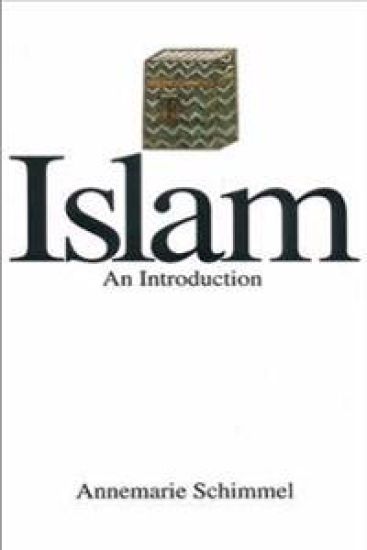
Islam

Islam

Annemarie Schimmel

State University of New York Press
1992
pokkari
It is a splendid introduction—carefully researched and comprehensive, yet readable. It corrects many popular and erroneous notions about Islam that prevail in non-Muslim societies. For the general reader there are many profound insights of great consequence, for example, the passages on women, marriage, and inheritance, or the section on jihad, nearly always completely misunderstood in the press.
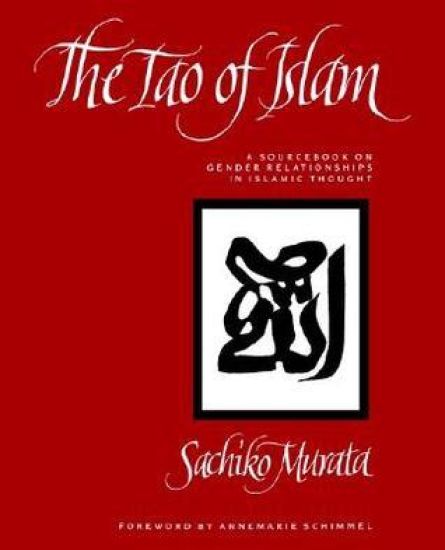
The Tao of Islam

The Tao of Islam

Sachiko Murata; Annemarie Schimmel

State University of New York Press
1992
pokkari
The Tao of Islam is a rich and diverse anthology of Islamic teachings on the nature of the relationships between God and the world, the world and the human being, and the human being and God. Focusing on gender symbolism, Sachiko Murata shows that Muslim authors frequently analyze the divine reality and its connections with the cosmic and human domains with a view toward a complementarity or polarity of principles that is analogous to the Chinese idea of yin/yang. Murata believes that the unity of Islamic thought is found, not so much in the ideas discussed, as in the types of relationships that are set up among realities. She pays particular attention to the views of various figures commonly known as "Sufis" and "philosophers," since they approach these topics with a flexibility and subtlety not found in other schools of thought. She translates several hundred pages, most for the first time, from more than thirty important Muslims including the Ikhwan al-Safa', Avicenna, and Ibn al-'Arabi.
As Through a Veil

As Through a Veil

Annemarie Schimmel

Columbia University Press
1982
sidottu
A history of mystical Islamic poetry, not only in Arabic and Persian, but also in the popular folk traditions of regional vernacular languages, including a chapter on Rumi and Sufi poetry