
Kirjailija
Annie Besant
Kirjat ja teokset yhdessä paikassa: 481 kirjaa, julkaisuja vuosilta 1887–2026, suosituimpiin kuuluu May a Christian Believe in Reincarnation?. Vertaile teosten hintoja ja tarkista saatavuus suomalaisista kirjakaupoista.
Nimi esiintyy myös muodoissa: Annie Bésant
481 kirjaa
Kirjojen julkaisuvuodet: 1887–2026.
An Unabridged Edition of the 1918 Printing to include All Twelve Chapters, Preface, and The Unity Underlying All Religions (Original Introduction) at book's end, with all Footnotes, Charts and Illustrations: Preface - The Physical Plane - The Astral Plane - Kamaloka - The Mental Plane - Devachan - The Buddhic and Nirvanic Planes - Reincarnation - Reincarnation (Continued) - Karma - The Law of Sacrifice - Man's Ascent - Building A Kosmos - The Unity Underlying All Religions.
How India wrought for freedom, the story of the National congress told from official records
Annie Besant
Alpha Edition
2019
pokkari
This book has been considered by academicians and scholars of great significance and value to literature. This forms a part of the knowledge base for future generations. We have represented this book in the same form as it was first published. Hence any marks seen are left intentionally to preserve its true nature.
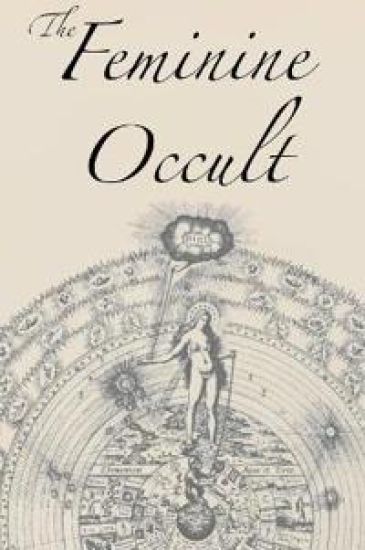
The Feminine Occult
Helena P Blavatsky; Annie Besant; Florence Farr
Lamp of Trismegistus
2019
pokkari
Halvin toimitettuna 32,70 €
"The Laws of the Higher Life" is a short manuscript by the well known Theosophist Annie Besant. It consists of three sections, each on a different basic principle regarding ascension and the laws of the spiritual realm. Through adherence to these basic principles, in concordance with Hindu principles, enlightenment and a positive world ensue. A large part of the work, especially within the two latter sections, involves asceticism and charitable acts as a general rule of life. It cites, at times, the Bhagavad Gita, as well.
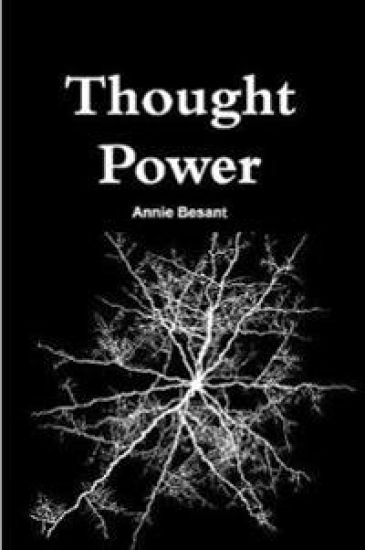
In this classic small book, famed occultists and mystic philosopher Annie Besant explores the vital substance of the mind, and explains how it leads the Ego, the Self, through life based on the mental images fostered there. Learn to harness the power of thought, and control the destiny you are called to fulfill, here on Earth. An invaluable treatise on the explosive power held within the human brain.

Annie Besant's "Ideals of Theosophy" is one of the primary introductory works on the subject of this spiritual order, and written in the form of four lectures by this enigmatic lady- once a political activist, later a spiritual figure and adoptive mother of Krishnamurti himself. Its content is quite ahead of its time, at moments, proposing criminal reforms which were not only adopted but are even now widely accepted, along with some social reforms based on the principles of theosophy, some of which are accepted, and some which never particularly took hold in the Western World. Besant alludes heavily to Hinduism, which she applauds, and was a proponent, early and often, of Indian independence from the British.
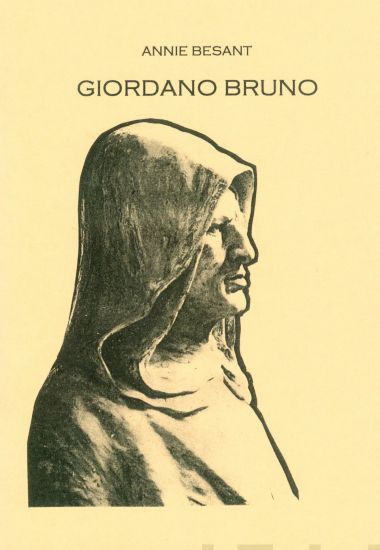
Giordano Bruno (1548-1600) oli italialainen filosofi, kirjailija, teologi, matemaatikko, astronomi, okkultisti, dominikaanimunkki ja teosofi, joka tutki Pythagoraan ja muiden antiikin ajan filosofien oppeja. Bruno esitti ihmistä ja maailmankaikkeutta koskevia näkemyksiä, jotka poikkesivat aikansa tieteellisistä näkemyksistä. Hän sanoi, että "olen pitänyt ja pidän sieluja kuolemattomina". Hänen mukaansa maailmoja, aurinkoja ja niitä kiertäviä planeettoja oli lukematon määrä. Giordano Bruno julistettiin harhaoppineeksi ja kieltäydyttyään luopumasta mielipiteistään hänet poltettiin roviolla Campo del Fiorin torilla Roomassa 17.2.1600.
Dans la premi re conf rence, l'auteur fait un parall le de la m thode objective et de la m thode subjective, des proc d s d'investigation de la science moderne - observation et exp rimentation, - et de l'exp rience interne pratiqu e par les adeptes de la Science antique. La seconde partie est une esquisse des donn es les plus grandioses dues cette m thode de recherches, soit l' volution d'un Univers. Le lien logique entre ces deux parties est l' nonc d'un petit nombre de principes, universellement admis, dont la conclusion tend d montrer dans la culture du Moi, dans le d veloppement int gral des pouvoirs latents dans l'homme, en un mot la condition m me de toute compr hension r elle. Dans ce livre, Mme Besant traite de fa on intelligible l' volution en la prenant sous deux aspects distincts qui sont l' volution de la vie et le d veloppement des formes. De mani re savante elle y d voile les m thodes des Sciences ancienne et moderne. Vient ensuite un brillant expos sur la Fonctions des Dieux, c'est- dire les activit s invisibles de la Nature, desquelles d pend tout le c t visible, oeuvres sous les infl uences des Anges ou D vas, pour d signer ces Intelligences spirituelles d velopp es. Une lecture captivante, comme quoi cette volution renferme la promesse de la perfection fi nale et comment l'ouvrage de Dieu surpasse tout ce que nous pouvons imaginer de meilleur.

D couvrez le v ritable Alchimie, cette Science m thodique convenable la Nature comme jamais il n'a t pr sent auparavant. Les Sages ont d crit trois Voies qui permettent toutes d'atteindre la lib ration et parmi lesquelles l'homme peut choisir celle qu'il suivra. Les Sentiers, tels qu'ils sont d crits dans la Bhagavad G t , sont au nombre de trois et pourtant, dans un certain sens, ils n'en font qu'un. Tout en diff rant entre eux par leurs m thodes, ils aboutissent tous au m me point. Tout en diff rant entre eux au point de vue des conditions ext rieures, ils m nent tous au Moi unique, ils visent tous le m me but. Ces trois Sentiers - les trois M rgas, comme les appelle la philosophie indienne: celui de Karma ou de l'Action, celui de Jn na ou de la Sagesse et celui de Bhakti ou de la D votion - ces trois Sentiers fi nissent par se confondre en un seul, attendu que chacun d'eux acquiert la fin les qualit s des autres, que chacun d'eux se fond, en quelque sorte, dans les deux autres, en unifi ant les caract ristiques de tous.
D couvrez le royaume invisible comme jamais il n'a t pr sent auparavant. De l'Absolu l'homme, la formation d'un syst me solaire, l' volution de la vie, la constitution de l'homme, les cha nes plan taires, apr s la mort, la r incarnation, tels sont les th mes ici expos s dans cette oeuvre, la lumi re de la Th osophie. La Th osophie est un sujet qui embrasse l'univers, elle est cette connaissance-sagesse qui aide l'humanit dans sa compr hension des lois qui r gissent la vie. Certains des nombreux sujets d velopp s: La sagesse divine ou Th osophie - Les v rit s fondamentales des religions - Le plan physique - L'esprit et la mati re - La formation des sept plans - Sommeil et r ve - La mort - Renaissance - Le plan astral - Les l mentals artificiels ou formes-pens es - Les esprits de la nature - Les animaux dans l'astral - closion des pouvoirs - Le k maloka - L'heure de la mort - Le plan mental, sa nature et ses subdivisions - Les anges ou d vas - Les ma tres - La communication des mes - Le d vakhan - Les sept r gions - Les plans bouddhique et nirvanique - Les tres qui vivent en nirvana - L'aura - La r incarnation - Continuit de la vie et de la forme - Les deux principes fondamentaux - Le r gne l mental, min ral, v g tal et animal - Mentalit embryonnaire - La r incarnation et l'h r dit - Le Karma - Karma collectif - La fatalit et le libre arbitre - La loi du sacrifice - L'ascension humaine - Les ma tres et leurs disciples - La construction d'un cosmos - Les sept races et les sept r gnes de chaque globe - La cha ne lunaire - La chimie occulte.
From the FOREWORD. THIS little book is intended to help the student to study his own nature, so far as its intellectual part is concerned. If he masters the principles herein laid down, he will be in a fair way to co-operate with Nature in his own evolution, and to increase his mental stature far more rapidly than is possible while he remains ignorant of the conditions of his growth. The Introduction may offer some difficulties to the lay reader, and may perhaps be skipped by such at the first reading. It is necessary, however, as a foundation for those who would see the relation of the intellect to the other parts of their nature and to the outer world. And those who would fulfill the maxim, ""Know thyself,"" must not shrink from a little mental exertion, nor must expect mental food to drop ready-cooked from the sky into a lazily-opened mouth. If the booklet help even a few earnest students, and clear some difficulties out of the way, its purpose will have been served. -Annie Besant.
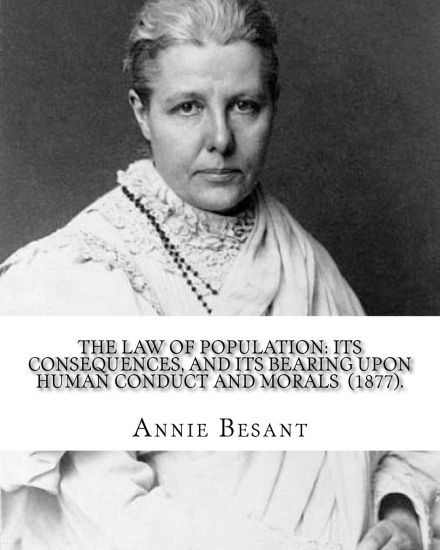
The Law of Population: Its Consequences, and Its Bearing upon Human Conduct and Morals (1877). By: Annie Besant: (Original Classics)
Annie Besant
Createspace Independent Publishing Platform
2018
nidottu
Annie Besant, n e Wood (1 October 1847 - 20 September 1933) was a British socialist, theosophist, women's rights activist, writer and orator and supporter of Irish and Indian self-rule. In 1867, Annie at age 20, married Frank Besant, a clergyman, and they had two children, but Annie's increasingly anti-religious views led to a legal separation in 1873. She then became a prominent speaker for the National Secular Society (NSS) and writer and a close friend of Charles Bradlaugh. In 1877 they were prosecuted for publishing a book by birth control campaigner Charles Knowlton. The scandal made them famous, and Bradlaugh was elected M. P. for Northampton in 1880. She became involved with union actions including the Bloody Sunday demonstration and the London matchgirls strike of 1888. She was a leading speaker for the Fabian Society and the Marxist Social Democratic Federation (SDF). She was elected to the London School Board for Tower Hamlets, topping the poll even though few women were qualified to vote at that time. In 1890 Besant met Helena Blavatsky and over the next few years her interest in theosophy grew while her interest in secular matters waned. She became a member of the Theosophical Society and a prominent lecturer on the subject. As part of her theosophy-related work, she travelled to India. In 1898 she helped establish the Central Hindu College and in 1922 she helped establish the Hyderabad (Sind) National Collegiate Board in Mumbai, India. In 1902, she established the first overseas Lodge of the International Order of Co-Freemasonry, Le Droit Humain. Over the next few years she established lodges in many parts of the British Empire. In 1907 she became president of the Theosophical Society, whose international headquarters were in Adyar, Madras, (Chennai). She also became involved in politics in India, joining the Indian National Congress. When World War I broke out in 1914, she helped launch the Home Rule League to campaign for democracy in India and dominion status within the Empire. This led to her election as president of the India National Congress in late 1917. In the late 1920s, Besant travelled to the United States with her prot g and adopted son Jiddu Krishnamurti, who she claimed was the new Messiah and incarnation of Buddha. Krishnamurti rejected these claims in 1929. After the war, she continued to campaign for Indian independence and for the causes of theosophy, until her death in 1933. She started the central Hindu school in Benares as a chief means of achieving her objective........................
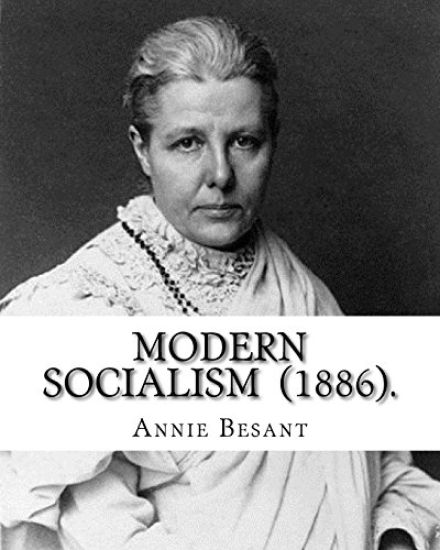
Modern Socialism (1886). By: Annie Besant: Annie Besant, née Wood (1 October 1847 - 20 September 1933) was a British socialist, theosophist, women'
Annie Besant
Createspace Independent Publishing Platform
2018
nidottu
Annie Besant, n e Wood (1 October 1847 - 20 September 1933) was a British socialist, theosophist, women's rights activist, writer and orator and supporter of Irish and Indian self-rule. In 1867, Annie at age 20, married Frank Besant, a clergyman, and they had two children, but Annie's increasingly anti-religious views led to a legal separation in 1873. She then became a prominent speaker for the National Secular Society (NSS) and writer and a close friend of Charles Bradlaugh. In 1877 they were prosecuted for publishing a book by birth control campaigner Charles Knowlton. The scandal made them famous, and Bradlaugh was elected M. P. for Northampton in 1880. She became involved with union actions including the Bloody Sunday demonstration and the London matchgirls strike of 1888. She was a leading speaker for the Fabian Society and the Marxist Social Democratic Federation (SDF). She was elected to the London School Board for Tower Hamlets, topping the poll even though few women were qualified to vote at that time. In 1890 Besant met Helena Blavatsky and over the next few years her interest in theosophy grew while her interest in secular matters waned. She became a member of the Theosophical Society and a prominent lecturer on the subject. As part of her theosophy-related work, she travelled to India. In 1898 she helped establish the Central Hindu College and in 1922 she helped establish the Hyderabad (Sind) National Collegiate Board in Mumbai, India. In 1902, she established the first overseas Lodge of the International Order of Co-Freemasonry, Le Droit Humain. Over the next few years she established lodges in many parts of the British Empire. In 1907 she became president of the Theosophical Society, whose international headquarters were in Adyar, Madras, (Chennai). She also became involved in politics in India, joining the Indian National Congress. When World War I broke out in 1914, she helped launch the Home Rule League to campaign for democracy in India and dominion status within the Empire. This led to her election as president of the India National Congress in late 1917. In the late 1920s, Besant travelled to the United States with her prot g and adopted son Jiddu Krishnamurti, who she claimed was the new Messiah and incarnation of Buddha. Krishnamurti rejected these claims in 1929. After the war, she continued to campaign for Indian independence and for the causes of theosophy, until her death in 1933. She started the central Hindu school in Benares as a chief means of achieving her objective.
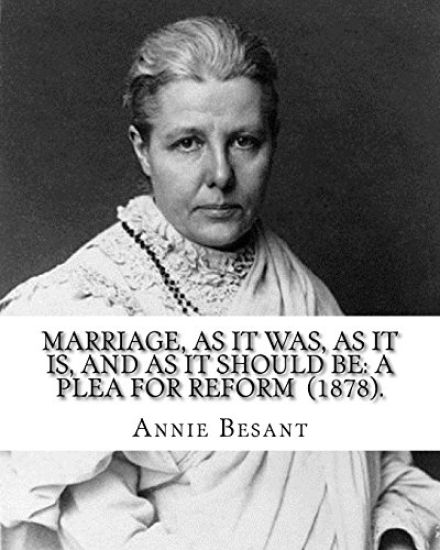
Marriage, As It Was, As It Is, And As It Should Be: A Plea For Reform (1878). By: Annie Besant: Annie Besant, née Wood (1 October 1847 - 20 September
Annie Besant
Createspace Independent Publishing Platform
2018
nidottu
Annie Besant, n e Wood (1 October 1847 - 20 September 1933) was a British socialist, theosophist, women's rights activist, writer and orator and supporter of Irish and Indian self-rule. In 1867, Annie at age 20, married Frank Besant, a clergyman, and they had two children, but Annie's increasingly anti-religious views led to a legal separation in 1873. She then became a prominent speaker for the National Secular Society (NSS) and writer and a close friend of Charles Bradlaugh. In 1877 they were prosecuted for publishing a book by birth control campaigner Charles Knowlton. The scandal made them famous, and Bradlaugh was elected M. P. for Northampton in 1880. She became involved with union actions including the Bloody Sunday demonstration and the London matchgirls strike of 1888. She was a leading speaker for the Fabian Society and the Marxist Social Democratic Federation (SDF). She was elected to the London School Board for Tower Hamlets, topping the poll even though few women were qualified to vote at that time. In 1890 Besant met Helena Blavatsky and over the next few years her interest in theosophy grew while her interest in secular matters waned. She became a member of the Theosophical Society and a prominent lecturer on the subject. As part of her theosophy-related work, she travelled to India. In 1898 she helped establish the Central Hindu College and in 1922 she helped establish the Hyderabad (Sind) National Collegiate Board in Mumbai, India. In 1902, she established the first overseas Lodge of the International Order of Co-Freemasonry, Le Droit Humain. Over the next few years she established lodges in many parts of the British Empire. In 1907 she became president of the Theosophical Society, whose international headquarters were in Adyar, Madras, (Chennai). She also became involved in politics in India, joining the Indian National Congress. When World War I broke out in 1914, she helped launch the Home Rule League to campaign for democracy in India and dominion status within the Empire. This led to her election as president of the India National Congress in late 1917. In the late 1920s, Besant travelled to the United States with her prot g and adopted son Jiddu Krishnamurti, who she claimed was the new Messiah and incarnation of Buddha. Krishnamurti rejected these claims in 1929. After the war, she continued to campaign for Indian independence and for the causes of theosophy, until her death in 1933. She started the central Hindu school in Benares as a chief means of achieving her objective.