Kirjojen hintavertailu – 12 859 818 kirjaa ja 27 kauppaa
Kirjailija
Annie Broadhead
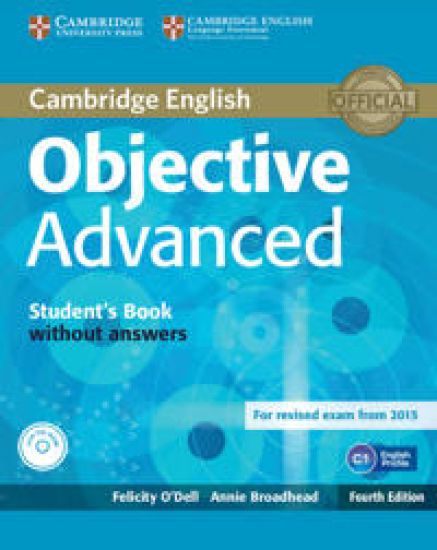
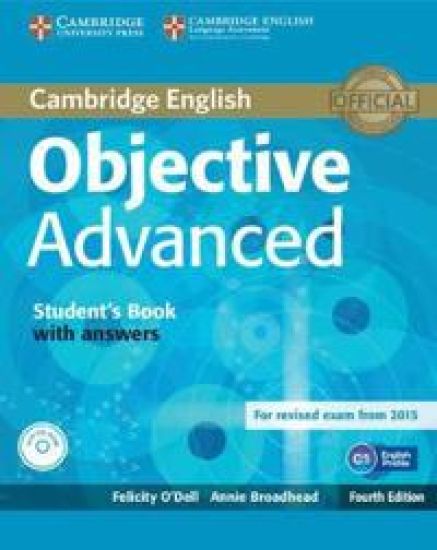
Kirjat ja teokset yhdessä paikassa: 6 kirjaa, julkaisuja vuosilta 2007–2014, suosituimpiin kuuluu Objective Advanced. Student's Book without answers with CD-ROM. Vertaile teosten hintoja ja tarkista saatavuus suomalaisista kirjakaupoista.
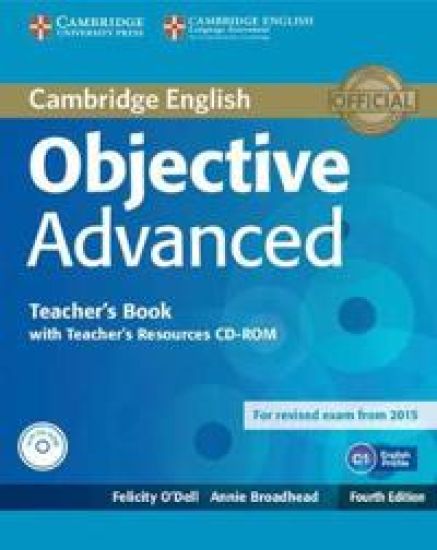
Fourth edition of the best-selling Cambridge English: Advanced (CAE) course, updated to prepare for the 2015 revised exam. This Teacher's Book includes teaching notes, answer key and background information corresponding to the 25 units of the Objective Advanced Fourth edition Student's Book. The Teacher's Resources CD-ROM includes 12 progress tests and unit-by-unit wordlists both with and without definitions. Complete Cambridge English: Advanced practice tests are available online.
Fourth edition of the best-selling Cambridge English: Advanced (CAE) course, updated to prepare for the 2015 revised exam. The Student's Book with answers contains fresh, updated texts and artwork that provide solid language development, lively class discussion and training in exam skills. The 25 topic-based units include examples from the Cambridge English Corpus to highlight common learner errors and ensuring that students are learning the most up-to-date and useful language required at this level. The interactive CD-ROM provides comprehensive extra practice of the language and topics covered in the book. Class Audio CDs containing the recordings for the listening exercises are available separately.
I = word/phrase usually in the initial position in a sentence M = word/phrase usually in the mid position in a sentence F = word/phrase usually in the final position in a sentence Inf = informal usage Appendix B Punctuation Punctuation in written English is used as a means of conveying your message clearly and unambiguously. Thefullstop has two main uses: To signify the end of a sentence, e.g., The European Union has faced a lot of oppositionfromsomepoliticalpartiesinallcountries. Thereisstillalongwaytogo beforeEuropeistrulyunited. To show that a word has been abbreviated, e.g.,Mr.,Dr., e.g., Remember to keep sentences in English short and simple otherwise it may be difficult for your reader to follow you. Thecomma is used in sentences to show a pause between sense groups of words, e.g., The car industry expanded in the eighties, slowed down in the nineties, and it is anybody’sguesswhatitwilldointhecomingdecade. The comma is also used to separate words in a list, e.g.,Thesteel,coal,chemical,and gasindustriesallfacealotofcompetitionfromtheFarEast. Commas are also used for non-defining relative clauses, e.g., The response, which came rather late, surprised everyone concerned. Remember that in defining relative clauses no commas are needed e.g., The item which you ordered is no longer in production. Commas are not generally used before linking words like or, but or then, e.g., The presentation was quite long but everyone listened with great concentration. Commas are, however, used after subclauses in front position, e.g.,Althoughinterestrateshave beenfalling,thereisnosignofanyrecoveryintheeconomy.