Kirjojen hintavertailu – 12 903 724 kirjaa ja 27 kauppaa

Kirjailija

Annika Richterich

Kirjat ja teokset yhdessä paikassa: 6 kirjaa, julkaisuja vuosilta 2018–2021, suosituimpiin kuuluu Digital Culture & Society (DCS) – Vol. 4, Issue 2/2018 – Digital Citizens. Vertaile teosten hintoja ja tarkista saatavuus suomalaisista kirjakaupoista.

6 kirjaa

Kirjojen julkaisuvuodet: 2018–2021.

Digital Culture & Society (DCS) Vol. 5, Issue 1/ – Inequalities and Divides in Digital Cultures

Digital Culture & Society (DCS) Vol. 5, Issue 1/ – Inequalities and Divides in Digital Cultures

Annika Richterich; Karin Wenz; Mathias Fuchs; Pablo Abend; Ramón Reichert

Transcript Verlag
2021
nidottu
Digital Culture & Society is a refereed, international journal, fostering discussion about the ways in which digital technologies, platforms and applications reconfigure daily lives and practices. It offers a forum for inquiries into digital media theory, methodologies, and socio-technological developments. This issue presents empirical studies as well as theoretical and methodological reflections on inequalities and divides in digital cultures. From various (inter-)disciplinary perspectives, the authors examine three main themes – inequality of access, inequality by design and discursive divides, and inequality by algorithms – while suggesting ways for research to move beyond these.
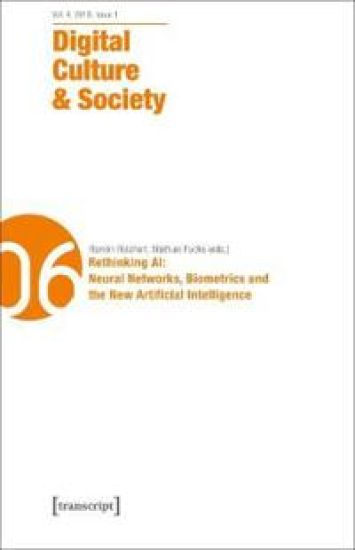
Digital Culture & Society (DCS) – Vol. 4, Issue 1/2018 – Rethinking AI: Neural Networks, Biometrics and the New Artificial Intelligence
Digital Culture & Society is a refereed, international journal, fostering discussion about the ways in which digital technologies, platforms and applications reconfigure daily lives and practices. It offers a forum for inquiries into digital media theory, methodologies, and socio-technological developments. This issue shows: The meaning of AI has undergone drastic changes during the last 60 years of AI discourse(s). What we talk about when saying AI is not what it meant in 1958, when John McCarthy, Marvin Minsky and their colleagues started using the term. Biological information processing is now firmly embedded in commercial applications like the intelligent personal Google Assistant, Facebook's facial recognition algorithm, Deep Face, Amazon's device Alexa or Apple's software feature Siri to mention just a few.
Digital Culture & Society (DCS) – Vol. 4, Issue 2/2018 – Digital Citizens

Digital Culture & Society (DCS) – Vol. 4, Issue 2/2018 – Digital Citizens

Annika Richterich; Karin Wenz; Mathias Fuchs; Pablo Abend; Ramón Reichert

Transcript Verlag
2021
nidottu
»Digital Culture & Society« is a refereed, international journal, fostering discussion about the ways in which digital technologies, platforms and applications reconfigure daily lives and practices. It offers a forum for critical analysis and inquiries into digital media theory and provides a publication environment for interdisciplinary research approaches, contemporary theory developments and methodological innovation. This special issue discusses theoretical and artistic investigations on citizen engagement, digital citizenship and grassroots information politics. The articles reflect on the role of the digital citizen from the perspectives of (digital) sociology, science, technology and society (STS), (digital) media studies, cultural studies, political sciences, and philosophy.
Digital Culture & Society (DCS) Vol. 3, Issue 2/ – Mobile Digital Practices

Digital Culture & Society (DCS) Vol. 3, Issue 2/ – Mobile Digital Practices

Annika Richterich; Karin Wenz; Mathias Fuchs; Pablo Abend; Ramón Reichert

Transcript Verlag
2021
nidottu
»Digital Culture & Society« is a refereed, international journal, fostering discussion about the ways in which digital technologies, platforms and applications reconfigure daily lives and practices. It offers a forum for critical analysis and inquiries into digital media theory and provides a publication environment for interdisciplinary research approaches, contemporary theory developments and methodological innovation. This issue, edited by Anna Lisa Ramella, Asko Lehmuskallio, Tristan Thielmann and Pablo Abend, discusses the mobility of people, data and devices from the perspective of digital mobile practices. As the authors of various empirical case studies show, these need to be studied both situationally, and on the move. With contributions by Marion Schulze, Jamie Coates, Geoffrey Hobbis, Samuel Gerald Collins, among others, and an interview with Heather Horst, David Morley, and Noel B. Salazar.
The Big Data Agenda

The Big Data Agenda

Annika Richterich

University of Westminster Press
2018
sidottu
This book highlights that the capacity for gathering, analysing, and utilising vast amounts of digital (user) data raises significant ethical issues. Annika Richterich provides a systematic contemporary overview of the field of critical data studies that reflects on practices of digital data collection and analysis. The book assesses in detail one big data research area: biomedical studies, focused on epidemiological surveillance. Specific case studies explore how big data have been used in academic work. The Big Data Agenda concludes that the use of big data in research urgently needs to be considered from the vantage point of ethics and social justice. Drawing upon discourse ethics and critical data studies, Richterich argues that entanglements between big data research and technology/ internet corporations have emerged. In consequence, more opportunities for discussing and negotiating emerging research practices and their implications for societal values are needed. An electronic version of this book is freely available, thanks to the support of libraries working with Knowledge Unlatched. KU is a collaborative initiative designed to make high quality books Open Access for the public good. More information about the initiative and details about KU's Open Access programme can be found at www.knowledgeunlatched.org.
The Big Data Agenda

The Big Data Agenda

Annika Richterich

University of Westminster Press
2018
nidottu
This book highlights that the capacity for gathering, analysing, and utilising vast amounts of digital (user) data raises significant ethical issues. Annika Richterich provides a systematic contemporary overview of the field of critical data studies that reflects on practices of digital data collection and analysis. The book assesses in detail one big data research area: biomedical studies, focused on epidemiological surveillance. Specific case studies explore how big data have been used in academic work. The Big Data Agenda concludes that the use of big data in research urgently needs to be considered from the vantage point of ethics and social justice. Drawing upon discourse ethics and critical data studies, Richterich argues that entanglements between big data research and technology/ internet corporations have emerged. In consequence, more opportunities for discussing and negotiating emerging research practices and their implications for societal values are needed. An electronic version of this book is freely available, thanks to the support of libraries working with Knowledge Unlatched. KU is a collaborative initiative designed to make high quality books Open Access for the public good. More information about the initiative and details about KU's Open Access programme can be found at www.knowledgeunlatched.org.