

Kirjailija
Annika Werner
Kirjat ja teokset yhdessä paikassa: 4 kirjaa, julkaisuja vuosilta 2007–2022, suosituimpiin kuuluu Die Politik Heinrich Brünings. Vertaile teosten hintoja ja tarkista saatavuus suomalaisista kirjakaupoista.
4 kirjaa
Kirjojen julkaisuvuodet: 2007–2022.
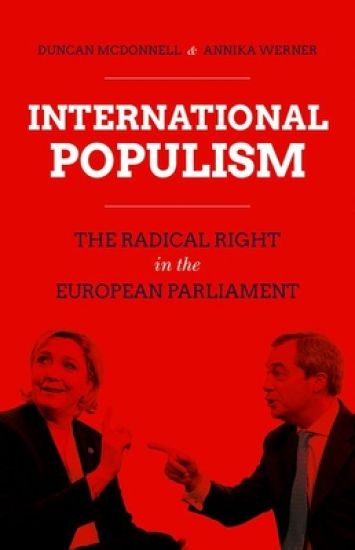
International Populism: The Radical Right in the European Parliament
Duncan McDonnell; Annika Werner
Oxford University Press, USA
2020
nidottu
The 2014 European Parliament elections were hailed as a "populist earthquake," with parties like the French Front National, UKIP and the Danish People's Party topping the polls in their respective countries. But what happened afterwards? Based on policy positions, voting data, and interviews conducted over three years with senior figures from fourteen radical right populist parties and their partners, this is the first major study to explain these parties' actions and alliances in the European Parliament. International Populism answers three key questions: why have radical right populists, unlike other ideological party types, long been divided in the Parliament? Why, although divisions persist, are many of them now more united than ever? And how does all this inform our understanding of the European populist radical right today? Arguing that these parties have entered a new international and transnational phase, with some trying to be "respectable radicals" while others embrace their shared populism, McDonnell and Werner shed new light on the past, present and future of one of the most important political phenomena of twenty-first-century Europe.
The 2014 European Parliament elections were hailed as a 'populist earthquake', with parties like the French Front National, UKIP and the Danish People’s Party topping the polls in their respective countries. But what happened afterwards? Based on policy positions, voting data, and interviews conducted over three years with senior figures from fourteen radical right populist parties and their partners, this is the first major study to explain these parties' actions and alliances in the European Parliament. International Populism answers three key questions: why have radical right populists, unlike other ideological party types, long been divided in the Parliament? Why, although divisions persist, are many of them now more united than ever? And how does all this inform our understanding of the European populist radical right today? Arguing that these parties have entered a new international and transnational phase, with some trying to be 'respectable radicals' while others embrace their shared populism, McDonnell and Werner shed new light on the past, present and future of one of the most important political phenomena of twenty-first-century Europe.
Studienarbeit aus dem Jahr 2007 im Fachbereich Gesch. Europa - Deutschland - I. Weltkrieg, Weimarer Republik, Note: 1,7, Bergische Universit t Wuppertal, Veranstaltung: Seminar, 10 Quellen im Literaturverzeichnis, Sprache: Deutsch, Abstract: Durch die Staatsf hrung Br nings kam es zu einer Ausarbeitung der Pr sidialherrschaft. Es entstand eine Machtver nderung, weg vom Parlamentarismus hin zur Pr sidialgewalt. Der Reichstag verlor an Funktion, zum Beispiel aufgrund der Verlagerung der Handlungskompetenzen zu den au erparlamentarischen Machttr gern (B rokratie und Reichswehr). Au erdem wurde die Gesellschaft durch Br nings Art der Regierung an "diktatorische Ma nahmen und Regelungen" angepasst. Durch die Deflationspolitik intensivierte sich die konomische Krisensituation. Der Radikalismus wurde durch die stetige Zunahme der Arbeitslosigkeit gef rdert. Im Fr hjahr 1932 waren es 6. Millionen Arbeitslose. Der Nationalsozialismus verbreitete sich, da die Regierung Br ning nichts gegen sie unternahm. "Br ning verstand die Hitler-Bewegung als parlamentarische Opposition, als berechenbares, als f r au enpolitische Zwecke n tzliches "nationales" Potential, dem er positiven Stellenwert in der schicksalhaft empfundenen "Reinigungskrise" beima ." Als "Triumph" der Au enpolitik Br nings kann die Aufhebung der Reparationszahlungen, die auf der Konferenz in Lausanne (16. Juni bis 9. Juli 1932) beschlossen wurden, bezeichnet werden. Diese werden aber im Allgemeinen nicht mehr der Regierung Br ning zugesprochen.