Kirjojen hintavertailu – 12 859 828 kirjaa ja 27 kauppaa

Kirjailija

Anoma Pieris

Kirjat ja teokset yhdessä paikassa: 13 kirjaa, julkaisuja vuosilta 2009–2024, suosituimpiin kuuluu New Directions in Tropical Asian Architecture. Vertaile teosten hintoja ja tarkista saatavuus suomalaisista kirjakaupoista.

13 kirjaa

Kirjojen julkaisuvuodet: 2009–2024.

The Architecture of Confinement

The Architecture of Confinement

Anoma Pieris; Lynne Horiuchi

Cambridge University Press
2024
pokkari
In this global and comparative study of Pacific War incarceration environments we explore the arc of the Pacific Basin as an archipelagic network of militarized penal sites. Grounded in spatial, physical and material analyses focused on experiences of civilian internees, minority citizens, and enemy prisoners of war, the book offers an architectural and urban understanding of the unfolding history and aftermath of World War II in the Pacific. Examples are drawn from Australia, New Zealand, Singapore, Japan, and North America. The Architecture of Confinement highlights the contrasting physical facilities, urban formations and material character of various camps and the ways in which these uncover different interpretations of wartime sovereignty. The exclusion and material deprivation of selective populations within these camp environments extends the practices by which land, labor and capital are expropriated in settler-colonial societies; practices critical to identity formation and endemic to their legacies of liberal democracy.

Immigrant Industry

Immigrant Industry

Anoma Pieris; Mirjana Lozanovska; Dr Alexandra Dellios; Andrew Saniga

BERGHAHN BOOKS
2024
sidottu
After the end of the Second World War, migrants were critical to the spatial making of modern Australia. Major federally funded industries driving postwar nation-building programs depended on the employment of large numbers of people who had been displaced by the war. Directed to remote, rural and urban industrial sites, migrant labor and resettlement altered the nation’s physical landscape, providing Australia with its contemporary economic base. While the immigrant contribution to nation-building in cultural terms is well-known, its everyday spatial, architectural and landscape transformations remain unexamined. This book aims to bring to the foreground postwar industry and immigration to comprehensively document a uniquely Australian shaping of the built environment.
Immigrant Industry

Immigrant Industry

Anoma Pieris; Mirjana Lozanovska; Dr Alexandra Dellios; Andrew Saniga

BERGHAHN BOOKS
2024
nidottu
After the end of the Second World War, migrants were critical to the spatial making of modern Australia. Major federally funded industries driving postwar nation-building programs depended on the employment of large numbers of people who had been displaced by the war. Directed to remote, rural and urban industrial sites, migrant labor and resettlement altered the nation’s physical landscape, providing Australia with its contemporary economic base. While the immigrant contribution to nation-building in cultural terms is well-known, its everyday spatial, architectural and landscape transformations remain unexamined. This book aims to bring to the foreground postwar industry and immigration to comprehensively document a uniquely Australian shaping of the built environment.
The Architecture of Confinement

The Architecture of Confinement

Anoma Pieris; Lynne Horiuchi

Cambridge University Press
2022
sidottu
In this global and comparative study of Pacific War incarceration environments we explore the arc of the Pacific Basin as an archipelagic network of militarized penal sites. Grounded in spatial, physical and material analyses focused on experiences of civilian internees, minority citizens, and enemy prisoners of war, the book offers an architectural and urban understanding of the unfolding history and aftermath of World War II in the Pacific. Examples are drawn from Australia, New Zealand, Singapore, Japan, and North America. The Architecture of Confinement highlights the contrasting physical facilities, urban formations and material character of various camps and the ways in which these uncover different interpretations of wartime sovereignty. The exclusion and material deprivation of selective populations within these camp environments extends the practices by which land, labor and capital are expropriated in settler-colonial societies; practices critical to identity formation and endemic to their legacies of liberal democracy.

Sovereignty, Space and Civil War in Sri Lanka
Analyses of the Sri Lankan civil war (1983–2009) overwhelmingly represent it as an ethnonationalist contest, prolonging postcolonial arguments on the creation and dissolution of the incipient nation-state since independence in 1948. While colonial divide-and-rule policies, the rise of ethnonationalist lobbies, structural discrimination and majoritarian democracy have been established as grounds for inter-ethnic hostility, there are other significant transformative forces that remain largely unacknowledged in postcolonial analyses. This ambitious multiscalar spatial study of civil war in Sri Lanka offers an intersectional, de-ethnicised analysis of political sovereignty drawn out by the struggle for territory. Based on vital retrospective findings from the five-year postwar period, when wartime hostilities were still festering, it convincingly links ethnonationalism to postnational border politics, marketisation, militarised securitisation and illiberal democracy. This book argues that internecine conflict exposes the implicit violence within nation-state formations; mass human displacements heighten collective and individual ontological insecurity and neoliberalism makes the nation porous in unforeseen ways. Based around three themes – normative spaces, human mobilities and exilic states – it is organised into ten comprehensive, chapter-based explorations of a range of spatial units, including homes, cities, routes, camps and experiences of ruin that were irrevocably politicised by protracted conflict. Focusing on their material transformations over a thirty-seven-year period, the book explores what can be known of the war if we look beyond ethnicity to other salient, shared geographical features of this embattled history. The book uncovers how fealty to exclusionary cultures of political sovereignty aligns us with their violence, limiting our capacity for empathy, a boundary seemingly exacerbated by neoliberal opportunities. Making use of Sri Lanka as a case study to test geographic, architectural and urban methodologies for understanding violence, this book acts as a provocation to rethink current readings of the particular case study while reflecting on the more general impact of marketisation and militarisation in Asia. It will be of interest to an interdisciplinary audience, including those scholars interested in South Asian history, politics and civil war, South Asian studies, border studies, geography and architecture and urban studies.
New Directions in Tropical Asian Architecture

New Directions in Tropical Asian Architecture

Philip Goad; Anoma Pieris

Tuttle Publishing
2018
nidottu
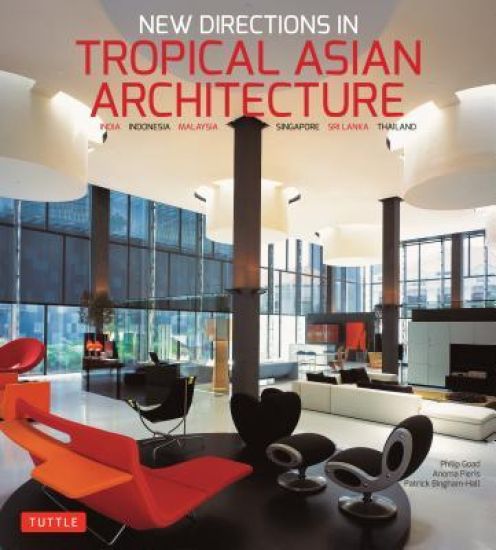
From three architecture industry experts comes a book nearly as sophisticated as the luxury homes profiled within. Inspired by new architectural agendas, such as rethinking congregational spaces and promoting a minimalist lifestyle, the luxury homes from across of Southeast Asia collected in this book dazzle with a bold new perspective on modern architecture. The 400 colour photographs inside place you in beachfront scenes where the waves crash only inches from your feet; where you laze dreamily, jungle-side, in dazzling hotels; and finally, you come face to face with the most innovative concepts in all of Asia. With an additional 200 architectural plans to further inspire modern architecture aficionados, New Directions in Tropical Asian Architecture presents breathtaking specimens from throughout Southeast Asia, including: India Indonesia Malaysia Singapore Sri Lanka ThailandLet the luxury homes and residences in this book wow you, and open your eyes to a side of Southeast Asian architecture that you've never seen before.
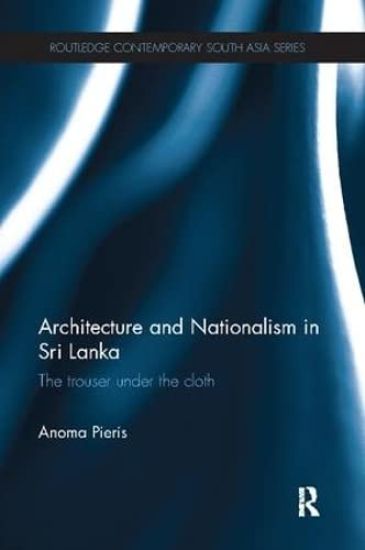
Architecture and Nationalism in Sri Lanka
The role of the home, the domestic sphere and the intimate, ethno-cultural identities that are cultivated within it, are critical to understanding the polemical constructions of country and city; tradition and modernity; and regionalism and cosmopolitanism. The home is fundamental to ideas of the homeland that give nationalism its imaginative form and its political trajectory. This book explores positions that are vital to ideas of national belonging through the history of colonial, bourgeois self-fashioning and post colonial identity construction in Sri Lanka. The country remains central to related architectural discourses due to its emergence as a critical site for regional architecture, post-independence. Suggesting patterns of indigenous accommodation and resistance that are expressed through built form, the book argues that the nation grows as an extension of an indigenous private sphere, ostensibly uncontaminated by colonial influences, domesticating institutions and appropriating rural geographies in the pursuit of its hegemonic ideals. This ambitious, comprehensive, wide-ranging book presents an abundance of new and original material and many imaginative insights into the history of architecture and nationalism from the mid nineteenth century to the present day.
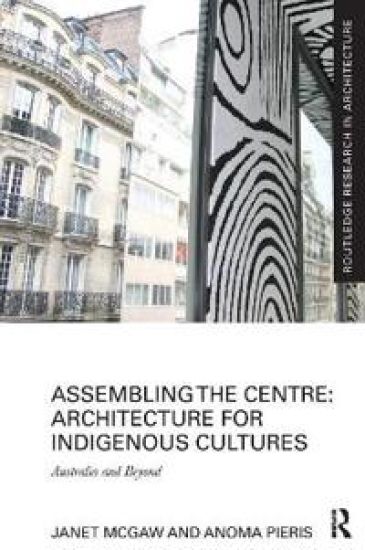
Assembling the Centre: Architecture for Indigenous Cultures
Metropolitan Indigenous Cultural Centres have become a focal point for making Indigenous histories and contemporary cultures public in settler-colonial societies over the past three decades. While there are extraordinary success stories, there are equally stories that cause concern: award-winning architecturally designed Indigenous cultural centres that have been abandoned; centres that serve the interests of tourists but fail to nourish the cultural interests of Indigenous stakeholders; and places for vibrant community gathering that fail to garner the economic and politic support to remain viable. Indigenous cultural centres are rarely static. They are places of ‘emergence’, assembled and re-assembled along a range of vectors that usually lie beyond the gaze of architecture. How might the traditional concerns of architecture – site, space, form, function, materialities, tectonics – be reconfigured to express the complex and varied social identities of contemporary Indigenous peoples in colonised nations? This book, documents a range of Indigenous Cultural Centres across the globe and the processes that led to their development. It explores the possibilities for the social and political project of the Cultural Centre that architecture both inhibits and affords. Whose idea of architecture counts when designing Indigenous Cultural Centres? How does architectural history and contemporary practice territorialise spaces of Indigenous occupation? What is architecture for Indigenous cultures and how is it recognised? This ambitious and provocative study pursues a new architecture for colonised Indigenous cultures that takes the politics of recognition to its heart. It advocates an ethics of mutual engagement as a crucial condition for architectural projects that design across cultural difference. The book’s structure, method, and arguments are dialogically assembled around narratives told by Indigenous people of their pursuit of public recognition, spatial justice, and architectural presence in settler dominated societies. Possibilities for decolonising architecture emerge through these accounts.
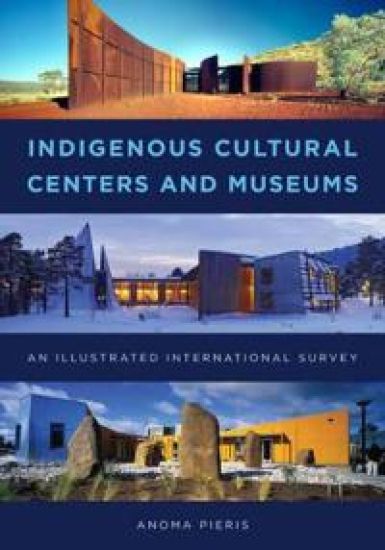
Indigenous Cultural Centers and Museums

Indigenous Cultural Centers and Museums

Anoma Pieris

Rowman Littlefield
2016
sidottu
Here is a lavishly illustrated descriptive survey of 48 leading indigenous cultural centers around the world (35 are from Australia and 13 from North America, Japan, Europe, and Asia). The book shows how each is a potentially transformative, politically compelling addition to the field of cultural production, illustrating how the facilities --- all built in the last three decades --- have challenged assumptions about nature, culture, and built form. Using the spatial-temporal practice of place-making as the starting point, the facilities highlighted here are described in terms of collaborations between a number of stake-holders and professional consultants. The book adopts the format of a descriptive survey with separate chapters devoted to individual case studies. A broad introductory chapter which presents the arguments and overview precedes richly illustrated short individual essays on selected projects. Each chapter commences with the details of the project including, location, area, cost and consultants, followed by a project description, and discussion of background, design development and reception of the projects. Each project is approached as an architectural commission, detailing the critical criteria, consultants, and processes. The format is adopted from architectural review essays typically used in awards or journal publications within the profession which are accessible and relevant for both academics and practitioners. Considerable attention is given to the process, and to the evaluation of the project as a cultural response. Each case study has been written with consultation of architects or administrators of the facilities for accuracy. Indigenous Cultural Centers and Museums: An Illustrated International Survey documents a rich legacy of collaboration across the spatial disciplines combining creative art practice, architecture, construction, landscape design and urban design in the production of unique and culturally significant social institutions. This book provides material on hitherto unknown bodies of work of talented architectural practices, working collaboratively with culturally different client groups and developing consultative processes that test models for inter-cultural engagement.
Assembling the Centre: Architecture for Indigenous Cultures
Metropolitan Indigenous Cultural Centres have become a focal point for making Indigenous histories and contemporary cultures public in settler-colonial societies over the past three decades. While there are extraordinary success stories, there are equally stories that cause concern: award-winning architecturally designed Indigenous cultural centres that have been abandoned; centres that serve the interests of tourists but fail to nourish the cultural interests of Indigenous stakeholders; and places for vibrant community gathering that fail to garner the economic and politic support to remain viable. Indigenous cultural centres are rarely static. They are places of ‘emergence’, assembled and re-assembled along a range of vectors that usually lie beyond the gaze of architecture. How might the traditional concerns of architecture – site, space, form, function, materialities, tectonics – be reconfigured to express the complex and varied social identities of contemporary Indigenous peoples in colonised nations? This book, documents a range of Indigenous Cultural Centres across the globe and the processes that led to their development. It explores the possibilities for the social and political project of the Cultural Centre that architecture both inhibits and affords. Whose idea of architecture counts when designing Indigenous Cultural Centres? How does architectural history and contemporary practice territorialise spaces of Indigenous occupation? What is architecture for Indigenous cultures and how is it recognised? This ambitious and provocative study pursues a new architecture for colonised Indigenous cultures that takes the politics of recognition to its heart. It advocates an ethics of mutual engagement as a crucial condition for architectural projects that design across cultural difference. The book’s structure, method, and arguments are dialogically assembled around narratives told by Indigenous people of their pursuit of public recognition, spatial justice, and architectural presence in settler dominated societies. Possibilities for decolonising architecture emerge through these accounts.
Architecture and Nationalism in Sri Lanka
The role of the home, the domestic sphere and the intimate, ethno-cultural identities that are cultivated within it, are critical to understanding the polemical constructions of country and city; tradition and modernity; and regionalism and cosmopolitanism. The home is fundamental to ideas of the homeland that give nationalism its imaginative form and its political trajectory. This book explores positions that are vital to ideas of national belonging through the history of colonial, bourgeois self-fashioning and post colonial identity construction in Sri Lanka. The country remains central to related architectural discourses due to its emergence as a critical site for regional architecture, post-independence. Suggesting patterns of indigenous accommodation and resistance that are expressed through built form, the book argues that the nation grows as an extension of an indigenous private sphere, ostensibly uncontaminated by colonial influences, domesticating institutions and appropriating rural geographies in the pursuit of its hegemonic ideals. This ambitious, comprehensive, wide-ranging book presents an abundance of new and original material and many imaginative insights into the history of architecture and nationalism from the mid nineteenth century to the present day.
Hidden Hands and Divided Landscapes

Hidden Hands and Divided Landscapes

Anoma Pieris

University of Hawai'i Press
2009
nidottu
During the nineteenth century, Singapore was established as a free port of British trade in Southeast Asia and proved attractive to large numbers of regional migrants. Following the abolishment of slavery in 1833, the Straits government transported convicts from the East India Company's Indian presidencies to the settlements as a source of inexpensive labor. The prison became the primary experimental site for the colonial plural society and convicts were graduated by race and the labor needed for urban construction. ""Hidden Hands and Divided Landscapes"" investigates how a political system aimed at managing ethnic communities in the larger material context of the colonial urban project was first imagined and tested through the physical segregation of the colonial prison. A description of the evolution of the ideal plan for a plural city across three settlements is followed by a detailed look at Singapore's colonial prison. Chapters trace the prison's development and its dissolution across the urban landscape through the penal labor system. The author demonstrates the way in which racial politics were inscribed spatially in the division of penal facilities and how the map of the city was reconfigured through convict labor. Later chapters describe penal resistance first through intimate stories of penal life and then through a discussion of organized resistance in festival riots.