

Kirjojen hintavertailu – 12 903 725 kirjaa ja 27 kauppaa

Kirjailija

Anonymous Heidegger Scholar

Kirjat ja teokset yhdessä paikassa: 2 kirjaa, julkaisuja vuodelta 2020, suosituimpiin kuuluu Graduate School with Heidegger. Vertaile teosten hintoja ja tarkista saatavuus suomalaisista kirjakaupoista.

2 kirjaa

Graduate School with Heidegger

Graduate School with Heidegger

Greg Johnson; Anonymous Heidegger Scholar

Counter-Currents Publishing
2020
sidottu
Greg Johnson's Graduate School with Heidegger is unique in the vast literature on Heidegger. Written by a self-proclaimed "failed academic" for intelligent laymen, these essays and lectures serve as a non-systematic, non-technical introduction to the twentieth century's most influential and difficult philosopher. Johnson explains essential concepts like phenomenology, metaphysics, and nihilism. He defines technical terms like Being, the clearing, and the event. He discusses Heidegger's relationships to Nietzsche, Husserl, and Evola. He explores the roots of Heidegger's nationalist and ecological politics. He responds to the Heidegger interpretations of Thomas Sheehan, Richard Polt, Ronald Beiner, Alexander Dugin, John Caputo, and Richard Rorty. Finally, he recommends Heidegger's many lecture courses as a graduate-level education in philosophy, free of the staggering cost and stifling conformity of contemporary academia.
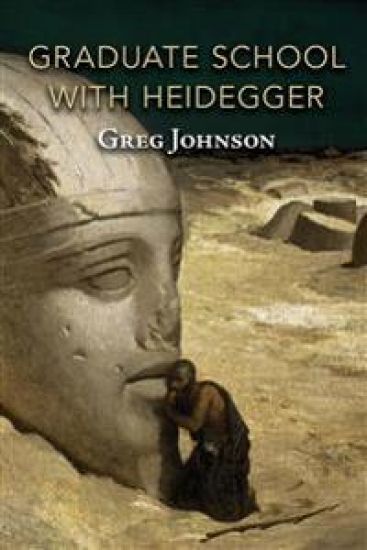
Graduate School with Heidegger

Graduate School with Heidegger

Greg Johnson; Anonymous Heidegger Scholar

Counter-Currents Publishing
2020
pokkari
Greg Johnson's Graduate School with Heidegger is unique in the vast literature on Heidegger. Written by a self-proclaimed "failed academic" for intelligent laymen, these essays and lectures serve as a non-systematic, non-technical introduction to the twentieth century's most influential and difficult philosopher. Johnson explains essential concepts like phenomenology, metaphysics, and nihilism. He defines technical terms like Being, the clearing, and the event. He discusses Heidegger's relationships to Nietzsche, Husserl, and Evola. He explores the roots of Heidegger's nationalist and ecological politics. He responds to the Heidegger interpretations of Thomas Sheehan, Richard Polt, Ronald Beiner, Alexander Dugin, John Caputo, and Richard Rorty. Finally, he recommends Heidegger's many lecture courses as a graduate-level education in philosophy, free of the staggering cost and stifling conformity of contemporary academia.