Kirjojen hintavertailu – 12 903 742 kirjaa ja 27 kauppaa

Kirjailija

Anoushiravan Ehteshami

Kirjat ja teokset yhdessä paikassa: 21 kirjaa, julkaisuja vuosilta 1995–2022, suosituimpiin kuuluu Irans's Security Policy In the Post-revolutionary Era. Vertaile teosten hintoja ja tarkista saatavuus suomalaisista kirjakaupoista.

21 kirjaa

Kirjojen julkaisuvuodet: 1995–2022.

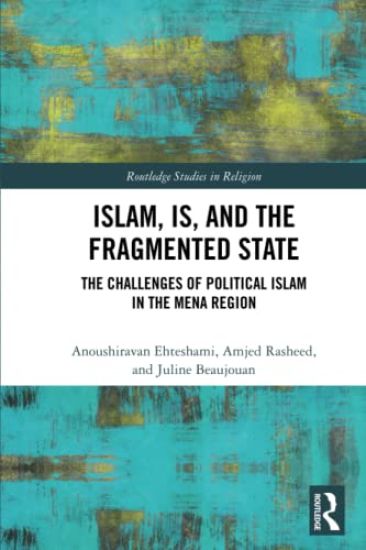
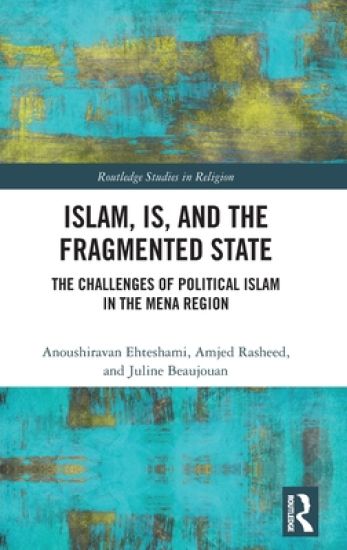
Islam, IS and the Fragmented State

Islam, IS and the Fragmented State

Anoushiravan Ehteshami; Amjed Rasheed; Juline Beaujouan

TAYLOR FRANCIS LTD
2022
nidottu
This book provides a pioneering and original study of the regional effects of political Islam. It sets out the multifaceted interactions between Islam and politics in the Middle East and North Africa (MENA) region, focussing in particular on the so-called Islamic State (IS) organization in its broad discussion of political Islam. Utilizing a trans-disciplinary perspective, the book interacts with social constructivism and complex realism theories to analyse the clash between the modern notion of the state and that of identity in the region. Looking at issues such as the rise of IS and its attempts to establish a caliphate, the book offers three different, yet complementary, levels of analysis for its discussion. These being: Regional (dis)order, the erosion of state power and its boundaries, and the role of non-state actors in shaping the politics of the MENA region. Each of these levels are addressed in detail in turn in order to build a comprehensive picture of state and political Islam in the Arab core of the MENA region. What emerges is a comprehensive analysis of the interlinked relationships between political and Islamic elements of Arab polities and societies. As such, this book will be of great interest to academics and policymakers focusing on matters relating to the study of Islam, Islam and politics, study of religion more broadly, and security studies and area studies, particularly in the MENA region.
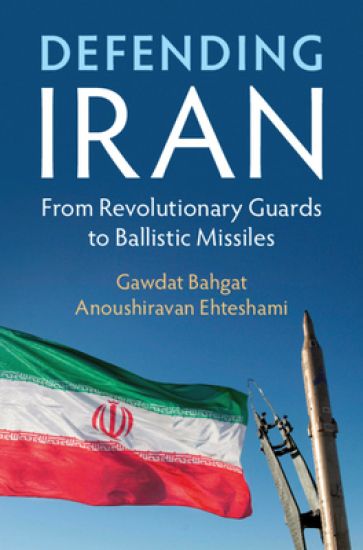
Defending Iran

Defending Iran

Gawdat Bahgat; Anoushiravan Ehteshami

Cambridge University Press
2021
sidottu
Since the 1979 revolution, the ruling establishment of Iran has developed and articulated a defense strategy reflective of the country's Iran-Iraq war experience and its international isolation. Its asymmetrical warfare doctrine, use of irregular forces in military campaigns, deployment of ballistic missiles, use of fast naval vessels to harass and confuse adversaries, and finally development of a sophisticated cyber warfare capability, are all features of this unique defense strategy. Based on a wide range of primary sources in Persian, Arabic and English, Gawdat Bahgat and Anoushiravan Ehteshami offer a detailed and authoritative analysis of Iran's defense strategy. Additionally, this book provides a comparative analysis of the Islamic Republic's capabilities in relation to Israel and Saudi Arabia, its main regional adversaries. Framing Tehran's threat perceptions following the revolution within a wider historical context, this book will facilitate further analytical reflections on the country's changing role in the region, and its relations further afield, with the United States, Europe, Russia and China.
Defending Iran

Defending Iran

Gawdat Bahgat; Anoushiravan Ehteshami

Cambridge University Press
2021
pokkari
Since the 1979 revolution, the ruling establishment of Iran has developed and articulated a defense strategy reflective of the country's Iran-Iraq war experience and its international isolation. Its asymmetrical warfare doctrine, use of irregular forces in military campaigns, deployment of ballistic missiles, use of fast naval vessels to harass and confuse adversaries, and finally development of a sophisticated cyber warfare capability, are all features of this unique defense strategy. Based on a wide range of primary sources in Persian, Arabic and English, Gawdat Bahgat and Anoushiravan Ehteshami offer a detailed and authoritative analysis of Iran's defense strategy. Additionally, this book provides a comparative analysis of the Islamic Republic's capabilities in relation to Israel and Saudi Arabia, its main regional adversaries. Framing Tehran's threat perceptions following the revolution within a wider historical context, this book will facilitate further analytical reflections on the country's changing role in the region, and its relations further afield, with the United States, Europe, Russia and China.
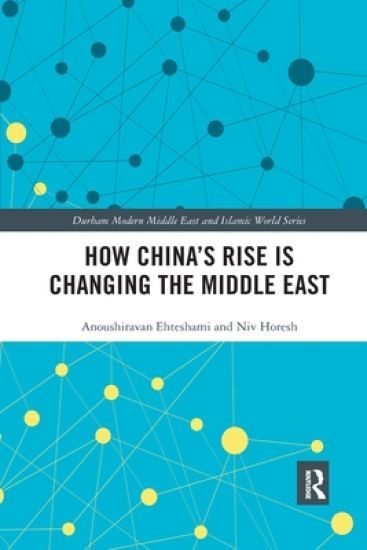
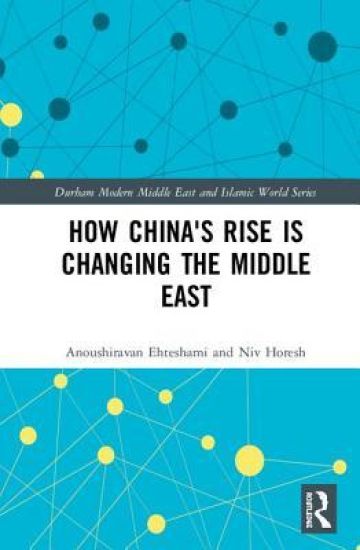
How China's Rise is Changing the Middle East

How China's Rise is Changing the Middle East

Anoushiravan Ehteshami; Niv Horesh

Routledge
2021
nidottu
This book explores the extent to which China’s rise is changing the economic, security, political, and social-cultural aspects of the Middle East – a region of significant strategic importance to the West and of increasing importance to the East. With its growing dependence on Middle East oil and gas, China has more at stake in this region than any other Asian power and, not surprisingly, has begun increasing its engagement with the region, with profound implications for other stakeholders. The book charts the history of China’s links with the Middle East, discusses China’s involvement with each of the major countries of the region, considers how China’s rise is reshaping Middle Easterners’ perceptions of China and the Chinese people, and examines the very latest developments.
Islam, IS and the Fragmented State

Islam, IS and the Fragmented State

Anoushiravan Ehteshami; Amjed Rasheed; Juline Beaujouan

Routledge
2020
sidottu
This book provides a pioneering and original study of the regional effects of political Islam. It sets out the multifaceted interactions between Islam and politics in the Middle East and North Africa (MENA) region, focussing in particular on the so-called Islamic State (IS) organization in its broad discussion of political Islam. Utilizing a trans-disciplinary perspective, the book interacts with social constructivism and complex realism theories to analyse the clash between the modern notion of the state and that of identity in the region. Looking at issues such as the rise of IS and its attempts to establish a caliphate, the book offers three different, yet complementary, levels of analysis for its discussion. These being: Regional (dis)order, the erosion of state power and its boundaries, and the role of non-state actors in shaping the politics of the MENA region. Each of these levels are addressed in detail in turn in order to build a comprehensive picture of state and political Islam in the Arab core of the MENA region. What emerges is a comprehensive analysis of the interlinked relationships between political and Islamic elements of Arab polities and societies. As such, this book will be of great interest to academics and policymakers focusing on matters relating to the study of Islam, Islam and politics, study of religion more broadly, and security studies and area studies, particularly in the MENA region.
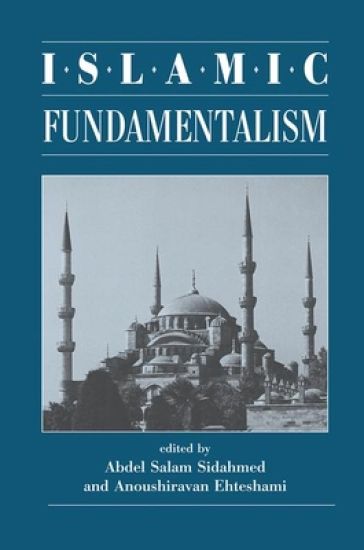
Islamic Fundamentalism

Islamic Fundamentalism

Abdel Salam Sidahmed; Anoushiravan Ehteshami

Routledge
2019
sidottu
The phenomenon of political Islam continues to dominate the political and social map of the Arab world, with the increasingly open struggle between ruling elites and Islamists becoming the main source of political instability in many states. This volume offers an in-depth analysis of the rise of Islamic and fundamentalist movements in the Middle Ea
How China's Rise is Changing the Middle East

How China's Rise is Changing the Middle East

Anoushiravan Ehteshami; Niv Horesh

Routledge
2019
sidottu
This book explores the extent to which China’s rise is changing the economic, security, political, and social-cultural aspects of the Middle East – a region of significant strategic importance to the West and of increasing importance to the East. With its growing dependence on Middle East oil and gas, China has more at stake in this region than any other Asian power and, not surprisingly, has begun increasing its engagement with the region, with profound implications for other stakeholders. The book charts the history of China’s links with the Middle East, discusses China’s involvement with each of the major countries of the region, considers how China’s rise is reshaping Middle Easterners’ perceptions of China and the Chinese people, and examines the very latest developments.
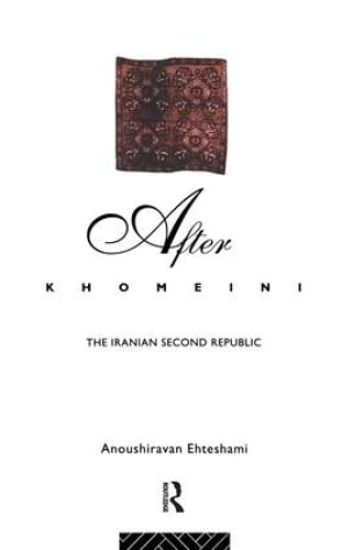
After Khomeini

After Khomeini

Anoushiravan Ehteshami

Routledge
2017
sidottu
For Iran the years since Ayatollah Khomeini's death have been dominated by the need for political consolidation and economic reconstruction. The book assesses the critical dilemmas of the regime both previous to and since the demise of its first spiritual leader. The vital issues of political succession and constitutional reform are addressed, contributing to an analysis of the structures and politics of power. How these have reflected upon economic policy is considered with close atttention being given to the reform policies of Rafsanjani. Foreign policy and security issues are discussed in both regional and global terms and include a study of Iranian defence strategy and its controversial re-armament drive. The final chapter examines the direction and context of all of these major policy areas, providing an analysis of whether the Islamic Republic truly represents a revolutionary alternative for the Third World or whether in fact it has developed in time to fall within a similar mould to other notable revolutions, casting by the wayside any uniquely Islamic agenda and alternatives. At the heart of this study is the belief that the Islamic regime has, since the cease-fire with Iraq, but more specifically since Ayatollah Khomeini's death passed into a new stage of development, referred to in the book as the `Second Republic'.
Iran

Iran

Anoushiravan Ehteshami

Routledge
2017
sidottu
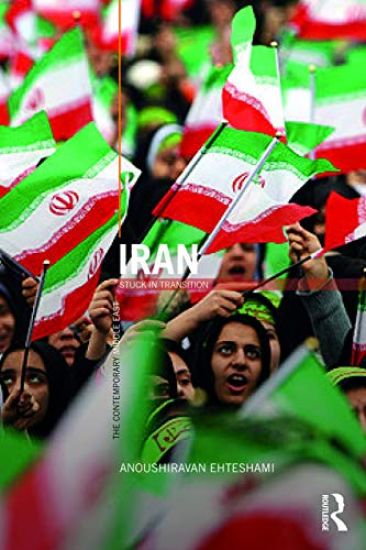
Having been ruled, more or less continuously, by a range of monarchical dynasties for three millennia, the end of the monarchy in Iran was relatively sudden, taking place in two short years. Since then, Iran has gone through tumultuous change, yet is still apparently caught in a cycle of transition. Iran has now created a complex but unique and non-transferrable system of government, but the question to be asked is whether the Islamic republic has lived up to its founding expectations, serving the Iranian people and helping them to realize their aspirations. This book is the first comprehensive analytical study of the forces which have been shaping and changing modern Iran and its relations with the rest of the world. It looks at the roots of the 1979 revolution and the forces unleashed during the modernization process under the Pahlavi monarchy. Applying a range of theoretical approaches to understanding the Islamic republic’s neo-authoritarian political system, Anoushiravan Ehteshami reflects on how the country’s new elite emerged and how these new political forces have changed Iran, the stresses on its political system, the forces shaping the country’s political economy, and the Islamic republic’s international relations. As some of Iran's leaders appear to crave permanent revolution as their means of staying in power, this book argues that the struggle for the soul of the Islamic Republic has mired the country in a cycle of change: Constant reform and transition. The republic finds itself stuck in transition. Written in a clear and insightful manner, this book provides an unparalleled analysis of the Islamic Republic of Iran as a major regional actor and gives fresh insights into the political workings of the world’s only Shia, and revolutionary, Islamic republic. It will be of great importance to students and scholars of Middle East Politics and International Relations, as well as the policy community whose gaze is never too far from this unique country.

Iran

Iran

Anoushiravan Ehteshami

Routledge
2017
nidottu
Having been ruled, more or less continuously, by a range of monarchical dynasties for three millennia, the end of the monarchy in Iran was relatively sudden, taking place in two short years. Since then, Iran has gone through tumultuous change, yet is still apparently caught in a cycle of transition. Iran has now created a complex but unique and non-transferrable system of government, but the question to be asked is whether the Islamic republic has lived up to its founding expectations, serving the Iranian people and helping them to realize their aspirations. This book is the first comprehensive analytical study of the forces which have been shaping and changing modern Iran and its relations with the rest of the world. It looks at the roots of the 1979 revolution and the forces unleashed during the modernization process under the Pahlavi monarchy. Applying a range of theoretical approaches to understanding the Islamic republic’s neo-authoritarian political system, Anoushiravan Ehteshami reflects on how the country’s new elite emerged and how these new political forces have changed Iran, the stresses on its political system, the forces shaping the country’s political economy, and the Islamic republic’s international relations. As some of Iran's leaders appear to crave permanent revolution as their means of staying in power, this book argues that the struggle for the soul of the Islamic Republic has mired the country in a cycle of change: Constant reform and transition. The republic finds itself stuck in transition. Written in a clear and insightful manner, this book provides an unparalleled analysis of the Islamic Republic of Iran as a major regional actor and gives fresh insights into the political workings of the world’s only Shia, and revolutionary, Islamic republic. It will be of great importance to students and scholars of Middle East Politics and International Relations, as well as the policy community whose gaze is never too far from this unique country.
Syria and Iran

Syria and Iran

Anoushiravan Ehteshami; Raymond A. Hinnebusch

Routledge
2014
nidottu
It has been the dominant view that both Syria in the 1980s and Iran today have acted as rogue states in the Middle East threatening to upset the stability of the region. In this innovative new study, Anoushiravan Ehteshami and Raymond Hinnebusch show that these two countries have in fact acted in a rational fashion pursuing the aim of containing Western influence. This book demonstrates how Syrian foreign policy resembles the "rational actor" model and Iran's rational factions in government guide its diplomacy. Syria and Iran's foreign policies are shown to be conventional ones, of "realist" diplomacy with their pursuance of a balance of power and spheres of influence. Their alliance with each other is also closely examined and found to be defensive in nature. Syria and Iran illustrates how these two countries, and their alliance, forms an integral part of the balance of power in the Middle East. It is an exciting contribution to the study of the region, and its application of international relations concepts will be welcomed by those studying this area.
The International Politics of the Red Sea

The International Politics of the Red Sea

Anoushiravan Ehteshami; Emma C. Murphy

Routledge
2013
nidottu
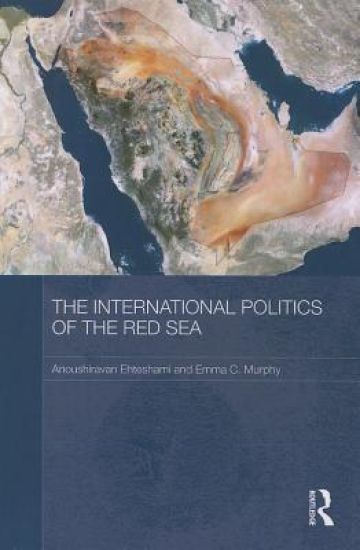
This pioneering book is the first comprehensive study of the Red Sea as a sub-region of the international system in its own right. Examining the international politics of the Red Sea region from the Cold War to the present day, it argues that the Red Sea area demonstrates the characteristics of a sub-regional system, given its increasing economic and social interdependence, greater regional integration, and flows of resources across it. It details how stronger regional powers - Egypt, Israel and Saudi Arabia - which co-habit the sub-region with much weaker, vulnerable and fragile states, are seeking to stamp their own authority on this dynamic sub-region. They have attempted to do so, the authors show, through extension of their military and economic influence where ever possible, while also forging regional partnerships aimed at protecting their interests or to fend off possible encroachment of others. The book discusses in great detail the security and military dynamics of the sub-region; land and maritime borders; as well as economic issues, including trade, migration, capital flows and transport. It covers developments across the Red Sea and also within all the states of this newly-forming sub-region.
Dynamics of Change in the Persian Gulf

Dynamics of Change in the Persian Gulf

Anoushiravan Ehteshami

Routledge
2013
sidottu
The Persian Gulf has come to represent one of the most strategically significant waterways of the world. In terms of geography, geopolitics, resources, global political economy, and regional influence, the Gulf is perhaps home to the world’s most significant group of countries. Focusing on the complexities of the interplay between domestic-level changes and region-wide interactions, this book presents the reader with the first comprehensive survey of the dynamics of change in this crucial area. Systemic-oriented in its approach, the impact of war and revolution on the countries of the sub-region is discussed, and the ways in which these factors have shaped the security dilemmas and responses of the Gulf States is also explored. The role of oil is examined in terms of the impact of its income on these states and societies, and the manner in which oil has shaped the integration of these states into the global system. Oil has shrunk developmental time in these countries, and has accelerated generational shift. At the same time, it has created the dialectical relationship which now characterizes the difficult balance between prosperity and instability which is at the heart of the sub-region. Casting new light on the workings of a strategically significant part of the international system, this book will be an essential resource for students and scholars of international relations, international security and Middle Eastern politics.
Dynamics of Change in the Persian Gulf

Dynamics of Change in the Persian Gulf

Anoushiravan Ehteshami

Routledge
2013
nidottu
The Persian Gulf has come to represent one of the most strategically significant waterways of the world. In terms of geography, geopolitics, resources, global political economy, and regional influence, the Gulf is perhaps home to the world’s most significant group of countries. Focusing on the complexities of the interplay between domestic-level changes and region-wide interactions, this book presents the reader with the first comprehensive survey of the dynamics of change in this crucial area. Systemic-oriented in its approach, the impact of war and revolution on the countries of the sub-region is discussed, and the ways in which these factors have shaped the security dilemmas and responses of the Gulf States is also explored. The role of oil is examined in terms of the impact of its income on these states and societies, and the manner in which oil has shaped the integration of these states into the global system. Oil has shrunk developmental time in these countries, and has accelerated generational shift. At the same time, it has created the dialectical relationship which now characterizes the difficult balance between prosperity and instability which is at the heart of the sub-region. Casting new light on the workings of a strategically significant part of the international system, this book will be an essential resource for students and scholars of international relations, international security and Middle Eastern politics.
The International Politics of the Red Sea

The International Politics of the Red Sea

Anoushiravan Ehteshami; Emma C. Murphy

Routledge
2011
sidottu
This pioneering book is the first comprehensive study of the Red Sea as a sub-region of the international system in its own right. Examining the international politics of the Red Sea region from the Cold War to the present day, it argues that the Red Sea area demonstrates the characteristics of a sub-regional system, given its increasing economic and social interdependence, greater regional integration, and flows of resources across it. It details how stronger regional powers - Egypt, Israel and Saudi Arabia - which co-habit the sub-region with much weaker, vulnerable and fragile states, are seeking to stamp their own authority on this dynamic sub-region. They have attempted to do so, the authors show, through extension of their military and economic influence where ever possible, while also forging regional partnerships aimed at protecting their interests or to fend off possible encroachment of others. The book discusses in great detail the security and military dynamics of the sub-region; land and maritime borders; as well as economic issues, including trade, migration, capital flows and transport. It covers developments across the Red Sea and also within all the states of this newly-forming sub-region.
Globalization and Geopolitics in the Middle East
Examining globalization in the Middle East, this book provides a much needed assessment of the impact of globalization in the ‘greater’ Middle East, including North Africa, in the context of the powerful geopolitical forces at work in shaping the region today. Written by a well-known authority in this area, this book demonstrates that, unlike in other regions, such as East Asia, geopolitics has been a critical factor in driving globalization in the Middle East. The author argues that whereas elsewhere globalisation has opened up the economy, society, culture and attitudes to the environment; in the Middle East it has had the opposite effect, with poor state formation, little interregional trade, foreign and interregional investment, and reassertion of traditional identities. This book explores the impact of globalization on the polities, economies and social environment of the greater Middle East, in the context of the region’s position as the central site of global geopolitical competition at the start of the twenty-first century.
Globalization and Geopolitics in the Middle East
Examining globalization in the Middle East, this book provides a much needed assessment of the impact of globalization in the ‘greater’ Middle East, including North Africa, in the context of the powerful geopolitical forces at work in shaping the region today. Written by a well-known authority in this area, this book demonstrates that, unlike in other regions, such as East Asia, geopolitics has been a critical factor in driving globalization in the Middle East. The author argues that whereas elsewhere globalisation has opened up the economy, society, culture and attitudes to the environment; in the Middle East it has had the opposite effect, with poor state formation, little interregional trade, foreign and interregional investment, and reassertion of traditional identities. This book explores the impact of globalization on the polities, economies and social environment of the greater Middle East, in the context of the region’s position as the central site of global geopolitical competition at the start of the twenty-first century.
Syria and Iran

Syria and Iran

Anoushiravan Ehteshami; Raymond A. Hinnebusch

Routledge
1997
sidottu
It has been the dominant view that both Syria in the 1980s and Iran today have acted as rogue states in the Middle East threatening to upset the stability of the region. In this innovative new study, Anoushiravan Ehteshami and Raymond Hinnebusch show that these two countries have in fact acted in a rational fashion pursuing the aim of containing Western influence. This book demonstrates how Syrian foreign policy resembles the "rational actor" model and Iran's rational factions in government guide its diplomacy. Syria and Iran's foreign policies are shown to be conventional ones, of "realist" diplomacy with their pursuance of a balance of power and spheres of influence. Their alliance with each other is also closely examined and found to be defensive in nature. Syria and Iran illustrates how these two countries, and their alliance, forms an integral part of the balance of power in the Middle East. It is an exciting contribution to the study of the region, and its application of international relations concepts will be welcomed by those studying this area.
Islamic Fundamentalism

Islamic Fundamentalism

Abdel Salam Sidahmed; Anoushiravan Ehteshami

Westview Press Inc
1996
nidottu
The phenomenon of political Islam continues to dominate the political and social map of the Arab world, with the increasingly open struggle between ruling elites and Islamists becoming the main source of political instability in many states. This volume offers an in-depth analysis of the rise of Islamic and fundamentalist movements in the Middle East and North Africa. Through detailed case studies, the contributors examine the various manifestations of political Islam, highlighting differences across movements and evaluating the varying circumstances in which they arise. They also assess the influence of such movements on the emerging post? Cold War order in the region and consider questions of a general nature, such as Islamic state theories and the impact of Islamicism on international relations.