Kirjojen hintavertailu – 12 903 725 kirjaa ja 27 kauppaa

Kirjailija

Anselm Adodo

Kirjat ja teokset yhdessä paikassa: 10 kirjaa, julkaisuja vuosilta 2017–2025, suosituimpiin kuuluu Medicinal Plants of Nigeria. Vertaile teosten hintoja ja tarkista saatavuus suomalaisista kirjakaupoista.

10 kirjaa

Kirjojen julkaisuvuodet: 2017–2025.

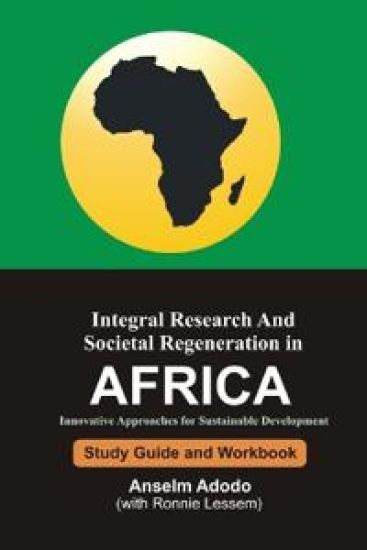
Integral Research and Societal Regeneration in Africa

Integral Research and Societal Regeneration in Africa

Anselm Adodo; Lessem Ronnie

Beacon Books and Media Ltd
2025
pokkari
This study guide and workbook complement Integral Research and Societal Regeneration in Africa by Anselm Adodo, Ronnie Lessem, and Alexander Schieffer, providing structured support for students, researchers, and academics. It offers a systematic approach to engaging with key ideas, theories, and methodologies through interactive exercises and critical reflections. Book Layout and FormatIntroduction: Provides an overview of the book's purpose, key themes, and how to use the study guide effectively. Chapter Summaries: Each section corresponds to a chapter in Integral Research and Societal Regeneration in Africa, distilling key concepts for structured learning. Guided Reflection Questions: Encourages critical thinking and personal engagement with the material. Practical Assignments & Exercises: Helps readers apply theories to real-world research and societal challenges. Case Studies & Examples: Illustrates the methodologies in practice, reinforcing their application. Checklists & Key Takeaways: Summarises essential points to aid comprehension and retention. Research Application Toolkit: Provides step-by-step guidance on implementing integral research methodologies. Conclusion & Next Steps: Encourages readers to integrate their learning into their academic or professional research. This structured format ensures a comprehensive, interactive, and applied approach, helping readers not only understand but also implement research practices that foster societal transformation.
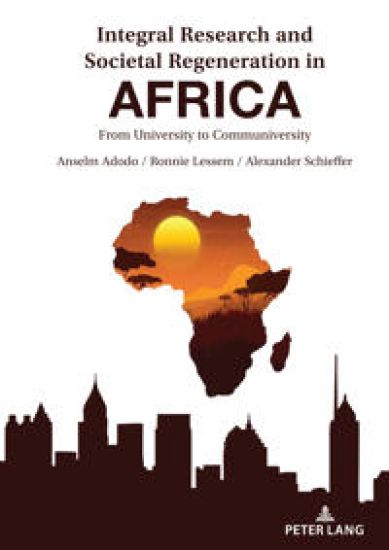
Integral Research and Societal Regeneration in Africa

Integral Research and Societal Regeneration in Africa

Anselm Adodo; Ronnie Lessem; Alexander Schieffer

PETER LANG AG
2024
sidottu
Embark on a journey through Africa’s social innovation landscape with this groundbreaking book, which presents a comprehensive framework for transformative change. Across its five captivating parts, it intricately weaves together cultural heritage, participatory research methods, and authentic storytelling to mitigate the adverse effects of globalization. Probe into the concepts of “Communitalism” and “Communiversity”, explore African phenomenology, and embrace critical realism as avenues for understanding and catalyzing positive change. This is a vital resource for researchers, policymakers, and individuals committed to shaping Africa’s trajectory towards a more equitable and sustainable future.
Healing Plants of Nigeria

Healing Plants of Nigeria

Anselm Adodo; Maurice M. Iwu

TAYLOR FRANCIS LTD
2022
nidottu
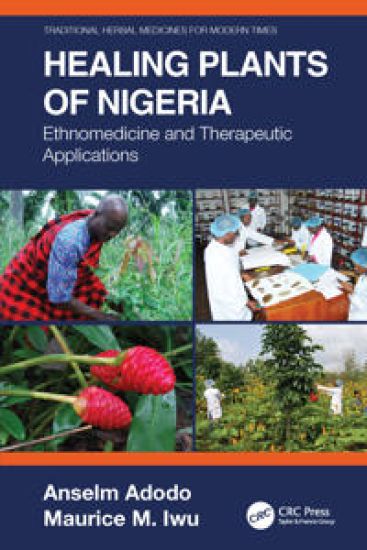
Healing Plants of Nigeria: Ethnomedicine and Therapeutic Applications offers comprehensive information on the use of herbal medicines in West Africa. Combining an evidence-based, ethnobotanical perspective with a pharmacological and pharmaceutical approach to phytomedicine, the book bridges the gap between the study of herbal plants’ pharmacological properties and active compounds for the development of clinical drugs and community-oriented approaches, emphasising local use. It demonstrates how the framework of African traditional medicine can be preserved in a contemporary clinical context. The book outlines the history and beliefs surrounding the traditional use of herbs by the local population alongside their application in contemporary phytotherapy in Nigeria and West Africa. It features a critical assessment of the scientific rationale behind the use of these plants in ethnomedicine and offers a composite catalogue of phytotherapeutic and wellness agents, detailing the safety profile, efficacy, and scientific integrity of plants used to treat diseases and optimise health. Features: An ethnobotanical survey containing over 200 full-colour photographs of Nigerian and West African plants. A unique combination of ethnobotany and pharmacognosy, bridging the divide between pharmaceutical and community-oriented approaches to herbal medicine research. Contextual discussion of the therapeutic potential of Nigerian herbal medicine. Offers a template which can be used to separate the superstitious aspects of ethnomedicine from culturally inherited deposits of knowledge. A handbook for herbal and natural medicine practitioners, the book is aimed at African thinkers, scientists, healthcare providers and students of pharmacology and ethnomedicine.
Afrikology

Afrikology

Anselm Adodo; Ronnie Lessem

Beacon Academic
2021
pokkari
During the twentieth century, global politics and economics have been marked by two politically, economically, and intellectually divi - sive rather than culturally and psychologically integrative forces. This has been reflected in the "East/West" mutually antagonistic divide of communism/capitalism and the North/South chasm of wealth and poverty. The result, worldwide, has been, to a considerable degree, stasis and disintegration. In this book, the authors argue that both capitalism and communism were born out of narrow views of our hu - manity, ignoring the cultural richness of the rest of the world. The evidence is everywhere: climate change, terrorism, rising poverty, political tension, social chaos and food insecurity. But this is not a book of lamentations. The authors present real case studies to dem - onstrate that there is an alternative to the current chaos: Afrikology. It is "Afri-" because it is inspired by ideas initially produced in Africa, the cradle of humankind; it is "ko (logy)" because it is based on logos, the word from which the world was originated, but at the same time, an episteme, a worldly-wise eco-logical knowledge, and consciousness. It stands for a plurality of epistemic directions. Knowledge, therefore, is an interpretation that is always situated within a living communal tradition, co-created by individuals, communities, and enterprises, specifically out of Africa's genius, alongside others.
Healing Plants of Nigeria

Healing Plants of Nigeria

Anselm Adodo; Maurice M. Iwu

CRC Press
2020
sidottu
Healing Plants of Nigeria: Ethnomedicine and Therapeutic Applications offers comprehensive information on the use of herbal medicines in West Africa. Combining an evidence-based, ethnobotanical perspective with a pharmacological and pharmaceutical approach to phytomedicine, the book bridges the gap between the study of herbal plants’ pharmacological properties and active compounds for the development of clinical drugs and community-oriented approaches, emphasising local use. It demonstrates how the framework of African traditional medicine can be preserved in a contemporary clinical context. The book outlines the history and beliefs surrounding the traditional use of herbs by the local population alongside their application in contemporary phytotherapy in Nigeria and West Africa. It features a critical assessment of the scientific rationale behind the use of these plants in ethnomedicine and offers a composite catalogue of phytotherapeutic and wellness agents, detailing the safety profile, efficacy, and scientific integrity of plants used to treat diseases and optimise health. Features: An ethnobotanical survey containing over 200 full-colour photographs of Nigerian and West African plants. A unique combination of ethnobotany and pharmacognosy, bridging the divide between pharmaceutical and community-oriented approaches to herbal medicine research. Contextual discussion of the therapeutic potential of Nigerian herbal medicine. Offers a template which can be used to separate the superstitious aspects of ethnomedicine from culturally inherited deposits of knowledge. A handbook for herbal and natural medicine practitioners, the book is aimed at African thinkers, scientists, healthcare providers and students of pharmacology and ethnomedicine.
Integral Community Enterprise in Africa
At a time of global economic crisis and disillusionment with capitalism, Adodo offers refreshing and positive insight into a more integral way of business management, enterprise and community development as well as holistic healing in Africa. For over three decades, Africa was the recipient of billions of dollars in aid funds that were meant to catapult the continent from undeveloped to developed status. Yet the more the aid poured in, the poorer African countries became. The devastating effect of western economic models in Africa that followed is well documented. Integral Community Enterprise in Africa exposes the limitations of existing theories, such as capitalism, socialism and communism, and shows how western theories were imposed on Africa. Such imposition of concepts and ideas is not only demeaning but also unsustainable, serving only the interest of the elite. Father Anselm Adodo argues for the need to have a southern theory to serve as an alternative to western theories. The majority of African intellectuals and activists, while criticizing existing theories, often do not provide alternative theories to address the prevalent inadequacies entrenched in conventional social, political and economic systems. This revolutionary book aims to address this lapse and proposes the theory of communitalism as a more indigenous, sustainable and integral approach to tackling the social, political, economic and developmental challenges of today’s Africa. There is an African alternative to capitalism, socialism and communism – a surer path to sustainable development in and from Africa. This is a book that is positioned at the very core of a much needed African Renaissance. A profoundly new approach to development in Africa, this is essential reading for anyone concerned with authentic development in Africa and in the world.
The Idea of the Communiversity

The Idea of the Communiversity

Ronnie Lessem; Anselm Adodo; Tony Bradley

Beacon Books and Media Ltd
2019
pokkari
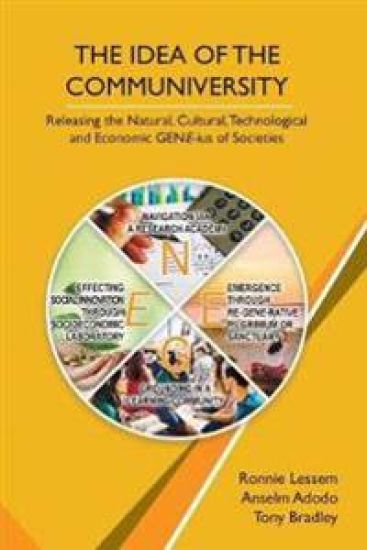
This book takes an integral world's approach to societal transformation, by pointing to ways in which we can reform our modes of knowledge creation. Through the fourfold model of community, pilgrimium, academy and co-laboratory, the authors have re-conceptualised a university for every people and culture.
Medicinal Plants of Nigeria

Medicinal Plants of Nigeria

Anselm Adodo

Beacon Books and Media Ltd
2018
pokkari
ABOUT THE BOOK Since the publication of Nature Power in the year 2000, there has always been a demand for a subsequent book of this kind, to help readers identify the medicinal plants pictorially. This book aims to serve as a workbook for students, teachers, and practitioners in the field of ethnobotany and ethnomedicine. It documents the plants that are traditionally used by the local population, the history of local use, and the traditional beliefs around the use in Nigeria. At a time when so much attention is being given to phytochemical screening of plants, there is a temptation to overlook the philosophy of ethnomedicine and cultural use of plants, thereby losing the link between plants and the community. This plant album will help herbal medicine practitioners to identify the local plants available in Nigeria, and also give them some basic knowledge of the chemical constituents. It is a welcome addition to the existing body of literature on Nigeria's plants and flora. The chapter on Nigerian grasses, which is a much-neglected area of research, contributes to the book's uniqueness. ABOUT THE AUTHOR Anselm Adodo is a member of the Benedictine order of the Catholic Church. He was ordained a priest in 1997. Father Anselm Adodo is foremost herbal research Institute, the Pax Herbal Clinic and Research Laboratories, popularly called Paxherbals, and Ofure (Pax) Centre for Integral Research and Development (OFIRDI). He has over twenty years' experience of research in the fields of Ethnography, Ethnobotany, Epidemiology, Phytomedicine and Medical Sociology. He is a prominent advocate of African herbal medicine research, indigenous knowledge systems, rural community development, health policy reform and transformation of education in Africa. He has authored a number of books which include: Herbs for Healing (1997), Healing Radiance of the Soul (2003), New (2005), Herbal Medicine and the revival of African Civilization (2010), Disease and Dietary patterns in Edo Central Nigeria (2013), in Africa. Communitalism as an Alternative to Capitalism (2017) and the best-selling Nature Power. Fr. Anselm is a visiting lecturer at the Institute of African Studies, University of Ibadan, Nigeria, where he teaches African Transformation studies and Research (NIMR), a Fellow of the Nigerian Society of Botanists, and a Senior Research Fellow at Trans4m centre for Integral Development, Geneva, Switzerland.
Integral Community Enterprise in Africa
At a time of global economic crisis and disillusionment with capitalism, Adodo offers refreshing and positive insight into a more integral way of business management, enterprise and community development as well as holistic healing in Africa. For over three decades, Africa was the recipient of billions of dollars in aid funds that were meant to catapult the continent from undeveloped to developed status. Yet the more the aid poured in, the poorer African countries became. The devastating effect of western economic models in Africa that followed is well documented. Integral Community Enterprise in Africa exposes the limitations of existing theories, such as capitalism, socialism and communism, and shows how western theories were imposed on Africa. Such imposition of concepts and ideas is not only demeaning but also unsustainable, serving only the interest of the elite. Father Anselm Adodo argues for the need to have a southern theory to serve as an alternative to western theories. The majority of African intellectuals and activists, while criticizing existing theories, often do not provide alternative theories to address the prevalent inadequacies entrenched in conventional social, political and economic systems. This revolutionary book aims to address this lapse and proposes the theory of communitalism as a more indigenous, sustainable and integral approach to tackling the social, political, economic and developmental challenges of today’s Africa. There is an African alternative to capitalism, socialism and communism – a surer path to sustainable development in and from Africa. This is a book that is positioned at the very core of a much needed African Renaissance. A profoundly new approach to development in Africa, this is essential reading for anyone concerned with authentic development in Africa and in the world.