

Kirjailija
Anselm Franke
Kirjat ja teokset yhdessä paikassa: 5 kirjaa, julkaisuja vuosilta 2015–2022, suosituimpiin kuuluu The Black City – Glosses. Vertaile teosten hintoja ja tarkista saatavuus suomalaisista kirjakaupoista.
5 kirjaa
Kirjojen julkaisuvuodet: 2015–2022.
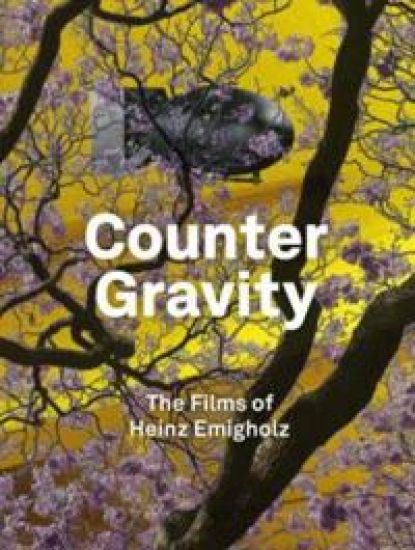
The Films of Heinz Emigholz. Heinz Emigholz b. 1948, Bremen is a pioneer of experimental architecture and narrative film who has been deciphering the experience of film, time, and space since the 1970s, while also exploring the texture of memory and consciousness. Thanks to his unique formal language he has radically distanced himself from conventional representations of space and architecture in film, creating instead an alternative narrative of modernist architecture. Counter Gravity provides the first comprehensive overview of Heinz Emigholz s oeuvre including selected media reviews. In addition to essays by international authors
The Black City – Glosses
Hubert Fichte; Diedrich Diederichsen; Anselm Franke; Leonore Mau; Adam Siegel
Sternberg Press
2020
sidottu
Neolithic Childhood – Art in a False Present, c. 1930
Anselm Franke; Tom Holert
Diaphanes AG
2018
sidottu
Resonating at the heart of Neolithic Childhood. Art in a False Present, c. 1930 is the question whether art has present, past, and future functions. The modernist assertion of the autonomy of art was intended to render superfluous art’s social and religious functions. But what if the functionlessness of art comes under suspicion of being instrumentalized by bourgeois capitalism? This was an accusation that informed the anti-modernist critique of the avant-garde, and particularly of Surrealism. The objective throughout the crisis-ridden present of the 1920s to the 1940s was to reaffirm a once ubiquitous, but long-lost functionality—not only of art. The publication accompanying the exhibition examines the strategies deployed in this reaffirmation. These include the surrealist Primitivism of an “Ethnology of the White Man” together with the excavation of the deep time of humanity—into the “Neolithic Childhood” mapped out by the notoriously anti-modernist Carl Einstein (1885-1940) as a hallucinatory retro-utopia. The volume brings together essays by the curators and academics involved in the project, primary texts by Carl Einstein and a comprehensive documentation of the exhibition including lists of works, texts on as well as images of numerous exhibits and finally installation views. At the center of the volume, a glossary discusses Carl Einstein’s own theoretical vocabulary as well as further associated terms, such as Autonomy, Formalism, Function, Gesture, Hallucination, Art, Metamorphosis, Primitivisms, Totality. With contributions by: Irene Albers, Philipp Albers, Joyce S. Cheng, Rosa Eidelpes, Carl Einstein, Anselm Franke, Charles W. Haxthausen, Tom Holert, Sven Lütticken, Ulrike Müller, Jenny Nachtigall, David Quigley, Cornelius Reiber, Erhard Schüttpelz, Kerstin Stakemeier, Maria Stavrinaki, Elena Vogman, Zairong Xiang, Sebastian ZeidlerWith reproductions of artworks by: Jean (Hans) Arp, Willi Baumeister, Georges Braque, Brassaï, Claude Cahun, Lux T. Feininger, Max Ernst, Florence Henri, Barbara Hepworth, Hannah Höch, Heinrich Hoerle, Paul Klee, Germaine Krull, Helen Levitt, André Masson, Alexandra Povòrina, Gaston-Louis Roux, Kalifala Sidibé, Louis Soutter, Yves Tanguy, Toyen, Jindrich Štyrský, Raoul Ubac, Paule Vézelay and others.
After Year Zero – Geographies of Collaboration
Annett Busch; Anselm Franke
Museum of Modern Art in Warsaw
2015
nidottu
Published in conjunction with an exhibition that has traveled to the Museum of Modern Art in Warsaw from Berlin's Haus der Kulturen der Welt, this volume takes as its starting point the realignment of global ties after 1945-Europe's "year zero"-and focuses on the worldwide phenomenon of decolonization. Investigating magazines, journals, and newspapers, the diverse essays in After Year Zero shine a spotlight on collaboration, not confrontation, in the many publications launched at various times and in different places within the African continent or the African diaspora. As the volume contributors show, the format of these periodicals provided a means for temporary intervention against hegemonic voices and made possible the necessary task of creating a new language to talk about art, life, and politics. In addition to text-based essays, After Year Zero also includes visual essays designed like collages of documents, quotes, and images. With its unique international and interdisciplinary approach, After Year Zero is an innovative study of postwar narrative possibilities and a powerful reflection on the processes by which the "universal" can be generated.