Kirjojen hintavertailu – 12 903 725 kirjaa ja 27 kauppaa

Kirjailija

Anshul Lohakare

Kirjat ja teokset yhdessä paikassa: 53 kirjaa, julkaisuja vuosilta 2020–2026, suosituimpiin kuuluu Lehrbuch zur Wertschöpfung von Jamun (Syzygium cumini). Vertaile teosten hintoja ja tarkista saatavuus suomalaisista kirjakaupoista.

53 kirjaa

Kirjojen julkaisuvuodet: 2020–2026.

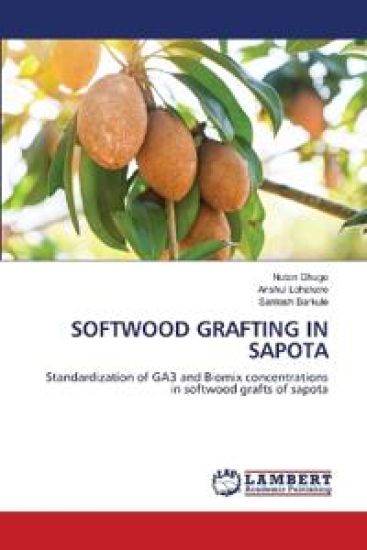
Softwood Grafting in Sapota

Softwood Grafting in Sapota

Nutan Ghuge; Anshul Lohakare; Santosh Barkule

Lap Lambert Academic Publishing
2024
pokkari
The satisfactory outcome in respect to the higher graft success in sapota cv. Kalipatti with highest gross returns (Rs. 1948.5), net returns (Rs.1457) and maximum B: C ratio (2.96) was obtained in the treatment where foliar application of GA3 125 ppm and Biomix 4% applied through drenching at three times i.e., immediately after grafting, 30 DAG and 60 DAG. Further, capping with polyethylene bags of 25 cm L x 7.5 cm B and 200 guage thickness was done to the grafts immediately after grafting till 20 days after grafting. Hence it can be concluded that the application of GA3 125 ppm + Biomix 4% have significant effects on growth, success and survival of sapota grafts cv. Kalipatti under polyhouse conditions.
Role Of Biostimulants In Sapota

Role Of Biostimulants In Sapota

Anitha L R; Santosh Barkule; Anshul Lohakare

Lap Lambert Academic Publishing
2024
pokkari
The present investigation entitled "Standardization of biostimulants in sapota cv. Kalipatti" was laid out in Randomized Block Design consisted of 10 treatments viz., Potassium silicate 0.1%, Potassium silicate 0.2%, Potassium silicate 0.3%, Orthosilicic acid 0.1%, Orthosilicic acid 0.2%, Orthosilicic acid 0.3%, Seaweed extract 0.1%, Seaweed extract 0.2%, Seaweed extract 0.3%, control. Spraying was done in the month of October, November and December. The results, revealed that high net returns with maximum benefit cost ratio can be obtained with application of Potassium Silicate 0.2 %. This treatment also provided better yield (t/ha) and quality fruits with maximum shelf life.
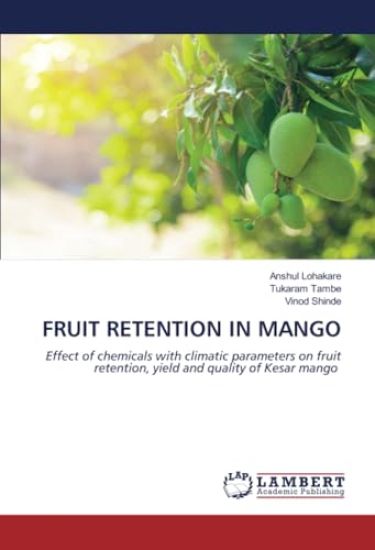
Fruit Retention in Mango

Fruit Retention in Mango

Anshul Lohakare; Tukaram Tambe; Vinod Shinde

Lap Lambert Academic Publishing
2024
pokkari
An investigation entitled "Effect of chemicals with climatic parameters on fruit retention, yield and quality of mango (Mangifera indica L.) cv. Kesar" was carried out with an objective to reduce fruit drop as well as to improve the fruit set, yield and quality by foliar application of various plant growth regulators, polyamines and micronutrients. In the present investigation Naphthalene Acetic Acid (NAA) 25 ppm at full bloom and pea stage, Salicylic Acid (SA) 100 ppm at pea and marble stage and also Zinc Sulphate (ZnSO4) 0.5% at pea and marble stage gave best results in respect to fruit retention, yield and quality of mango cv. Kesar. While correlation studies of climatic factors indicated that high or low temperature had non-significant correlations with fruit set and retention but high temperature and low humidity showed beneficial effects on the physical parameters, yield and quality attributes whereas, low temperature and high humidity exhibited less beneficial or deleterious effects on the above traits in Kesar mango.
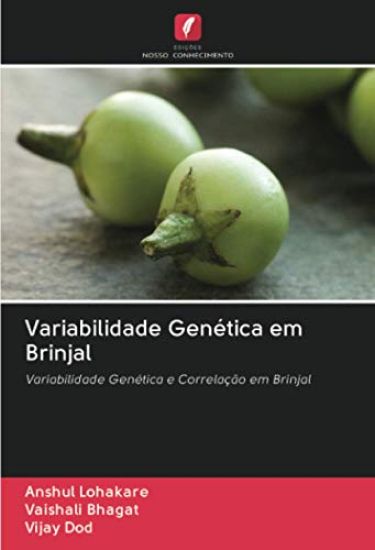
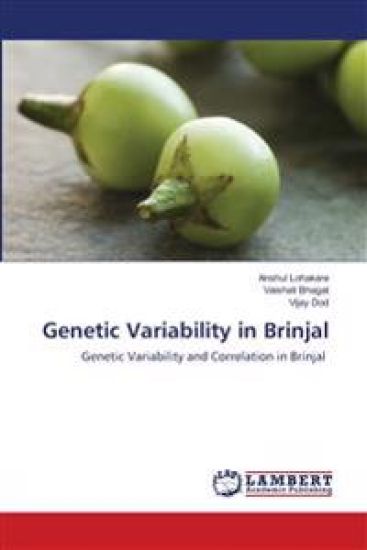
Genetic Variability in Brinjal

Genetic Variability in Brinjal

Anshul Lohakare; Vaishali Bhagat; Vijay Dod

LAP Lambert Academic Publishing
2020
pokkari
Brinjal is a typical solanaceous vegetable grown in all the seasons. Brinjal or egg plant or aubergine is an important solanaceous vegetable crop grown in India and in other parts of the World. It has been a staple vegetable in our diet since ancient times. Brinjal is highly productive and usually finds its place as poor man's crop. It is highly nutritive and is consumed as cooked vegetable in various ways. Brinjal (white types) also possesses several medicinal properties, which have been known in India since antiquity. S. melongena is used as medicine particularly in India for the treatment of diabetes, bronchitis, asthma, etc. For the study of genetic variability and correlation of characters, brinjal offers a good material because of its hardy nature, comparatively easier handling, wider adaptability and presence of maximum variability being indigenous. In view of the above facts, present studies in green fruited brinjal were undertaken with 23 genotypes, to study the variability and correlation.