Kirjojen hintavertailu – 12 859 829 kirjaa ja 27 kauppaa
Kirjailija
Anthony Bash
Kirjat ja teokset yhdessä paikassa: 9 kirjaa, julkaisuja vuosilta 2007–2025, suosituimpiin kuuluu Thomas Hatfield. Vertaile teosten hintoja ja tarkista saatavuus suomalaisista kirjakaupoista.
Though the Christian church has a well-developed theology of Godward-facing remorse about sin, it has paid little attention to the interpersonal implications of the remorse that people feel when they wrong one another. Since the nineteenth century, important work has been done by psychologists, anthropologists, philosophers, ethicists, scientists, and lawyers that has implications for the way theologians might think about remorse. This book draws on the biblical record in its ancient settings as well as on insights from contemporary scholarship to offer a new and distinctively Christian contribution to an understanding of remorse.
Thomas Hatfield (c. 1310?81) rose to become a valued royal servant under King Edward III. In 1345 he was elected Bishop of Durham, an office he held until his death. As bishop he retained a strong connection with royal service and helped manage northern England and England's relations with Scotland. At the same time, he remained a dedicated advocate of the autonomy of the Durham palatinate over which he ruled as bishop. Hatfield's long episcopacy ensured that he made his mark on his bishopric and on the cathedral church of Durham, where his tomb is still seen. Hatfield College, Durham University, is named after him. Based on a series of lectures given at Hatfield College in 2010, the assumed seven hundredth anniversary of Thomas Hatfield's birth, this volume highlights the unique military, political, and clerical roles Hatfield performed and his notable legacies. The studies in this volume advance knowledge of both the man and his remarkable career and, in so doing, enhance understanding of the wider secular and religious world in which he lived.
Anthony Bash offers new insights into forgiveness from a biblical perspective, taking into account important findings in philosophy, politics and psychology. The book explores what the Bible says about forgiveness so that we can better experience its regenerative and renewing effects. It also looks at what the Bible says in the light of two thousand years of thought about forgiveness. It does so in the belief that, if forgiveness is to be meaningful, it must be just.
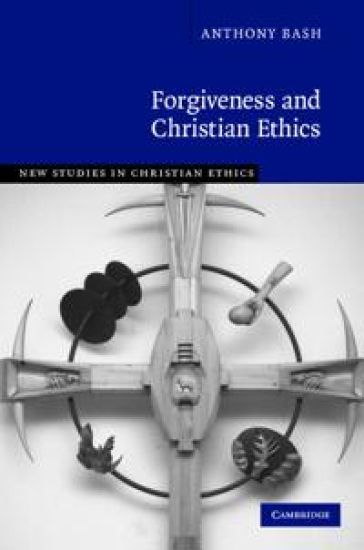
What does it mean to forgive? The answer is widely assumed to be self-evident but critical analysis quickly reveals the complexities of the subject. Forgiveness has traditionally been the preserve of Christian theology, though in the last half century - and at an accelerating pace - psychologists, lawyers, politicians and moral philosophers have all been making an important contribution to questions about and our understanding of the subject. Anthony Bash offers a vigorous restatement of the Christian view of forgiveness in critical dialogue with those both within and without the Christian tradition. Forgiveness is a much more complicated subject than many theologians recognize. Bash explores the relevance of the theoretical discussion of the topic to recent events such as the Truth and Reconciliation Commission in South Africa, post-Holocaust trials, the aftermath of 9/11 and July 7 and various high-profile criminal cases.
What does it mean to forgive? The answer is widely assumed to be self-evident but critical analysis quickly reveals the complexities of the subject. Forgiveness has traditionally been the preserve of Christian theology, though in the last half century - and at an accelerating pace - psychologists, lawyers, politicians and moral philosophers have all been making an important contribution to questions about and our understanding of the subject. Anthony Bash offers a vigorous restatement of the Christian view of forgiveness in critical dialogue with those both within and without the Christian tradition. Forgiveness is a much more complicated subject than many theologians recognize. Bash explores the relevance of the theoretical discussion of the topic to recent events such as the Truth and Reconciliation Commission in South Africa, post-Holocaust trials, the aftermath of 9/11 and July 7 and various high-profile criminal cases.