Kirjojen hintavertailu – 12 903 735 kirjaa ja 27 kauppaa

Kirjailija

Anthony Burke

Kirjat ja teokset yhdessä paikassa: 9 kirjaa, julkaisuja vuosilta 2006–2025, suosituimpiin kuuluu Institutionalising Multispecies Justice. Vertaile teosten hintoja ja tarkista saatavuus suomalaisista kirjakaupoista.

9 kirjaa

Kirjojen julkaisuvuodet: 2006–2025.

Institutionalising Multispecies Justice

Institutionalising Multispecies Justice

Danielle Celermajer; Anthony Burke; Stefanie Fishel; Erin Fitz-Henry; Nicole Rogers; David Schlosberg; Christine Winter

Cambridge University Press
2025
sidottu
Multispecies Justice (MSJ) is a theory and practice seeking to correct the defects making dominant theories of justice incapable of responding to current and emerging planetary disruptions and extinctions. Multispecies Justice starts with the assumption that justice is not limited to humans but includes all Earth others, and the relationships that enable their functioning and flourishing. This Element describes and imagines a set of institutions, across all scales and in different spheres, that respect, revere, and care for the relationships that make life on Earth possible and allow all natural entities, humans included, to flourish. It draws attention to the prefigurative work happening within societies otherwise dominated by institutions characterised by Multispecies Injustice, demonstrating historical and ongoing practices of MSJ in different contexts. It then sketches speculative possibilities that expand on existing institutional reforms and are more fundamentally transformational. This title is also available as Open Access on Cambridge Core.

The Ecology Politic

The Ecology Politic

Anthony Burke; Stefanie Fishel

MIT PRESS LTD
2025
nidottu
A compelling proposal for new international law and institutions to address the planetary crisis that improves biodiversity protection, supports Indigenous peoples, and prevents catastrophic climate change. In The Ecology Politic, Anthony Burke and Stefanie Fishel contend that the roots of our planetary crisis lie in the modern state: in its destructive entanglement with capitalism and its colonial legacies of extraction and oppression. This, in turn, has shaped global governance and international law, as they continue to fail to curb global heating, deforestation, and extinction. In a far-reaching critique of the foundational political theory of the modern state--the Body-Politic--the authors insist that nothing less than a radically different model of the polity--an Ecology Politic--is needed if we are to escape this impasse. Burke and Fishel argue that the international rule of law enacts a sovereign ban of nature that appropriates nonhuman lives for profit and use while denying them political and legal standing. We fail because we rely on the very institutions, worldviews, and systems that generated the crisis to solve it. The authors reconsider political power, agency, scale, and democracy in the Anthropocene and assert a biospheric ethic that values the entangled planetary structure of matter, energy, and life. Further, they argue for more-than-human beings to be represented in an ecological democracy that flows across borders. In short, they imagine a polity whose fundamental purpose is to protect planetary ecosystems and nurture interlocking systems of social and ecological justice.
Institutionalising Multispecies Justice

Institutionalising Multispecies Justice

Danielle Celermajer; Anthony Burke; Stefanie Fishel; Erin Fitz-Henry; Nicole Rogers; David Schlosberg; Christine Winter

Cambridge University Press
2025
pokkari
Multispecies Justice (MSJ) is a theory and practice seeking to correct the defects making dominant theories of justice incapable of responding to current and emerging planetary disruptions and extinctions. Multispecies Justice starts with the assumption that justice is not limited to humans but includes all Earth others, and the relationships that enable their functioning and flourishing. This Element describes and imagines a set of institutions, across all scales and in different spheres, that respect, revere, and care for the relationships that make life on Earth possible and allow all natural entities, humans included, to flourish. It draws attention to the prefigurative work happening within societies otherwise dominated by institutions characterised by Multispecies Injustice, demonstrating historical and ongoing practices of MSJ in different contexts. It then sketches speculative possibilities that expand on existing institutional reforms and are more fundamentally transformational. This title is also available as Open Access on Cambridge Core.
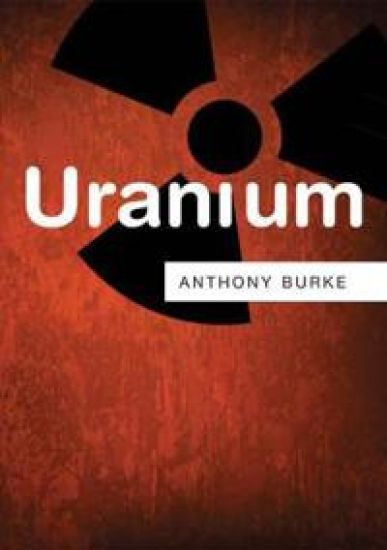
Uranium

Uranium

Anthony Burke

Polity Press
2017
sidottu
Uranium, the most atomically unstable natural element on earth, has a unique place in the global geopolitics of resources. It provides energy to millions of people and its isotopes are used to power spacecraft and in nuclear medicine. But it is also at the heart of many of the planet's most deadly threats, including nuclear devastation and radioactive waste. Its mining has caused bitter conflict with indigenous peoples and its testing in nuclear weapons has left a toxic legacy. Yet the nonproliferation regime which aims to phase out nuclear weapons and manage the risks of nuclear energy is at risk of unravelling. In this book, Anthony Burke explores the geopolitical intrigue around uranium and the dilemmas of justice and security to which its development has given rise. The twenty-first century, he cautions, will be a time of reckoning and new reserves of political will must be found to manage the impact of this extraordinary mineral. Only by cooperating to achieve multilateral disarmament and greater international control over nuclear power can we ward off nuclear catastrophe and harness the potential of nuclear energy to help address, rather than create, some of the world's most pressing problems.
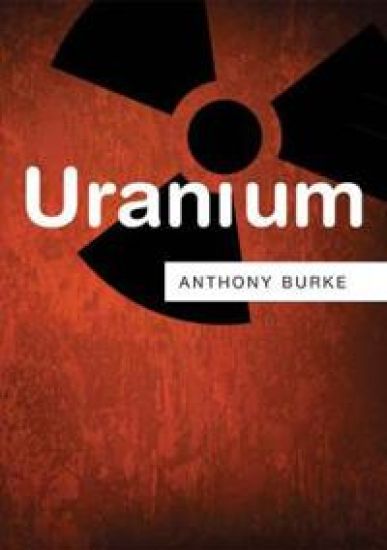
Uranium

Uranium

Anthony Burke

Polity Press
2017
nidottu

Halvin toimitettuna 30,00 €

Uranium, the most atomically unstable natural element on earth, has a unique place in the global geopolitics of resources. It provides energy to millions of people and its isotopes are used to power spacecraft and in nuclear medicine. But it is also at the heart of many of the planet's most deadly threats, including nuclear devastation and radioactive waste. Its mining has caused bitter conflict with indigenous peoples and its testing in nuclear weapons has left a toxic legacy. Yet the nonproliferation regime which aims to phase out nuclear weapons and manage the risks of nuclear energy is at risk of unravelling. In this book, Anthony Burke explores the geopolitical intrigue around uranium and the dilemmas of justice and security to which its development has given rise. The twenty-first century, he cautions, will be a time of reckoning and new reserves of political will must be found to manage the impact of this extraordinary mineral. Only by cooperating to achieve multilateral disarmament and greater international control over nuclear power can we ward off nuclear catastrophe and harness the potential of nuclear energy to help address, rather than create, some of the world's most pressing problems.
Ethics and Global Security

Ethics and Global Security

Anthony Burke; Katrina Lee-Koo; Matt McDonald

Routledge
2014
nidottu
This book will be the first systematic examination of the role that ethics plays in international security in both theory and practice, and offers the reader a concrete ethics for global security. Questions of morality and ethics have long been central to global security, from the death camps, world wars and H-bombs of the 20th century, to the humanitarian missions, tsunamis, terrorism and refugees of the 21st. This book goes beyond the Just War tradition to demonstrate how ethical commitments influence security theory, policy and international law, across a range of pressing global challenges. The book highlights how, from patrolling a territorial border to maintaining armed forces, security practices have important ethical implications, by excluding some from consideration, presenting others as potential threats and exposing them to harm, and licensing particular actions. While many scholars and practitioners of security claim little interest in ethics, ethics clearly has an interest in them. This innovative book extends the traditional agenda of war and peace to consider the ethics of force short of war such as sanctions, deterrence, terrorism, targeted killing, and torture, and the ethical implications of new security concerns such as identity, gender, humanitarianism, the responsibility to protect, and the global ecology. It advances a concrete ethics for an era of global threats, and makes a case for a cosmopolitan approach to the theory and practice of security that could inspire a more just, stable and inclusive global order. This book fills an important gap in the literature and will be of much interest to students of ethics, security studies and international relations.
Ethics and Global Security

Ethics and Global Security

Anthony Burke; Katrina Lee-Koo; Matt McDonald

Routledge
2014
sidottu
This book will be the first systematic examination of the role that ethics plays in international security in both theory and practice, and offers the reader a concrete ethics for global security. Questions of morality and ethics have long been central to global security, from the death camps, world wars and H-bombs of the 20th century, to the humanitarian missions, tsunamis, terrorism and refugees of the 21st. This book goes beyond the Just War tradition to demonstrate how ethical commitments influence security theory, policy and international law, across a range of pressing global challenges. The book highlights how, from patrolling a territorial border to maintaining armed forces, security practices have important ethical implications, by excluding some from consideration, presenting others as potential threats and exposing them to harm, and licensing particular actions. While many scholars and practitioners of security claim little interest in ethics, ethics clearly has an interest in them. This innovative book extends the traditional agenda of war and peace to consider the ethics of force short of war such as sanctions, deterrence, terrorism, targeted killing, and torture, and the ethical implications of new security concerns such as identity, gender, humanitarianism, the responsibility to protect, and the global ecology. It advances a concrete ethics for an era of global threats, and makes a case for a cosmopolitan approach to the theory and practice of security that could inspire a more just, stable and inclusive global order. This book fills an important gap in the literature and will be of much interest to students of ethics, security studies and international relations.
Beyond Security, Ethics and Violence
In a world plagued by war and terror, Beyond Security, Ethics and Violence sounds a warning: not only are global patterns of insecurity, violence and conflict getting ever more destructive and out of hand, but the ways we understand and respond to them will only prolong the crisis. When security is grounded in exclusion and alienation, ethics licenses killing and war, and freedom is a mask for imperial violence, how should we act? Anthony Burke offers a groundbreaking analysis of the historical roots of sovereignty and security, his critique of just war theory, and important new essays on strategy, the concept of freedom and US exceptionalism. He pursues critical engagements with thinkers such as Giorgio Agamben, Hardt and Negri, Emmanuel Levinas, Carl Von Clausewitz, Jean Bethke Elshtain, Michael Walzer, Michel Foucault and William Connolly. Combining a diversity of critical thought with analyses of the War on Terror, Iraq, the Israeli-Palestinian conflict, the Vietnam War, the Indonesian crisis, globalization and the new drive for empire, Burke refuses easy answers, or to abandon hope. This innovative study will be of interest to students and researchers of politics and international relations, security studies, social and cultural theory and philosophy.
Beyond Security, Ethics and Violence
In a world plagued by war and terror, Beyond Security, Ethics and Violence sounds a warning: not only are global patterns of insecurity, violence and conflict getting ever more destructive and out of hand, but the ways we understand and respond to them will only prolong the crisis. When security is grounded in exclusion and alienation, ethics licenses killing and war, and freedom is a mask for imperial violence, how should we act? Anthony Burke offers a groundbreaking analysis of the historical roots of sovereignty and security, his critique of just war theory, and important new essays on strategy, the concept of freedom and US exceptionalism. He pursues critical engagements with thinkers such as Giorgio Agamben, Hardt and Negri, Emmanuel Levinas, Carl Von Clausewitz, Jean Bethke Elshtain, Michael Walzer, Michel Foucault and William Connolly. Combining a diversity of critical thought with analyses of the War on Terror, Iraq, the Israeli-Palestinian conflict, the Vietnam War, the Indonesian crisis, globalization and the new drive for empire, Burke refuses easy answers, or to abandon hope. This innovative study will be of interest to students and researchers of politics and international relations, security studies, social and cultural theory and philosophy.