Kirjojen hintavertailu – 12 903 725 kirjaa ja 27 kauppaa

Kirjailija

Anthony Elliott

Kirjat ja teokset yhdessä paikassa: 34 kirjaa, julkaisuja vuosilta 2004–2024, suosituimpiin kuuluu Routledge Revivals: Anthony Elliott: Early Works in Social Theory. Vertaile teosten hintoja ja tarkista saatavuus suomalaisista kirjakaupoista.

34 kirjaa

Kirjojen julkaisuvuodet: 2004–2024.

Routledge Revivals: Anthony Elliott: Early Works in Social Theory
The volumes in this set, originally published between 1999 and 2003, draw together early works in social theory by leading sociologist Anthony Elliott. The collection covers some of his major works in the field of social theory, with a paticular focus on psychoanalysis, and social theorists within the area of sociology. The works in this set make accessible previously unavailable works from the early stages of Anthony Elliott's ongoing and prolific career to date.

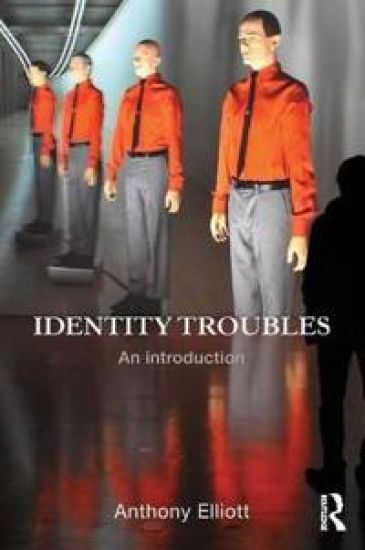
Identity Troubles

Identity Troubles

Anthony Elliott

Routledge
2015
sidottu
In our turbulent world of global flows and digital transformations pervasive identity crises and self-reinvention have become increasingly central to everyday life. In this fascinating book, Anthony Elliott shows how global transformations – the new electronic economy, digital worlds, biotechnologies and artificial intelligence - generatesa metamorphosis across the force-field of identities today. Identity Troubles documents various contemporary mutations of identity – from robotics to biomedicine, from cosmetic surgery to digital lives – and considers their broader social, cultural and political consequences. Elliott offers a synthesis of the key conceptual innovations in identity studies in the context of recent social theory. He critically examines accounts of "individualization", "reflexivity", "liquidization" and "new maladies of the soul" – situating these in wider social and historical contexts, and drawing out critical themes. He follows with a series of chapters looking at how what is truly new in contemporary life is having profound consequences for identities, both private and public. This book will be essential reading for undergraduate students in sociology, cultural studies, political science, and human geography. It offers the first comprehensive overview of identity studies in the interdisciplinary field of social theory.
Identity Troubles

Identity Troubles

Anthony Elliott

Routledge
2015
nidottu
In our turbulent world of global flows and digital transformations pervasive identity crises and self-reinvention have become increasingly central to everyday life. In this fascinating book, Anthony Elliott shows how global transformations – the new electronic economy, digital worlds, biotechnologies and artificial intelligence - generatesa metamorphosis across the force-field of identities today. Identity Troubles documents various contemporary mutations of identity – from robotics to biomedicine, from cosmetic surgery to digital lives – and considers their broader social, cultural and political consequences. Elliott offers a synthesis of the key conceptual innovations in identity studies in the context of recent social theory. He critically examines accounts of "individualization", "reflexivity", "liquidization" and "new maladies of the soul" – situating these in wider social and historical contexts, and drawing out critical themes. He follows with a series of chapters looking at how what is truly new in contemporary life is having profound consequences for identities, both private and public. This book will be essential reading for undergraduate students in sociology, cultural studies, political science, and human geography. It offers the first comprehensive overview of identity studies in the interdisciplinary field of social theory.
Psychoanalytic Theory

Psychoanalytic Theory

Anthony Elliott

Red Globe Press
2015
nidottu
This comprehensive introduction to psychoanalytic theory and its application to the social sciences and humanities is now available in a new and fully revised edition. Elliott provides lucid interpretations of key psychoanalytic theorists and examines the political and cultural dimensions of psychoanalytic studies.
On Society

On Society

Anthony Elliott; Bryan S. Turner

Polity Press
2012
sidottu
‘Society' is one of the most frequently used words in public life; it is also a foundational term in the social sciences. In our own time, however, the idea has never been so much in dispute and so little understood. For some critics, society is simply too consensual for a world of intensive discord. For others, the idea of ‘society' is oppressive - the very notion, so some argue, is dismissive of the infinite social differences that shape global realities. In this erudite and original book, two of the world's leading social theorists focus on unravelling the different meanings of society as a way of introducing the reader to contemporary debates in social theory. The authors argue provocatively that all ideas of society can be assigned to one of three analytical categories, or some combination of these - structure, solidarity or creation - and develop a fresh characterization of the nature of the social as a means of understanding global transformations. By integrating abstract problems of social theory with empirical examples and political analysis, On Society provides lucid interpretations of classical and contemporary social theory. The book also critiques recent social theories that simply equate the demise of society with globalization, the communications revolution or multiculturalism, and in so doing provides an original insight into today's world.
On Society

On Society

Anthony Elliott; Bryan S. Turner

Polity Press
2012
nidottu
‘Society' is one of the most frequently used words in public life; it is also a foundational term in the social sciences. In our own time, however, the idea has never been so much in dispute and so little understood. For some critics, society is simply too consensual for a world of intensive discord. For others, the idea of ‘society' is oppressive - the very notion, so some argue, is dismissive of the infinite social differences that shape global realities. In this erudite and original book, two of the world's leading social theorists focus on unravelling the different meanings of society as a way of introducing the reader to contemporary debates in social theory. The authors argue provocatively that all ideas of society can be assigned to one of three analytical categories, or some combination of these - structure, solidarity or creation - and develop a fresh characterization of the nature of the social as a means of understanding global transformations. By integrating abstract problems of social theory with empirical examples and political analysis, On Society provides lucid interpretations of classical and contemporary social theory. The book also critiques recent social theories that simply equate the demise of society with globalization, the communications revolution or multiculturalism, and in so doing provides an original insight into today's world.
Mobile Lives

Mobile Lives

Anthony Elliott; John Urry

Routledge
2010
sidottu
How should we understand the personal and social impacts of complex mobility systems? Can lifestyles based around intensive travel, transport and tourism be maintained in the 21st century? What possibility post-carbon lifestyles? In this provocative study of "life on the move", Anthony Elliott and John Urry explore how complex mobility systems are transforming everyday, ordinary lives. The authors develop their arguments through an analysis of various sectors of mobile lives: networks, new digital technologies, consumerism, the lifestyles of ‘globals’, and intimate relationships at-a-distance. Elliott and Urry introduce a range of new concepts – miniaturized mobilities, affect storage, network capital, meetingness, neighbourhood lives, portable personhood, ambient place, globals – to capture the specific ways in which mobility systems intersect with mobile lives. This book represents a novel approach in "post-carbon" social theory. It will be essential reading for advanced undergraduate students, postgraduates and teachers in sociology, social theory, politics, geography, international relations, cultural studies, and economics and business studies.
Mobile Lives

Mobile Lives

Anthony Elliott; John Urry

Routledge
2010
nidottu
How should we understand the personal and social impacts of complex mobility systems? Can lifestyles based around intensive travel, transport and tourism be maintained in the 21st century? What possibility post-carbon lifestyles? In this provocative study of "life on the move", Anthony Elliott and John Urry explore how complex mobility systems are transforming everyday, ordinary lives. The authors develop their arguments through an analysis of various sectors of mobile lives: networks, new digital technologies, consumerism, the lifestyles of ‘globals’, and intimate relationships at-a-distance. Elliott and Urry introduce a range of new concepts – miniaturized mobilities, affect storage, network capital, meetingness, neighbourhood lives, portable personhood, ambient place, globals – to capture the specific ways in which mobility systems intersect with mobile lives. This book represents a novel approach in "post-carbon" social theory. It will be essential reading for advanced undergraduate students, postgraduates and teachers in sociology, social theory, politics, geography, international relations, cultural studies, and economics and business studies.
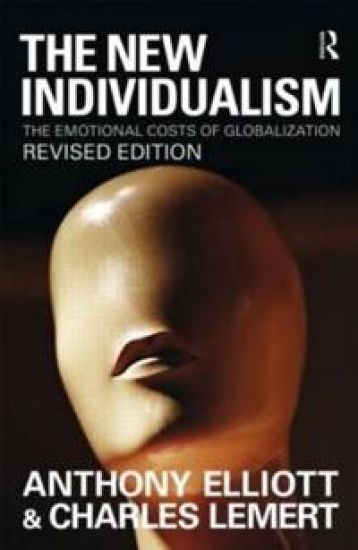
The New Individualism

The New Individualism

Anthony Elliott; Prof Charles Lemert

Routledge
2009
nidottu
This is a new and revised edition of a book which has had a major impact upon the social sciences and public political debate. Anthony Elliott and Charles Lemert's THE NEW INDIVIDUALISM inspired readers with the dramatic suggestion that 'the reinvention craze' - from self-help and therapy culture to management restructurings and corporate downsizings - is central to a 'new individualism' sweeping the globe. Giving particular attention to the narratives of people seeking to define anew their lives in an age of globalization, the authors contend that an endless hunger for instant change and relentless emphasis on self-reinvention is fundamental to grasping the disorientating effects of the new individualism. This edition contains a substantial new Introduction in which Elliott and Lemert reply to some of the standard criticisms made of the theory of the new individualism, and also addresses the escalation of new individualist thinking in the wake of recent global crises.
The New Individualism

The New Individualism

Anthony Elliott; Prof Charles Lemert

Routledge
2009
sidottu
This is a new and revised edition of a book which has had a major impact upon the social sciences and public political debate. Anthony Elliott and Charles Lemert's THE NEW INDIVIDUALISM inspired readers with the dramatic suggestion that 'the reinvention craze' - from self-help and therapy culture to management restructurings and corporate downsizings - is central to a 'new individualism' sweeping the globe. Giving particular attention to the narratives of people seeking to define anew their lives in an age of globalization, the authors contend that an endless hunger for instant change and relentless emphasis on self-reinvention is fundamental to grasping the disorientating effects of the new individualism. This edition contains a substantial new Introduction in which Elliott and Lemert reply to some of the standard criticisms made of the theory of the new individualism, and also addresses the escalation of new individualist thinking in the wake of recent global crises.
Subject to Ourselves

Subject to Ourselves

Anthony Elliott

Paradigm
2004
sidottu
The revised edition of Subject to Ourselves, a lively and provocative book that was a leader on its topic in England, uses psychoanalytic theory as the basis for a fresh reassessment of the nature of modernity and postmodernism. Analyzing changing experiences of selfhood, desire, interpersonal relations, culture and globalization, the author develops a novel account of postmodernity that supplants current understandings of "fragmented selves." Subject to Ourselves includes a diverse set of case studies, including the power of fantasy in military violence and war, the debate over sexual seduction in psychoanalysis, and the cultural uses of media and new information technologies. The book will be essential reading for students and professionals of social and political theory, psychoanalytic studies, psychology and cultural studies, as well as those with an interest in the modernity/postmodernity debate. Praise for the First Edition: 'This book not only fills an important gap in the literature, for it summarises a debate that is scattered across a decade of rather difficult texts, but also offers a resolution that is sensible and grounded in the best current thinking. It will be widely read by graduate students, faculty, and professionals in the humanities and social sciences.' Choice 'This is an informative and enjoyable book, which will be of use to students and academics... It is accessibly written and provides useful summaries of the different theories and debates in cultural and psychoanalytic theory. Recommended.' Radical Philosophy
Subject to Ourselves

Subject to Ourselves

Anthony Elliott

Paradigm
2004
nidottu
The revised edition of Subject to Ourselves, a lively and provocative book that was a leader on its topic in England, uses psychoanalytic theory as the basis for a fresh reassessment of the nature of modernity and postmodernism. Analyzing changing experiences of selfhood, desire, interpersonal relations, culture and globalization, the author develops a novel account of postmodernity that supplants current understandings of "fragmented selves." Subject to Ourselves includes a diverse set of case studies, including the power of fantasy in military violence and war, the debate over sexual seduction in psychoanalysis, and the cultural uses of media and new information technologies. The book will be essential reading for students and professionals of social and political theory, psychoanalytic studies, psychology and cultural studies, as well as those with an interest in the modernity/postmodernity debate. Praise for the First Edition: 'This book not only fills an important gap in the literature, for it summarises a debate that is scattered across a decade of rather difficult texts, but also offers a resolution that is sensible and grounded in the best current thinking. It will be widely read by graduate students, faculty, and professionals in the humanities and social sciences.' Choice 'This is an informative and enjoyable book, which will be of use to students and academics... It is accessibly written and provides useful summaries of the different theories and debates in cultural and psychoanalytic theory. Recommended.' Radical Philosophy
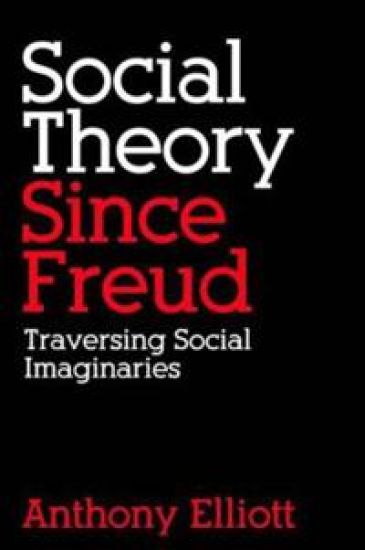
Social Theory Since Freud

Social Theory Since Freud

Anthony Elliott

Routledge
2004
nidottu
In this compelling book, Anthony Elliott traces the rise of psychoanalysis from the Frankfurt School to postmodernism. Examining how pathbreaking theorists such as Adorno, Marcuse, Lacan and Lyotard have deployed psychoanalysis to politicise issues such as desire, sexuality, repression and identity, Elliott assesses the gains and losses arising from this appropriation of psychoanalysis in social theory and cultural studies. Moving from the impact of the Culture Wars and recent Freud-bashing to contemporary debates in social theory, feminism and postmodernism, Elliott argues for a new alliance between sociological and psychoanalytic perspectives.
Social Theory Since Freud

Social Theory Since Freud

Anthony Elliott

Routledge
2004
sidottu
In this compelling book, Anthony Elliott traces the rise of psychoanalysis from the Frankfurt School to postmodernism. Examining how pathbreaking theorists such as Adorno, Marcuse, Lacan and Lyotard have deployed psychoanalysis to politicise issues such as desire, sexuality, repression and identity, Elliott assesses the gains and losses arising from this appropriation of psychoanalysis in social theory and cultural studies. Moving from the impact of the Culture Wars and recent Freud-bashing to contemporary debates in social theory, feminism and postmodernism, Elliott argues for a new alliance between sociological and psychoanalytic perspectives.