Kirjojen hintavertailu – 12 903 724 kirjaa ja 27 kauppaa

Kirjailija

Anthony Ellis

Kirjat ja teokset yhdessä paikassa: 10 kirjaa, julkaisuja vuosilta 2009–2026, suosituimpiin kuuluu Climbing The Summit. Vertaile teosten hintoja ja tarkista saatavuus suomalaisista kirjakaupoista.

10 kirjaa

Kirjojen julkaisuvuodet: 2009–2026.

Envy, Jealousy and Rivalry in the Ancient and Medieval Mediterranean
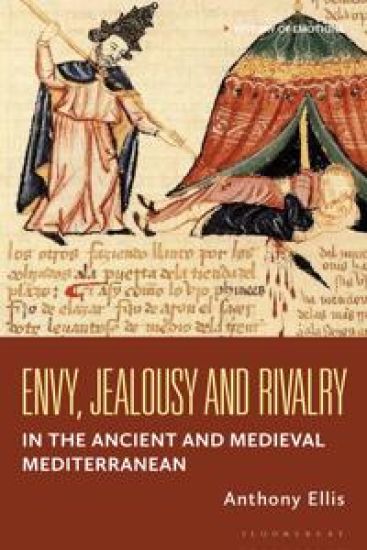
Envy, jealousy and rivalry are some of the most universal of human experiences, yet attitudes towards them across different societies and eras show vast cross-cultural variations. This book traces the evolution of these emotions from Ancient Greece and Rome to Medieval Christendom, to understand how the diabolical sin of one moral regime could be elevated to a democratic virtue or a tool of self-improvement in the next. Offering a historical panorama of attitudes towards these emotions, Envy, Jealousy and Rivalry in the Ancient and Medieval Mediterranean explores how they were affected by shifts in gender relations, class structure, religious belief and language. Anchored in case studies of ancient and medieval cultures, it offers the first long-range intellectual history of envy and jealousy in the European tradition and reveals how these emotions felt in the distant past. Investigating whether envy and jealousy are indeed two separate emotions or one and the same, it brings insights of the ancient and medieval worlds to bear on questions such as how should we respond to jealousy? What role should envy play in our own relationships? When can these emotions be justified, and when can they not? Challenging our understanding of what is universal and what is culturally specific in the experience of emotions, it provides a new intellectual basis for the study of envy, jealousy and rivalry.
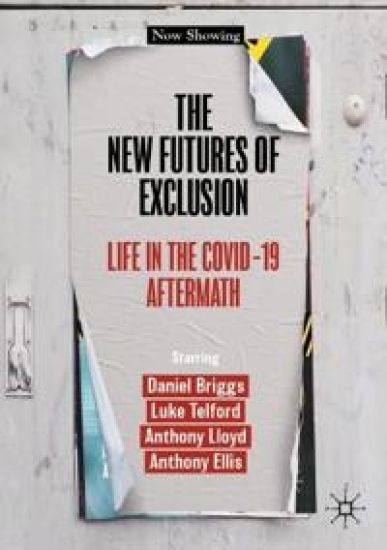
The New Futures of Exclusion

The New Futures of Exclusion

Daniel Briggs; Luke Telford; Anthony Lloyd; Anthony Ellis

Springer International Publishing AG
2023
nidottu
Based upon global data and following on from Lockdown: Social Harm in the COVID-19 Era, this book discusses the rise of surveillance capitalism and new forms of control and exclusion throughout the Covid-19 pandemic. It particularly addresses the use of vaccine passports, mandates and the new forms of capital extraction and political control that emerged throughout the pandemic. The book also explicates how the ‘vaccine hesitant’ became marginalized in both mainstream discourse and through regulatory interventions. Whilst the book addresses the wider political economy within which so-called ‘anti-vaxxers’ were ostracized, it also explores the complex nature of their sentiments. The book closes by considering The New Futures of Exclusion, outlining the forms of surveillance and control that may be implemented in the future particularly in light of the challenges brought by global warming and the energy transition. It is a broadly accessible text, particularly appealing to policymakers, general readers and academics in sociology, political sociology, politics, human geography, political economy, criminology, social policy, psychology, history, and infectious diseases and medicine.
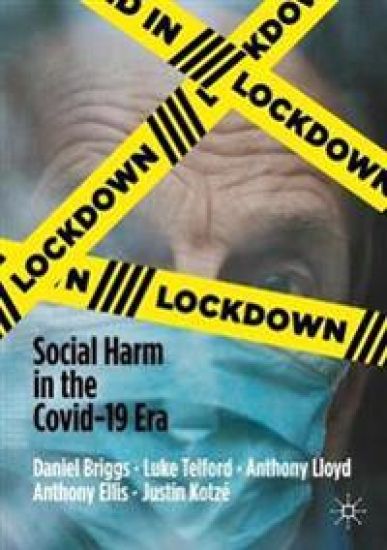
Lockdown

Lockdown

Daniel Briggs; Luke Telford; Anthony Lloyd; Anthony Ellis; Justin Kotzé

Springer Nature Switzerland AG
2021
nidottu

Halvin toimitettuna 34,30 €

This book asks whether the decision to lock down the world was justified in proportion to the potential harms and risks generated by the Covid-19 virus. Drawing on global, empirical data, it explores and exposes the social harms induced by lockdowns, many of which are 'hidden', including joblessness, mental health problems and an intensification of societal inequalities and divisions. It offers data-driven case studies on harms such as domestic violence, child abuse, the distress of being ordered to stay at home, and the numerous harms associated with the new wealth industries. It explores why some people weren't compliant with lockdown restrictions and examines the already vulnerable social groups who were disproportionally affected by lockdown including those who were locked in (care home residents), locked up (prisoners), and locked out (migrant workers, refugees). The book closes with a brief discussion on what the future might look like as we enter a post-Covid world, drawing on cutting-edge social theory.
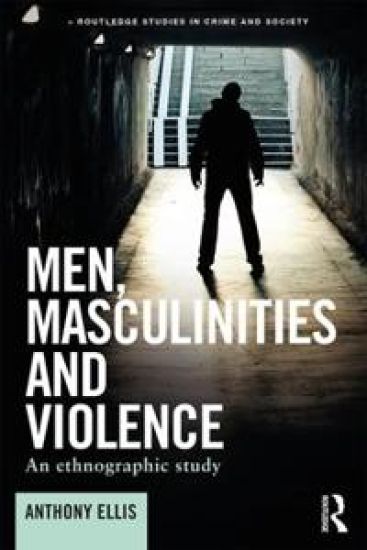
Men, Masculinities and Violence

Men, Masculinities and Violence

Anthony Ellis

Routledge
2017
nidottu
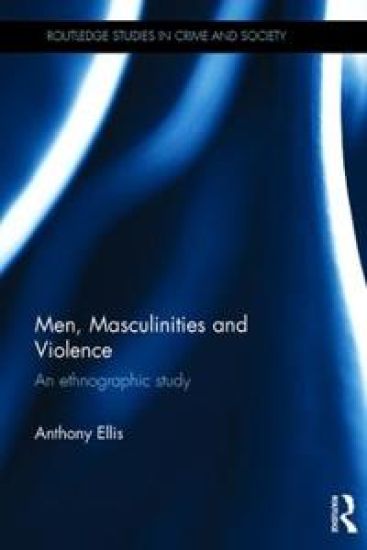
Why do some men use physical violence against others? How do some men come to value physical violence as a resource? Drawing on in-depth ethnographic research conducted with men involved in serious violence and crime over a period of two years in the North of England, Anthony Ellis addresses these questions and the complex relationship between these men and their use of physical violence against others. Using detailed life-history interviews and extended periods of observation with these men, Men, Masculinities and Violence describes their ‘inner’ subjective lives and experiences, exploring how they came to value violence, why they are willing to use it against others and risk serious harm to themselves in the process. Over the course of the book a picture emerges of a group of men that have experienced and perpetrated serious violence throughout their lives. This book advances a critical psychosocial understanding of such violence by situating these masculine biographies within their immediate contexts of de-industrialisation, fracturing working class community and culture, and broader shifts within the political economy of liberal capitalism. With its synthesis of rich ethnographic material and new developments in criminological theory, this book is essential reading for students and academics interested in issues of gender and violence.
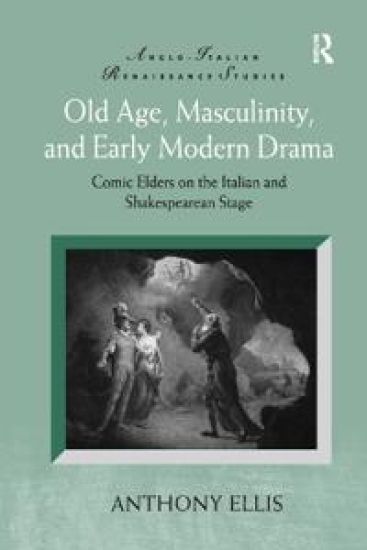
Old Age, Masculinity, and Early Modern Drama
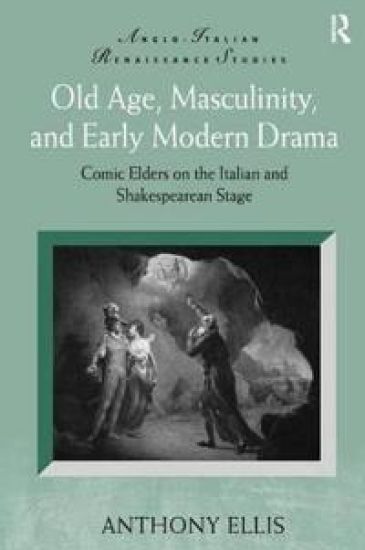
This first book-length study to trace the evolution of the comic old man in Italian and English Renaissance comedy shows how English dramatists adopted and reimagined an Italian model to reflect native concerns about and attitudes toward growing old. Anthony Ellis provides an in-depth study of the comic old man in the erudite comedy of sixteenth-century Florence; the character's parallel development in early modern Venice, including the commedia dell'arte; and, along with a consideration of Anglo-Italian intertextuality, the character's subsequent flourishing on the Elizabethan and Jacobean stage. In outlining the character's development, Ellis identifies and describes the physical and behavioral characteristics of the comic old man and situates these traits within early modern society by considering prevailing medical theories, sexual myths, and intergenerational conflict over political and economic circumstances. The plays examined include Italian dramas by Bernardo Dovizi da Bibbiena, Niccolò Machiavelli, Donato Giannotti, Lorenzino de' Medici, Andrea Calmo, and Flaminio Scala, and English works by William Shakespeare, Ben Jonson, and Thomas Dekker, along with Middleton, Rowley, and Heywood's The Old Law. Besides providing insight into stage representations of aging, this book illuminates how early modern people conceived of and responded to the experience of growing old and its social, economic, and physical challenges.
Men, Masculinities and Violence

Men, Masculinities and Violence

Anthony Ellis

Routledge
2015
sidottu
The BSC Critical Criminology Network’s Book of the Year 2016Why do some men use physical violence against others? How do some men come to value physical violence as a resource? Drawing on in-depth ethnographic research conducted with men involved in serious violence and crime over a period of two years in the North of England, Anthony Ellis addresses these questions and the complex relationship between these men and their use of physical violence against others. Using detailed life-history interviews and extended periods of observation with these men, Men, Masculinities and Violence describes their ‘inner’ subjective lives and experiences, exploring how they came to value violence, why they are willing to use it against others and risk serious harm to themselves in the process. Over the course of the book a picture emerges of a group of men that have experienced and perpetrated serious violence throughout their lives. This book advances a critical psychosocial understanding of such violence by situating these masculine biographies within their immediate contexts of de-industrialisation, fracturing working class community and culture, and broader shifts within the political economy of liberal capitalism. With its synthesis of rich ethnographic material and new developments in criminological theory, this book is essential reading for students and academics interested in issues of gender and violence.
The Philosophy of Punishment

The Philosophy of Punishment

Anthony Ellis

Imprint Academic
2012
pokkari
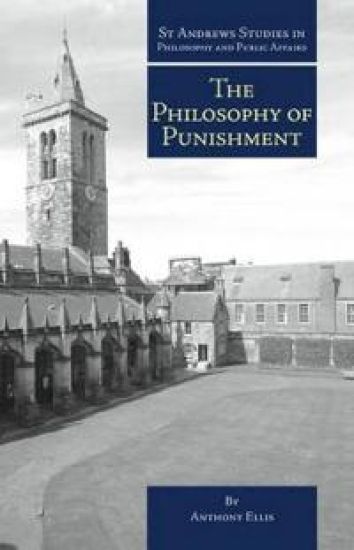
The series St Andrews Studies in Philosophy and Public Affairs originates in the Centre for Ethics, Philosophy and Public Affairs, University of St Andrews and is under the general editorship of John Haldane. The series includes monographs, collections of essays and occasional anthologies of source material representing study in those areas of philosophy most relevant to topics of public importance, with the aim of advancing the contribution of philosophy in the discussion of these topics. In this volume, the author sets aside the usual division between theories of punishment that do or do not focus on retribution. In its place he proposes and explores the distinction between internalist and externalist theories. The final chapter discusses the deterrent value of punishment.
Old Age, Masculinity, and Early Modern Drama

Old Age, Masculinity, and Early Modern Drama

Anthony Ellis

Ashgate Publishing Limited
2009
sidottu
This first book-length study to trace the evolution of the comic old man in Italian and English Renaissance comedy shows how English dramatists adopted and reimagined an Italian model to reflect native concerns about and attitudes toward growing old. Anthony Ellis provides an in-depth study of the comic old man in the erudite comedy of sixteenth-century Florence; the character's parallel development in early modern Venice, including the commedia dell'arte; and, along with a consideration of Anglo-Italian intertextuality, the character's subsequent flourishing on the Elizabethan and Jacobean stage. In outlining the character's development, Ellis identifies and describes the physical and behavioral characteristics of the comic old man and situates these traits within early modern society by considering prevailing medical theories, sexual myths, and intergenerational conflict over political and economic circumstances. The plays examined include Italian dramas by Bernardo Dovizi da Bibbiena, Niccolò Machiavelli, Donato Giannotti, Lorenzino de' Medici, Andrea Calmo, and Flaminio Scala, and English works by William Shakespeare, Ben Jonson, and Thomas Dekker, along with Middleton, Rowley, and Heywood's The Old Law. Besides providing insight into stage representations of aging, this book illuminates how early modern people conceived of and responded to the experience of growing old and its social, economic, and physical challenges.