Kirjojen hintavertailu – 12 903 725 kirjaa ja 27 kauppaa

Kirjailija

Anthony Flint

Kirjat ja teokset yhdessä paikassa: 7 kirjaa, julkaisuja vuosilta 2006–2025, suosituimpiin kuuluu Wrestling with Moses: How Jane Jacobs Took on New York's Master Builder and Transformed the American City. Vertaile teosten hintoja ja tarkista saatavuus suomalaisista kirjakaupoista.

7 kirjaa

Kirjojen julkaisuvuodet: 2006–2025.

Mayor's Desk

Mayor's Desk

Anthony Flint

Lincoln Institute of Land Policy
2024
pokkari
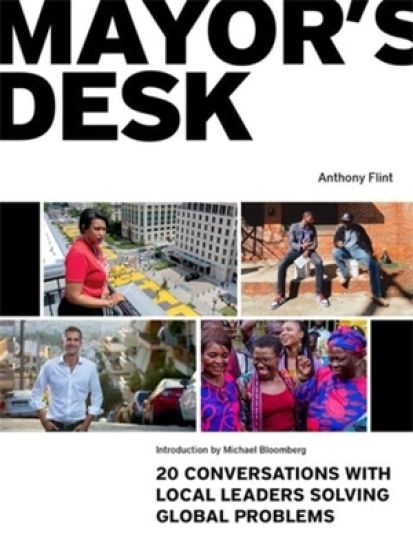
This book is currently available for pre-order. It will be published in October 2023. In this collection of interviews, with an introduction by former New York City mayor Mike Bloomberg, 20 mayors from five continents share their strategies for tackling global challenges at the local level. During a period dominated by racial unrest, the Covid pandemic, and the increasingly vivid impact of the climate crisis, these enterprising leaders have made their cities more healthy, functional, fiscally sound, and sustainable places to live and work. Mayor's Desk argues that local governments are the real engines of global change. Angela Brooks, president of the American Planning Association, writes an impassioned afterword. Packed with full-color photography, this book will inspire, educate, and surprise all who strive to influence the evolution of their cities.
Modern Man

Modern Man

Anthony Flint

Amazon Publishing
2018
pokkari
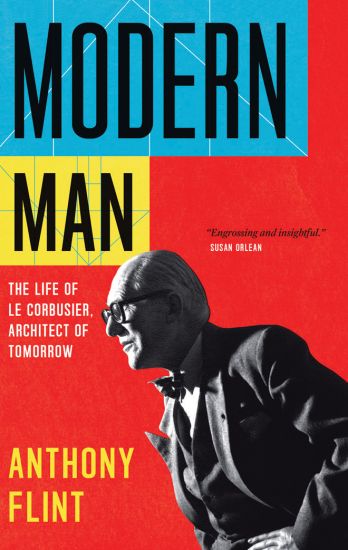
From the award-winning author of Wrestling with Moses comes a fascinating, accessible biography of the most important architect of the twentieth century. Modern Man is a riveting biography of Le Corbusier—a man who invented new ways of building and thinking. Modern Man is a penetrating psychological portrait of a true genius and constant self-inventor, as well as a sweeping tale filled with exotic locales, sex and celebrity (he was a lover of Josephine Baker), and high-stakes projects. In Flint’s telling, Corbusier isn’t just the grandfather of modern architecture but a man who sought to remake the world according to his vision, dispelling the Victorian style and replacing it with something never seen before. His legacy remains controversial today, as the world grapples with how to house its skyrocketing urban population and the cult of the “starchitect” continues to grow. Modern Man is for readers fascinated by the complex personal lives and outsized visions of both groundbreaking artists and dazzling, charismatic innovators like Steve Jobs.
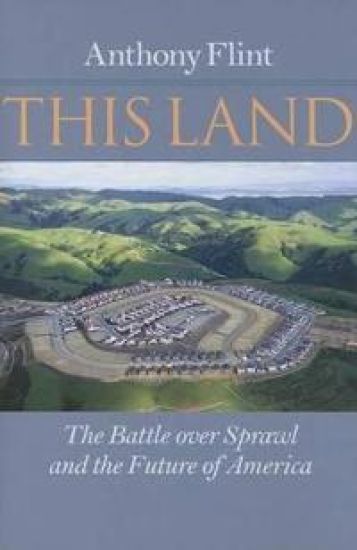
This Land

This Land

Anthony Flint

Johns Hopkins University Press
2012
pokkari
Despite a modest revival in city living, Americans are spreading out more than ever - into "exurbs" and "boomburbs" miles from anywhere, in big houses in big subdivisions. We cling to the notion of safer neighborhoods and better schools, but what we get, argues Anthony Flint, is long commutes, crushing gas prices and higher taxes - and a landscape of strip malls and office parks badly in need of a makeover. "This Land" tells the untold story of development in America - how the landscape is shaped by a furious clash of political, economic and cultural forces. It is the story of burgeoning anti-sprawl movement, a 1960s-style revolution of "New Urbanism", smart growth, and green building. And it is the story of landowners fighting back on the basis of property rights, with free-market libertarians, homebuilders, road pavers, financial institutions, and even the lawn-care industry right alongside them. The subdivisions and extra-wide roadways are encroaching into the wetlands of Florida, ranchlands in Texas, and the desert outside Phoenix and Las Vegas. But with up to 120 million more people in the country by 2050, will the spread-out pattern cave in on itself? Could Americans embrace a new approach to development if it made sense for them? A veteran journalist who covered planning, development, and housing for the Boston Globe for sixteen years and a visiting scholar in 2005 at the Harvard Design School, Flint reveals some surprising truths about the future and how we live in "This Land".

Wrestling with Moses: How Jane Jacobs Took on New York's Master Builder and Transformed the American City
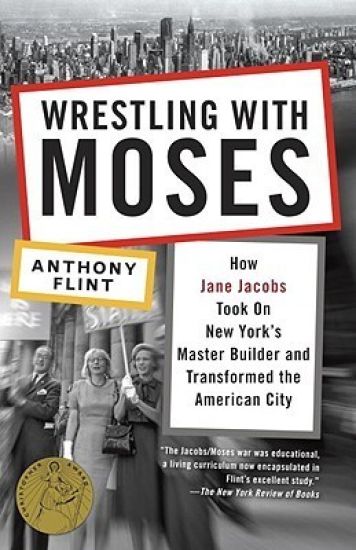
The rivalry of Jane Jacobs and Robert Moses, a struggle for the soul of a city, is one of the most dramatic and consequential in modern American history. To a young Jane Jacobs, Greenwich Village, with its winding cobblestone streets and diverse makeup, was everything a city neighborhood should be. But consummate power broker Robert Moses, the father of many of New York's most monumental development projects, thought neighborhoods like Greenwich Village were badly in need of "urban renewal." Standing up against government plans for the city, Jacobs marshaled popular support and political power against Moses, whether to block traffic through her beloved Washington Square Park or to prevent the construction of the Lower Manhattan Expressway, an elevated superhighway that would have destroyed centuries-old streetscapes and displaced thousands of families. By confronting Moses and his vision, Jacobs forever changed the way Americans understood the city. Her story reminds us of the power we have as individuals to confront and defy reckless authority.
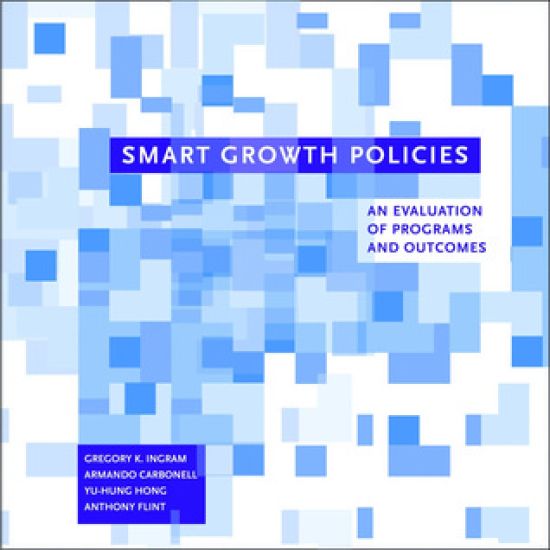
Smart Growth Policies – An Evaluation of Programs and Outcomes

Smart Growth Policies – An Evaluation of Programs and Outcomes

Gregory K. Ingram; Armando Carbonell; Yu–hung Hong; Anthony Flint

Lincoln Institute of Land Policy
2009
nidottu
The Lincoln Institute of Land Policy collaborated with 14 leading land use researchers and planners to measure and compare outcomes in four states with statewide smart growth programs (Florida, Maryland, New Jersey, and Oregon) and four states without such programs (Colorado, Indiana, Texas, and Virginia).
This Land

This Land

Anthony Flint

Johns Hopkins University Press
2006
sidottu
Despite a modest revival in city living, Americans are spreading out more than ever-into "exurbs" and "boomburbs" miles from anywhere, in big houses in big subdivisions. We cling to the notion of safer neighborhoods and better schools, but what we get, argues Anthony Flint, is long commutes, crushing gas prices and higher taxes-and a landscape of strip malls and office parks badly in need of a makeover. This Land tells the untold story of development in America-how the landscape is shaped by a furious clash of political, economic and cultural forces. It is the story of burgeoning anti-sprawl movement, a 1960s-style revolution of New Urbanism, smart growth, and green building. And it is the story of landowners fighting back on the basis of property rights, with free-market libertarians, homebuilders, road pavers, financial institutions, and even the lawn-care industry right alongside them. The subdivisions and extra-wide roadways are encroaching into the wetlands of Florida, ranchlands in Texas, and the desert outside Phoenix and Las Vegas. But with up to 120 million more people in the country by 2050, will the spread-out pattern cave in on itself? Could Americans embrace a new approach to development if it made sense for them? A veteran journalist who covered planning, development, and housing for the Boston Globe for sixteen years and a visiting scholar in 2005 at the Harvard Design School, Flint reveals some surprising truths about the future and how we live in This Land.