Kirjojen hintavertailu – 12 903 725 kirjaa ja 27 kauppaa

Kirjailija

Anthony J. Badger

Kirjat ja teokset yhdessä paikassa: 7 kirjaa, julkaisuja vuosilta 2002–2022, suosituimpiin kuuluu Reaction, Depression, and the Second World War, 1920-1945. Vertaile teosten hintoja ja tarkista saatavuus suomalaisista kirjakaupoista.

Nimi esiintyy myös muodoissa: Anthony J Badger

7 kirjaa

Kirjojen julkaisuvuodet: 2002–2022.

Why White Liberals Fail

Why White Liberals Fail

Anthony J. Badger

HARVARD UNIVERSITY PRESS
2022
sidottu
It’s not the economy, stupid: How liberal politicians’ faith in the healing powers of economic growth—and refusal to address racial divisions—fueled reactionary politics across the South. From FDR to Clinton, charismatic Democratic leaders have promised a New South—a model of social equality and economic opportunity that is always just around the corner. So how did the region become the stronghold of conservative Republicans in thrall to Donald Trump? After a lifetime studying Southern politics, Anthony Badger has come to a provocative conclusion: white liberals failed because they put their faith in policy solutions as an engine for social change and were reluctant to confront directly the explosive racial politics dividing their constituents. After World War II, many Americans believed that if the edifice of racial segregation, white supremacy, and voter disfranchisement could be dismantled across the South, the forces of liberalism would prevail. Hopeful that economic modernization and education would bring about gradual racial change, Southern moderates were rattled when civil rights protest and federal intervention forced their hand. Most were fatalistic in the face of massive resistance. When the end of segregation became inevitable, it was largely driven by activists and mediated by Republican businessmen. Badger follows the senators who refused to sign the Southern Manifesto and rejected Nixon’s Southern Strategy. He considers the dilemmas liberals faced across the South, arguing that their failure cannot be blamed simply on entrenched racism. Conservative triumph was not inevitable, he argues, before pointing to specific false steps and missed opportunities. Could the biracial coalition of low-income voters that liberal politicians keep counting on finally materialize? Badger sees hope but urges Democrats not to be too complacent.
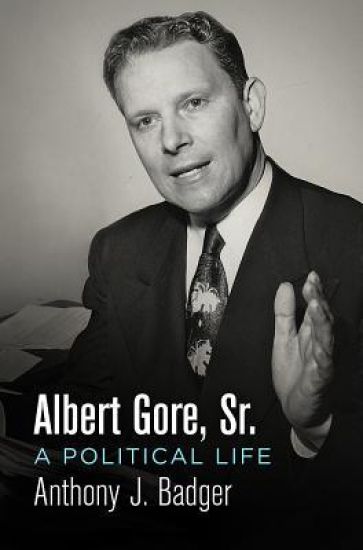
Albert Gore, Sr.

Albert Gore, Sr.

Anthony J. Badger

University of Pennsylvania Press
2018
sidottu
In chronicling the life and career of Albert Gore, Sr., historian Anthony J. Badger seeks not just to explore the successes and failures of an important political figure who spent more than three decades in the national eye-and whose son would become Vice President of the United States-but also to explain the dramatic changes in the South that led to national political realignment. Born on a small farm in the hills of Tennessee, Gore served in Congress from 1938 to 1970, first in the House of Representatives and then in the Senate. During that time, the United States became a global superpower and the South a two party desegregated region. Gore, whom Badger describes as a policy-oriented liberal, saw the federal government as the answer to the South's problems. He held a resilient faith, according to Badger, in the federal government to regulate wages and prices in World War II, to further social welfare through the New Deal and the Great Society, and to promote economic growth and transform the infrastructure of the South. Gore worked to make Tennessee the "atomic capital" of the nation and to protect the Tennessee Valley Authority, while at the same time cosponsoring legislation to create the national highway system. He was more cautious in his approach to civil rights; though bolder than his moderate Southern peers, he struggled to adjust to the shifting political ground of the 1960s. His career was defined by his relationship with Lyndon Johnson, whose Vietnam policies Gore bitterly opposed. The injection of Christian perspectives into the state's politics ultimately distanced Gore's worldview from that of his constituents. Altogether, Gore's political rise and fall, Badger argues, illuminates the significance of race, religion, and class in the creation of the modern South.
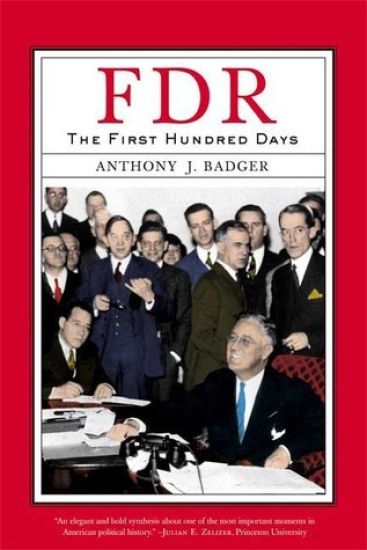
Fdr: The First Hundred Days

Fdr: The First Hundred Days

Anthony J. Badger

Hill Wang
2009
nidottu
The Hundred Days, Franklin Roosevelt's first fifteen weeks in office, have become the stuff of legend, a mythic yardstick against which every subsequent American president has felt obliged to measure himself. The renowned historian Anthony J. Badger cuts through decades of politicized history to provide a succinct, balanced, and timely reminder that Roosevelt's accomplishment was above all else an exercise in exceptional political craftsmanship. Roosevelt entered the White House in 1933 confronting 25 percent unemployment, bank closings, and a nationwide crisis in confidence. From March 9 to June 16, FDR secured sixteen major bills, many of which gave extraordinary discretionary power to the president. From legalizing the sale of beer to providing mortgage relief to millions of Americans, Roosevelt launched the New Deal that conservatives have been working to roll back ever since. Reintroducing the contingency that marked those fateful days, Badger humanizes Roosevelt and suggests a far more useful yardstick for future presidents: the politics of the possible under the guidance of principle.
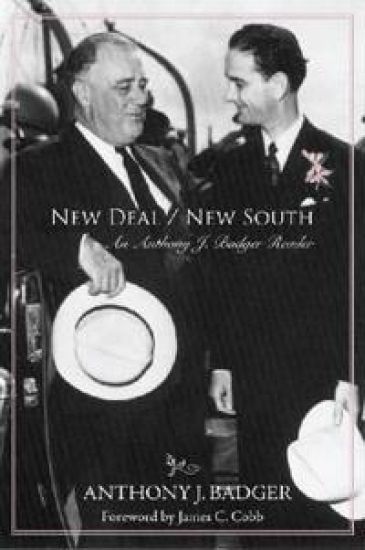
New Deal / New South

New Deal / New South

Anthony J. Badger; James C. Cobb

University of Arkansas Press
2007
nidottu
The twelve essays in this book, some published for the first time, represent some of Tony Badger's best work in his ongoing examination of how white liberal southern politicians who came to prominence in the New Deal and World War II handled the race issue when it became central to politics in the 1950s and 1960s. Franklin Roosevelt in the 1930s thought a new generation of southerners would wrestle Congress back from the conservatives. Political scientists such as V. O. Key Jr. thought the collapse of segregation would herald a new liberal class in the South. The Supreme Court thought that responsible southern leaders would lead their communities to general school desegregation after the Brown decision. John F. Kennedy believed that moderate southern leaders would, with government support, facilitate peaceful racial change. Badger's writings demonstrate how all of these hopes were misplaced. Badger shows that time and time again that moderates did not control southern politics. Southern liberal politicians for the most part were paralyzed by their fear that ordinary southerners were all-too-aroused by the threat of integration and were reluctant to offer a coherent alternative to the conservative strategy of resistance. Indeed, liberal politicians became irrelevant in the 1960s as African Americans and the federal government dictated the timetable of racial change. It was southern business leaders and a new generation of New South politicians who mediated the transition to desegregation.
New Deal/New South

New Deal/New South

Anthony J. Badger; James C. Cobb

University of Arkansas Press
2007
sidottu
The twelve essays in this book, some published for the first time, represent some of Tony Badger's best work in his ongoing examination of how white liberal southern politicians who came to prominence in the New Deal and World War II handled the race issue when it became central to politics in the 1950s and 1960s. Franklin Roosevelt in the 1930s thought a new generation of southerners would wrestle Congress back from the conservatives. Political scientists such as V. O. Key Jr. thought the collapse of segregation would herald a new liberal class in the South. The Supreme Court thought that responsible southern leaders would lead their communities to general school desegregation after the Brown decision. John F. Kennedy believed that moderate southern leaders would, with government support, facilitate peaceful racial change. Badger's writings demonstrate how all of these hopes were misplaced. Badger shows that time and time again that moderates did not control southern politics. Southern liberal politicians for the most part were paralyzed by their fear that ordinary southerners were all-too-aroused by the threat of integration and were reluctant to offer a coherent alternative to the conservative strategy of resistance. Indeed, liberal politicians became irrelevant in the 1960s as African Americans and the federal government dictated the timetable of racial change. It was southern business leaders and a new generation of New South politicians who mediated the transition to desegregation.
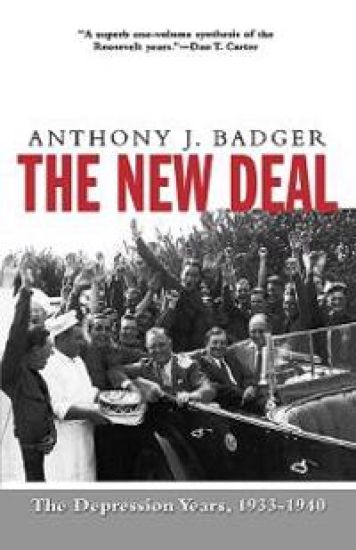
The New Deal: The Depression Years, 1933-40

The New Deal: The Depression Years, 1933-40

Anthony J. Badger

Ivan R. Dee Publisher
2002
nidottu
Anthony Badger's notably successful history is not simply another narrative of the New Deal, nor does the figure of Franklin Roosevelt loom as large in his account as in some others. What Mr. Badger does so well is to consider important aspects of New Deal activity agriculture, welfare, and politics, interpreting the history of each.