Kirjojen hintavertailu – 12 859 827 kirjaa ja 27 kauppaa

Kirjailija

Anthony J. Rhem

Kirjat ja teokset yhdessä paikassa: 6 kirjaa, julkaisuja vuosilta 2005–2025, suosituimpiin kuuluu The Future of Legal Knowledge Management. Vertaile teosten hintoja ja tarkista saatavuus suomalaisista kirjakaupoista.

Nimi esiintyy myös muodoissa: Anthony J Rhem

6 kirjaa

Kirjojen julkaisuvuodet: 2005–2025.

The Future of Legal Knowledge Management

The Future of Legal Knowledge Management

Andrea Miskolczi; Mark Ford; Grant Newton; Sarah Pullin; Anthony J Rhem; Hélène Russell; Chad Ergun; Katya Linossi; Pietro Brambilla

Globe Law and Business Ltd
2025
nidottu
Legal knowledge management (KM) used to mean vast law firm libraries, filing cabinets stocked with briefs, and decades of professional experience and institutional knowledge locked in senior partners' minds. As digital transformation swept through the legal industry, these evolved into document management systems and searchable databases. Although these tools represented a significant improvement, fundamental limitations remained in their ability to extract meaning from data and make connections across different sources of information. As artificial intelligence (AI) becomes increasingly embedded in law firm operations, KM professionals and teams find their role evolving, moving beyond pure practice support into a more strategic function that directly impacts firm profitability, operational efficiency, and competitive differentiation. KM professionals will play a critical role moving forward in the era of AI. However, this shift can only be achieved when KM practitioners are equipped with the right tools, skills, and resources. The Future of Legal Knowledge Management: Harnessing Artificial Intelligence provides innovative and robust solutions to some of the most pressing issues facing KM practitioners today, including the ways in which knowledge managers can build a strong data foundation for AI application; how to develop the AI-empowered lawyer; gaining organizational and partner support for AI-augmented legal KM; modernizing existing KM architecture in the age of AI; and navigating the implementation of agentic AI. Written by KM experts, technologists, and industry leaders, The Future of Legal Knowledge Management: Harnessing Artificial Intelligence serves as a comprehensive handbook for KM professionals seeking to develop their skills, broaden their expertise, and overcome the challenges presented by modern legal practice. It will equip readers with the data-driven insights and actionable strategies needed to navigate a rapidly evolving profession, embrace AI's potential, and harness its power to shape the future of KM.

Knowledge Management in Law Firms

Knowledge Management in Law Firms

Nick Milton; Chris Boyd; Amy Halverson; Ian Rodwell; Joe Cohen; Andrea Miskolczi; Jonna Vainikainen; Elisabeth Cappuyns; James Loft; Jon Beaumont; James G Perkins; Gordon Vala-Webb; Mark Gediman; Kevin Miles; Tara Pichardo-Angadi; Orla Bingham; Katherine Lang; Kathy Skinner; Anthony J Rhem; Tiffany M. O’Neil

Globe Law and Business Ltd
2023
nidottu
Strategies for gathering and harnessing knowledge have existed in law firms for decades. However, knowledge management suddenly found itself in the spotlight as a result of the COVID-19 pandemic. Enforced remote working reduced opportunities for knowledge sharing between colleagues and this gap was filled with knowledge databases and experienced knowledge lawyers. Now that hybrid and virtual workforces are here to stay, these new working practices have combined with technological developments, enhanced demand, and the transformation of how to access knowledge to drive the advancement of knowledge management into a new era. Knowledge Management in Law Firms: Challenges and Opportunities Post-Pandemic is the essential guide to the evolution of law firm knowledge management. It covers how to revisit your strategy in light of recent and future changes, the expansion of knowledge management to encompass legal tech and innovation, the rise of the importance of data, strategies for overcoming the challenges hybrid and virtual working pose to knowledge management, managing knowledge teams, and much more. Chapters are written by an international group of KM experts from a range of organisations and leading law firms, including DLA Piper, Linklaters, and Dentons. Pandemic experiences and lessons learnt are shared as well as ways to approach the future. Knowledge is at the heart of the legal profession, and this book provides guidance on how to prepare for and thrive in the knowledge management practices of the future, overcoming the obstacles and embracing the opportunities that have arisen from or been accelerated by the pandemic. Through demonstrating how effective knowledge management can help firms exceed client expectations, differentiate themselves in the competitive market, and, ultimately, improve their bottom line, this title will be of interest to knowledge management professionals including professional support lawyers, law firm leaders, partners and fee earners, and, outside of law firms, in-house lawyers and consultants.
Knowledge Management in Practice

Knowledge Management in Practice

Anthony J. Rhem

TAYLOR FRANCIS LTD
2022
nidottu
"This evidence-based book provides the framework and guidelines that professionals need for working with the contemporary explosion of data that is creating opportunities and challenges to all phases of our society and commerce." –Larry R. Medsker, Research Professor in Physics and Data Science, The George Washington UniversityKnowledge Management in Practice is a resource on how knowledge management (KM) is implemented. It provides specific KM methods, tips, techniques, and best practices to gain competitive advantage and the most from investing in KM. It examines how KM is leveraged by first responders, the military, healthcare providers, insurance and financial services companies, legal firms, human resources departments, merger and acquisition (M&A) firms, and research institutions. Essential KM concepts are explored not only from a foundational perspective but also from a practical application. These concepts include capturing and codifying tacit and explicit knowledge, KM methods, information architecture, search, KM and social media, KM and Big Data, and the adoption of KM. Readers can visit the book’s companion website, KM Mentor (www. KMMentor.com), where they can access:Presentations by industry leaders on a variety of topicsKM templates and instruction on executing KM strategy, performing knowledge transfer, and KM assessments and auditsKM program and project implementation guidanceInsights and reviews on KM toolsGuidance on implementing and executing various KM MethodsSpecialized KM publicationsA private secure collaboration community for members to discuss ideas and get expert answers and advice
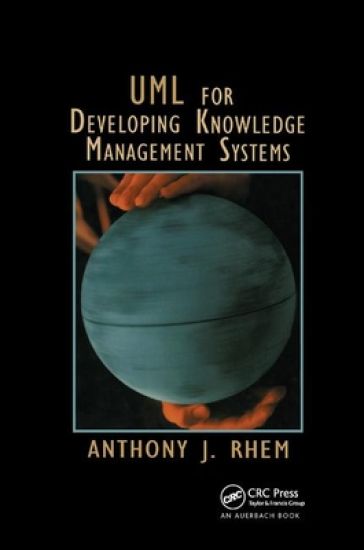
UML for Developing Knowledge Management Systems
UML for Developing Knowledge Management Systems provides knowledge engineers the framework in which to identify types of knowledge and where this knowledge exists in an organization. It also shows ways in which to use a standard recognized notation to capture, or model, knowledge to be used in a knowledge management system (KMS). This volume enables knowledge engineers, systems analysts, designers, developers, and researchers to understand the concept of knowledge modeling with Unified Modeling Language (UML). It offers a guide to quantifying, qualifying, understanding, and modeling knowledge by providing a reusable framework that can be adopted for KMS implementation. Following a brief history of knowledge management, the book discusses knowledge acquisition and the types of knowledge that can be discovered within a domain. It offers an overview of types of models and the concepts behind them. It then reviews UML and how to apply UML to model knowledge. The book concludes by defining and applying the Knowledge Acquisition framework via a real-world case study.
Knowledge Management in Practice

Knowledge Management in Practice

Anthony J. Rhem

Auerbach Publishers Inc.
2016
sidottu
"This evidence-based book provides the framework and guidelines that professionals need for working with the contemporary explosion of data that is creating opportunities and challenges to all phases of our society and commerce." –Larry R. Medsker, Research Professor in Physics and Data Science, The George Washington UniversityKnowledge Management in Practice is a resource on how knowledge management (KM) is implemented. It provides specific KM methods, tips, techniques, and best practices to gain competitive advantage and the most from investing in KM. It examines how KM is leveraged by first responders, the military, healthcare providers, insurance and financial services companies, legal firms, human resources departments, merger and acquisition (M&A) firms, and research institutions. Essential KM concepts are explored not only from a foundational perspective but also from a practical application. These concepts include capturing and codifying tacit and explicit knowledge, KM methods, information architecture, search, KM and social media, KM and Big Data, and the adoption of KM. Readers can visit the book’s companion website, KM Mentor (www. KMMentor.com), where they can access:Presentations by industry leaders on a variety of topicsKM templates and instruction on executing KM strategy, performing knowledge transfer, and KM assessments and auditsKM program and project implementation guidanceInsights and reviews on KM toolsGuidance on implementing and executing various KM MethodsSpecialized KM publicationsA private secure collaboration community for members to discuss ideas and get expert answers and advice
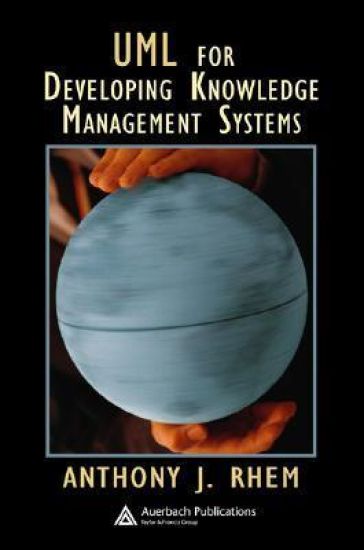
UML for Developing Knowledge Management Systems

UML for Developing Knowledge Management Systems

Anthony J. Rhem

Auerbach Publishers Inc.
2005
sidottu
UML for Developing Knowledge Management Systems provides knowledge engineers the framework in which to identify types of knowledge and where this knowledge exists in an organization. It also shows ways in which to use a standard recognized notation to capture, or model, knowledge to be used in a knowledge management system (KMS). This volume enables knowledge engineers, systems analysts, designers, developers, and researchers to understand the concept of knowledge modeling with Unified Modeling Language (UML). It offers a guide to quantifying, qualifying, understanding, and modeling knowledge by providing a reusable framework that can be adopted for KMS implementation. Following a brief history of knowledge management, the book discusses knowledge acquisition and the types of knowledge that can be discovered within a domain. It offers an overview of types of models and the concepts behind them. It then reviews UML and how to apply UML to model knowledge. The book concludes by defining and applying the Knowledge Acquisition framework via a real-world case study.