Kirjojen hintavertailu – 12 868 753 kirjaa ja 27 kauppaa

Kirjailija

Anthony M. Messina

Kirjat ja teokset yhdessä paikassa: 6 kirjaa, julkaisuja vuosilta 1992–2024, suosituimpiin kuuluu West European Immigration and Immigrant Policy in the New Century. Vertaile teosten hintoja ja tarkista saatavuus suomalaisista kirjakaupoista.

6 kirjaa

Kirjojen julkaisuvuodet: 1992–2024.

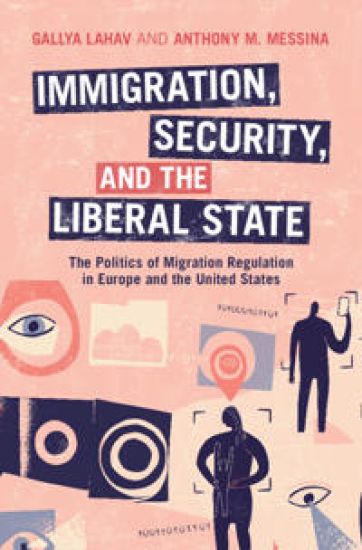
Immigration, Security, and the Liberal State

Immigration, Security, and the Liberal State

Gallya Lahav; Anthony M. Messina

Cambridge University Press
2024
sidottu
Contextualizing the regulation of human mobility in a new security framework, this book offers an original perspective on the dominant mode of politics and evolving norms shaping the immigration policies of contemporary liberal states. In doing so, the authors challenge existing paradigms that privilege economic and cultural factors over new security ones in explaining the critical institutional and normative changes in migration management, from the early post-WWII through the post-Cold War era. Drawing on evidence from multiple sources, including media and elite discourse, policy tracking, party manifesto data and public opinion across Europe and the US, the book exposes the restrictive nature of immigration politics and policies when immigration is framed as a security threat, and considers its implications for civil liberties. Informed by a rich breadth of scholarly sub-disciplines, the findings contribute both empirically and theoretically to the literatures on international migration, security and public opinion.
Immigration, Security, and the Liberal State

Immigration, Security, and the Liberal State

Gallya Lahav; Anthony M. Messina

Cambridge University Press
2024
pokkari
Contextualizing the regulation of human mobility in a new security framework, this book offers an original perspective on the dominant mode of politics and evolving norms shaping the immigration policies of contemporary liberal states. In doing so, the authors challenge existing paradigms that privilege economic and cultural factors over new security ones in explaining the critical institutional and normative changes in migration management, from the early post-WWII through the post-Cold War era. Drawing on evidence from multiple sources, including media and elite discourse, policy tracking, party manifesto data and public opinion across Europe and the US, the book exposes the restrictive nature of immigration politics and policies when immigration is framed as a security threat, and considers its implications for civil liberties. Informed by a rich breadth of scholarly sub-disciplines, the findings contribute both empirically and theoretically to the literatures on international migration, security and public opinion.

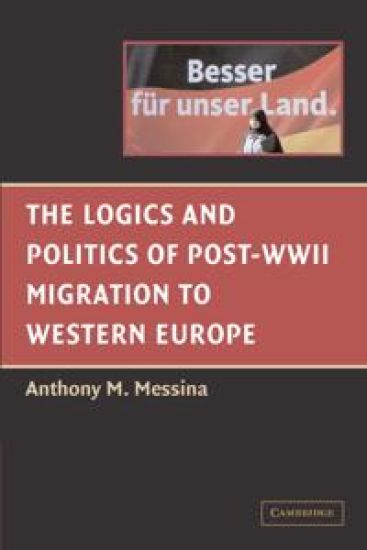
The Logics and Politics of Post-WWII Migration to Western Europe

The Logics and Politics of Post-WWII Migration to Western Europe

Anthony M. Messina

Cambridge University Press
2007
sidottu
Few phenomena have been more disruptive to West European politics and society than the accumulative experience of post-WWII immigration. Against this backdrop spring two questions: Why have the immigrant-receiving states historically permitted high levels of immigration? To what degree can the social and political fallout precipitated by immigration be politically managed? Utilizing evidence from a variety of sources, this study explores the links between immigration and the surge of popular support for anti-immigrant groups; its implications for state sovereignty; its elevation to the policy agenda of the European Union; and its domestic legacies. It argues that post-WWII migration is primarily an interest-driven phenomenon that has historically served the macroeconomic and political interests of the receiving countries. Moreover, it is the role of politics in adjudicating the claims presented by domestic economic actors, foreign policy commitments, and humanitarian norms that creates a permissive environment for significant migration to Western Europe.
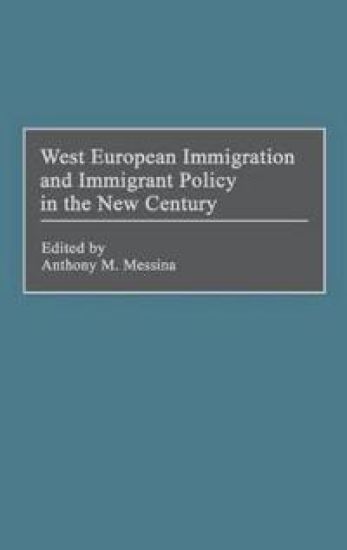
West European Immigration and Immigrant Policy in the New Century
Few, if any phenomena affecting Western Europe as a whole since 1945 have been more far-reaching in their immediate effects or more potentially destabilizing to politics and society over the long term than the accumulative experience of immigration. Messina and his contributors analyze why the major immigrant-receiving states of Western Europe historically permitted and often abetted relatively high levels of postwar migration, and they assess how contemporary governments attempt to govern immigration flows and manage the domestic social and political fallout which it inevitably yields. The central purpose of the volume is to address these questions within the context of the decision-making logics that have demonstratively governed postwar migration to Western Europe in each of its three distinct, but interrelated waves or phases-labor migration, family migration, and humanitarian or forced migration. Messina demonstrates that postwar migration to Western Europe, in all of its phases, has been governed by a set of mutually reinforcing and mostly compatible logics. Of these—the economic, the humanitarian, and the political—the political has predominated over time and is likely to continue doing so into the indefinite future. A major cross-disciplinary analysis that will appeal to political scientists, sociologists, and general researchers and scholars of ethnicity, race relations, and comparative public policy.
The Logics and Politics of Post-WWII Migration to Western Europe

The Logics and Politics of Post-WWII Migration to Western Europe

Anthony M. Messina

Cambridge University Press
2007
pokkari
Few phenomena have been more disruptive to West European politics and society than the accumulative experience of post-WWII immigration. Against this backdrop spring two questions: Why have the immigrant-receiving states historically permitted high levels of immigration? To what degree can the social and political fallout precipitated by immigration be politically managed? Utilizing evidence from a variety of sources, this study explores the links between immigration and the surge of popular support for anti-immigrant groups; its implications for state sovereignty; its elevation to the policy agenda of the European Union; and its domestic legacies. It argues that post-WWII migration is primarily an interest-driven phenomenon that has historically served the macroeconomic and political interests of the receiving countries. Moreover, it is the role of politics in adjudicating the claims presented by domestic economic actors, foreign policy commitments, and humanitarian norms that creates a permissive environment for significant migration to Western Europe.
Ethnic and Racial Minorities in Advanced Industrial Democracies

Ethnic and Racial Minorities in Advanced Industrial Democracies

Luis R. Fraga; Anthony M. Messina; Laurie Rhodebeck; Frederic D. Wright

Praeger Publishers Inc
1992
sidottu
This collection of essays breaks new ground in the comparative study of ethnic and racial minorities by showing that there is a common ground shared by those in advanced industrial democracies that differentiates them from Third World and communist countries. The study offers a unique synthesis of diverse views by those who have focused on long-established or ethnoregional minorities and those who have studied recent immigrant populations. The analysis of ethnic tolerance, political factors, and conflict resolution considers why ethnic and racial conflict and disadvantage endure, pointing to ways that societies are organized economically and politically and linked into the international political economy. Students and experts in comparative and minority politics, ethnic and Black studies, and sociology will benefit from the observations and conclusions about the operations of economic and political markets and how they heighten ethnic and racial inequality. The general introduction and conclusion offer theoretical overviews and point to social science paradigms concerning the role of ethnic and racial minorities in the advanced industrial democracies. Noted contributors examine immigration policy and ethnic tolerance; minorities, politics, and the state; political consciousness, organization and participation; and conflict resolution and public policy. A lengthy reference list is given. This volume will be of great interest to interdisciplinary audiences in political science, sociology/social problems, and ethnic and black studies.