Kirjojen hintavertailu – 12 859 829 kirjaa ja 27 kauppaa

Kirjailija

Anthony N. Doob

Kirjat ja teokset yhdessä paikassa: 3 kirjaa, julkaisuja vuosilta 2004–2009, suosituimpiin kuuluu Responding to Youth Crime in Canada. Vertaile teosten hintoja ja tarkista saatavuus suomalaisista kirjakaupoista.

3 kirjaa

Kirjojen julkaisuvuodet: 2004–2009.

Justice for Girls?

Justice for Girls?

Jane B. Sprott; Anthony N. Doob; Franklin E. Zimring

University of Chicago Press
2009
sidottu
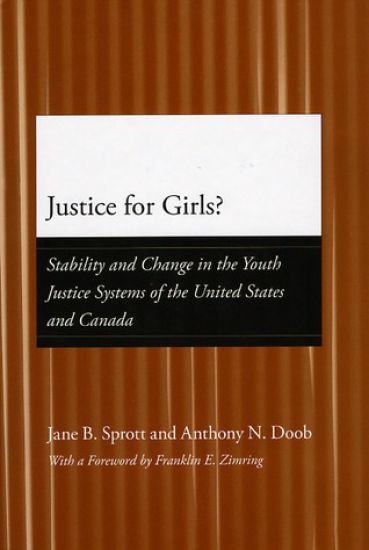
For over a century, as women have fought for and won greater freedoms, concern over an epidemic of female criminality, especially among young women, has followed. Fear of this crime wave - despite a persistent lack of evidence of its existence - has played a decisive role in the development of the youth justice systems in the United States and Canada. "Justice for Girls?" is a comprehensive comparative study of the way these countries have responded to the hysteria over 'girl crime' and how it has affected the treatment of both girls and boys. Tackling a century of historical evidence and crime statistics, Jane B. Sprott and Anthony N. Doob carefully trace the evolution of approaches to the treatment of young offenders. Seeking to keep youths out of adult courts, both countries have built their systems around rehabilitation. But, as Sprott and Doob reveal, the myth of the 'girl crime wave' led to a punitive system where young people are dragged into court for minor offenses and girls are punished far more severely than boys. Thorough, timely, and persuasive, "Justice for Girls?" will be vital to anyone working with troubled youths.
Responding to Youth Crime in Canada

Responding to Youth Crime in Canada

Carla Cesaroni; Anthony N. Doob

University of Toronto Press
2004
sidottu
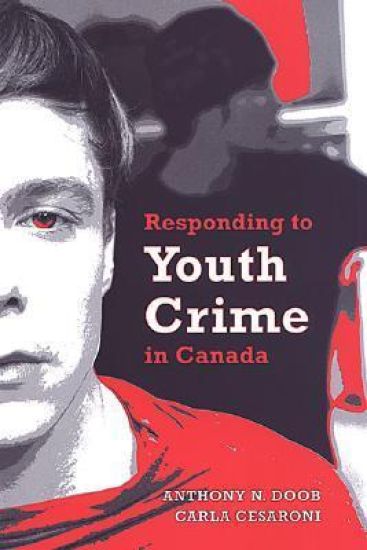
In Responding to Youth Crime in Canada, Anthony Doob and Carla Cesaroni describe how Canada has been responding to youth crime in the context of the Youth Criminal Justice Act, which came into force on April 1, 2003. The authors describe what is known about Canadian youth crime, and the operation of the youth justice system in the context of the changes in the law that are taking place. The authors posit that the youth justice system has a relatively modest impact on youth crime. In order to respond intelligently to it and to evaluate the response of the state, two sets of information must be understood. First, society must try to understand what 'youth crime' looks like in Canada. Second, in order to understand - and evaluate - the changes that are being made in youth justice legislation in Canada, a clear understanding of the manner in which the youth justice system currently operates is necessary. Unlike those who look to the youth justice system to solve the problem of youth crime, the authors suggest that we should look to the youth justice system to respond appropriately to the realities of what constitutes youth crime and look elsewhere to address how one might affect the level of youth crime in our society.
Responding to Youth Crime in Canada

Responding to Youth Crime in Canada

Carla Cesaroni; Anthony N. Doob

University of Toronto Press
2004
pokkari
In Responding to Youth Crime in Canada, Anthony Doob and Carla Cesaroni describe how Canada has been responding to youth crime in the context of the Youth Criminal Justice Act, which came into force on April 1, 2003. The authors describe what is known about Canadian youth crime, and the operation of the youth justice system in the context of the changes in the law that are taking place. The authors posit that the youth justice system has a relatively modest impact on youth crime. In order to respond intelligently to it and to evaluate the response of the state, two sets of information must be understood. First, society must try to understand what 'youth crime' looks like in Canada. Second, in order to understand - and evaluate - the changes that are being made in youth justice legislation in Canada, a clear understanding of the manner in which the youth justice system currently operates is necessary. Unlike those who look to the youth justice system to solve the problem of youth crime, the authors suggest that we should look to the youth justice system to respond appropriately to the realities of what constitutes youth crime and look elsewhere to address how one might affect the level of youth crime in our society.