

Kirjojen hintavertailu – 12 859 829 kirjaa ja 27 kauppaa

Kirjailija

Anthony Ogus

Kirjat ja teokset yhdessä paikassa: 2 kirjaa, julkaisuja vuosilta 1994–1998, suosituimpiin kuuluu Controlling the Regulators. Vertaile teosten hintoja ja tarkista saatavuus suomalaisista kirjakaupoista.

2 kirjaa

Kirjojen julkaisuvuodet: 1994–1998.

Controlling the Regulators

Controlling the Regulators

Julie Froud; Rebecca Boden; Anthony Ogus; Peter Stubbs

Palgrave Macmillan
1998
nidottu
An authoritative study of attempts to deregulate and roll back the state in Britain from 1979-1997. Compliance cost assessment was the new tool used by the UK government to evaluate the likely impact of legislative proposals on business. The authors analyze the system and, using case studies, evaluate its performance as a technique of economic appraisal and as a way of controlling civil servants. Comparisons are made with the European Fiche d'impact and the American regulatory impact analysis. Given the considerable importance of CCA, and the dearth of literature on it, the book makes a significant contribution to the understanding of public policy-making.
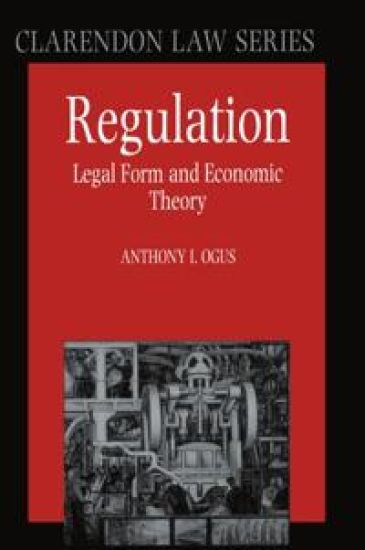
Regulation

Regulation

Anthony Ogus

Clarendon Press
1994
nidottu
Since 1980 there have been fundamental changes in the relationship between the state and industry. With the aid of economic theory, the atuhor critically examines the ways in which public law has been adapted to this task. The book provides a systematic overview of the theory and forms of social and economic regulation. In particular, it explores: (a) why governments regulate, for which, broadly speaking two theoretical frameworks exist - 'public interest' theories (regulation aims to improve social and economic welfare) and 'economic' theories (regulation aims to satisfy the demands of private interests); (b) the evolution of different forms of regulation in Britain, extending to the current policies of privatisation and deregulation; (c) the advantages and disadvantages of the different forms of regulation, evlauted in the ligh of the two theoretical frameworks and involving an analysis of how firms respond to the various kinds of incentives and controls; (d) how choices between the different forms of regulation are made by governments and the influence exerted by interest groups (including bureaucrats) and EC law.