Kirjojen hintavertailu – 12 859 818 kirjaa ja 27 kauppaa

Kirjailija

Anthony Pagden

Kirjat ja teokset yhdessä paikassa: 15 kirjaa, julkaisuja vuosilta 1987–2026, suosituimpiin kuuluu Virtues and Vices. Vertaile teosten hintoja ja tarkista saatavuus suomalaisista kirjakaupoista.

15 kirjaa

Kirjojen julkaisuvuodet: 1987–2026.

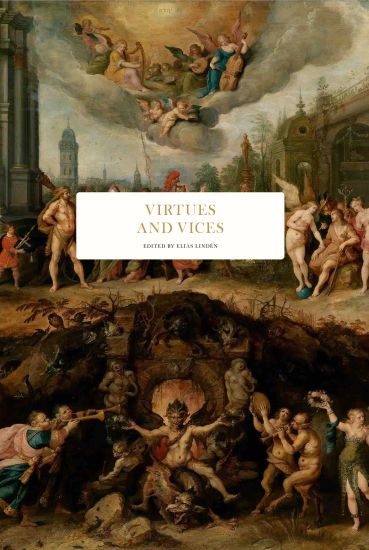
Virtues and Vices

Virtues and Vices

Katarina Barrling; David Butterfield; Pär Cassel; Marie Kawthar Daouda; Torbjörn Elensky; Jessica Frazier; Peter Haldén; Thomas Idergard; Anthony Pagden; Ritchie Robertson; Hans Ruin; Malise Ruthven; Mateusz Strózynski; Fredrik Svenaeus; Sten Widmalm

Bokförlaget Stolpe
2026
sidottu
Vad är en dygd och vad är en synd? Går det att säga om våra handlingar är onda eller goda? Varje epok och kultur har haft sina respektive svar på dessa eviga frågor. I en västerländsk, protestantisk tradition har människokroppen och dess begär exempelvis ansetts vara inneboende onda, men det är ingen självklarhet i andra kulturer. Dygd och synd verkar representera en dualitet som är lika gammal som mänskligheten. Denna antologi utforskar hur uppfattningar om dygder och synder har förändrats genom historien. Essäerna tar avstamp i antikens Grekland och Rom, rör sig över den tidiga kristna perioden från Augustinus till Dante, och fram till sentida tänkare som Friedrich Nietzsche. Skribenterna, såväl svenska som internationella forskare, gör också nedslag i alltifrån det konfucianska Kina och forntida Indien till självhjälpsböcker, transhumanism och AI, samt de mänskliga rättigheternas vara eller icke vara. Boken utkommer även på svenska, Dygder och dödsynder.
Dygder och dödssynder

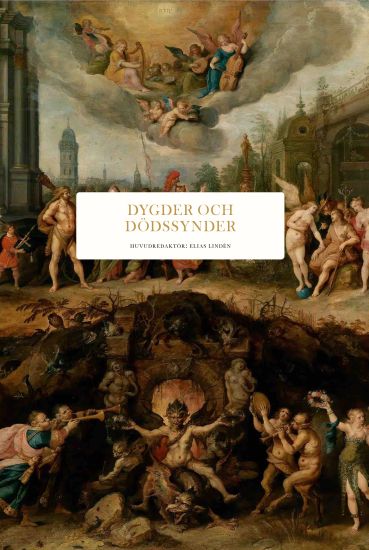
Dygder och dödssynder

Katarina Barrling; David Butterfield; Pär Cassel; Marie Kawthar Daouda; Torbjörn Elensky; Jessica Frazier; Peter Haldén; Thomas Idergard; Anthony Pagden; Ritchie Robertson; Hans Ruin; Malise Ruthven; Mateusz Strózynski; Fredrik Svenaeus; Sten Widmalm

Bokförlaget Stolpe
2026
sidottu
Vad är en dygd och vad är en synd? Går det att säga om våra handlingar är onda eller goda? Varje epok och kultur har haft sina respektive svar på dessa eviga frågor. I en västerländsk, protestantisk tradition har människokroppen och dess begär exempelvis ansetts vara inneboende onda, men det är ingen självklarhet i andra kulturer. Dygd och synd verkar representera en dualitet som är lika gammal som mänskligheten. Denna antologi utforskar hur uppfattningar om dygder och synder har förändrats genom historien. Essäerna tar avstamp i antikens Grekland och Rom, rör sig över den tidiga kristna perioden från Augustinus till Dante, och fram till sentida tänkare som Friedrich Nietzsche. Skribenterna, såväl svenska som internationella forskare, gör också nedslag i alltifrån det konfucianska Kina och forntida Indien till självhjälpsböcker, transhumanism och AI, samt de mänskliga rättigheternas vara eller icke vara. Boken finns även på engelska.
Pursuit of Europe

Pursuit of Europe

Anthony Pagden

Oxford University Press
2025
nidottu
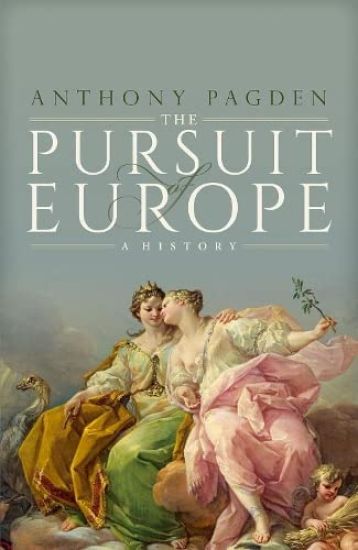
The European Union, we are told, is facing extinction. Most of those who believe that, however, have no understanding of how, and why, it became possible to imagine that the diverse peoples of Europe might be united in a single political community. The Pursuit of Europe tells the story of the evolution of the 'European project', from the end of the Napoleonic Wars, which saw the earliest creation of a 'Concert of Europe', right through to Brexit. The question was how, after centuries of internecine conflict, to create a united Europe while still preserving the political legal and cultural integrity of each individual nation. The need to find an answer to this question became more acute after two world wars had shown that if the nations of Europe were to continue to play a role in the world they could now only do so together. To achieve that, however, they had to be prepared to merge their zealously-guarded sovereign powers into a new form of trans-national constitutionalism. This, the European Union has tried to do. Here, Anthony Pagden argues that it has created not as its enemies have claimed, a 'super-state' but a new post-national order united in a political life based, not upon the old shibboleths of nationalism and patriotism, but upon a common body of values and aspirations. It is this, argues Pagden, that will allow the Union to defeat its political enemies from within, and to overcome the difficulties, from mass migration to the pandemic, which it faces from without. But it will only succeed in doing so if it also continues to evolve as it has over the past two centuries.
Beyond States

Beyond States

Anthony Pagden

JOHN WILEY AND SONS LTD
2024
sidottu
Today, the majority of the peoples of the planet live in nation-states, based upon the idea, if never the reality, of a single people, a single culture, a single rule of law and a single source of sovereign authority. But will they continue to do so in the future? None of the major challenges that confront humanity today – from climate change to disease, from terrorism to mass migration – can be handled effectively by single nation-states, no matter how powerful. The world is no longer made up only of states but also of an ever-increasing multitude of interstate networks and organizations which recognize no borders. We are beginning to be able to imagine the very real possibility of a new global civil society. But what political form should this take? By examining the history of the evolution of human society from the world’s first empires to today’s world of interstate networks, this book argues that there now exists the possibility of the emergence of a new political form, a global ‘federation of federations’, that will bring the species closer to the possibility of a more harmonious, equitable and secure future.
Beyond States

Beyond States

Anthony Pagden

JOHN WILEY AND SONS LTD
2024
nidottu

Halvin toimitettuna 28,10 €

Today, the majority of the peoples of the planet live in nation-states, based upon the idea, if never the reality, of a single people, a single culture, a single rule of law and a single source of sovereign authority. But will they continue to do so in the future? None of the major challenges that confront humanity today – from climate change to disease, from terrorism to mass migration – can be handled effectively by single nation-states, no matter how powerful. The world is no longer made up only of states but also of an ever-increasing multitude of interstate networks and organizations which recognize no borders. We are beginning to be able to imagine the very real possibility of a new global civil society. But what political form should this take? By examining the history of the evolution of human society from the world’s first empires to today’s world of interstate networks, this book argues that there now exists the possibility of the emergence of a new political form, a global ‘federation of federations’, that will bring the species closer to the possibility of a more harmonious, equitable and secure future.
The Pursuit of Europe: A History

The Pursuit of Europe: A History

Anthony Pagden

Oxford University Press
2022
sidottu
The European Union, we are told, is facing extinction. Most of those who believe that, however, have no understanding of how, and why, it become possible to imagine that the diverse peoples of Europe might be united in a single political community. The Pursuit of Europe tells the story of the evolution of the "European project", from the end of the Napoleonic Wars, which saw the earliest creation of a "Concert of Europe", right through to Brexit. The question was how, after centuries of internecine conflict, to create a united Europe while still preserving the political legal and cultural integrity of each individual nation. The need to find an answer to this question became more acute after two world wars had shown that if the nations of Europe were to continue to play a role in the world they could now only do so together. To achieve that, however, they had to be prepared to merge their zealously-guarded sovereign powers into a new form of trans-national constitutionalism. This the European Union has tried to do. In the process it has created not, as its enemies have claimed, a "super-state" but a new post-national order united in a political life based, not upon the old shibboleths of nationalism and patriotism, but upon a common body of values and aspirations. It is this, argues Anthony Pagden, that will allow the Union to defeat its political enemies from within, and to overcome the difficulties, from mass migration to the pandemic, which it faces from without. But it will only succeed in doing so if it also continues to evolve as it has over the past two centuries.
The Pursuit of Europe

The Pursuit of Europe

Anthony Pagden

Oxford University Press
2022
sidottu
The European Union, we are told, is facing extinction. Most of those who believe that, however, have no understanding of how, and why, it became possible to imagine that the diverse peoples of Europe might be united in a single political community. The Pursuit of Europe tells the story of the evolution of the 'European project', from the end of the Napoleonic Wars, which saw the earliest creation of a 'Concert of Europe', right through to Brexit. The question was how, after centuries of internecine conflict, to create a united Europe while still preserving the political legal and cultural integrity of each individual nation. The need to find an answer to this question became more acute after two world wars had shown that if the nations of Europe were to continue to play a role in the world they could now only do so together. To achieve that, however, they had to be prepared to merge their zealously-guarded sovereign powers into a new form of trans-national constitutionalism. This, the European Union has tried to do. Here, Anthony Pagden argues that it has created not as its enemies have claimed, a 'super-state' but a new post-national order united in a political life based, not upon the old shibboleths of nationalism and patriotism, but upon a common body of values and aspirations. It is this, argues Pagden, that will allow the Union to defeat its political enemies from within, and to overcome the difficulties, from mass migration to the pandemic, which it faces from without. But it will only succeed in doing so if it also continues to evolve as it has over the past two centuries.
The Burdens of Empire

The Burdens of Empire

Anthony Pagden

Cambridge University Press
2015
pokkari
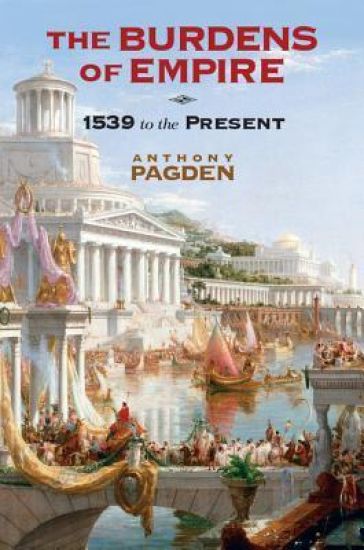
Despite the long history of debate and the recent resurgence of interest in empires and imperialism, no one seems very clear as to what exactly an empire is. The Burdens of Empire strives to offer not only a definition but also a working description. This book examines how empires were conceived by those who ruled them and lived under them; it looks at the relations, real or imagined, between the imperial metropolis (when one existed) and its outlying provinces or colonies; and it asks how the laws that governed the various parts and various ethnic groups, of which all empires were made, were conceived and interpreted. Anthony Pagden argues that the evolution of the modern concept of the relationship between states, and in particular the modern conception of international law, cannot be understood apart from the long history of European empire building.
The Burdens of Empire

The Burdens of Empire

Anthony Pagden

Cambridge University Press
2015
sidottu
Despite the long history of debate and the recent resurgence of interest in empires and imperialism, no one seems very clear as to what exactly an empire is. The Burdens of Empire strives to offer not only a definition but also a working description. This book examines how empires were conceived by those who ruled them and lived under them; it looks at the relations, real or imagined, between the imperial metropolis (when one existed) and its outlying provinces or colonies; and it asks how the laws that governed the various parts and various ethnic groups, of which all empires were made, were conceived and interpreted. Anthony Pagden argues that the evolution of the modern concept of the relationship between states, and in particular the modern conception of international law, cannot be understood apart from the long history of European empire building.
The Enlightenment

The Enlightenment

Anthony Pagden

Oxford University Press
2015
nidottu
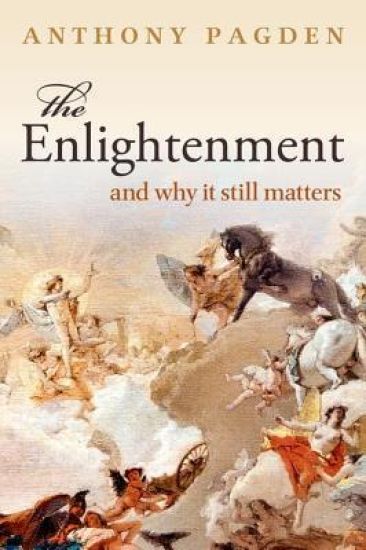
The Enlightenment and Why It Still Matters tells nothing less than the story of how the modern, Western view of the world was born. Cultural and intellectual historian Anthony Pagden explains how, and why, the ideal of a universal, global, and cosmopolitan society became such a central part of the Western imagination in the ferment of the Enlightenment - and how these ideas have done battle with an inward-looking, tradition-oriented view of the world ever since. Cosmopolitanism is an ancient creed; but in its modern form it was a creature of the Enlightenment attempt to create a new 'science of man', based upon a vision of humanity made up of autonomous individuals, free from all the constraints imposed by custom, prejudice, and religion. As Pagden shows, this 'new science' was based not simply on 'cold, calculating reason', as its critics claimed, but on the argument that all humans are linked by what in the Enlightenment were called 'sympathetic' attachments. The conclusion was that despite the many tribes and nations into which humanity was divided there was only one 'human nature', and that the final destiny of the species could only be the creation of one universal, cosmopolitan society. This new 'human science' provided the philosophical grounding of the modern world. It has been the inspiration behind the League of Nations, the United Nations and the European Union. Without it, international law, global justice, and human rights legislation would be unthinkable. As Anthony Pagden argues passionately and persuasively in this book, it is a legacy well worth preserving - and one that might yet come to inherit the earth.
Worlds at War: The 2,500-Year Struggle Between East and West

Worlds at War: The 2,500-Year Struggle Between East and West

Anthony Pagden

Random House Publishing Group
2009
nidottu

Halvin toimitettuna 26,10 €

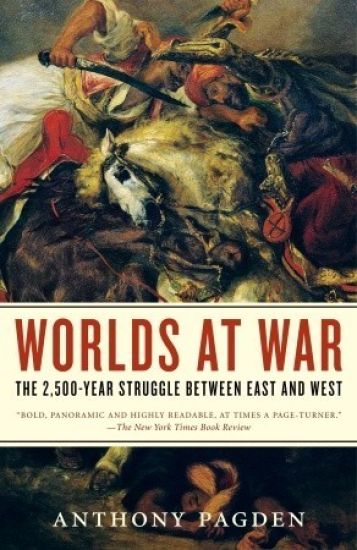
Spanning two and a half millennia, Anthony Pagden's mesmerizing Worlds at War delves deep into the roots of the "clash of civilizations" between East and West that has always been a battle over ideas. It begins with ancient Greece and its epic fight against the Persian Empire, then sweeps to Rome, which created the modern concepts of citizenship and the rule of law. Pagden dramatizes the birth of Christianity in the East and its use in the West as an instrument of government, setting the stage for what would become, and has remained, a global battle of the secular against the sacred. Islam, at first ridiculed in Christian Europe, drives Pope Urban II to launch the Crusades, which transform the relationship between East and West into one of competing religious beliefs. Modern times bring a first world war, which among other things seeks to redesign the Muslim world by force. In our own era, Muslims now find themselves in unwelcoming Western societies, while the West seeks to enforce democracy and its own secular values through occupation in the East. Pagden ends on a cautionary note, warning that terrorism and war will continue as long as sacred and secular remain confused in the minds of so many. Eye-opening and compulsively readable, Worlds at War is a stunning work of history and a triumph of modern scholarship.
The Conquest of America

The Conquest of America

Tzvetan Todorov; Anthony Pagden

University of Oklahoma Press
1999
nidottu

Halvin toimitettuna 29,30 €

A classic in its field, The Conquest of America is a study of cultural confrontation in the New World, with implications far beyond sixteenth-century America. The book offers an original interpretation of both Columbus's discovery of America and the Spaniards' subsequent conquest, colonization, and destruction of pre-Columbian cultures in Mexico and the Caribbean. Using sixteenth-century sources, the distinguished French writer and critic Tzvetan Todorov examines the beliefs and behavior of the Spanish conquistadors and of the Aztecs, adversaries in a clash of cultures that resulted in the near extermination of Mesoamerica's Indian population. A new foreword by Anthony Pagden discusses the implications of Todorov's landmark study.
Lords of all the World

Lords of all the World

Anthony Pagden

Yale University Press
1998
nidottu
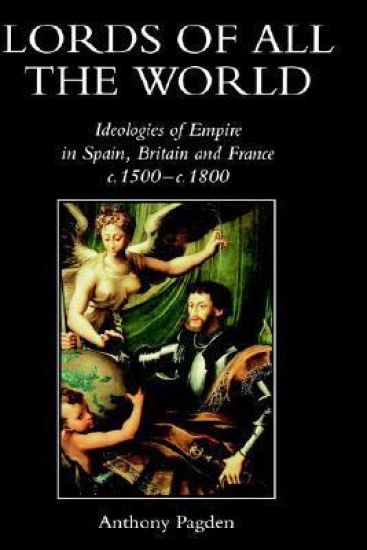
This book, the first to compare theories of empire as they emerged in, and helped to define, the great colonial powers-Spain, Britain, and France-describes the different ways and arguments these countries used to legitimate the seizure and subjugation of aboriginal lands and peoples." Learned, wide-ranging and important. . . . Pagden`s willingness to examine the three empires in tandem is as rewarding as it is innovative."-Linda Colley, London Review of Books"An impressive book, erudite and lively. . . . The book succeeds as an exercise in drawing together the interpretive treatises of three empires over three centuries and showing, often subtly but at times explicitly, their similarity."-William D. Phillips, Jr., American Historical Review"This volume . . . provides an excellent commentary on the imperial ideologies of three major European powers during the early modern era. . . . This is a book to which scholars will return time and again. I certainly found it intellectually stimulating."-Chandra R. de Silva, Sixteenth Century JournalAnthony Pagden is Harry C. Black professor of history at the Johns Hopkins University, Baltimore. He is also the author of European Encounters with the New World: From Renaissance to Romanticism and Spanish Imperialism and the Political Imagination, both published by Yale University Press.
European Encounters with the New World

European Encounters with the New World

Anthony Pagden

Yale University Press
1994
pokkari
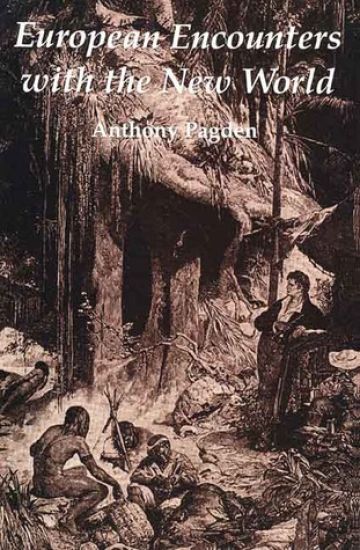
For more than three centuries after Columbus's voyages to America, Europeans pondered how the Old World's encounters with the New World affected European sensibilities and intellectual horizons. In this book Anthony Pagden examines some of the varied ways in which Europeans interpreted these encounters with America. Pagden explores the strategies used by Columbus and the early chroniclers of America to describe a continent and its inhabitants so deeply unfamiliar to Europeans that they seemed hardly to be real. He looks at how, in the seventeenth and eighteenth centuries, Europeans reacted in different ways to these descriptions. Some, like the Prussian explorer and naturalist Alexander von Humboldt, declared that scientific understanding before the oceanic voyages had advanced by slow steps and that the encounter with America had invigorated Europeans to make new discoveries in many directions at once. Other Europeans, particularly Enlightenment and Romantic figures, argued fiercely against the whole process of colonization and acculturation in the Americas. French philosophe Denis Diderot, for example, felt that the European experience of America had led to an increased familiarity with all that was potentially strange and unusual—the creation of a global village—and that this had resulted in a steady decline in that sense of wonder that was the principal incentive for all scientific inquiry. The German philosopher Johann Gottfried Herder proposed that all cultures must recognize their essential alienness and that the single world culture that colonization and commerce had helped to create must be allowed to revert to its natural condition of plurality. In an exploration of these and other responses, Pagden throws a vivid new light on the intellectual consequences of Europe's encounter with the Americas.
The Fall of Natural Man

The Fall of Natural Man

Anthony Pagden

Cambridge University Press
1987
pokkari
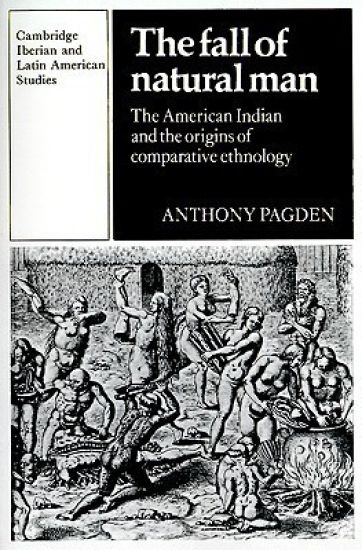
This book gives a new interpretation of the reception of the new world by the old. It is the first in-depth study of the pre-Enlightenment methods by which Europeans attempted to describe and classify the American Indian and his society. Between 1512 and 1724 a simple determinist view of human society was replaced by a more sophisticated relativist approach. Anthony Pagden uses new methods of technical analysis, already developed in philosophy and anthropology, to examine four groups of writers who analysed Indian culture: the sixteenth-century theologian, Francisco de Vitoria, and his followers; the ‘champion of the Indians’ Bartolomé de Las Casas; and the Jesuit historians José de Acosta and Joseph François Lafitau. Dr Pagden explains the sources for their theories and how these conditioned their observations. He also examines for the first time the key terms in each writer’s vocabulary - words such as ‘barbarian’ and ‘civil’ - and the assumptions that lay beneath them.