Kirjojen hintavertailu – 12 859 828 kirjaa ja 27 kauppaa

Kirjailija

Anthony Pym

Kirjat ja teokset yhdessä paikassa: 18 kirjaa, julkaisuja vuosilta 1998–2026, suosituimpiin kuuluu Method in Translator History. Vertaile teosten hintoja ja tarkista saatavuus suomalaisista kirjakaupoista.

18 kirjaa

Kirjojen julkaisuvuodet: 1998–2026.

Method in Translator History

Method in Translator History

Anthony Pym

TAYLOR FRANCIS LTD
2026
nidottu
Method in Translator History is a complete reworking of the much-cited classic text Method in Translator History It explains the basics of reflexive empiricism and offers a highly critical assessment of recent developments in the area. New chapters address current issues in the history of technologies, the risks of big data, types of translation flows, network analysis, translation policies, institutions, trust relationships, and the translator's historical agency. A toolbox approach breaks issues down into commonsense questions, to which short, clear answers are provided. Examples are drawn from European and Asian cultures, as well as Australian Indigenous translation practices. Features include clear definitions of key terms, both in the initial Glossary and throughout; an accessible academic style able to explain and at the same time provoke, an overall structure that follows the research process, dealing with the selection of questions, data gathering, modes of analysis, considerations of how to present the completed research, and who is likely to listen to history; lists of questions that the historian could or should ask at each stage; examples of common traps to be avoided and examples of methodological mistakes made in previous research. This text is suitable for translation studies researchers, graduate students, educators, professional translators, cultural historians, and digital humanities scholars seeking methodological guidance for historical research on translation practices.
Method in Translator History

Method in Translator History

Anthony Pym

TAYLOR FRANCIS LTD
2026
sidottu
Method in Translator History is a complete reworking of the much-cited classic text Method in Translator History It explains the basics of reflexive empiricism and offers a highly critical assessment of recent developments in the area. New chapters address current issues in the history of technologies, the risks of big data, types of translation flows, network analysis, translation policies, institutions, trust relationships, and the translator's historical agency. A toolbox approach breaks issues down into commonsense questions, to which short, clear answers are provided. Examples are drawn from European and Asian cultures, as well as Australian Indigenous translation practices. Features include clear definitions of key terms, both in the initial Glossary and throughout; an accessible academic style able to explain and at the same time provoke, an overall structure that follows the research process, dealing with the selection of questions, data gathering, modes of analysis, considerations of how to present the completed research, and who is likely to listen to history; lists of questions that the historian could or should ask at each stage; examples of common traps to be avoided and examples of methodological mistakes made in previous research. This text is suitable for translation studies researchers, graduate students, educators, professional translators, cultural historians, and digital humanities scholars seeking methodological guidance for historical research on translation practices.

Risk Management in Translation

Risk Management in Translation

Anthony Pym

Cambridge University Press
2025
pokkari
Once fidelity and equivalence are abandoned, how can successful translation be understood? Risk management offers an alternative way of looking at the work of translators and their social function. It posits that the greater the cultural differences, the greater the risks of failed communication. What can be done to manage those risks? Drawing on the ways translators and interpreters handle intercultural encounters by adjusting what is said, this essay outlines a series of strategies that can be applied to all kinds of cross-cultural communication. Practical examples are drawn from a wide range of contexts, from Australian bushfires to court interpreting in Barcelona, with special regard for the new kinds of risks presented by machine translation and generative AI. The result is a critical view of the professionalization of translation, and a fresh account of democratized translation as a rich human activity in the service of cross-cultural cooperation.
Risk Management in Translation

Risk Management in Translation

Anthony Pym

Cambridge University Press
2025
sidottu
Once fidelity and equivalence are abandoned, how can successful translation be understood? Risk management offers an alternative way of looking at the work of translators and their social function. It posits that the greater the cultural differences, the greater the risks of failed communication. What can be done to manage those risks? Drawing on the ways translators and interpreters handle intercultural encounters by adjusting what is said, this essay outlines a series of strategies that can be applied to all kinds of cross-cultural communication. Practical examples are drawn from a wide range of contexts, from Australian bushfires to court interpreting in Barcelona, with special regard for the new kinds of risks presented by machine translation and generative AI. The result is a critical view of the professionalization of translation, and a fresh account of democratized translation as a rich human activity in the service of cross-cultural cooperation.
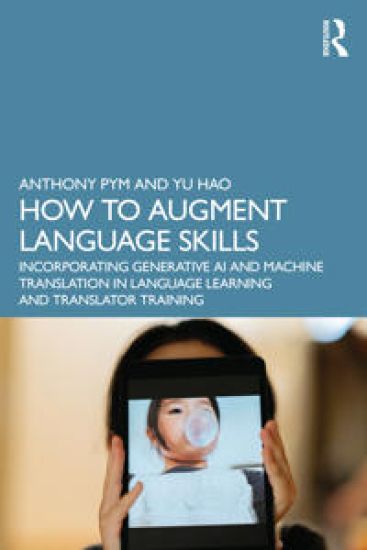
How to Augment Language Skills

How to Augment Language Skills

Anthony Pym; Yu Hao

TAYLOR FRANCIS LTD
2024
sidottu
How to Augment Language Skills outlines ways in which translators and language providers can expand their skillset and how translation technologies can be integrated into language learning and translator training. This book explains the basics of generative AI, machine translation, and translation memory suites, placing them in a historical context and assessing their fundamental impacts on language skills. It covers what to teach in a specific context, how to teach it, how to assess the result, and how to set up lively class discussions on the many problematic aspects. The exploratory empirical approach is designed to reach across several divides: between language education and translation studies, between technology designers and users, between Western and Asian research, and between abstract ideas and hands-on practice. Features include:Fifty-seven technology-related activities for the language and/or translation class. Recent research on the capacities of generative AI. Examples of how to conduct a needs analysis in the Higher Education context. Comparisons of the main teaching methods. Ways to assess the use of technologies. Examples in Chinese, Spanish, Catalan, French, and German. A full glossary explaining the key terms in clear language. Drawing on years of classroom experience, Pym and Hao illustrate how these skills can be taught in a range of classroom and online activities, making this essential reading for teachers and researchers involved in the teaching of languages and the training of translators.
How to Augment Language Skills

How to Augment Language Skills

Anthony Pym; Yu Hao

TAYLOR FRANCIS LTD
2024
nidottu
How to Augment Language Skills outlines ways in which translators and language providers can expand their skillset and how translation technologies can be integrated into language learning and translator training. This book explains the basics of generative AI, machine translation, and translation memory suites, placing them in a historical context and assessing their fundamental impacts on language skills. It covers what to teach in a specific context, how to teach it, how to assess the result, and how to set up lively class discussions on the many problematic aspects. The exploratory empirical approach is designed to reach across several divides: between language education and translation studies, between technology designers and users, between Western and Asian research, and between abstract ideas and hands-on practice. Features include:Fifty-seven technology-related activities for the language and/or translation class. Recent research on the capacities of generative AI. Examples of how to conduct a needs analysis in the Higher Education context. Comparisons of the main teaching methods. Ways to assess the use of technologies. Examples in Chinese, Spanish, Catalan, French, and German. A full glossary explaining the key terms in clear language. Drawing on years of classroom experience, Pym and Hao illustrate how these skills can be taught in a range of classroom and online activities, making this essential reading for teachers and researchers involved in the teaching of languages and the training of translators.
Exploring Translation Theories

Exploring Translation Theories

Anthony Pym

TAYLOR FRANCIS LTD
2023
nidottu
Exploring Translation Theories presents a comprehensive analysis of the core contemporary paradigms of Western translation theory. This engaging overview covers the key theories of equivalence, solution types, purpose, scientific approaches, uncertainty, automation, and cultural translation. Fully revised, this third edition adds coverage of Russian and Ukrainian theories, examples from Chinese, advances in machine translation, and research on translators’ cognitive processes. Readers are encouraged to explore the various theories and consider their strengths, weaknesses, and implications for translation practice. The book concludes with a survey of the way translation is used as a model in postmodern cultural studies and sociologies, extending its scope beyond traditional Western notions. Features in each chapter include:An introduction outlining the main points, key concepts and illustrative examples. Examples drawn from a range of languages, although knowledge of no language other than English is assumed. Discussion points and suggested classroom activities. A chapter summary. This comprehensive and engaging book is ideal both for self-study and as a textbook for Translation theory courses within Translation Studies, Comparative Literature and Applied Linguistics.
Exploring Translation Theories

Exploring Translation Theories

Anthony Pym

TAYLOR FRANCIS LTD
2023
sidottu
Exploring Translation Theories presents a comprehensive analysis of the core contemporary paradigms of Western translation theory. This engaging overview covers the key theories of equivalence, solution types, purpose, scientific approaches, uncertainty, automation, and cultural translation. Fully revised, this third edition adds coverage of Russian and Ukrainian theories, examples from Chinese, advances in machine translation, and research on translators’ cognitive processes. Readers are encouraged to explore the various theories and consider their strengths, weaknesses, and implications for translation practice. The book concludes with a survey of the way translation is used as a model in postmodern cultural studies and sociologies, extending its scope beyond traditional Western notions. Features in each chapter include:An introduction outlining the main points, key concepts and illustrative examples. Examples drawn from a range of languages, although knowledge of no language other than English is assumed. Discussion points and suggested classroom activities. A chapter summary. This comprehensive and engaging book is ideal both for self-study and as a textbook for Translation theory courses within Translation Studies, Comparative Literature and Applied Linguistics.
What is Translation History?

What is Translation History?

Andrea Rizzi; Birgit Lang; Anthony Pym

Springer Nature Switzerland AG
2019
sidottu
This book presents a dynamic history of the ways in which translators are trusted and distrusted. Working from this premise, the authors develop an approach to translation that speaks to historians of literature, language, culture, society, science, translation and interpreting. By examining theories of trust from sociological, philosophical, and historical studies, and with reference to interdisciplinarity, the authors outline a methodology for approaching translation history and intercultural mediation from three discrete, concurrent perspectives on trust and translation: the interpersonal, the institutional and the regime-enacted. This book will be of particular interest to students and scholars of translation studies, as well as historians working on mediation and cultural transfer.
Teoreticheskie paradigmy v perevodovedenii

Teoreticheskie paradigmy v perevodovedenii

Anthony Pym

Izdatelstvo Sankt-Peterburgskogo universiteta
2018
nidottu
Kniga soderzhit kompleksnyj analiz osnovnykh podkhodov k perevodu v sovremennom perevodovedenii. V nej rassmatrivajutsja teoreticheskie paradigmy perevoda, analizirujutsja preimuschestva i nedostatki razlichnykh tochek zrenija na praktiku perevoda, vkljuchaja lokalizatsiju, a takzhe kulturologicheskie i sotsiologicheskie podkhody k perevodu kak k tipovoj modeli, razdvigajuschejpredely traditsionnykh zapadnoevropejskikh predstavlenij v epokhu postmoderna. PerevodchikKazakova T.
Translation Solutions for Many Languages

Translation Solutions for Many Languages

Anthony Pym

Bloomsbury Academic
2017
nidottu
Many “translation solutions” (often called “procedures,” “techniques,” or “strategies”) have been proposed over the past 50 years or so in French, Chinese, Russian, Ukrainian, English, Spanish, German, Japanese, Italian, Czech, and Slovak. This book analyzes, criticizes and compares them, proposing a new list of solutions that can be used in training translators to work between many languages. The book also traces out an entirely new history of contemporary translation studies, showing for example how the Russian tradition was adapted in China, how the impact of transformational linguistics was resisted, and how scholarship has developed an intercultural metalanguage over and above the concerns of specific national languages. The book reveals the intensely political nature of translation theory, even in its most apparently technical aspects. The lists were used to advance the agendas of not just linguistic nationalisms but also state regimes – this is a history in which Hitler, Stalin, and Mao all played roles, Communist propaganda and imperialist evangelism were both legitimized, Ukrainian advances in translation theory were forcefully silenced in the 1930s, the Cold War both stimulated the application of transformational grammar and blocked news of Russian translation theory, French translation theory was conscripted into the agenda of Japanese exceptionalism, and much else.
Translation Solutions for Many Languages

Translation Solutions for Many Languages

Anthony Pym

Bloomsbury Academic
2016
sidottu
Many “translation solutions” (often called “procedures,” “techniques,” or “strategies”) have been proposed over the past 50 years or so in French, Chinese, Russian, Ukrainian, English, Spanish, German, Japanese, Italian, Czech, and Slovak. This book analyzes, criticizes and compares them, proposing a new list of solutions that can be used in training translators to work between many languages. The book also traces out an entirely new history of contemporary translation studies, showing for example how the Russian tradition was adapted in China, how the impact of transformational linguistics was resisted, and how scholarship has developed an intercultural metalanguage over and above the concerns of specific national languages. The book reveals the intensely political nature of translation theory, even in its most apparently technical aspects. The lists were used to advance the agendas of not just linguistic nationalisms but also state regimes – this is a history in which Hitler, Stalin, and Mao all played roles, Communist propaganda and imperialist evangelism were both legitimized, Ukrainian advances in translation theory were forcefully silenced in the 1930s, the Cold War both stimulated the application of transformational grammar and blocked news of Russian translation theory, French translation theory was conscripted into the agenda of Japanese exceptionalism, and much else.
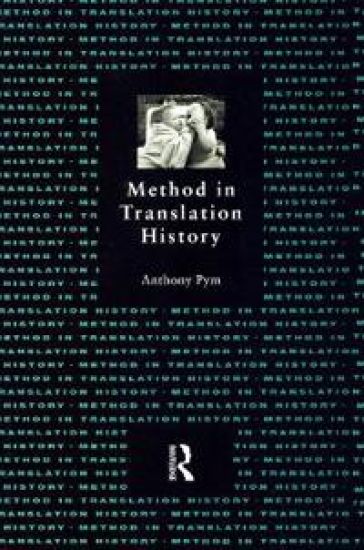
Method in Translation History

Method in Translation History

Anthony Pym

Routledge
2016
sidottu
Starting from the critical notion that we should be asking questions of contemporary importance - and that 'importance' itself must be defined - Anthony Pym sets about undoing many of the currently dominant models of translation history, positing, among much else, that the object of this history should be translators as people, that researchers are subjectively involved in their object, that cultural systems are based on social will, that translators work in intercultural spaces, and that a model of cooperation through negotiation may be applied to the way translators (and researchers!) work between cultures. At the same time, the proposed methodology is eminently constructive, showing how many empirical techniques can be developed and applied: clear illustrations are given of corpus selection, working definitions, deceptive statistics, and the construction of networks and regimes, incorporating elaborate examples drawn from medieval and modernist fields, as well as finding space for notes on practical problems like funding research. Finding its focus in historical debates, this book cannot help but create contemporary debate: its arguments seek not only to revitalize the historical study of translation but also to develop the wider concerns of intercultural studies.
The Status of the Translation Profession in the European Union

The Status of the Translation Profession in the European Union

Anthony Pym; Claudio Sfreddo; Andy L. J. Chan; François Grin

Anthem Press
2014
nidottu
Based on thorough and extensive research, this book examines in detail traditional status signals in the translation profession. It provides case studies of eight European and non-European countries, with further chapters on sociological and economic modelling, and goes on to identify a number of policy options and make recommendations on rectifying problem areas.
The Status of the Translation Profession in the European Union

The Status of the Translation Profession in the European Union

Anthony Pym; Claudio Sfreddo; Andy L. J. Chan; François Grin

Anthem Press
2013
sidottu
Based on thorough and extensive research, this book examines in detail traditional status signals in the translation profession. It provides case studies of eight European and non-European countries, with further chapters on sociological and economic modelling, and goes on to identify a number of policy options and make recommendations on rectifying problem areas.
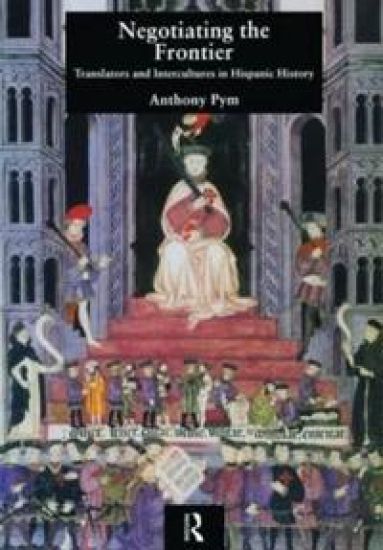
Negotiating the Frontier

Negotiating the Frontier

Anthony Pym

St Jerome Publishing
2000
nidottu
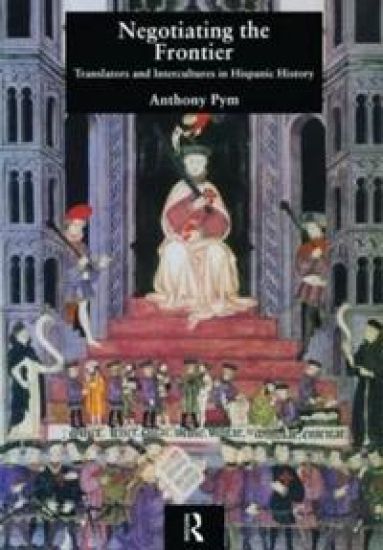
Why would a Latin Qur'an be addressed to readers who knew no Latin? What happens when translators work on paper rather than parchment? Why would a Jewish rabbi translate a bible for Christians? How can a theorist successfully criticize a version of Aristotle without knowing any Greek? Why were children used to bring down an Amerindian civilization? Why does the statue of Columbus in Barcelona point straight to Israel? Why should a Nicaraguan poet cite a French poem in order to explain a volcano in Nicaragua? This book does more than answer such questions. It uses them to discuss some of the most fundamental and complex issues in contemporary Translation Studies and Cultural Studies. Identifying cultural intermediaries as members of medieval frontier society, it traces the stages by which that society has assisted in the creation of Hispanic cultures. Individual case studies go from the twelfth-century Christian, Islamic and Jewish exchanges right through to the not unrelated complexity of today's translation schools in Spain, mining a history rich in anecdote and paradox. Further aspects trace key concepts such as disputation, the medieval hierarchy of languages, the nationalist mistrust of intermediaries, the effects of decolonization on development ideology, and the difficulties of training students for globalizing markets.
Negotiating the Frontier

Negotiating the Frontier

Anthony Pym

St Jerome Publishing
2000
sidottu
Why would a Latin Qur'an be addressed to readers who knew no Latin? What happens when translators work on paper rather than parchment? Why would a Jewish rabbi translate a bible for Christians? How can a theorist successfully criticize a version of Aristotle without knowing any Greek? Why were children used to bring down an Amerindian civilization? Why does the statue of Columbus in Barcelona point straight to Israel? Why should a Nicaraguan poet cite a French poem in order to explain a volcano in Nicaragua? This book does more than answer such questions. It uses them to discuss some of the most fundamental and complex issues in contemporary Translation Studies and Cultural Studies. Identifying cultural intermediaries as members of medieval frontier society, it traces the stages by which that society has assisted in the creation of Hispanic cultures. Individual case studies go from the twelfth-century Christian, Islamic and Jewish exchanges right through to the not unrelated complexity of today's translation schools in Spain, mining a history rich in anecdote and paradox. Further aspects trace key concepts such as disputation, the medieval hierarchy of languages, the nationalist mistrust of intermediaries, the effects of decolonization on development ideology, and the difficulties of training students for globalizing markets.
Method in Translation History

Method in Translation History

Anthony Pym

St Jerome Publishing
1998
nidottu
Starting from the critical notion that we should be asking questions of contemporary importance - and that 'importance' itself must be defined - Anthony Pym sets about undoing many of the currently dominant models of translation history, positing, among much else, that the object of this history should be translators as people, that researchers are subjectively involved in their object, that cultural systems are based on social will, that translators work in intercultural spaces, and that a model of cooperation through negotiation may be applied to the way translators (and researchers!) work between cultures. At the same time, the proposed methodology is eminently constructive, showing how many empirical techniques can be developed and applied: clear illustrations are given of corpus selection, working definitions, deceptive statistics, and the construction of networks and regimes, incorporating elaborate examples drawn from medieval and modernist fields, as well as finding space for notes on practical problems like funding research. Finding its focus in historical debates, this book cannot help but create contemporary debate: its arguments seek not only to revitalize the historical study of translation but also to develop the wider concerns of intercultural studies.