Kirjojen hintavertailu – 12 903 725 kirjaa ja 27 kauppaa

Kirjailija

Anthony Sammarco

Kirjat ja teokset yhdessä paikassa: 7 kirjaa, julkaisuja vuosilta 1996–2022, suosituimpiin kuuluu East Boston Through Time. Vertaile teosten hintoja ja tarkista saatavuus suomalaisista kirjakaupoista.

7 kirjaa

Kirjojen julkaisuvuodet: 1996–2022.

Mission Hill Through Time

Mission Hill Through Time

Anthony Sammarco

America Through Time
2022
nidottu
Mission Hill, Boston, is a diverse, evolving neighborhood offering housing, parks, dining, and community spirit. The Mission Hill neighborhood of Boston has long been a thriving nexus of cultures, with residents of all walks of life, including numerous workers in the medical field, making it an inclusive, busy, and evolving neighborhood. Though Mission Hill is less than one square mile, it is a neighborhood constantly in transition, with not just home owners but renters, especially students, calling it home. What it lacks in land area, Mission Hill makes up in character, maintaining a small neighborhood vibe while remaining one of Boston's most diverse neighborhoods. With a variety of housing, restaurants, and pubs, it also offers green spaces such as the Iroquois Woods, the Kevin W. Fitzgerald Park, and the Back of the Hill Urban Wild, making it a small neighborhood that has evolved over the last century as a destination.

Kenmore Square and the Fenway of Boston Through Time

Kenmore Square and the Fenway of Boston Through Time

Anthony Sammarco

America Through Time
2021
nidottu
Chronicles the development of Kenmore Square and Fenway, from early nineteenth-century marshland to a thriving cultural and residential area. Kenmore Square and The Fenway of Boston Through Time chronicles the history and development of an area of the city of Boston that only began in the early nineteenth century. When the Mill Dam, present day Beacon Street, was opened in 1821 between the foot of Beacon Hill and Sewall's Point, now known as Kenmore Square, the area west of Boston was now accessible by land, as previously the only means of access was by The Neck, a thin strip of land in the South End that connected Boston to the mainland at Roxbury. However, in the late nineteenth century, Frederick Law Olmsted transformed the marshland into the Back Bay Fens, which became an integral part of the Emerald Necklace of Boston. Anthony Sammarco, with contemporary photographs by Peter B. Kingman, discusses Kenmore Square with the Hotel Buckminster, built in 1897 facing the prominent square, along with ease of transportation which led to early residential hotels such as the Charlesview, the Wadsworth and the Westgate to be built along with large hotels such as the Hotel Kenmore and the Hotel Braemore. With apartment buildings constructed between 1900 and 1930, the Back Bay Fens evolved into the Fenway neighborhood, with not just accessibility to the city but also with a far more park-like and naturalistic aspect than any other city neighborhood. With numerous institutions from the Museum of Fine Arts and the Boston Opera House to the Harvard Medical School and numerous hospitals, Kenmore Square is dominated by the iconic Citgo sign and is not just home to baseball's beloved Fenway Park, which draws huge crowds for Red Sox games, but also many restaurants, shops and student hangouts which have long been in and around Kenmore Square, and clubs and sports bars along Brookline Avenue and Lansdowne Street.
Thanksgiving Traditions in Boston

Thanksgiving Traditions in Boston

Anthony Sammarco

America Through Time
2020
nidottu
Explores the holiday's evolving history, diverse cultural foods, and local celebrations from colonial times to today. Noah Webster described Thanksgiving as "The act of rendering thanks or expressing gratitude for favors or mercies," and it has been celebrated nationally on and off since 1789. Governors of Massachusetts would proclaim a local holiday of Thanksgiving, but it was Sarah J. Hale, the editor of Godey's Lady's Book, who promoted a national day of Thanksgiving. It was during the Civil War under the presidency of Abraham Lincoln that Thanksgiving became a federal holiday in 1863. By the late nineteenth century in Boston--now a thriving nexus of ethnic, religious and racially diverse residents, and far more diverse than the early Pilgrims could ever have expected--Thanksgiving began to include ethnic foods and traditions which their ancestors brought to the New World. Each group broadened the meaning of Thanksgiving and food became a way of preserving one's background while assimilating into the "Pilgrim culture." Though Thanksgiving today often is celebrated with food, football and parades, it replicates the first thanksgiving held by the Pilgrims in 1621. In Boston, there was the annual Thanksgiving Day parade, held from 1929 to 1943. Thanksgiving Traditions in Boston is a compilation of more of Boston's shared traditions and anecdotes, both traditional and created.
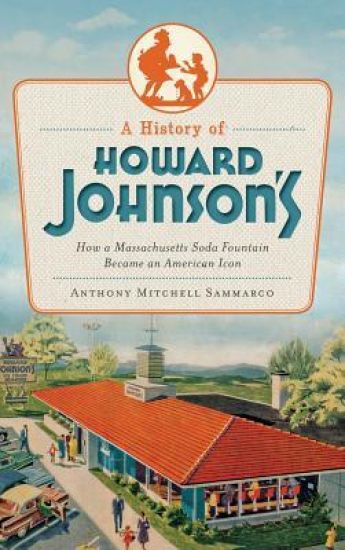
A History of Howard Johnson's: How a Massachusetts Soda Fountain Became an American Icon
Howard Johnson created an orange-roofed empire of ice cream stands and restaurants that stretched from Maine to Florida and all the way to the West Coast. Popularly known as the "Father of the Franchise Industry," Johnson delivered good food and prices that brought appreciative customers back for more. The attractive white Colonial Revival restaurants, with eye-catching porcelain tile roofs, illuminated cupolas and sea blue shutters, were described in "Reader's Digest" in 1949 as the epitome of "eating places that look like New England town meeting houses dressed up for Sunday." Boston historian and author Anthony M. Sammarco recounts how Howard Johnson introduced twenty-eight flavors of ice cream, the "Tendersweet" clam strips, grilled frankforts and a menu of delicious and traditional foods that families eagerly enjoyed when they traveled.