Kirjojen hintavertailu – 12 903 725 kirjaa ja 27 kauppaa

Kirjailija

Anthony Stevens

Kirjat ja teokset yhdessä paikassa: 26 kirjaa, julkaisuja vuosilta 1990–2026, suosituimpiin kuuluu Rewire Your Mindset and Don't Quit. Vertaile teosten hintoja ja tarkista saatavuus suomalaisista kirjakaupoista.

26 kirjaa

Kirjojen julkaisuvuodet: 1990–2026.

Evolutionary Psychiatry, second edition

Evolutionary Psychiatry, second edition

Anthony Stevens; John Price

Routledge
2000
nidottu

Halvin toimitettuna 52,20 €

Challenging a medical model which has supplied few effective answers to long-standing conundrums, Evolutionary Psychiatry proposes a new conceptual framework for psychiatry based on Darwinian theory. Anthony Stevens and John Price argue that psychiatric symptoms are manifestations of ancient adaptive strategies which are no longer necessarily appropriate but which can best be understood and treated in an evolutionary and developmental context. They propose theories to account for the widespread existence of affective disorders, borderline states and schizophrenia, as well as offering solutions for puzzles such as sadomasochism and the function of dreams. This comprehensive introduction to the new science of Darwinian Psychiatry is readily accessible to both the specialist and non-specialist reader. It describes in detail the disorders and conditions commonly encountered in psychiatric practice and show how evolutionary theory can account for their biological origins and functional nature.
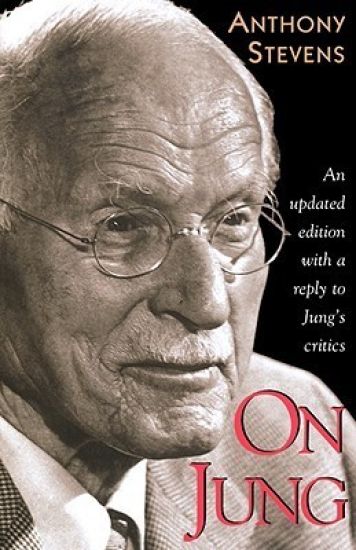
On Jung

On Jung

Anthony Stevens

Princeton University Press
1999
pokkari
Here Anthony Stevens examines every stage of Jung's personal and professional development to throw light on his theories of the life cycle, dream symbolism, and the collective unconscious. Jung's life experience made him a profound, stimulating, and immensely influential writer on almost every aspect of human behavior; this lucid and penetrating study makes the ideal introduction to his life and ideas. This new edition contains a preface intended as a rebuttal to the recent attacks on Jung made by Noll and McLynn.
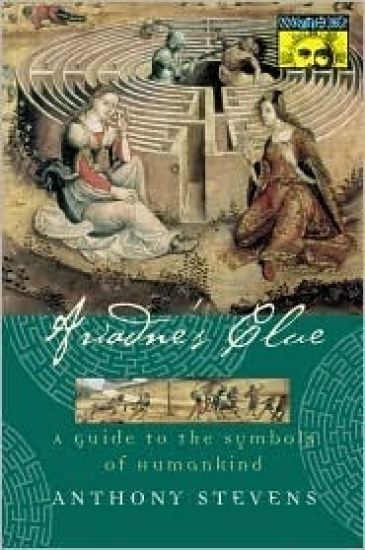
Ariadne's Clue

Ariadne's Clue

Anthony Stevens

Princeton University Press
1999
sidottu
"Stevens has a unique capacity for relating myths and symbols to the way our psyches function today, thus bringing symbols alive rather than dismissing them as historical curiosities. He is also a stylish writer, and is able to link his conclusions from a variety of fields into a consistent, readable whole."--Anthony Storr, University of Oxford Symbolism is the most powerful and ancient means of communication available to humankind. For centuries people have expressed their preoccupations and concerns through symbolism in the form of myths, stories, religions, and dreams. The meaning of symbols has long been debated among philosophers, antiquarians, theologians, and, more recently, anthropologists and psychologists. In Ariadne's Clue, distinguished analyst and psychiatrist Anthony Stevens explores the nature of symbols and explains how and why we create the symbols we do. The book is divided into two parts: an interpretive section that concerns symbols in general and a "dictionary" that lists hundreds of symbols and explains their origins, their resemblances to other symbols, and the belief systems behind them. In the first section, Stevens takes the ideas of C. G. Jung a stage further, asserting not only that we possess an innate symbol-forming propensity that exists as a creative and integral part of our psychic make-up, but also that the human mind evolved this capacity as a result of selection pressures encountered by our species in the course of its evolutionary history. Stevens argues that symbol formation has an adaptive function: it promotes our grasp on reality and in dreams often corrects deficient modes of psychological functioning. In the second section, Stevens examines symbols under four headings: "The Physical Environment," "Culture and Psyche," "People, Animals, and Plants," and "The Body." Many of the symbols are illustrated in the book's rich variety of woodcuts. From the ancient symbol of the serpent to the archetypal masculine and feminine, from the earth to the stars, from the primordial landscape of the savannah to the mysterious depths of the sea, Stevens traces a host of common symbols back through time to reveal their psychodynamic functioning and looks at their deep-rooted effects on the lives of modern men, women, and children.
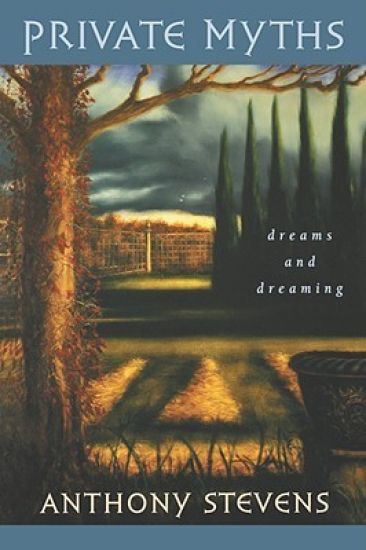
Private Myths

Private Myths

Anthony Stevens

Harvard University Press
1997
nidottu
Every night we enter a mythic realm, a dark, primordial world of fear and desire. What this world offers, Anthony Stevens suggests, may well be the key to understanding our waking mysteries--ourselves, our society, and our history. A prominent psychiatrist and practicing Jungian analyst, Stevens views dreaming from both psychological and neurological perspectives to show how dreams owe their origins as much to our evolutionary history as a species as to our personal history as individuals. A work rich in symbolic and scientific insight, Private Myths traverses the course of dream interpretation from distant hunter-gatherer times to the present. This analysis is as authoritative as it is wide-ranging, including discussions of the biology of dreaming and the discovery of REM sleep, elaboration of the latest neuroscientific techniques in sleep research, and an assessment of the century-long legacy of analytic practice to dream interpretation. In a close look at the actual processes of dream formation, Stevens relates "dream work" to other creative capacities such as language, poetry, storytelling, memory, play, symptom-formation, magic, and ritual. He draws on his many years of experience to analyze key historical dreams, such as Freud's dream of Irma's injection and Hitler's dream of being buried alive, and enriches this discussion with analyses of his own and his patients' dreams. Remarkable in its breadth, Private Myths makes the principles of dream interpretation accessible to scientists, the findings of dream science accessible to analysts, and the discoveries of both available to anyone intrigued by the mysteries of dreams and dreaming.
Privata myter : om drömmar och drömmande

Privata myter : om drömmar och drömmande

Anthony Stevens

Gedins förlag
1997
sidottu
Varje natt träder vi in i en mystisk värld, ett mörkt urtidsrike fyllt av önskningar, tvivel, fantasi och oro – vi drömmer. Drömmandet är oerhört betydelsefullt, såväl ur personligt som ur antropologiskt perspektiv, och kan vara en nyckel till förståelsen av oss själva, av samhället och av historien. I Privata myter guidar Anthony Stevens läsaren genom drömtolkningens labyrintiska mysterier, berättar om människans kunskap om drömmar i äldre tider – ända från stenåldern – och redovisar olika drömteorier i modern tid, framför allt hos Freud och Jung. Vi får också ta del av nutida drömvetenskap, där upptäckten av REM-sömnen, ny teknik inom hjärnforskningen och över ett århundrade av psykoanalytisk erfarenhet samverkar till att ge oss ökad kunskap om drömmandets och drömmarnas betydelse. Anthony Stevens tar bland annat upp drömmarnas kreativa aspekt, där "drömarbetet" jämförs med andra kreativa processer som språk, poesi, berättande, minne, lek och magi. Han beskriver hur drömmar används i analytisk terapi och hur man själv kan arbeta med sina drömmar. Stevens analyserar också en rad "klassiska" drömmar, bl.a. Descartes stora filosofiska dröm, Freuds berömda dröm om Irmas injektion och Hitlers dröm om att bli levande begravd. Dessutom får vi läsa om hur drömmarna har ändrat historiens förlopp och om deras rika bidrag till konst och vetenskap.
Archetype

Archetype

Anthony Stevens

Routledge
1990
nidottu
Commonly dismissed as mystical by scientists, archetypes were described by Jung as biological entities, which have evolved through natural selection, and which, if they exist at all, must be amenable to empirical study. Anthony Stevens has discovered the key to opening up this long-ignored scientific approach to the archetype.