
Kirjailija
Anthony Trollope
Kirjat ja teokset yhdessä paikassa: 2 344 kirjaa, julkaisuja vuosilta 1974–2026, suosituimpiin kuuluu Autobiography Of Anthony Trollope. Vertaile teosten hintoja ja tarkista saatavuus suomalaisista kirjakaupoista.
2 344 kirjaa
Kirjojen julkaisuvuodet: 1974–2026.
Harry Heathcote of Gangoil
Anthony Trollope
Createspace Independent Publishing Platform
2017
nidottu
He was married, and with him and his wife lived his wife's sister. At that somewhat late hour he walked in among the two young women, and another much older woman who was preparing the table for dinner. The wife and the wife's sister each had a child in her lap, the elder having seen some fifteen months of its existence, and the younger three months. "He has been out since seven, and I don't think he's had a mouthful," the wife had just said. "Oh, Harry, you must be half starved," she exclaimed, jumping up to greet him, and throwing her arm round his bare neck. "I'm about whole melted," he said, as he kissed her. "In the name of charity give me a nobbler. I did get a bit of damper and a pannikin of tea up at the German's hut; but I never was so hot or so thirsty in my life.

La Vend e, - An Historical Romance is an unchanged, high-quality reprint of the original edition of 1875. Hansebooks is editor of the literature on different topic areas such as research and science, travel and expeditions, cooking and nutrition, medicine, and other genres. As a publisher we focus on the preservation of historical literature. Many works of historical writers and scientists are available today as antiques only. Hansebooks newly publishes these books and contributes to the preservation of literature which has become rare and historical knowledge for the future.

The three clerks (Special Edition)
Anthony Trollope
Createspace Independent Publishing Platform
2017
pokkari
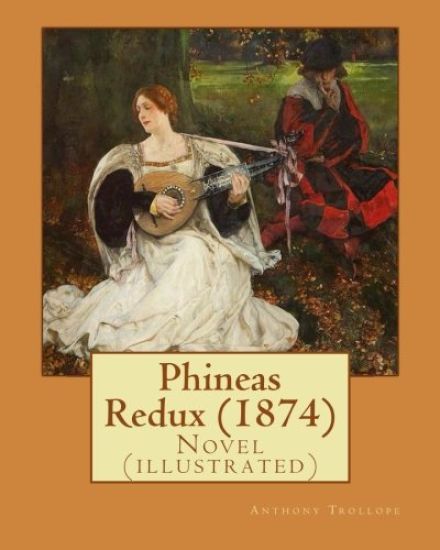
Phineas Redux (1874). By: Anthony Trollope, illustrated By: Francis Montague Holl RA (4 July 1845 in London - 31 July 1888 in London) was an Eng
Francis Montague Holl; Anthony Trollope
Createspace Independent Publishing Platform
2017
nidottu
The duke's children: a novel By: Anthony Trollope: Family-saga novel
Anthony Trollope
Createspace Independent Publishing Platform
2017
nidottu
Kept in the dark; a novel. By: Anthony Trollope (Volume 1): Novel ( Original Version), in two volume's
Anthony Trollope
Createspace Independent Publishing Platform
2017
nidottu
Kept in the dark: a novel. By: Anthony Trollope (Original Version): Novel (New edition)
Anthony Trollope
Createspace Independent Publishing Platform
2017
nidottu
Harry Heathcote of Gangoil. A tale of Australian bush life (1874). By: Anthony Trollope: Novel (Original Classics)
Anthony Trollope
Createspace Independent Publishing Platform
2017
nidottu
Anthony Trollope ( 24 April 1815 - 6 December 1882) was an English novelist of the Victorian era. Among his best-known works is a series of novels collectively known as the Chronicles of Barsetshire, which revolves around the imaginary county of Barsetshire. He also wrote novels on political, social, and gender issues, and other topical matters. Trollope's literary reputation dipped somewhat during the last years of his life, but he had regained the esteem of critics by the mid-20th century. Biography: Thomas Anthony Trollope, Anthony's father, was a barrister. Though a clever and well-educated man and a Fellow of New College, Oxford, he failed at the bar due to his bad temper. In addition, his ventures into farming proved unprofitable, and he lost an expected inheritance when an elderly childless uncle remarried and had children. As a son of landed gentry, he wanted his sons to be raised as gentlemen and to attend Oxford or Cambridge. Anthony Trollope suffered much misery in his boyhood owing to the disparity between the privileged background of his parents and their comparatively small means. Born in London, Anthony attended Harrow School as a free day pupil for three years from the age of seven because his father's farm, acquired for that reason, lay in that neighbourhood. After a spell at a private school at Sunbury, he followed his father and two older brothers to Winchester College, where he remained for three years. He returned to Harrow as a day-boy to reduce the cost of his education. Trollope had some very miserable experiences at these two public schools. They ranked as two of the most lite schools in England, but Trollope had no money and no friends, and was bullied a great deal. At the age of twelve, he fantasised about suicide. However, he also daydreamed, constructing elaborate imaginary worlds. In 1827, his mother Frances Trollope moved to America with Trollope's three younger siblings, to Nashoba Commune. After that failed, she opened a bazaar in Cincinnati, which proved unsuccessful. Thomas Trollope joined them for a short time before returning to the farm at Harrow, but Anthony stayed in England throughout. His mother returned in 1831 and rapidly made a name for herself as a writer, soon earning a good income. His father's affairs, however, went from bad to worse. He gave up his legal practice entirely and failed to make enough income from farming to pay rents to his landlord, Lord Northwick. In 1834, he fled to Belgium to avoid arrest for debt. The whole family moved to a house near Bruges, where they lived entirely on Frances's earnings. In Belgium, Anthony was offered a commission in an Austrian cavalry regiment. To accept it, he needed to learn French and German; he had a year in which to acquire these languages. To learn them without expense to himself and his family, he took a position as an usher (assistant master) in a school in Brussels, which position made him the tutor of thirty boys. After six weeks of this, however, he received an offer of a clerkship in the General Post Office, obtained through a family friend. He returned to London in the autumn of 1834 to take up this post. Thomas Trollope died the following year. According to Trollope, "the first seven years of my official life were neither creditable to myself nor useful to the public service." At the Post Office, he acquired a reputation for unpunctuality and insubordination. A debt of 12 to a tailor fell into the hands of a moneylender and grew to over 200; the lender regularly visited Trollope at his work to demand payments. Trollope hated his work, but saw no alternative and lived in constant fear of dismissal.
Ayala's Angel (1881). By: Anthony Trollope (Volume 1): Novel (Original Classics), in three volume
Anthony Trollope
Createspace Independent Publishing Platform
2017
nidottu
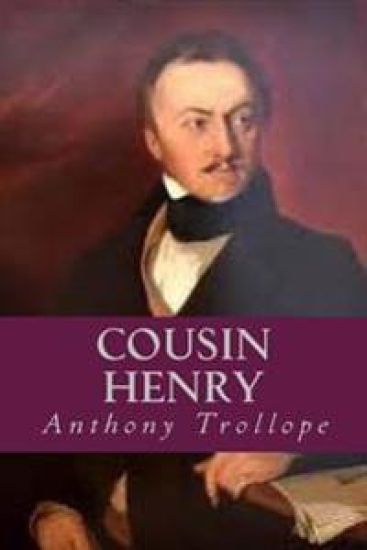
Cousin Henry: a novel. By: Anthony Trollope: The story deals with the trouble arising from the indecision of a squire in choosing an heir to his estat
Anthony Trollope
Createspace Independent Publishing Platform
2017
nidottu
Cousin Henry is a novel by Anthony Trollope first published in 1879. The story deals with the trouble arising from the indecision of a squire in choosing an heir to his estate. Of all Trollope's shorter novels, this one has been called one of his most experimental. Plot: Indefer Jones is the aged squire, between seventy and eighty years of age, of a large manor, Llanfeare, in Carmarthen, Wales. His niece, Isabel Brodrick, has lived with him for years after the remarriage of her father, and endeared herself to everyone. However, according to his strong traditional beliefs, the estate should be bequeathed to a male heir. His sole male blood relative is his nephew Henry Jones, a London clerk. Henry has, in the past, incurred debts that the squire had paid off, been "sent away from Oxford", and generally made a poor impression on his occasional visits to Llanfeare. Nevertheless, Henry is told of his uncle's intention to make him the heir to the estate and is invited to pay a visit. Isabel rejects her uncle's suggestion that she solve his dilemma by marrying Henry, as she cannot stand her cousin. Indefer Jones finds his nephew to be just as detestable as ever. As a result, he overcomes his prejudice and changes his will one final time, in Isabel's favour. Unfortunately, he dies before he can tell anyone. Finding the document hidden in a book of sermons by accident, Henry vacillates between keeping silent and revealing its location. He is neither good enough to give up the estate nor evil enough to burn the document, fearing disgrace, a long jail sentence and, not least, eternal damnation. Instead, he comforts himself by reasoning that doing nothing cannot be a crime. Indefer Jones had had his last will witnessed by two of his tenants, but since the will cannot be found despite a thorough search of the house, Henry inherits the estate. However, already extant suspicions are only strengthened by his guilty manner. He endures abuse from everyone; his own servants either quit or treat him with disrespect. He takes to spending hours in the library, where the will is hidden. The local newspaper begins to publish accounts of the affair that are insulting and seemingly libelous to Henry. It accuses him of destroying the will and usurping the estate from Isabel, whom everybody knows and respects. The old squire's lawyer, Mr Apjohn, himself suspecting that Henry knows more than he lets on, approaches the new squire about the articles, pressuring the unwilling young man into taking legal action against the editor. Henry finds that this only makes things worse. The prospect of being cross examined in the witness box fills him with dread. He realises the truth would be dragged out of him in court. Mr Apjohn, by clever questioning, gets a good idea about where the will is. Henry knows that time is running out, but once again procrastinates. Mr Apjohn and Mr Brodrick, Isabel's father, visit Henry at home and find the document, despite Henry's ineffectual efforts to stop them. Because he did not destroy the will, Henry is permitted to return to his job in London with his reputation intact and 4000, the amount Isabel was bequeathed in the other will..... Anthony Trollope ( 24 April 1815 - 6 December 1882) was an English novelist of the Victorian era.
The Fixed Period (1882). By: Anthony Trollope. (Volume 2): The Fixed Period (1882) is a satirical dystopian novel. ( in two volumen's)
Anthony Trollope
Createspace Independent Publishing Platform
2017
nidottu
Phineas Finn, The Irish member. By: Anthony Trollope: Novel (World's classic's)
Anthony Trollope
Createspace Independent Publishing Platform
2017
nidottu
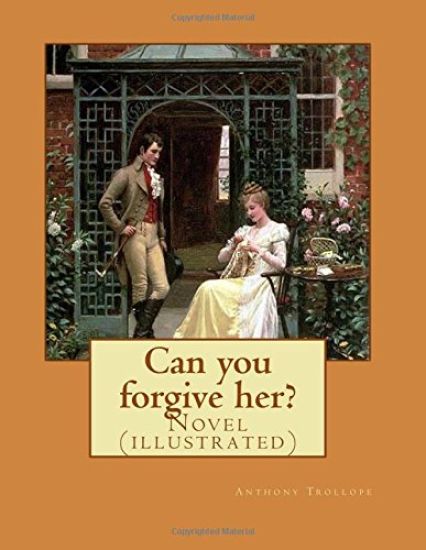
Can you forgive her?. By: Anthony Trollope, (set in two volume): Novel (illustrated)
Anthony Trollope
Createspace Independent Publishing Platform
2017
nidottu
Can You Forgive Her? is a novel by Anthony Trollope, first published in serial form in 1864 and 1865. It is the first of six novels in the "Palliser" series. The novel follows three parallel stories of courtship and marriage and the decisions of three strong women: Alice Vavasor, her cousin Glencora Palliser, and her aunt Arabella Greenow. Early on, Alice asks the question "What should a woman do with her life?" This theme repeats itself in the dilemmas faced by the other women in the novel. Lady Glencora and her husband Plantagenet Palliser recur in the remainder of the Palliser series.... Alice Vavasor, a young woman of twenty-four, is engaged to the wealthy and respectable and dependable, if unambitious and bland, John Grey. She had previously been engaged to her cousin George, but she broke it off after he went through a wild period. John, trusting in his love, makes only the slightest protest of Alice's planned tour of Switzerland with her cousin Kate, George's sister, even when he learns George is to go with them as male protector. Influenced by the romance of Switzerland, Kate's contriving to restore George to Alice's favour, and her own misgivings with John's shortcomings, Alice jilts her second fianc . Alice's noble but despised relations are shocked, but their protests only strengthen Alice's resolve, and she eventually renews her engagement to George, who seems charismatic, ambitious and alluring, in contrast to John. Then George's darker side becomes increasingly visible. He starts asking for money from Alice to support his parliamentary ambitions. Ever attentive to Alice's welfare, John secretly pays the money instead. George wins his first election, but loses his second and in despair and, after learning of John's interference in his campaign and engagement, almost murders John before escaping to America. A second story involves the comic rivalry between the wealthy farmer Cheesacre and the pauper soldier Captain Bellfield for the affections (and substantial inheritance) of the widow Mrs Greenow. Mrs Greenow had married young to a very rich older man who had recently died. Still in mourning, which for her involves a great deal of performance, she also enjoys basking in the attentions of her beaux and pitting them against each other. Finally she decides to marry the more attractive Captain Bellfield, knowing that she can keep him under control. The third story deals with the marriage of the extremely rich Plantagenet Palliser to the even wealthier heiress, Lady Glencora M'Cluskie. They are not very well suited. He is a stiff-necked, hardworking politician in line to be Chancellor of the Exchequer, while she has a lively, fun-loving personality and a well-developed sense of humour. She is outspoken and often shocks Alice by her frankness. The marital situation is made more tense by Glencora's failure to conceive a child. Previously, she had been engaged to Burgo Fitzgerald, an aristocratic wastrel, but the same noble relations that protested Alice's jilt had successfully pressured Glencora to abandon Burgo to marry Plantagenet. But she is still passionately in love with Burgo, who plots to elope with Glencora. To Alice's dismay, Glencora argues that it would be for the best if she eloped with Burgo as then Plantagenet could divorce her and marry someone else who could give him children. She publicly dances with Burgo at a ball and nearly agrees to go with him, even at the risk of her fortune and reputation.... Anthony Trollope ( 24 April 1815 - 6 December 1882) was an English novelist of the Victorian era.
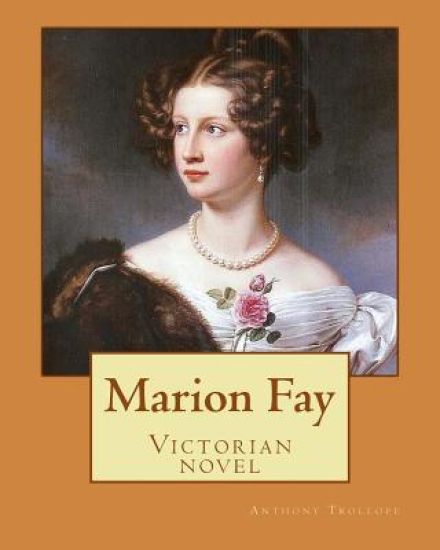
Marion Fay. By: Anthony Trollope: (Victorian novel )
Anthony Trollope
Createspace Independent Publishing Platform
2017
nidottu
The novel contrasts two love affairs, each involving an aristocrat and a commoner. Trollope vividly evokes the dull working lives, plain homes, blank streets, and limited horizons of the dwellers. Marion Fay (1882) by Anthony Trollope is a multi-threaded Victorian novel of social mores, romantic entanglements and occasional heartfelt pathos. Marion Fay is a Quaker's daughter courted by the idealistic Lord Hampstead. Meanwhile, his best friend, the impoverished George Roden, is in love with the Lord's noble sister. Differences of class and situation create romantic drama in typical Trollope fashion. Anthony Trollope(24 April 1815 - 6 December 1882) was one of the most successful, prolific and respected English novelists of the Victorian era. Among his best-loved works is a series of novels collectively known as the Chronicles of Barsetshire, which revolves around the imaginary county of Barsetshire. He also wrote perceptive novels on political, social, and gender issues, and on other topical matters. Trollope's literary reputation dipped somewhat during the last years of his life, but he regained the esteem of critics by the mid-twentieth century. Thomas Anthony Trollope, Anthony's father, was a barrister. Though a clever and well-educated man and a Fellow of New College, Oxford, he failed at the bar due to his bad temper. In addition, his ventures into farming proved unprofitable, and he lost an expected inheritance when an elderly childless uncle remarried and had children. As a son of landed gentry, he wanted his sons to be raised as gentlemen and to attend Oxford or Cambridge. Anthony Trollope suffered much misery in his boyhood owing to the disparity between the privileged background of his parents and their comparatively small means. Born in London, Anthony attended Harrow School as a free day pupil for three years from the age of seven because his father's farm, acquired for that reason, lay in that neighbourhood. After a spell at a private school at Sunbury, he followed his father and two older brothers to Winchester College, where he remained for three years. He returned to Harrow as a day-boy to reduce the cost of his education. Trollope had some very miserable experiences at these two public schools. They ranked as two of the most lite schools in England, but Trollope had no money and no friends, and was bullied a great deal. At the age of twelve, he fantasized about suicide...