Kirjojen hintavertailu – 12 903 725 kirjaa ja 27 kauppaa

Kirjailija

Antoinette Burton

Kirjat ja teokset yhdessä paikassa: 25 kirjaa, julkaisuja vuosilta 1998–2024, suosituimpiin kuuluu Reading from the South. Vertaile teosten hintoja ja tarkista saatavuus suomalaisista kirjakaupoista.

25 kirjaa

Kirjojen julkaisuvuodet: 1998–2024.

Harriet Martineau's Writing on the British Empire, vol 4

Harriet Martineau's Writing on the British Empire, vol 4

Deborah Logan; Antoinette Burton; Kitty Sklar; Patrick Brantlinger

Routledge
2004
sidottu
The literary presence of Harriet Martineau pervades 19th-century English and American culture. This edition makes her work available, and focuses on her writings on imperialism. It should be of interest to scholars of colonialism, women's writing, Victorian studies, sociology and journalism.
Harriet Martineau's Writing on the British Empire, vol 3

Harriet Martineau's Writing on the British Empire, vol 3

Deborah Logan; Antoinette Burton; Kitty Sklar; Patrick Brantlinger

Routledge
2004
sidottu
The literary presence of Harriet Martineau pervades 19th-century English and American culture. This edition makes her work available, and focuses on her writings on imperialism. It should be of interest to scholars of colonialism, women's writing, Victorian studies, sociology and journalism.
Harriet Martineau's Writing on the British Empire, vol 2

Harriet Martineau's Writing on the British Empire, vol 2

Deborah Logan; Antoinette Burton; Kitty Sklar; Patrick Brantlinger

Routledge
2004
sidottu
The literary presence of Harriet Martineau pervades 19th-century English and American culture. This edition makes her work available, and focuses on her writings on imperialism. It should be of interest to scholars of colonialism, women's writing, Victorian studies, sociology and journalism.
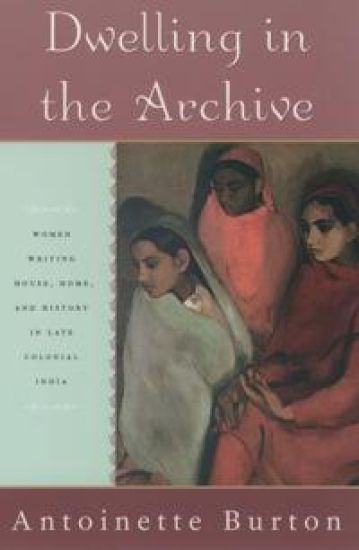
Dwelling in the Archive

Dwelling in the Archive

Antoinette Burton

Oxford University Press Inc
2003
nidottu
Dwelling in the Archives uses the writing of three 20th century Indian women to interrogate the status of the traditional archive, reading their memoirs, fictions, and histories as counter-narratives of colonial modernity. Janaki Majumdar was the daughter of the first president of the Indian National Congress. Her unpublished "Family History" (1935) stages the story of her parents' transnational marriage as a series of homes the family inhabited in Britain and India -- thereby providing a heretofore unavailable narrative of the domestic face of 19th century Indian nationalism. Cornelia Sorabji was one of the first Indian women to qualify for the bar. Her memoirs (1934 and 1936) demonstrate her determination to rescue the zenana (women's quarters) and purdahashin (secluded women) from the recesses of the orthodox home in order to counter the emancipationist claims of Gandhian nationalism. Last but not least, Attia Hosain's 1961 novel, "Sunlight on Broken Column" represents the violence and trauma of partition through the biography of a young heroine called Laila and her family home. Taken together, their writings raise questions about what counts as an archive, offering us new insights into the relationship of women to memory and history, gender to fact and fiction, and feminism to nationalism and postcolonialism.
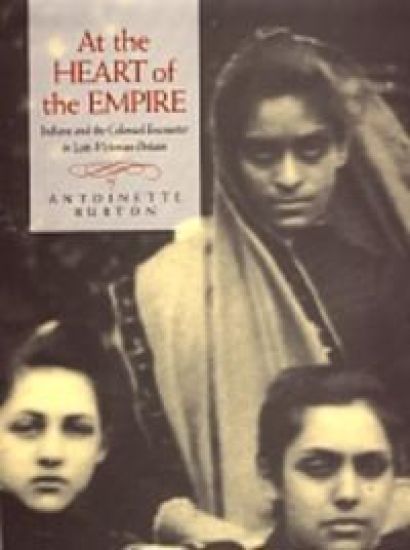
At the Heart of the Empire

At the Heart of the Empire

Antoinette Burton

University of California Press
1998
sidottu
Antoinette Burton focuses on the experiences of three Victorian travelers in Britain to illustrate how 'Englishness' was made and remade in relation to imperialism. The accounts left by these three sojourners - all prominent, educated Indians - represent complex, critical ethnographies of 'native' metropolitan society and offer revealing glimpses of what it was like to be a colonial subject in fin-de-siecle Britain. Burton's innovative interpretation of the travelers' testimonies shatters the myth of Britain's insularity from its own construction of empire and shows that it was instead a terrain open to continual contest and refiguration. Burton's three subjects felt the influence of imperial power keenly during even the most everyday encounters in Britain. Pandita Ramabai arrived in London in 1883 seeking a medical education and left in 1886, having resisted the Anglican Church's attempts to make her an evangelical missionary. Cornelia Sorabji went to Oxford to study law and became the first Indian woman to be called to the Bar. Behramji Malabari sought help for his Indian reform projects in England, and subjected London to colonial scrutiny in the process. Their experiences form the basis of this wide-ranging, clearly written, and imaginative investigation of diasporic movement in the colonial metropolis.