Kirjojen hintavertailu – 12 859 818 kirjaa ja 27 kauppaa
Kirjailija
Anton Chekhov
Kirjat ja teokset yhdessä paikassa: 644 kirjaa, julkaisuja vuosilta 1896–2026, suosituimpiin kuuluu Anton Chekhov's Selected Plays. Vertaile teosten hintoja ja tarkista saatavuus suomalaisista kirjakaupoista.
"I did have hallucinations, but did they harm anyone? Who did they harm, that's what I'd like to know!'From the supreme artist of the short story, three disturbing tales of supernatural hallucinations, hysterical obsession and moral decay. One of 46 new books in the bestselling Little Black Classics series, to celebrate the first ever Penguin Classic in 1946. Each book gives readers a taste of the Classics' huge range and diversity, with works from around the world and across the centuries - including fables, decadence, heartbreak, tall tales, satire, ghosts, battles and elephants.
Chekhov's late masterpiece examines human behaviour in all of its beautiful, terrible, laughable contradiction. Following his reimagining of Oresteia (Almeida / West End), Almeida Associate Director Robert Icke directs a new production of Chekhov's greatest play. Things your life could be:(1) a farce.(2) a tragedy.(3) pointless.(4) all of the above. Things you could do about it:(1) keep living.(2) stop living.(3) stop someone else living.(4) nothing. Even so, what has your life been worth?
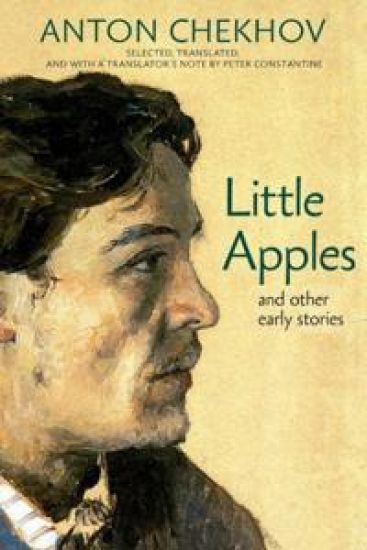
In the follow-up to his National Translation Award-winning collection The Undiscovered Chekhov, translator and scholar Peter Constantine brings us more little-known work from the Chekhov's early days as a magazine writer, pseudonymously turning out pieces for Russia's small middle class. These stories are fresh, yet mature, snapshots of the style with which Chekhov would come to be associated, both uproariously tragic and darkly comic, and lit from within by a deep feeling of fellowship for all of humanity. As his readers have come to expect, Constantine has translated this work with a masterly command of both languages' subtleties, capturing the shadings and intricacies of Chekhov's writing that flash and recede like sunlight on an orchard, offering Chekhov's tough and amused perspectives on love, aging, class, and work. With moments that seem to presage the most contemporary writing, Chekhov's Little Apples reveals one of the world's greatest writers as we have rarely seen him, an author both deeply of his times and far ahead of them.
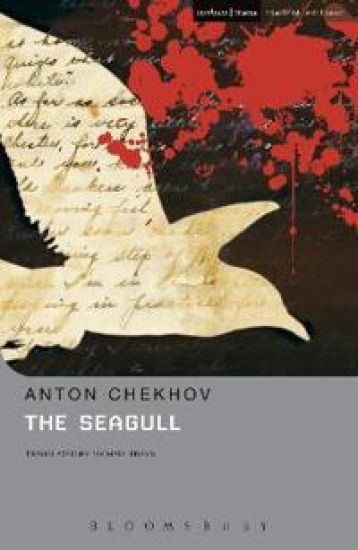
A Methuen Student Edition of Chekhov's classic play in Michael Frayn's acclaimed translation'The play has been flooded with light, like a room with the curtains drawn back' John Peter, Sunday Times'The direct simplicity of this new translation ... uncovers not only the nerve endings of Chekhov's restless malcontents but also their comic absurdities. It is, as he always intended, actually funny ...' Jack Tinker, Daily MailWhen it opened in St Petersburg in 1896, The Seagull survived only five performances after a disastrous first night. Two years later it was revived by Nemirovich-Danchenko at the newly-founded Moscow Art Theatre with Stanslasky as Trigorin and was an immediate success. Checkhov's description of the play was characteristically self-mocking: "A comedy - 3F, 6M, four acts, rural scenery (a view over a lake); much talk of literature, little action, five bushels of love". Michael Frayn's translation was commissioned by the Oxford Playhouse Company.
The Cherry OrchardA Comedy in Four ActsAnton ChekhovTranslated by Julius WestThe Cherry Orchard is the last play by Russian playwright Anton Chekhov. It opened at the Moscow Art Theatre on 17 January 1904 in a production directed by Constantin Stanislavski. Although Chekhov intended it as a comedy, and it does contain some elements of farce, Stanislavski insisted on directing the play as a tragedy. Since this initial production, directors have had to contend with the dual nature of the play. The play is often identified on the short list of the three or four outstanding plays written by Chekhov along with The Seagull, Three Sisters, and Uncle Vanya. There were several experiences in Chekhov's own life that are said to have directly inspired his writing of The Cherry Orchard. When Chekhov was sixteen, his mother went into debt after being cheated by some builders she had hired to construct a small house. A former lodger, Gabriel Selivanov, offered to help her financially, but secretly bought the house for himself. At approximately the same time, Chekov's childhood home in Taganrog was sold to pay off its mortgage. These financial and domestic upheavals imprinted themselves deeply on his memory and would reappear in the action of The Cherry Orchard. Later in his life, living on a country estate outside Moscow, Chekhov developed an interest in gardening and planted his own cherry orchard. After relocating to Yalta due to his poor health, Chekhov was devastated to learn that the buyer of his former estate had cut down most of the orchard. Returning on one trip to his childhood haunts in Taganrog, he was further horrified by the devastating effects of industrial deforestation. It was in those woodlands and the forests of his holidays in Ukraine that he had first nurtured his ecological passion (this passion is reflected in the character of Dr. Astrov, from his earlier play Uncle Vanya, whose love of the forests is his only peace). A lovely and locally famous cherry orchard stood on the farm of family friends where he spent childhood vacations, and in his early short story "Steppe," Chekhov depicts a young boy crossing the Ukraine amidst fields of cherry blossoms. Finally, the first inklings of the genesis for the play that would be his last came in a terse notebook entry of 1897: "cherry orchard." Today, Chekhov's Yalta garden survives alongside The Cherry Orchard as a monument to a man whose feeling for trees equaled his feeling for theatre. Indeed, trees are often unspoken, symbolic heroes and victims of his stories and plays; so much so that Chekhov is often singled out as Europe's first ecological author.
Nainen ja sylikoira helpotettuna tekstinä, 2300 sanan sanavarasto riittää. Myös äänikirjana:http://www.ruslania.com/entity-2/context-321/details-1405.htmleasy reader, adapted text, lexicon 2300 words
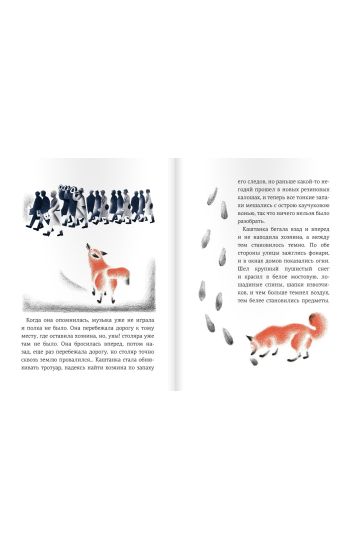
Vashemu vnimaniju predstavlena klassicheskaja istorija Antona Pavlovicha Chekhova "Kashtanka", eto proizvedenie vpervye izdaetsja na russkom jazyke s illjustratsijami Natali Paren.
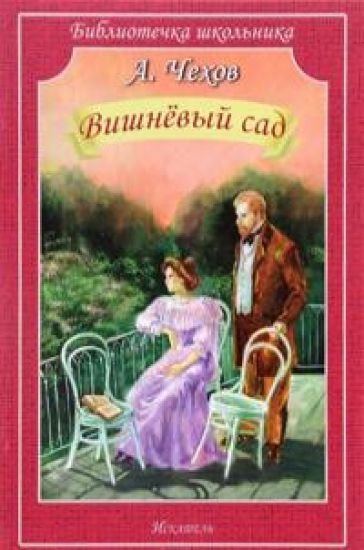
"Vishnjovyj sad" - liricheskaja pesa v chetyrjokh dejstvijakh Antona Pavlovicha Chekhova. Pesa napisana v 1903 godu, vpervye postavlena 17 janvarja 1904 goda v Moskovskom khudozhestvennom teatre.
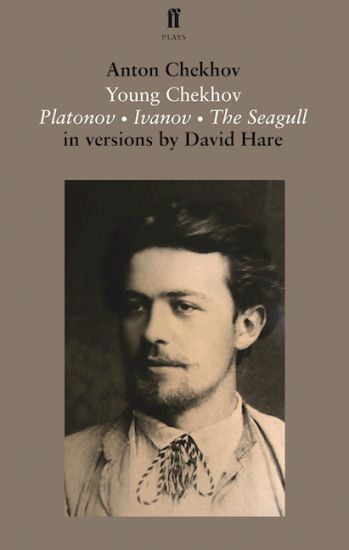
Anton Chekhov is one of the undisputed masters of world drama. He is usually thought to hide himself behind his characters and stories, keeping his own personality well off-stage. But when he was young he wrote three plays - Platonov, Ivanov and The Seagull - which, with their thrilling sunbursts of youthful anger and romanticism, reveal a very different playwright from the one known by his mature, more familiar work. Young Chekhov brings these three blazing dramas together in versions by internationally acclaimed dramatist David Hare, offering the chance to explore the birth of a revolutionary dramatic voice. The plays show a writer freeing himself from the constraints of nineteenth-century melodrama and herald the shift into the twentieth century, and the birth of the modern stage. The Young Chekhov season premiered at the Chichester Festival Theatre in the autumn of 2015.
"Pevear and Volokhonsky are at once scrupulous translators and vivid stylists of English."--"The New Yorker"There have always been two versions of Chekhov's heartrending and humorous masterwork: the one with which we are all familiar, staged by Konstatine Stanislavski at the Moscow Art Theatre in 1904, and the one Chekhov had originally envisioned. Now, for the first time, both are available and published here in a single volume in translations by the renowned playwright Richard Nelson and Richard Peavar and Larissa Volokhonsky, the foremost contemporary translators of classic Russian literature. Shedding new light on this most revered play, the translators reconstructed the script Chekhov first submitted and all of the changes he made prior to rehearsal. The result is a major event in the publishing of Chekhov's canon. Richard Nelson's many plays include "Rodney's Wife," "Goodnight Children Everywhere," Drama Desk-nominated "Franny's Way" and "Some Americans Abroad," Tony Award-nominated "Two Shakespearean Actors" and "James Joyce's The Dead" (with Shaun Davey), for which he won a Tony Award for Best Book of a Musical, and the critically acclaimed, searing play cycle, "The Apple Family Plays." Richard Pevear and Larissa Volokhonsky have produced acclaimed translations of Leo Tolstoy, Fyodor Dostoevsky, Nikolai Gogol, Anton Chekhov, and Mikhail Bulgakov. Their translations of "The Brothers Karamazov" and "Anna Karenina" won the 1991 and 2002 PEN/Book-of-the-Month Club Translation Prizes. Pevvear, a native of Boston, and Volokhonsjky, of St. Petersburg, are married to each other and live in Paris.
A play based around youthful hopes and dreams squashed by the necessary grind of life. Chekhov offers a closely observed study of a family falling apart. Everything is taken from the three sisters - Olga, Masha and Irina - the security of their comfortable home life, their ambitious plans for a bright future, love and lovers. A complex process of stripping away from them everything they hold dear is played out over four increasingly tense acts, bringing reward to some and despair to others.-5 women, 9 men
An NYRB Classics Original The Prank is Chekhov's own selection of the best of his early work, the first book he put together and the first book he hoped to publish. Assembled in 1882, with illustrations by Nikolay Chekhov, the book was then presented to the censor for approval--which was denied. Now, more than a hundred and thirty years later, The Prank appears here for the first time in any language. At the start of his twenties, when he was still in medical school, Anton Chekhov was also busily setting himself up as a prolific and popular writer. Appearing in a wide range of periodicals, his shrewd, stinging, funny stories and sketches turned a mocking eye on the mating rituals and money-grubbing habits of the middle classes, the pretensions of aspiring artists and writers, bureaucratic corruption, drunken clowning, provincial ignorance, petty cruelty--on Russian life, in short. Chekhov was already developing his distinctive ear for spoken language, its opacities and evasions, the clich s we shelter behind and the clich s that betray us. The lively stories in The Prank feature both the themes and the characteristic tone that make Chekhov among the most influential and beloved of modern writers.