Kirjojen hintavertailu – 12 859 818 kirjaa ja 27 kauppaa

Kirjailija

Anton Oleinik

Kirjat ja teokset yhdessä paikassa: 9 kirjaa, julkaisuja vuosilta 2010–2025, suosituimpiin kuuluu Organized Crime, Prison and Post-Soviet Societies. Vertaile teosten hintoja ja tarkista saatavuus suomalaisista kirjakaupoista.

9 kirjaa

Kirjojen julkaisuvuodet: 2010–2025.

A Comparative Analysis of Political and Media Discourses about Russia’s Invasion of Ukraine
? This book explores the discursive dimension of Russia’s invasion of Ukraine. It analyzes how political leaders, mass media, social media, and ordinary people in Ukraine, Russia, the United States, the United Kingdom, and France discuss the war. War propaganda and counterpropaganda structure discourses about the invasion, strengthening post-truth conditions. The book highlights the consequences of the growing distrust in the institutional truth-teller, mass media. Russia’s invasion of Ukraine is the first social media war. Social media became the principal source of information about the invasion. The rise of digital media did not change the tendency of the discourses about war to be territorially segregated according to national boundaries. Nationalization of discourses about war continues to prevail over their globalization. The corpora containing more than 180 million words in four languages inform the analysis. The data was collected during the first year and a half of Russia’sall-out war in Ukraine.
A Comparative Analysis of Political and Media Discourses about Russia’s Invasion of Ukraine
? This book explores the discursive dimension of Russia’s invasion of Ukraine. It analyzes how political leaders, mass media, social media, and ordinary people in Ukraine, Russia, the United States, the United Kingdom, and France discuss the war. War propaganda and counterpropaganda structure discourses about the invasion, strengthening post-truth conditions. The book highlights the consequences of the growing distrust in the institutional truth-teller, mass media. Russia’s invasion of Ukraine is the first social media war. Social media became the principal source of information about the invasion. The rise of digital media did not change the tendency of the discourses about war to be territorially segregated according to national boundaries. Nationalization of discourses about war continues to prevail over their globalization. The corpora containing more than 180 million words in four languages inform the analysis. The data was collected during the first year and a half of Russia’sall-out war in Ukraine.

Organized Crime, Prison and Post-Soviet Societies

Organized Crime, Prison and Post-Soviet Societies

Alain Touraine; Anton Oleinik

Routledge
2019
nidottu
This title was first published in 2003. The "Red Mafia" in Russia have become the subject of increasing international interest and considerable misinterpretation. After well-received editions in Russian, French and Italian, Anton Oleinik's study of Russian prisons, in which he explores the social roots of organized crime in post-Soviet societies, is now published in English. This English edition includes a postscript on the Moscow terrorist crisis of 2002. Oleinik's analysis reveals prison society as a mirror of broader Russian society - characterized by the absence of the state as an organizer of social practices. He builds on this to make a central distinction between two types of societies - the modern "large" society and the "small" society, like Russia, that has only been partially modernized, and in which the world of everyday life, experiences and relationships remains entirely separated from the official aims of modernization and efficiency. Oleinik is interested in the void between these two separate worlds, a void he sees being filled in Russia by the Mafia.
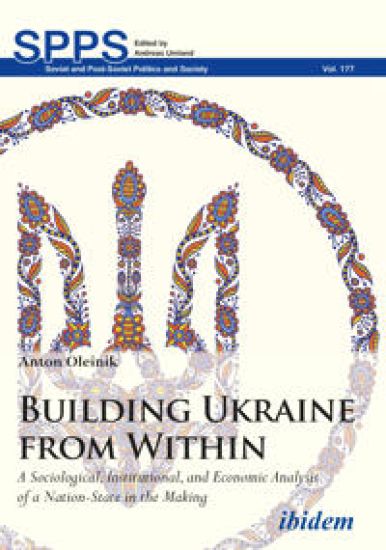
Building Ukraine from Within

Building Ukraine from Within

Anton Oleinik

ibidem-Verlag, Jessica Haunschild u Christian Schon
2018
nidottu
Ukraine drew significant media attention after the 2013-2014 Revolution of Dignity and the subsequent undeclared war waged by Russia. However, the nature of these events and their impact on the social, economic, and political development of this country remain under-studied and, hence, often misunderstood. The reader is invited to take an inside look at the recent developments in Ukraine and to search for an answer to the question of whether transition from externally to internally driven development is possible in this case. Anton Oleinik argues that Ukraine is currently going through a revolutionary period aimed at building a nation-state and its aftermath. Ukraine is a latecomer in this process, especially compared with most other European countries. Its outcomes cannot be predicted with certainty. It is yet to be seen if a current surge in volunteerism and bottom-up civic initiatives will lead to the emergence of a viable and sustainable national democratic system in this country.
Organized Crime, Prison and Post-Soviet Societies

Organized Crime, Prison and Post-Soviet Societies

Alain Touraine; Anton Oleinik

Routledge
2017
sidottu
This title was first published in 2003. The "Red Mafia" in Russia have become the subject of increasing international interest and considerable misinterpretation. After well-received editions in Russian, French and Italian, Anton Oleinik's study of Russian prisons, in which he explores the social roots of organized crime in post-Soviet societies, is now published in English. This English edition includes a postscript on the Moscow terrorist crisis of 2002. Oleinik's analysis reveals prison society as a mirror of broader Russian society - characterized by the absence of the state as an organizer of social practices. He builds on this to make a central distinction between two types of societies - the modern "large" society and the "small" society, like Russia, that has only been partially modernized, and in which the world of everyday life, experiences and relationships remains entirely separated from the official aims of modernization and efficiency. Oleinik is interested in the void between these two separate worlds, a void he sees being filled in Russia by the Mafia.
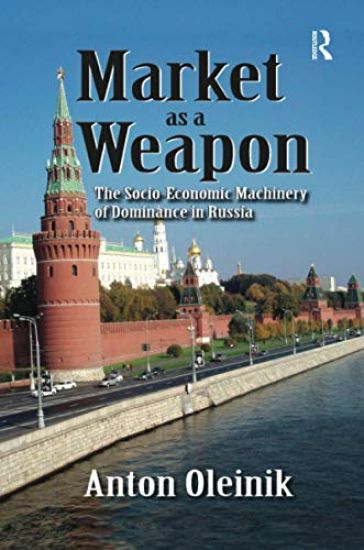
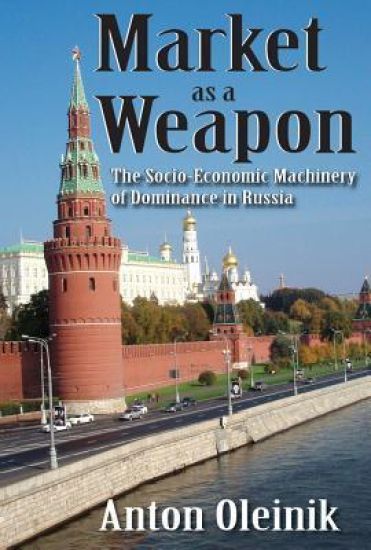
Market as a Weapon

Market as a Weapon

Lionel S. Lewis; Anton Oleinik

Routledge
2017
nidottu
Power is all-encompassing in Russia, and mediates most interactions among people, including everyday decisions. Even the recent administrative reforms in the country, which began at the end of the 1990s, have tried to reshape the government institutions and modernize the country through the use of power. Changes were initiated and implemented by people vested with power. Power, convention, and trust can all support coordination. However, in the Russian institutional context power tends not only to supplement the alternative coordination mechanisms but also to substitute them. Power can be used to solve problems related to social action by merging two (or several) centers of decision-making into one. The actor vested with power decides exactly how coordination and adjustment can be achieved. This path-breaking volume shows how power turns into a unique coordination mechanism and what are consequences of such transformation for everyday life and businesses. Market as a Weapon focuses on issues of power and domination using the configuration of power relationships in Russia as a "critical case," but goes far beyond a narrowly defined scope of country-specific studies. Particular emphasis is put on domination by virtue of a constellation interests in the market, since this is a relatively underexplored yet broadly used technique for imposing will in all countries that heavily rely on interventionist policies. Instead of being a liberating force, the market becomes an additional instrument facilitating the continuous reproduction of power, which explains the title of the book. Both qualitative and quantitative data, including more than one hundred in-depth interviews with experts, state servants, and businesspeople in Russia, as well as statistics, are used throughout the text of this major book.
Knowledge and Networking

Knowledge and Networking

Anton Oleinik

AldineTransaction
2016
nidottu
Success and career growth in academic life depend upon reaching and influencing the widest audience possible. To do so, scientists strive to develop personalized trust. They do so by establishing connections through networking and also through the strength of their arguments and the validity and reliability of their research. To secure increasingly rare tenure positions and achieve salary increases, promotions, and recognition, scholars place themselves on a continuum of priorities ranging from total emphasis on networking to complete focus on advancing knowledge. The best solution, Oleinik argues is to find some middle ground between the two extremes. When scholars prioritize networking, he argues, science reproduces features of a "small world," in which personal connections prevail, and who knows whom matters more than who knows what. In this scenario, one's status derives more from affiliation with a specific group of scholars or a particular university than from advancing knowledge. Acknowledging that it would be a mistake to consider networking the main source of evils in social science, Oleinik instead criticizes the decisions scholars make to focus on networking, instead of struggling to find that middle ground between networking and advancing knowledge, and managing conflicts between these priorities. The fierce competition for increasingly scarce research funds, and the difficulty of finding jobs in academia underlines the growing importance of the career choices made by an academic. Though Oleinik focuses particularly on the social sciences, his ideas are just as relevant to other disciplinary areas.
Knowledge and Networking

Knowledge and Networking

Anton Oleinik

AldineTransaction
2014
sidottu
Success and career growth in academic life depend upon reaching and influencing the widest audience possible. To do so, scientists strive to develop personalized trust. They do so by establishing a large number of connections through networking and also through the strength of their arguments and the validity and reliability of their research. To secure increasingly rare tenure positions and achieve salary increases, promotions, and recognition, scholars place themselves on a continuum of priorities ranging from total emphasis on networking to complete focus on advancing knowledge, trying to find some middle ground between the two extremes. Anton Oleinik argues that when scholars prioritize networking, science reproduces features of a "small world," in which personal connections prevail. Who knows whom matters more than who knows what. In this scenario, one's status derives more from affiliation with a specific group of scholars or a particular university than from contributing to advancing knowledge. Acknowledging that it would be a mistake to consider networking the main source of evils in science, Oleinik instead criticizes the decisions scholars make while struggling to find that middle ground between networking and advancing knowledge, and managing conflicts between these priorities. The fierce competition for increasingly scarce research funds, and the difficulty of finding jobs in academia underlines the growing importance of the choices made by an academic. Though Oleinik focuses particularly on the social sciences, his ideas are just as relevant to other disciplinary areas.
Market as a Weapon

Market as a Weapon

Lionel S. Lewis; Anton Oleinik

AldineTransaction
2010
sidottu
Power is all-encompassing in Russia, and mediates most interactions among people, including everyday decisions. Even the recent administrative reforms in the country, which began at the end of the 1990s, have tried to reshape the government institutions and modernize the country through the use of power. Changes were initiated and implemented by people vested with power. Power, convention, and trust can all support coordination. However, in the Russian institutional context power tends not only to supplement the alternative coordination mechanisms but also to substitute them. Power can be used to solve problems related to social action by merging two (or several) centers of decision-making into one. The actor vested with power decides exactly how coordination and adjustment can be achieved. This path-breaking volume shows how power turns into a unique coordination mechanism and what are consequences of such transformation for everyday life and businesses. Market as a Weapon focuses on issues of power and domination using the configuration of power relationships in Russia as a "critical case," but goes far beyond a narrowly defined scope of country-specific studies. Particular emphasis is put on domination by virtue of a constellation interests in the market, since this is a relatively underexplored yet broadly used technique for imposing will in all countries that heavily rely on interventionist policies. Instead of being a liberating force, the market becomes an additional instrument facilitating the continuous reproduction of power, which explains the title of the book. Both qualitative and quantitative data, including more than one hundred in-depth interviews with experts, state servants, and businesspeople in Russia, as well as statistics, are used throughout the text of this major book.